Appliance
La Cornue ovens
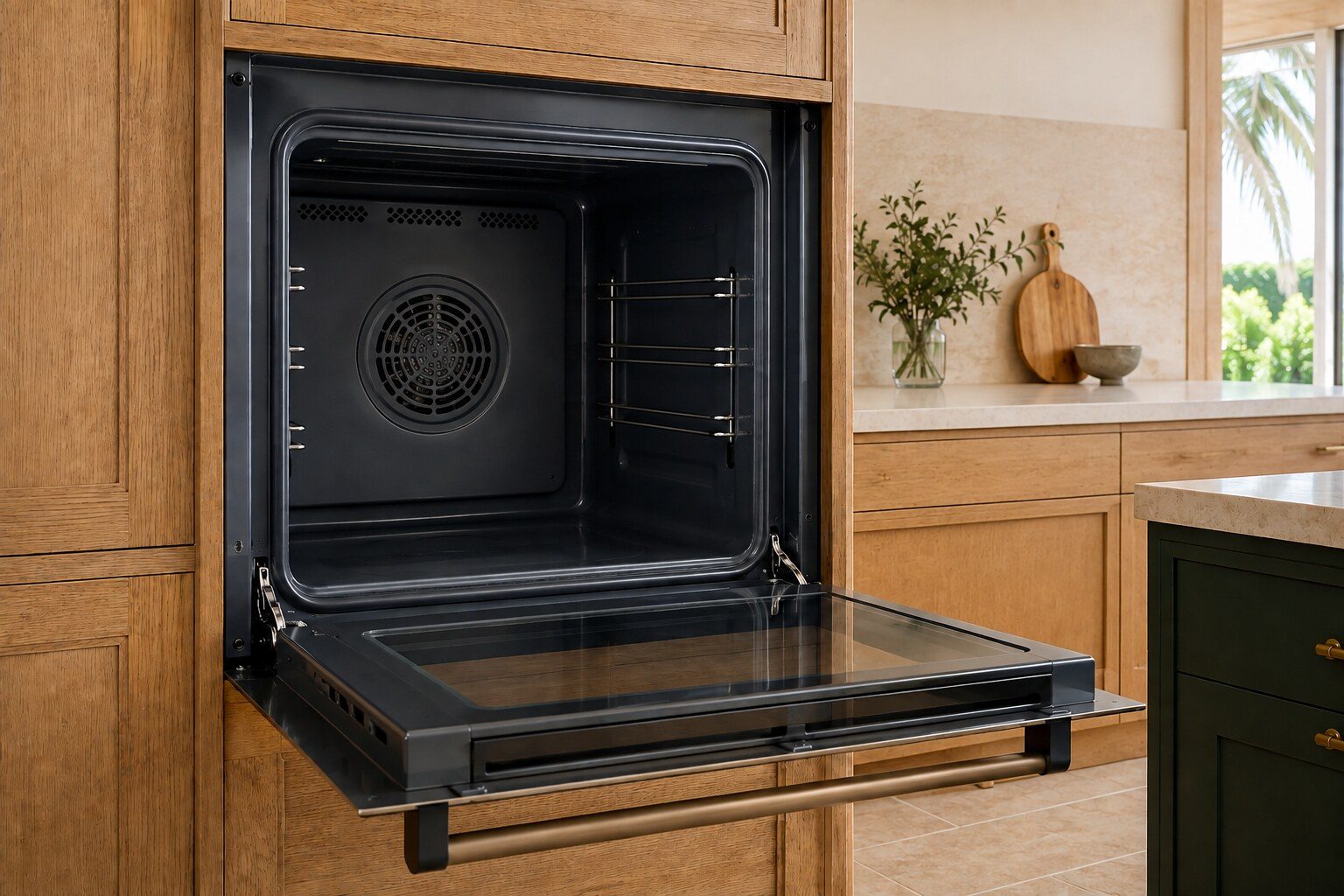
There are three different ovens on this make and they fail in three different ways. The vaulted gas oven cooks by radiant heat inside a sealed dome and has an electric broiler over it. The vaulted electric oven sits on the other side of the same range. And since 2025 there is a standalone one: the Château Tourelle, a fully electric multifunction wall oven in 60 and 75 centimeter widths, built to sit in a cabinet run next to a Château cooktop. Which of the three you have decides everything about the repair.
- 7 symptoms we are called out to
- From $95 diagnostic, credited to the repair
- 59 cities and neighborhoods covered
- OEM parts available on order
The short version
What this equipment is, for a repair
Configurations
Vaulted ovens and convection ovens — gas, electric, and the Tourelle wall oven
Access
Planned before the visit, not discovered on arrival
Parts
OEM, available on order
Diagnostic
From $95, credited to the repair
What goes wrong with it
Symptoms we are called out to on La Cornue ovens
Each one covers the likely causes in the order they are worth checking, and what to do in five minutes before booking anything.
-
It lights and then goes out Burner will not stay lit
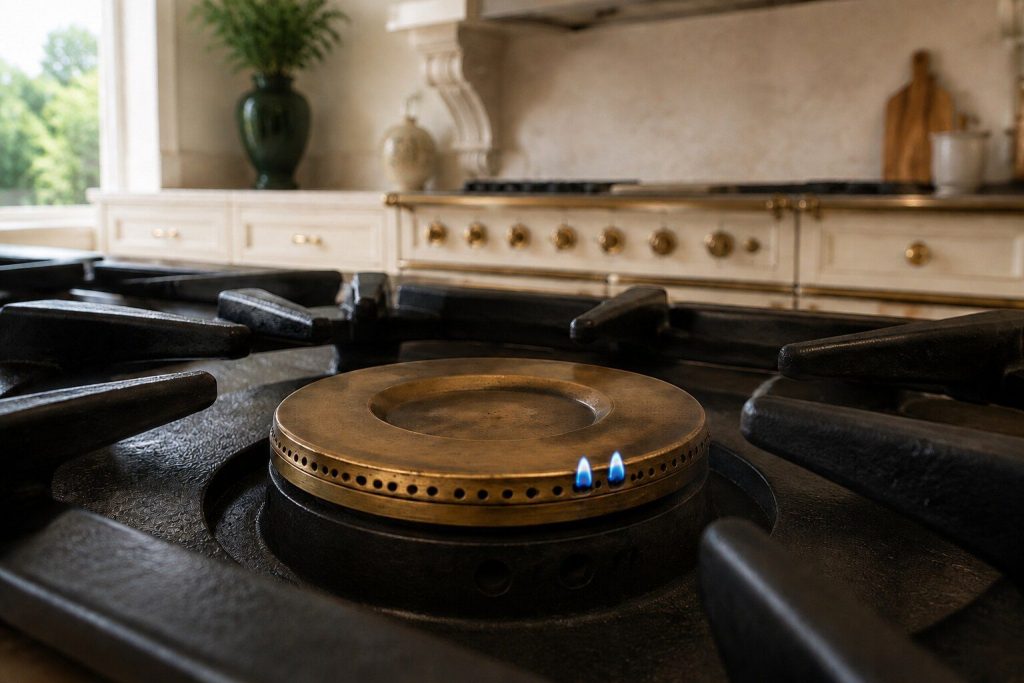
A burner that lights while the knob is held and dies when it is released is a flame supervision failure, and it is the same problem whether it happens on a surface burner or in the oven. The safety system is doing what it exists to do; the reason it no longer trusts the flame is what needs finding.
- The safety chain is working — it just no longer sees the flame
- Thermocouple, then valve, in that order
- An oven that does this is a same-day call
-
Stop and read this first Gas smell in the kitchen
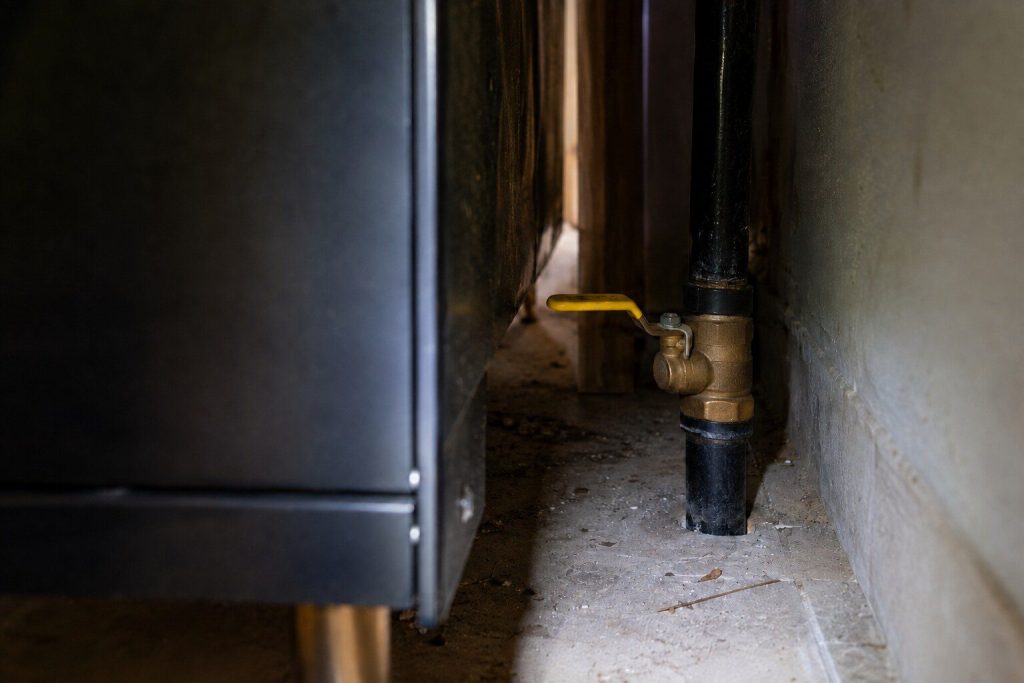
A smell of gas is the one symptom on this site with instructions rather than a diagnosis. Turn the range off at its shut-off valve, open windows, do not operate switches or the hood, and get everyone out if the smell is strong. Then call the gas utility or 911 first and us second.
- Utility or 911 first, appliance repair second
- Do not operate switches, the hood or a phone in the room
- A faint smell only while lighting is a different matter from a persistent one
-
No heat and no explanation Oven will not light
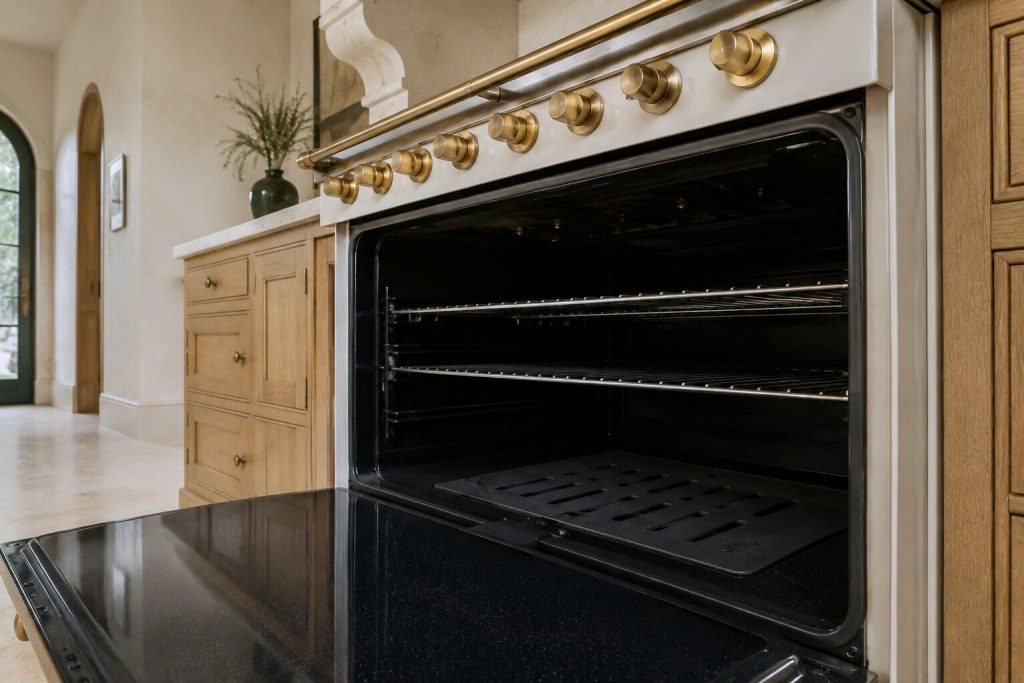
A vaulted gas oven that will not light gives you nothing to work with — no display, no code, no window — because La Cornue's Château guide contains no error codes at all. That is normal for this make. The diagnosis is igniter, safety valve, thermocouple and supply, measured in that order.
- No code is not a symptom — this oven has nothing to print one with
- A glowing igniter with no flame is the classic failure
- Two attempts, then stop and shut the range off at its valve
-
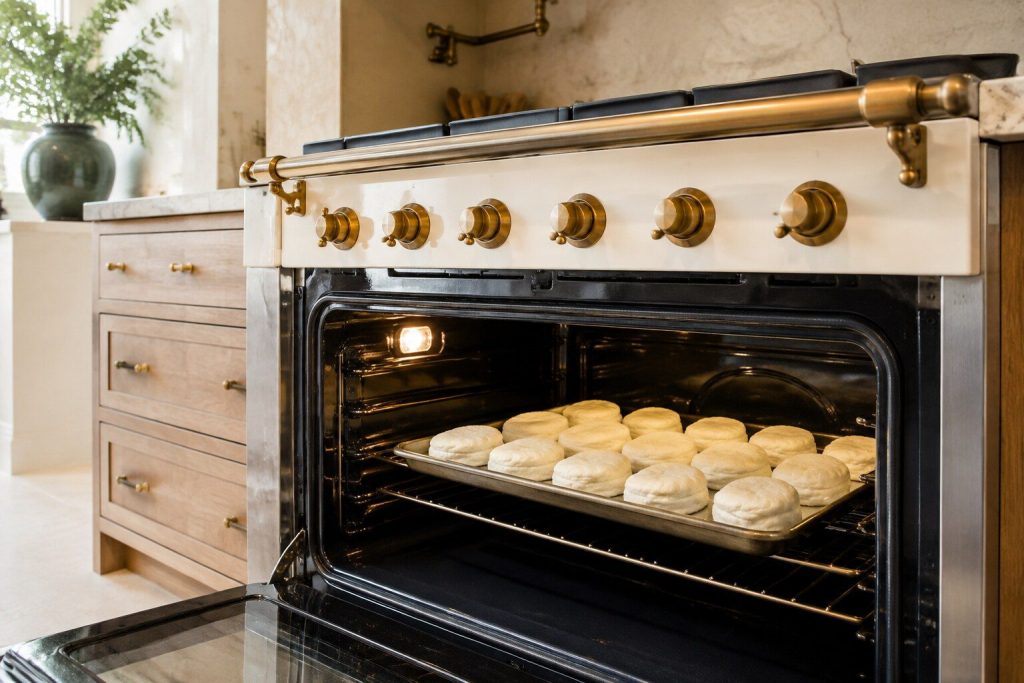
It heats, but not enough Oven not reaching temperature
An oven that gets warm and stalls short of its setting, takes an hour to preheat, or loses temperature the moment the door opens. On a vaulted oven some of this is thermal mass behaving as designed, and separating the design from the problem is the first job.
- A vaulted oven is slow by design — measure before condemning
- Bake and broil are separate circuits on this make
- Door seal and level come before any talk of parts
-
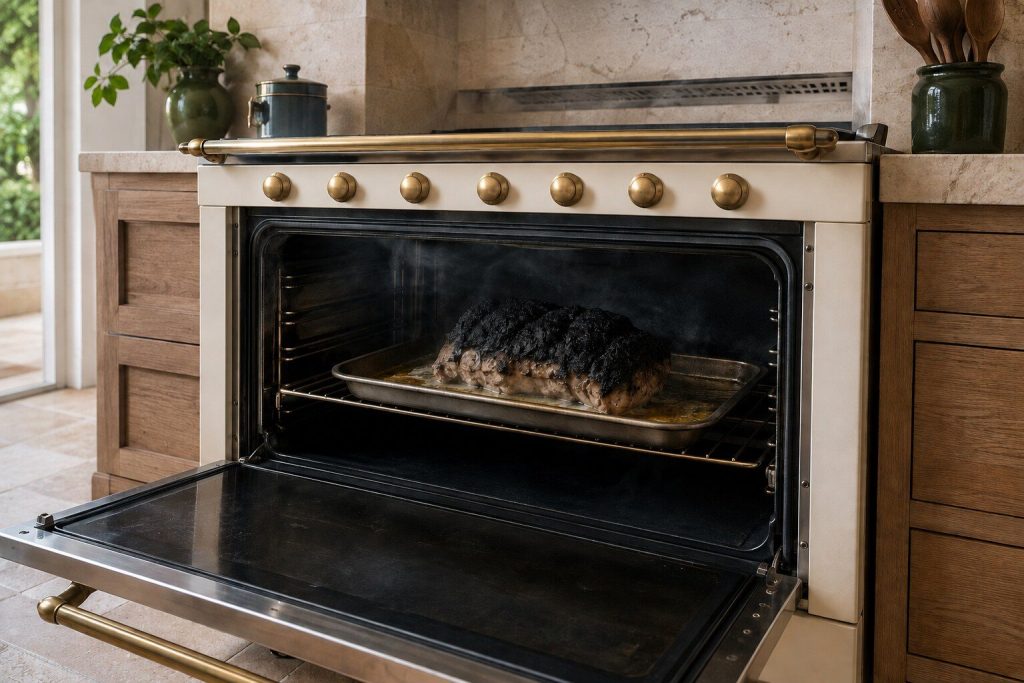
Everything cooks faster than it should Oven runs hot
An oven that has drifted upwards over years, and a cook who has quietly rewritten every recipe around it. The manual is explicit: an oven that gets hotter as the range gets older, and does not come back when the dial is turned down, wants a new thermostat rather than a new habit.
- The maker's own guide names this and names the answer
- Measured through a full cycle, not with one reading
- A corrected oven changes your cooking — expect that
-
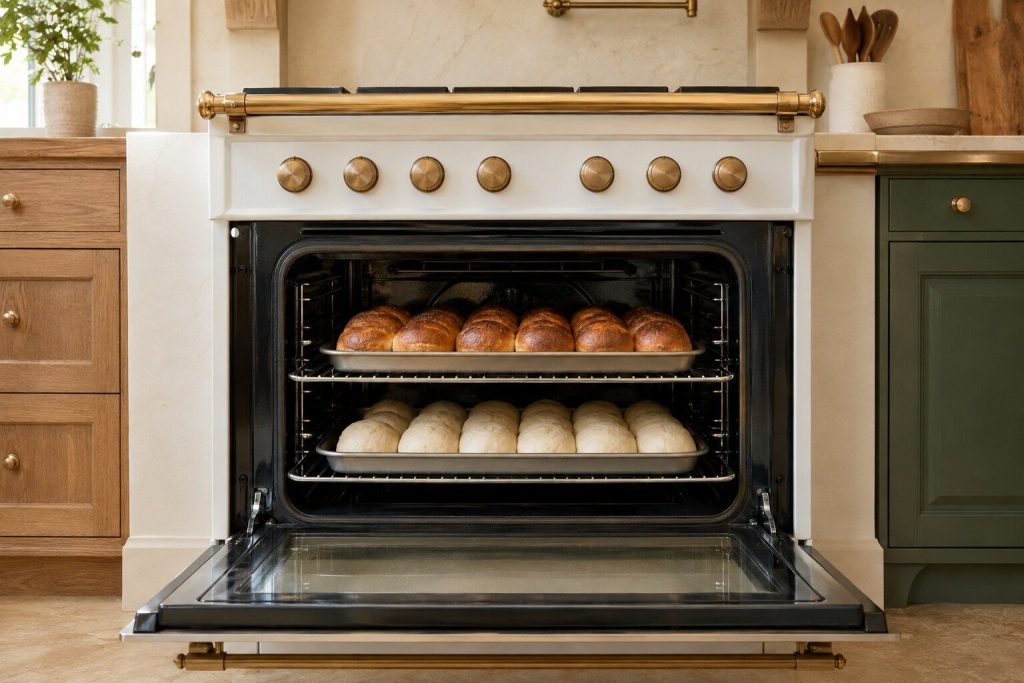
One side browns and the other does not Oven cooks unevenly
On a vaulted oven a degree of unevenness is the design — heat radiates from a dome and the strongest zone is not the geometric center. La Cornue's own cooking notes tell owners to turn a large item during cooking and to leave space between loaded shelves. The job here is to find what has made it worse than designed.
- Some unevenness is designed in — the manual says so
- Level, door seal and tray size come before any part
- A dish of water on the shelf is the maker's own test
What we do on it
Repairs we carry out on La Cornue ovens
Starting figures for this equipment in South Florida. The exact cost is confirmed after an on-site diagnostic — and this is not the whole list of what can go wrong, so call if your problem is not here.
-
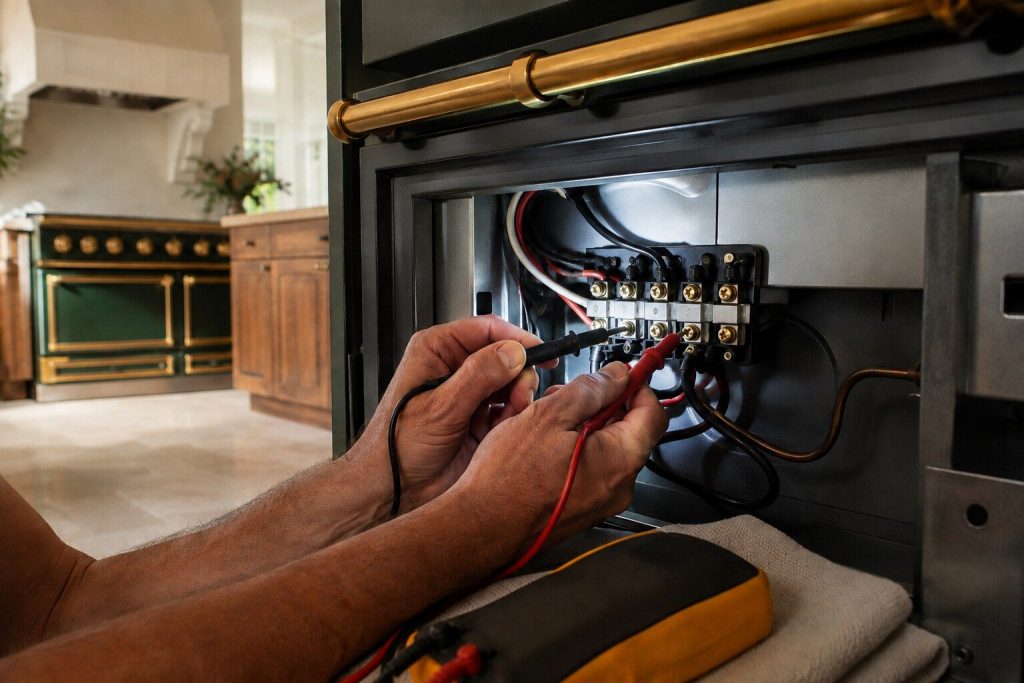
from $95 Diagnostic visit
One visit, one technician, one answer in writing. On a make with three error codes in its entire documentation, the diagnostic is not a formality before the repair — it is the repair's only source of information, and it is done with instruments rather than by elimination.
- Measured, not guessed — this make reports almost nothing on its own
- The configuration code read off the range, because it decides the parts
- Written findings and a from-price before anything is opened
-
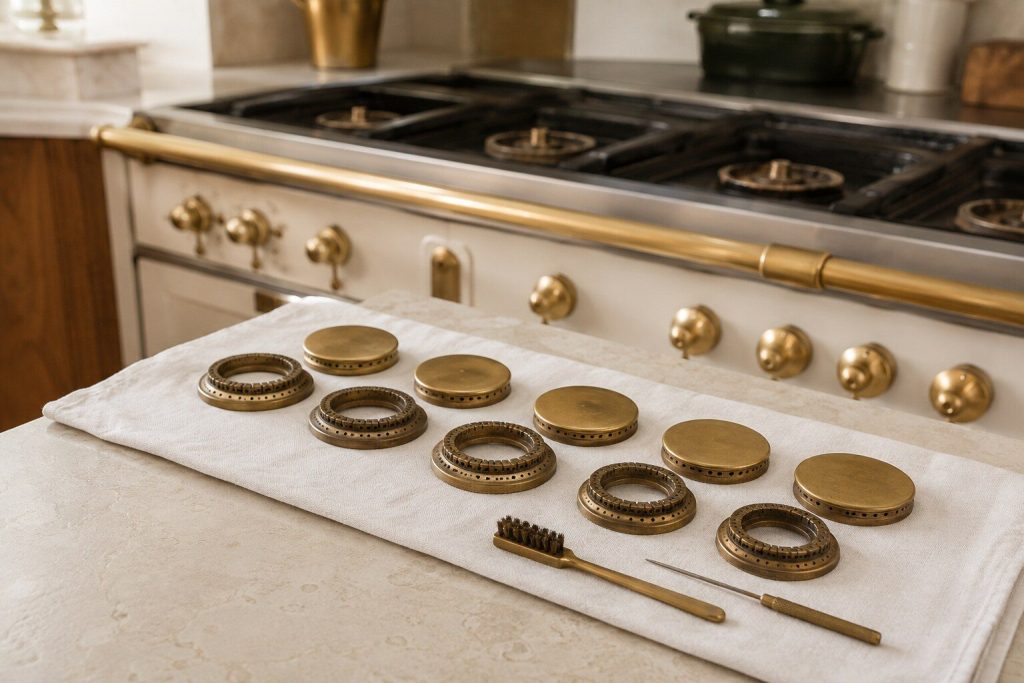
from $195 Appliance maintenance
An annual visit that exists because most of what goes wrong on this make goes wrong slowly. Burners drift rich, thermostats drift hot, baffles saturate, brass tarnishes, and the owner adapts to every one of them without noticing. This is the visit that measures instead of adapting.
- Burner combustion and oven calibration checked against specification
- Baffle filters, duct flow and blower condition on the hood
- Enamel, trim and seals inspected while they are still repairable
-
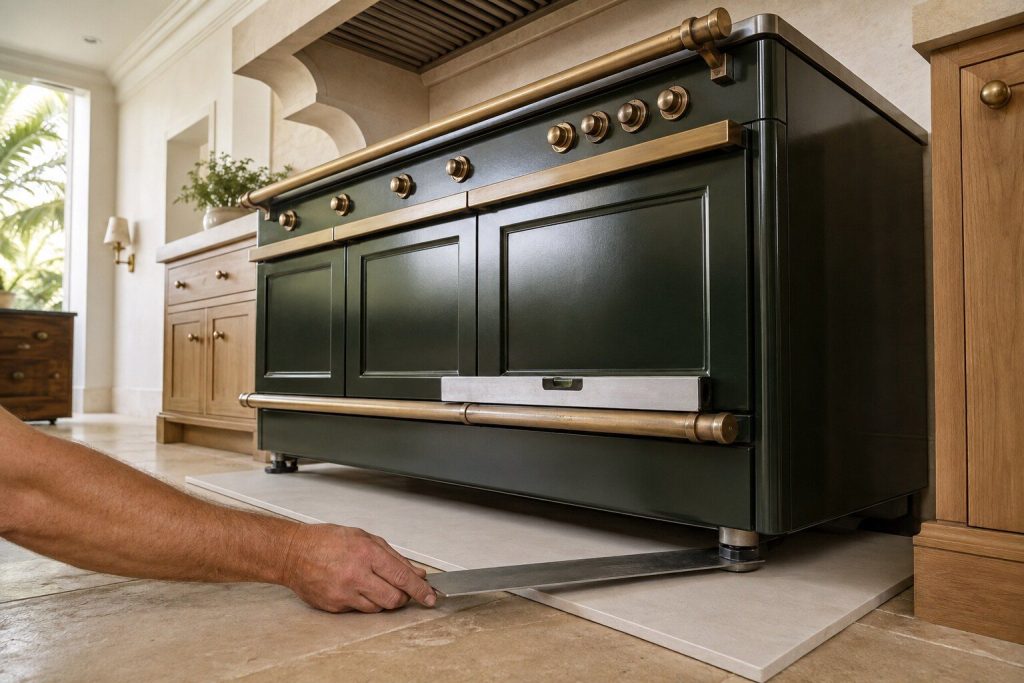
from $295 Appliance installation
A Château is delivered in a crate that can weigh 1,320 lb and is leveled to a specification, not to a spirit level held by eye. Installation covers gas, electrical, leveling, hood duct and the first-use check — and it covers the paperwork, because altitude, fuel type and voltage are specified at order time and have to match what is actually in the house.
- Gas and electrical to the maker's own requirements document
- Leveled to specification — a dish of water sits at one depth all over
- First-use check, and the hood duct measured rather than assumed
-
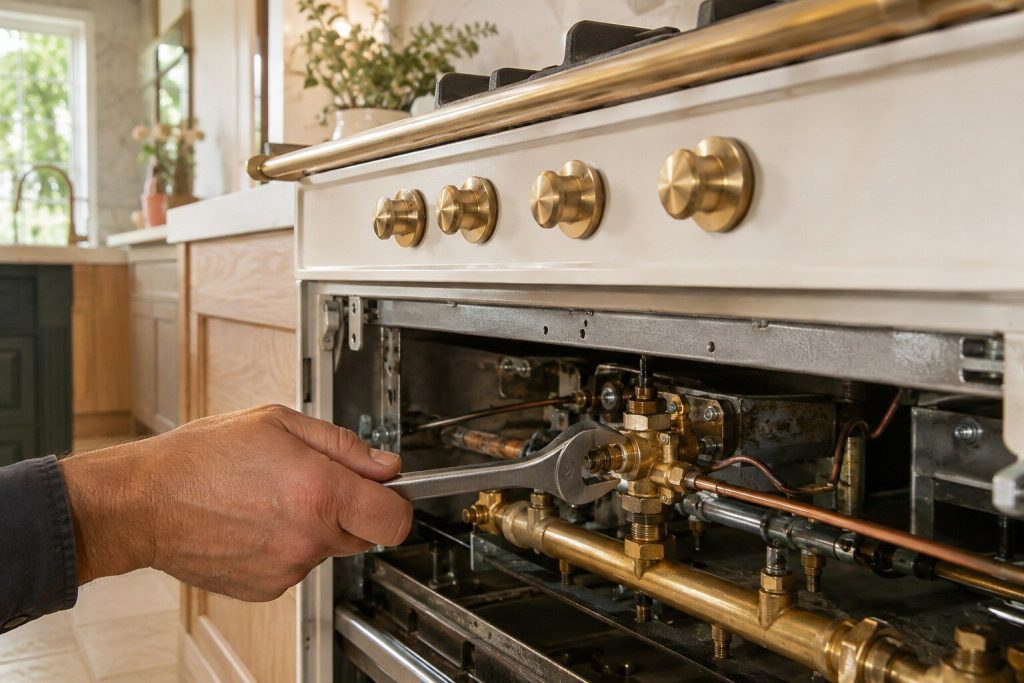
from $265 Gas valve and thermocouple repair
The safety chain: a valve that will not hold open, a thermocouple that no longer tells it to, a knob that has gone stiff or will not shut off cleanly. This is the part of a gas range where nothing gets improvised and nothing gets left half-diagnosed.
- Safety valve and flame supervision tested as a system
- Stiff or leaking knob valves rebuilt or replaced, never lubricated over
- Leak-checked at every joint that was opened
-
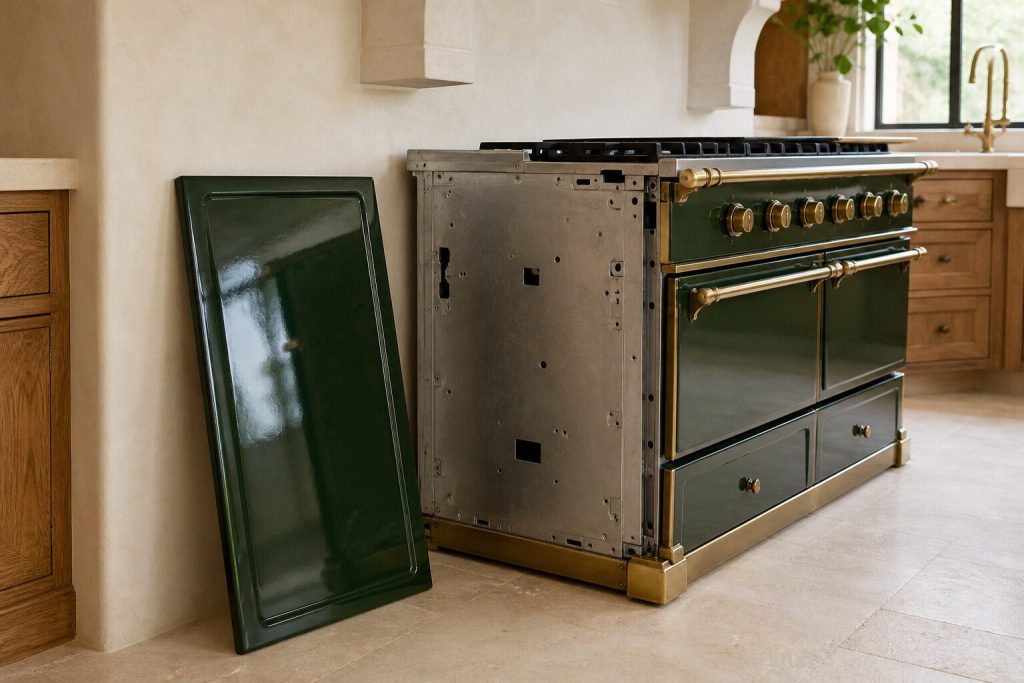
from $265 Enamel panel and trim service
Vitreous enamel is glass fused to steel and about fifty colors of it were available at order time. A chip is not cosmetic in this climate — the steel under it rusts outwards — and a tarnished brass handrail attacked with the wrong product loses its lacquer along with the tarnish.
- Chips stabilized or the part ordered in the range's own color reference
- Brass, copper, nickel and chrome trim treated by what they actually are
- Clear-coated finishes identified before anything is polished
-
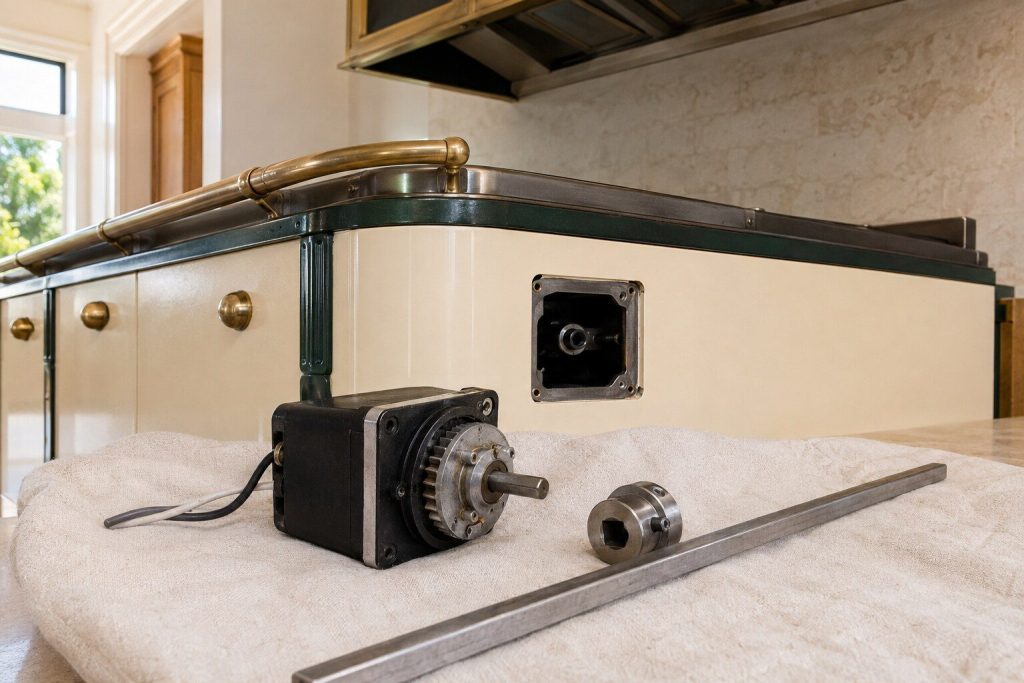
from $285 Flamberge rotisserie repair
The gas rotisserie module: a burner, a motor, a spit and a set of controls, and a module that sits idle for months and is then expected to work on a holiday. Motor failures, a burner that will not light and a spit that will not turn under load are the three calls.
- Motor and gearing tested under a loaded spit, not empty
- The rotisserie burner treated as its own gas circuit
- Spit, forks and bearings checked for the wear that stops rotation
-
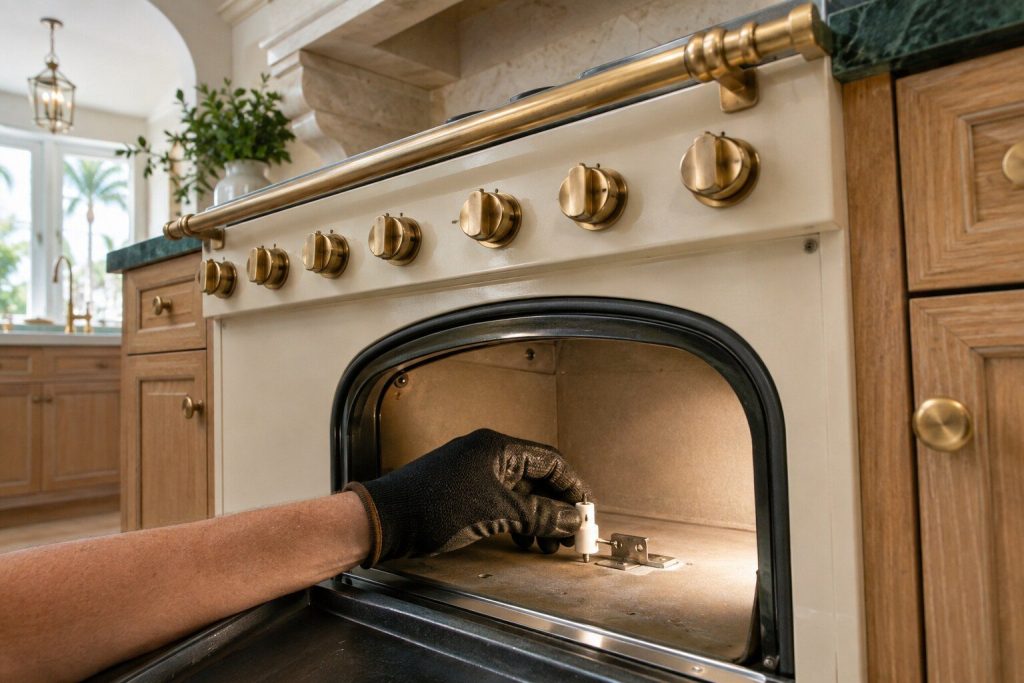
from $275 Vaulted gas oven ignition repair
The vaulted gas oven has no display, no window and no error code — La Cornue's own Château guide contains no troubleshooting section at all. So an oven that will not light is diagnosed the way gas has always been diagnosed: igniter, safety valve, thermocouple, supply, in that order and with instruments.
- A glowing igniter that never opens the valve is the classic failure here
- Safety valve and flame supervision measured rather than swapped
- Same-day priority — an oven that smells of gas is not a next-week call
-
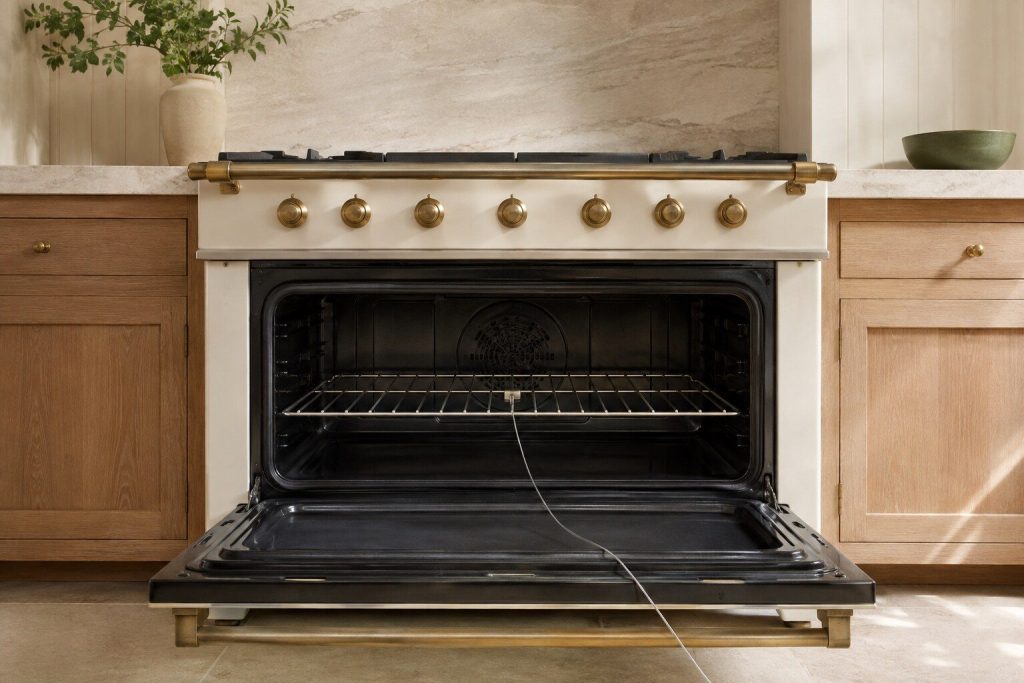
from $185 Oven thermostat calibration
An oven that has drifted hot over years, and a cook who has quietly rewritten every recipe around it. The manual is explicit: an oven that gets hotter as the range ages and does not come back when the dial is turned down wants a thermostat, not a new habit.
- Measured with a calibrated probe through a full cycle
- Drift distinguished from a vaulted oven's designed unevenness
- The owner warned that a corrected oven changes their cooking
-
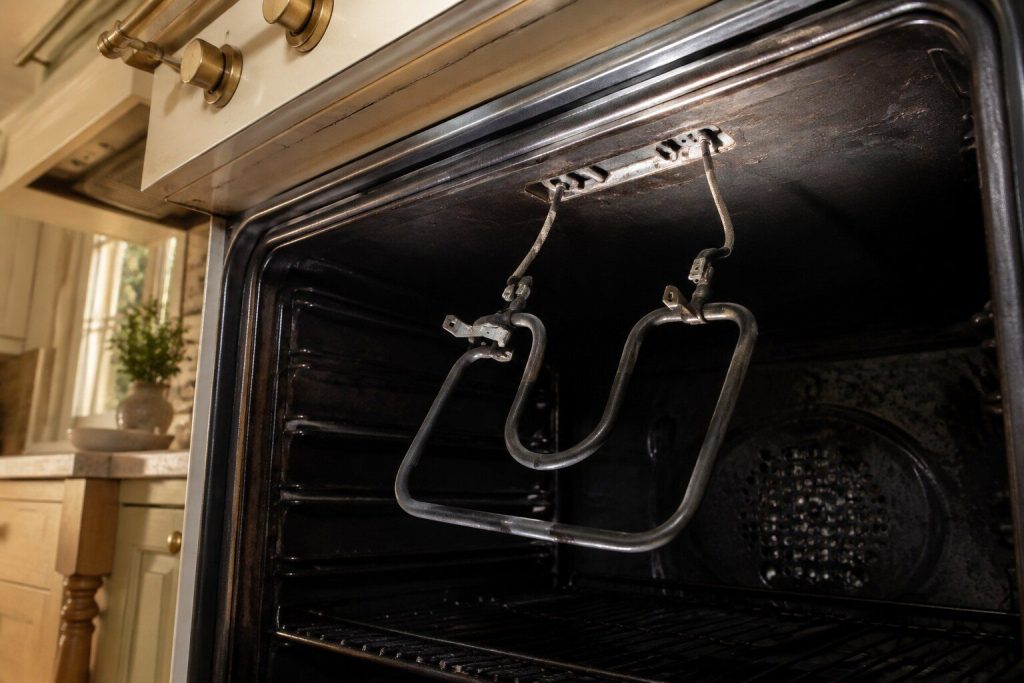
from $255 Oven element and broiler replacement
Every vaulted gas oven on this make carries an electric broiler above it, and the electric ovens are elements throughout. That means a range can lose browning and keep baking perfectly, or the reverse, and the two are separate parts.
- Bake and broil are separate circuits and separate failures
- Elements measured cold and under load
- Element supports and terminals checked, because that is where they burn out
-
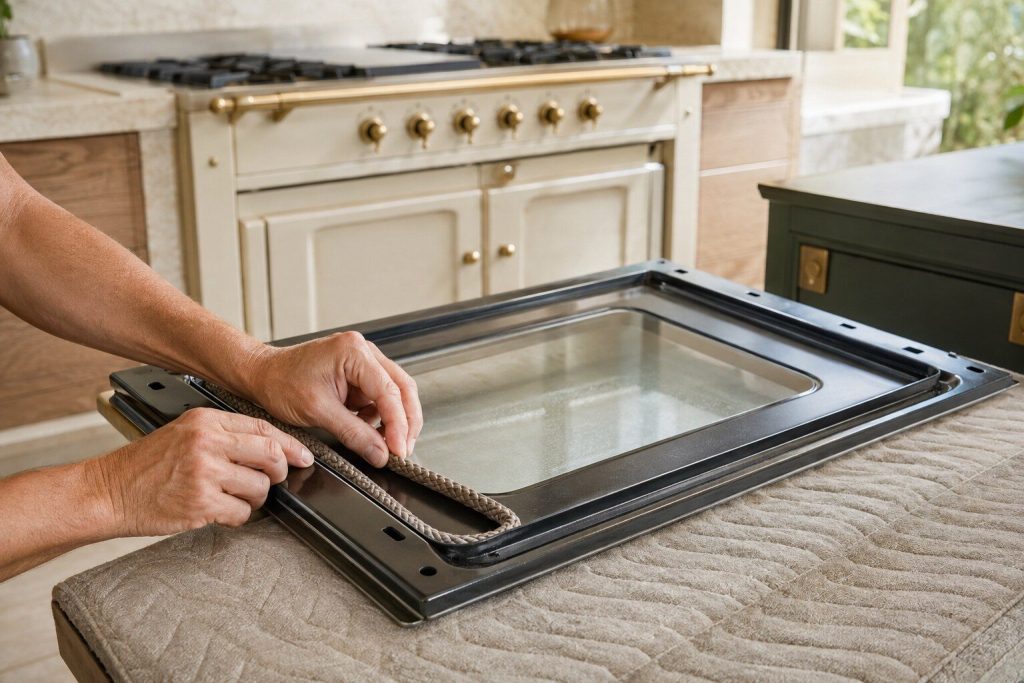
from $215 Oven door seal and hinge service
On a vaulted oven the door is part of the cooking mass, and a seal that no longer pulls onto its frame turns into a cooking complaint rather than a visible leak. Long preheats, a cool front shelf and browning on one side all start here.
- Seal, catch and hinge adjusted as one system
- Door pull measured, not judged by how it sounds
- Heat loss confirmed before and after
-
from $265 Wall oven repair
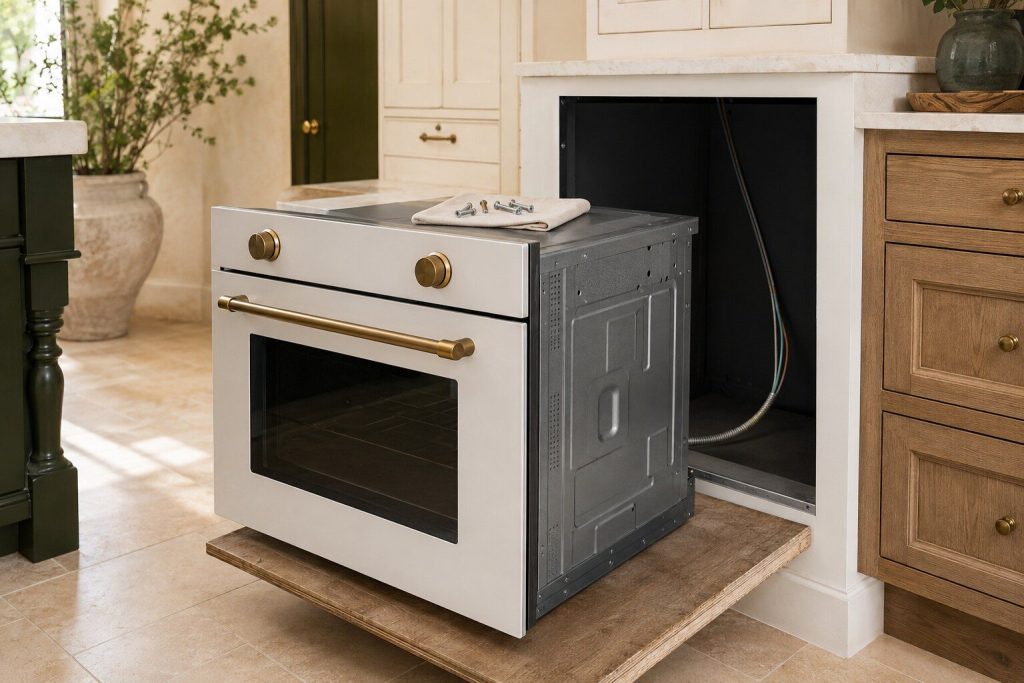
The Château Tourelle, F60 and F75, is fully electric and multifunction, built into a cabinet run to a cutout specification and served by its own installation guide. It fails the way a good electric oven fails — elements, fan, sensor, board — and it is not the range's oven.
- Pulled forward as a planned step, to the cutout it was fitted to
- Elements, convection fan, sensor and board measured separately
- Told apart from the range oven before the visit, so the right parts arrive
-
from $235 Convection fan repair
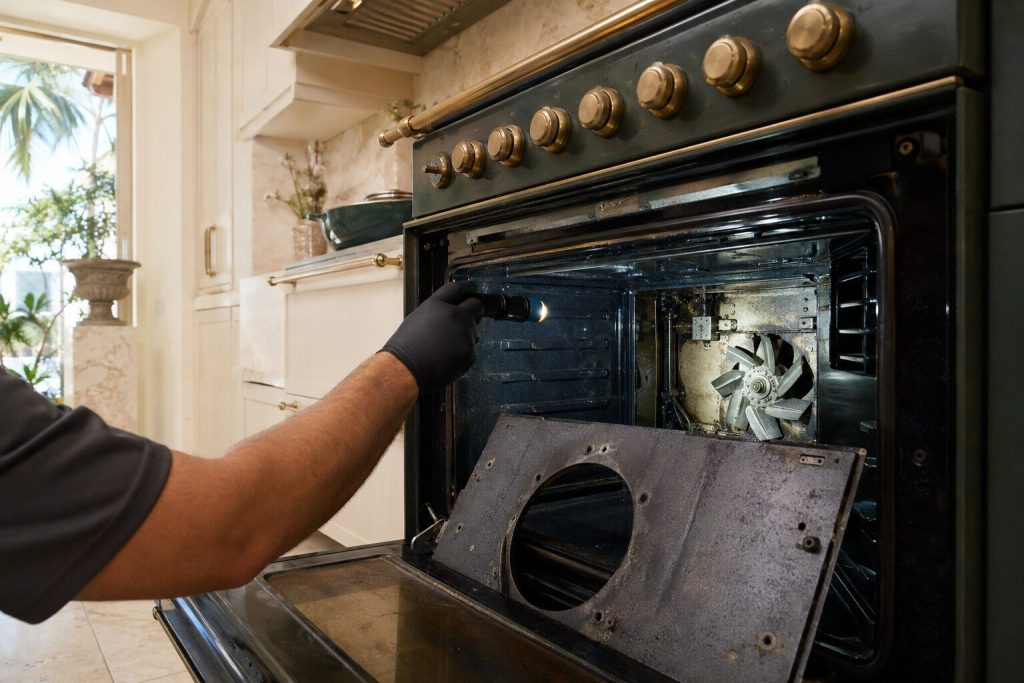
The electric and multifunction ovens use a fan, and the noise it makes changes as the oven heats — which the manual says is normal. A fan that rumbles, ticks, slows or stops is not normal, and it takes the oven's evenness with it.
- Bearing noise separated from the normal change in note
- Motor tested at temperature, because that is when it fails
- Blade and housing checked for the contact that causes ticking
-
from $345 Appliance control board repair
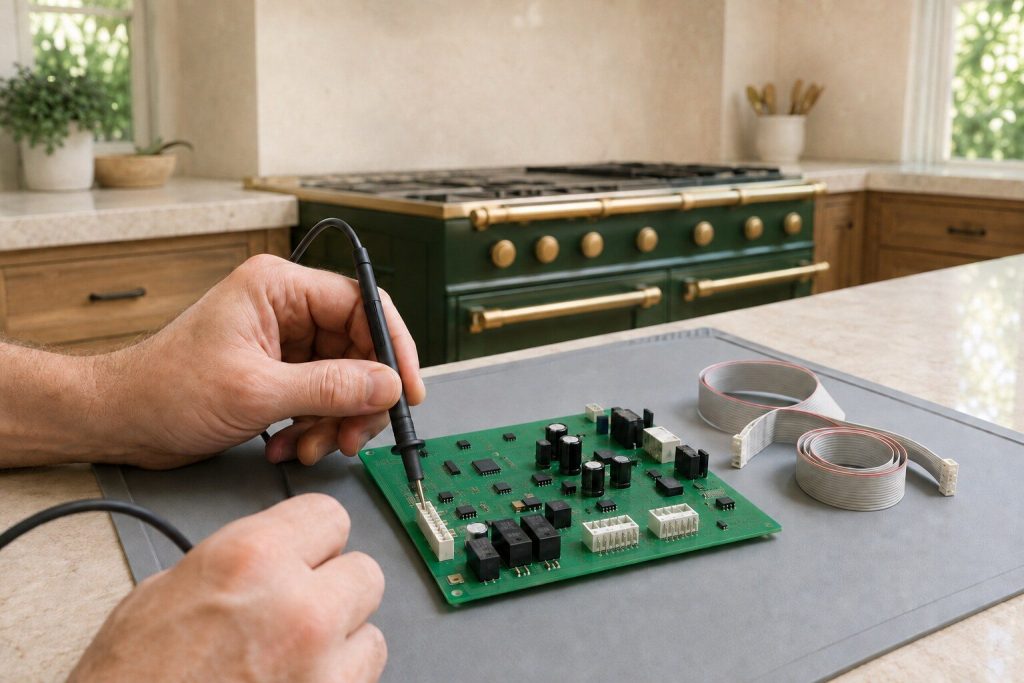
Only part of this make has electronics at all, and where it does — induction generators, multifunction oven controls, the Tourelle, motorized hood controls — a board is the last suspect rather than the first. An Er code and a measured failure send us here; an unexplained symptom does not.
- Supply, sensors and loads eliminated before a board is blamed
- Er numbers documented and quoted, since only the maker's own board clears them
- Lead time stated up front on a hand-built appliance
In more detail
About La Cornue ovens
Three ovens, one badge
A Château 120 and everything larger is dual-fuel: a vaulted gas oven with an electric broiler on one side, a vaulted electric oven with its own broiler on the other. The grand versions are 3.1 cubic feet on the gas side at 13,000 BTU and 2.7 cubic feet electric; the standard vaulted ovens are 2.3 cubic feet at 11,000 BTU and 2.0 cubic feet electric. A range ordered with an all-induction cooktop has electric ovens on both sides, without exception — that is a rule on La Cornue's order form, not a preference. And since November 2025 there is the Château Tourelle, F60 and F75, a fully electric multifunction wall oven meant to be installed in a cabinet run beside a Château cooktop. Four ovens, three heat systems, one nameplate. The first useful thing a customer can tell us is which one they mean.
Vaulted ovens and convection ovens are two different appliances
A vaulted oven — the voûte — is a sealed dome that cooks by radiant heat from its own mass, with no fan, and on the gas side no window because the door is part of that mass. It is slow to come up, it holds beautifully, it recovers slowly, and it is graded rather than even on purpose. A convection oven is what the CornuFé models and the Château Tourelle carry: elements, a fan and a mode dial — the CornuFé 90’s oven has seven cooking modes, two convection fans and eight heating elements across 3.81 cubic feet. Their failures have almost nothing in common. A vaulted gas oven fails at the igniter, the thermocouple or the safety valve; a convection oven fails at an element, a fan bearing, a sensor or a board. The most useful thing a booking can say on this make is which of the two it is about.
What a vaulted oven asks of a technician
Radiant cooking inside a sealed dome means the oven has no fan to blame and no window to look through, and it means the mass of the cavity is part of the cooking. A repair that leaves the door seal slightly proud, or the door catch a turn out of adjustment, shows up a week later as a cooking complaint rather than as a leak. The gas ovens are lit and held by an igniter, a safety valve and a thermocouple, all reachable from the front; the electric ones are elements, a thermostat and, on the multifunction platforms, a board. None of it self-reports. Everything is measured — gas pressure at the manifold, resistance across an element, actual shelf temperature against the dial — because on a make with no diagnostic display, measurement is the only alternative to guessing.
The parts that are worth waiting for
La Cornue is hand-built in Saint-Ouen-l'Aumône and a genuine part sometimes has to come from France. We would rather tell you that on the phone than after the visit. Igniters, thermocouples, safety valves, elements, thermostats, door seals, oven lamps and the common hardware we stock or source domestically, and those are same-week jobs. A vaulted cavity component, a color-matched enamel panel or a control specific to one configuration is an order with a lead time, and on an appliance built to order that is the trade the owner already made once. What we do not do is fit a generic substitute into a range that cost more than a car and call it repaired.
This article is based on:
- Official manufacturer documentation
- Internal repair procedures
- Technician repair history
- Company quality standards
Before you book
Questions about La Cornue ovens
The oven reaches temperature but everything browns on one side.
On a vaulted oven, some of that is the design. Heat radiates from the dome and the strongest zone is not the geometric center, so La Cornue's own cooking notes tell owners to turn a large roast during cooking and to leave room between two loaded shelves. Before anybody replaces anything we check the three things that make it worse than designed: whether the range is level, because a dish of water on the shelf should sit at one depth all over; whether the door seal is intact and the catch is still pulling the door onto it; and whether a baking tray larger than the specified size is blocking the circulation the oven does have. That is a fifteen-minute check that has saved a lot of unnecessary parts.
It used to hold 350 and now it runs hot. Is that the thermostat?
Most often yes, and the manual says as much: an oven that gets hotter as the range gets older, and does not come back when you turn the dial down, wants a new thermostat rather than a new habit. We measure it before we say so — a calibrated probe on the shelf, through a full cycle, so the number in the report is a number rather than an impression. The reason it matters on this make is that owners adapt: a range that has run 25 degrees hot for three years has a cook who has quietly rewritten every recipe around it, and putting the oven back to specification changes their kitchen. Worth knowing that is coming.
My gas oven will not light and there is no error on the panel.
There is no error on the panel because a Château gas oven has nothing to print one with, and that is normal for this make rather than a sign the electronics are dead. La Cornue's own Château guide contains no error codes at all. So the diagnosis is done the way gas has always been diagnosed: does the igniter glow, does it glow strongly enough to open the safety valve, does the thermocouple hold the valve once it is open, and is the valve itself passing gas. A glowing igniter with no flame is the classic one and it is a part we carry. Please do not keep cycling it and do not leave the door shut on an oven that smells of gas — turn it off at the valve and call.
Does the Tourelle wall oven get serviced like the range oven?
No, and it is worth being clear about it because the badge is the same. The Tourelle is fully electric and multifunction — elements, a fan, a sensor and a control board — so it fails the way a good electric oven fails, and its installation guide is a separate document from the range's. It is also built into cabinetry to a cutout specification, which means pulling it forward is a planned step rather than something to do in the first ten minutes. If you have both a Château and a Tourelle, tell us which one is the problem when you book; the parts we bring are not the same.
Where we do it
Across Miami-Dade, Broward, and Palm Beach
Same terms everywhere we go: an on-site diagnostic first, the price agreed in writing, and the exact figure confirmed once we have seen the unit.
Neighborhoods people ask for by name