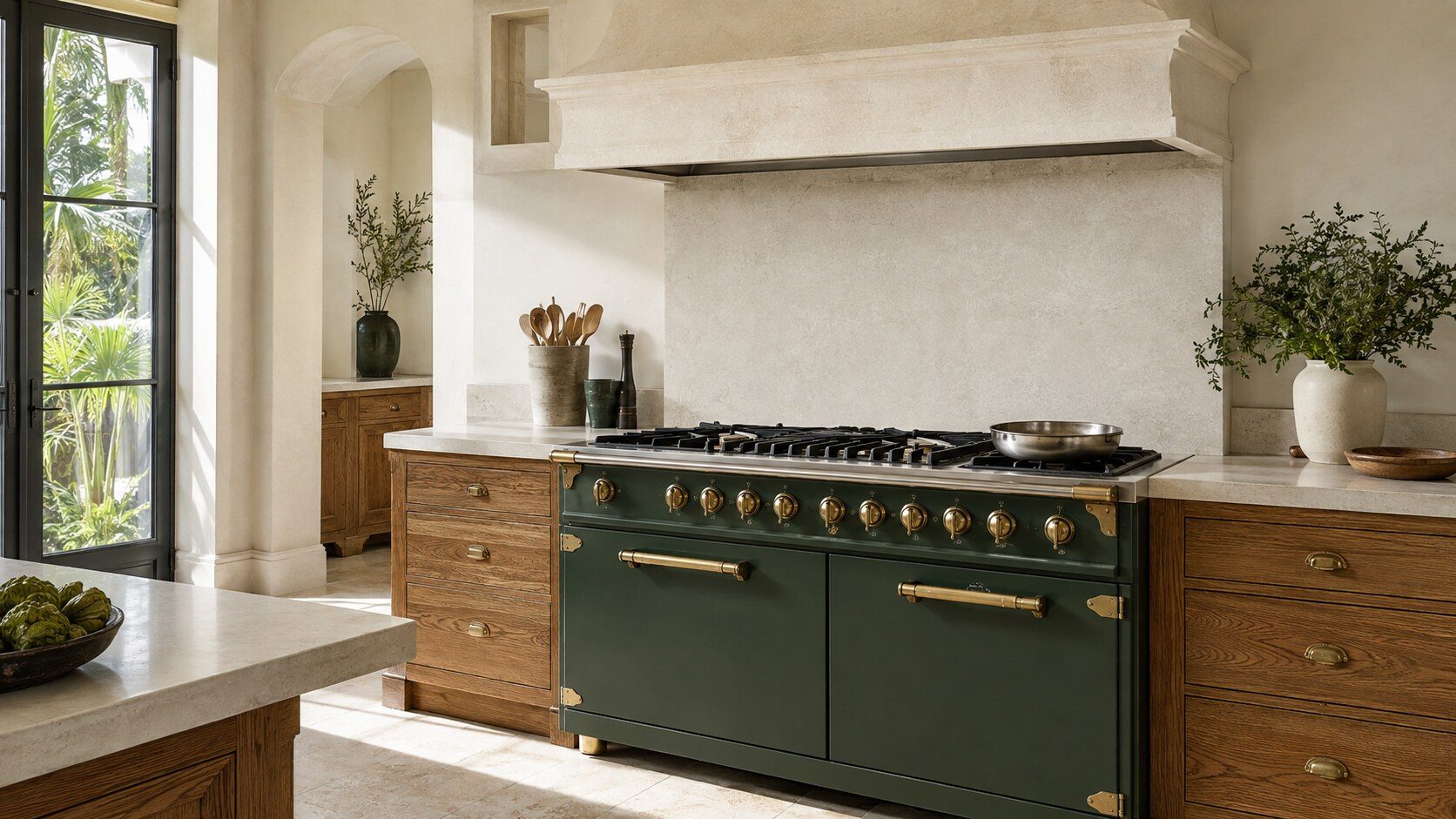
The gas half of this line has no diagnostic system whatsoever: no display, no code, no stored history. The Château installation and user guide contains no troubleshooting section, and neither does the Tourelle guide. Only the induction electronics report anything, and they report exactly three things. So the observable behavior is the entire diagnostic path here, and a page that describes it properly is worth more than a code list would be.
21 symptoms · 5 appliances
A La Cornue stove not lighting, and twenty other things it does without explaining itself.
On most makes the symptom pages are a way in and the code pages are the diagnosis. Here it is the other way round. La Cornue publishes three error codes in its entire US documentation and its Château guide has no troubleshooting section at all, so these twenty-one pages carry the whole diagnostic side of this site — and they are written for somebody standing in front of the range rather than for a search box.
- 21 symptoms, each with its likely causes
- 3 error codes in the whole make
- 0 phrases in this make's search demand contain the word error
- from $95 diagnostic, credited to the repair
Start from the behavior
What it is doing, and what that usually means
Each page separates the design from the problem first, because a vaulted oven is uneven on purpose and an H on the hob display means the zone is still hot.
-
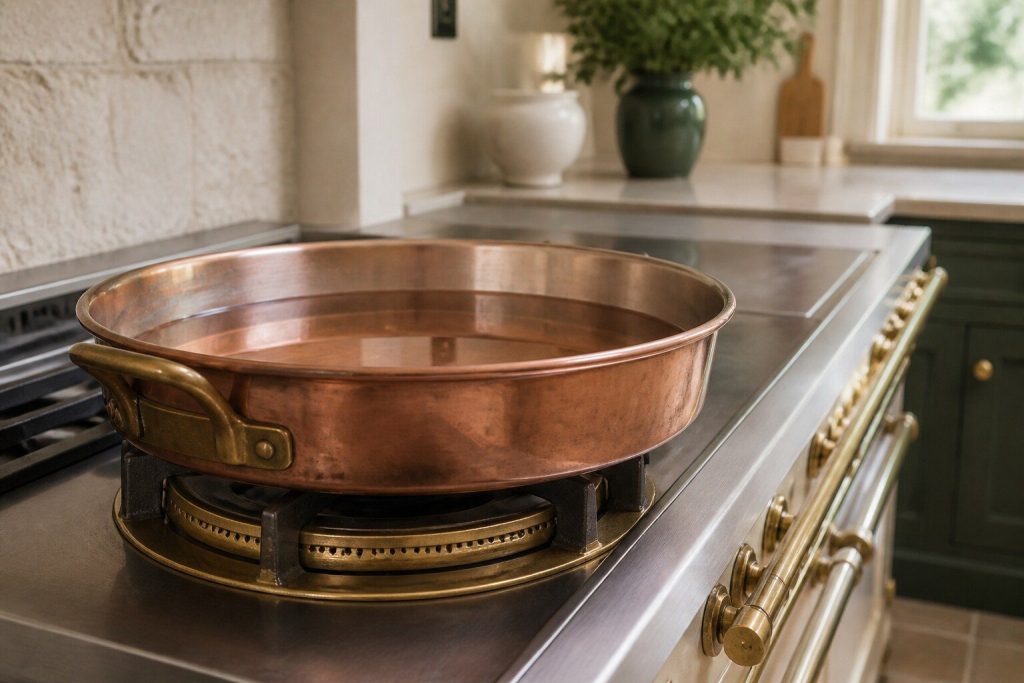
No flame, and no obvious reason Burner will not light
One burner dead while the others work is a different problem from a whole top that will not light, and the two are worth separating before anybody calls anybody. On brass burners in a humid kitchen the single dead burner is nearly always the electrode or the ports; a whole top points at the ignition module or the gas supply.
- One burner out is that burner — not the module
- All of them out is ignition or supply, and it is quick to tell
- Never hold the knob in while it clicks
-
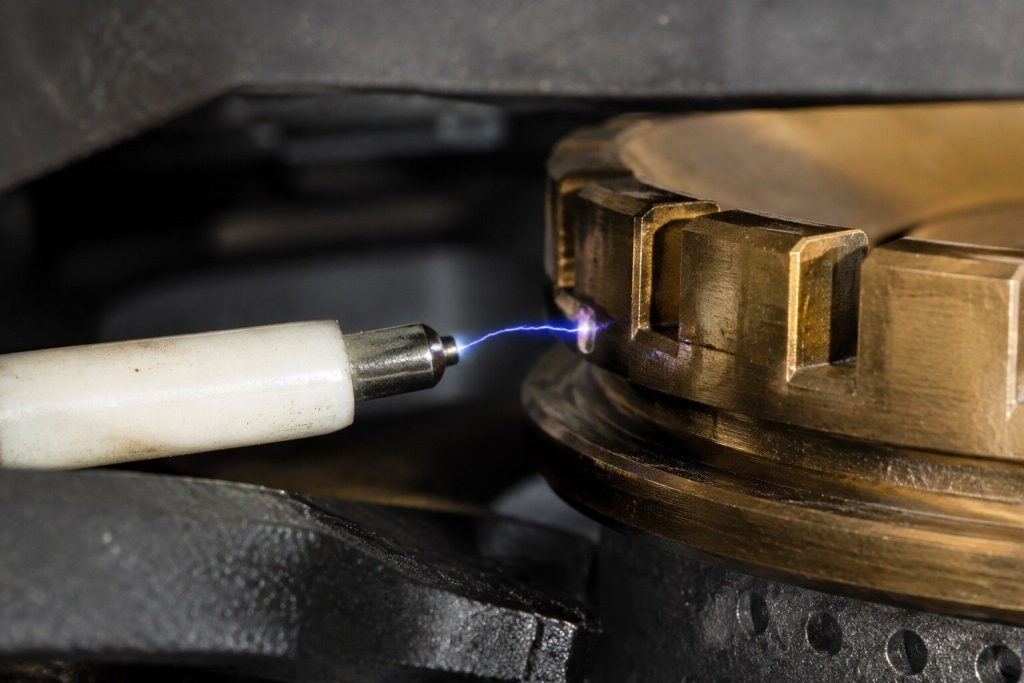
The spark is there and the flame is not Burner clicks but will not ignite
Continuous clicking with no flame — or clicking that carries on after a burner has lit — is one of the two or three most common calls on any gas range, and on this one it has a short list of causes. It is also the symptom people live with longest, and it should not be: every click is unlit gas.
- Clicking after ignition is usually a wet or dirty electrode
- Clicking on every burner at once points at the module
- It is a small part and a same-visit job in most cases
-
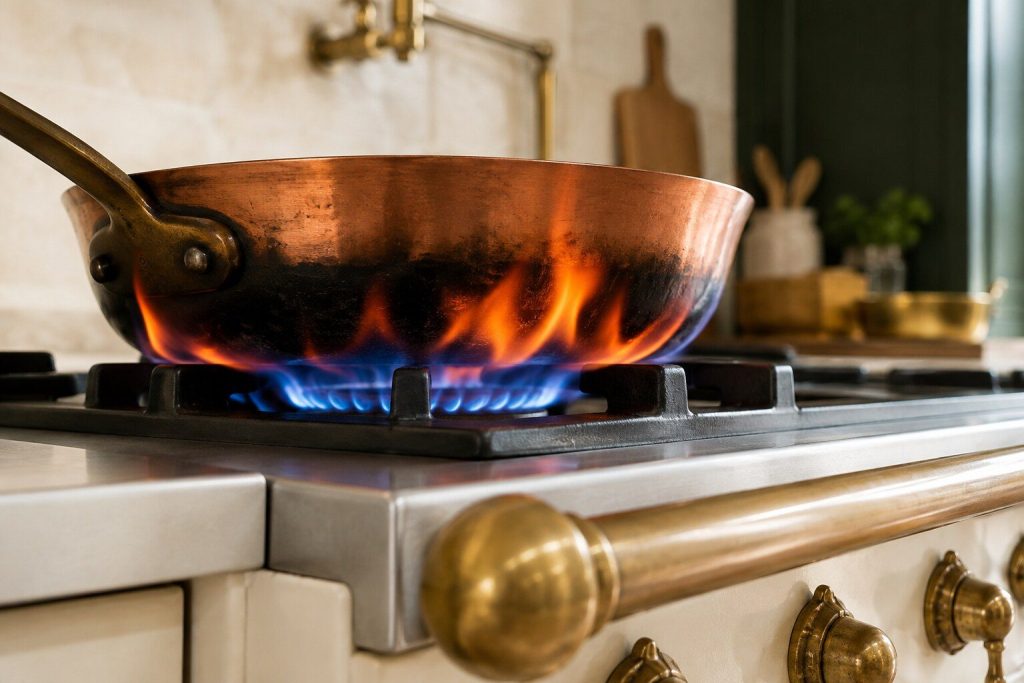
The flame is the wrong color Yellow or orange flame
A gas flame on this range should be blue with a defined inner cone. Yellow or orange tips, soot on the bottom of a pan and a smell of unburnt gas mean the air-to-gas mixture is wrong, and on a range that has moved house or changed fuel that has a specific and common cause.
- Blue is correct — yellow is an air, fuel or orifice problem
- A bad propane conversion is the leading cause on a relocated range
- Soot on a pan bottom is the symptom people notice first
-
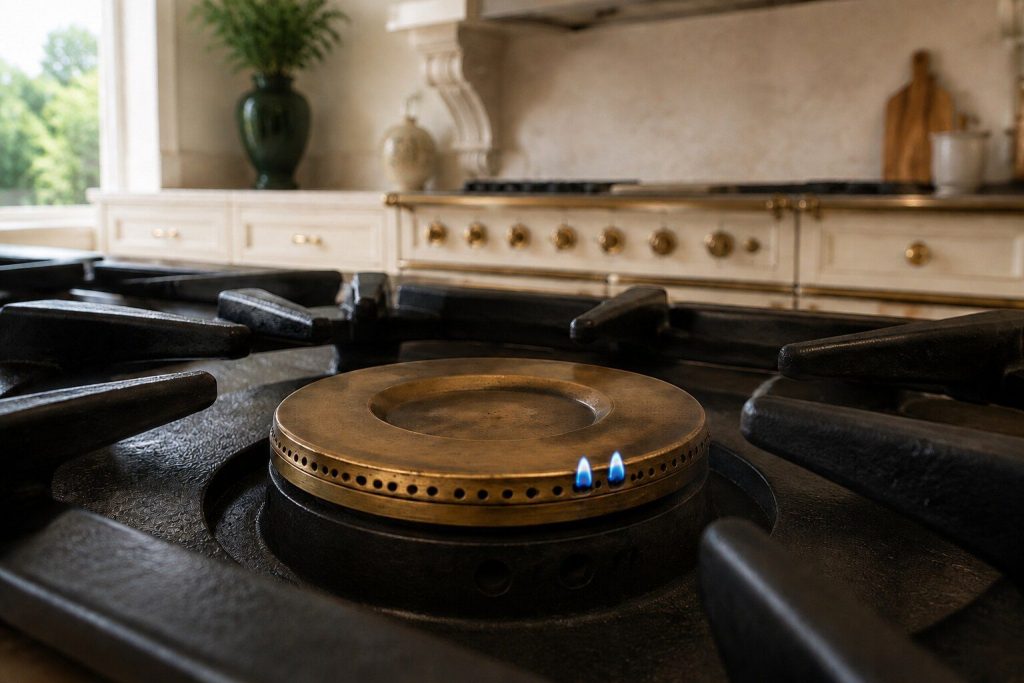
It lights and then goes out Burner will not stay lit
A burner that lights while the knob is held and dies when it is released is a flame supervision failure, and it is the same problem whether it happens on a surface burner or in the oven. The safety system is doing what it exists to do; the reason it no longer trusts the flame is what needs finding.
- The safety chain is working — it just no longer sees the flame
- Thermocouple, then valve, in that order
- An oven that does this is a same-day call
-
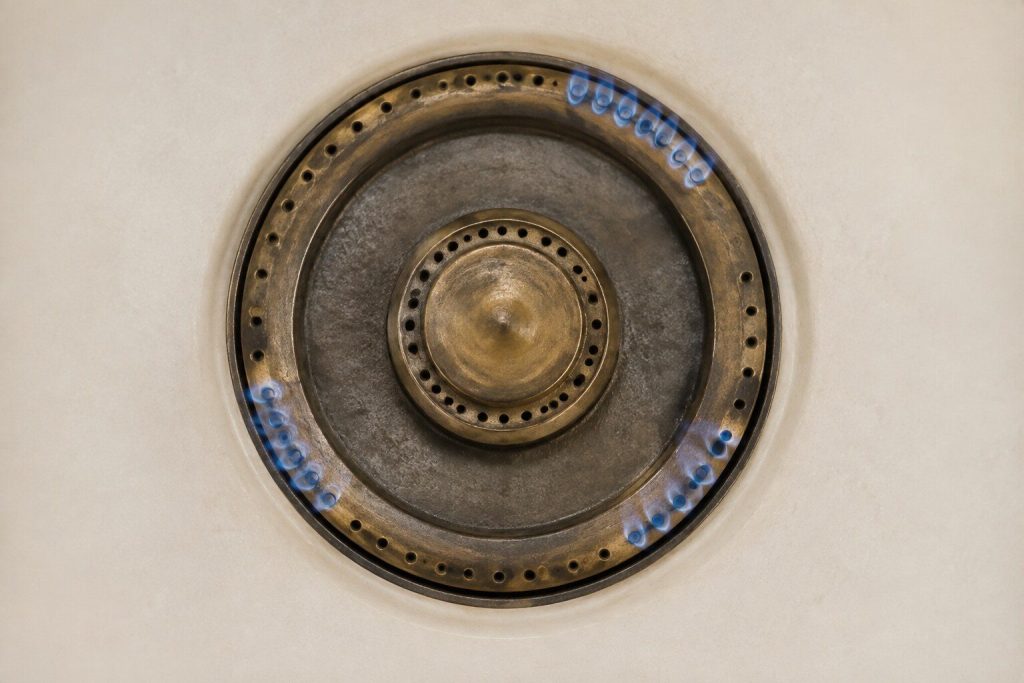
It lights, but there is no heat in it Weak or uneven flame
A burner that lights cleanly and produces half the heat it used to, or a flame that is tall on one side of the crown and absent on the other. On a range whose front burners are rated at 17,000 BTU and whose power burner is rated at 22,000, a weak flame is not a small loss — it changes what the range can do.
- Uneven around the crown is ports or a misseated cap
- Weak on every burner is supply pressure or a regulator
- The plaque burner is the one nobody notices has weakened
-
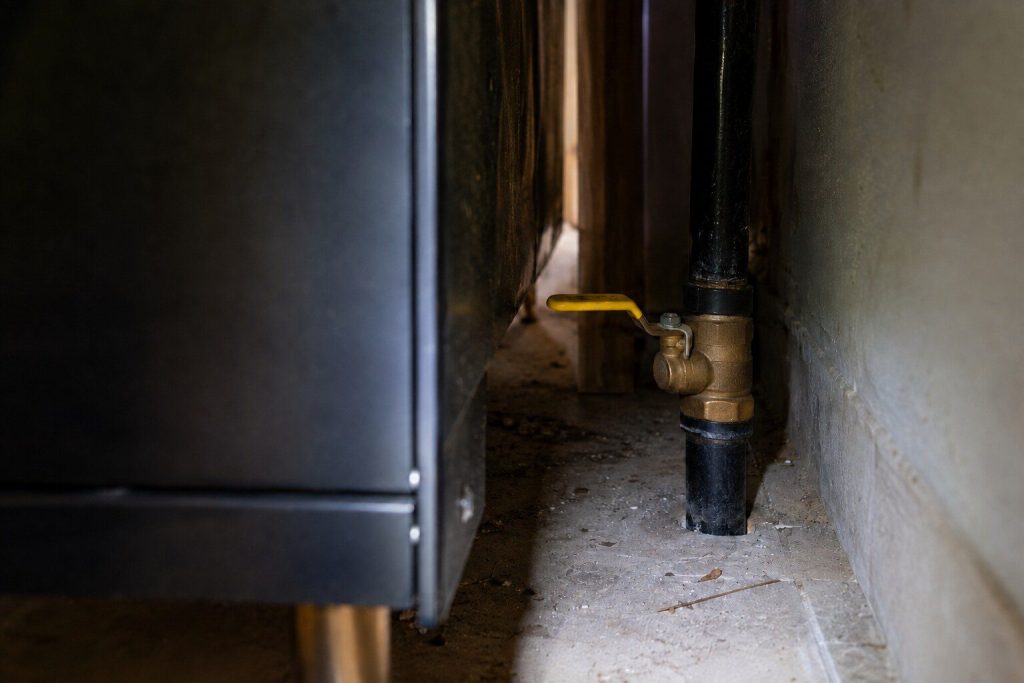
Stop and read this first Gas smell in the kitchen
A smell of gas is the one symptom on this site with instructions rather than a diagnosis. Turn the range off at its shut-off valve, open windows, do not operate switches or the hood, and get everyone out if the smell is strong. Then call the gas utility or 911 first and us second.
- Utility or 911 first, appliance repair second
- Do not operate switches, the hood or a phone in the room
- A faint smell only while lighting is a different matter from a persistent one
-
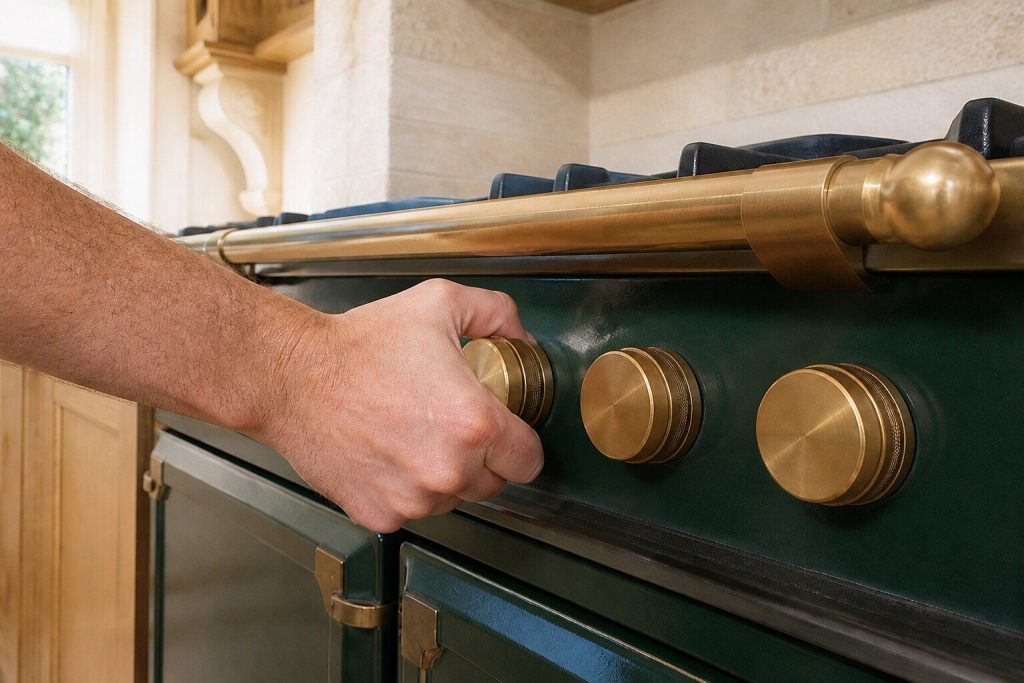
It turns, but not easily Stiff or stuck burner knob
Brass knobs on mechanical valves, used several times a day for years in a humid kitchen. Stiffness is the early warning and it is worth acting on: the failure mode of a stiff valve is not that it becomes hard to turn, but that one day it stops where it is.
- A stiff valve is failing, not dry
- A knob that will not return cleanly to off is urgent
- Every valve gets worked, not only the one complained about
-
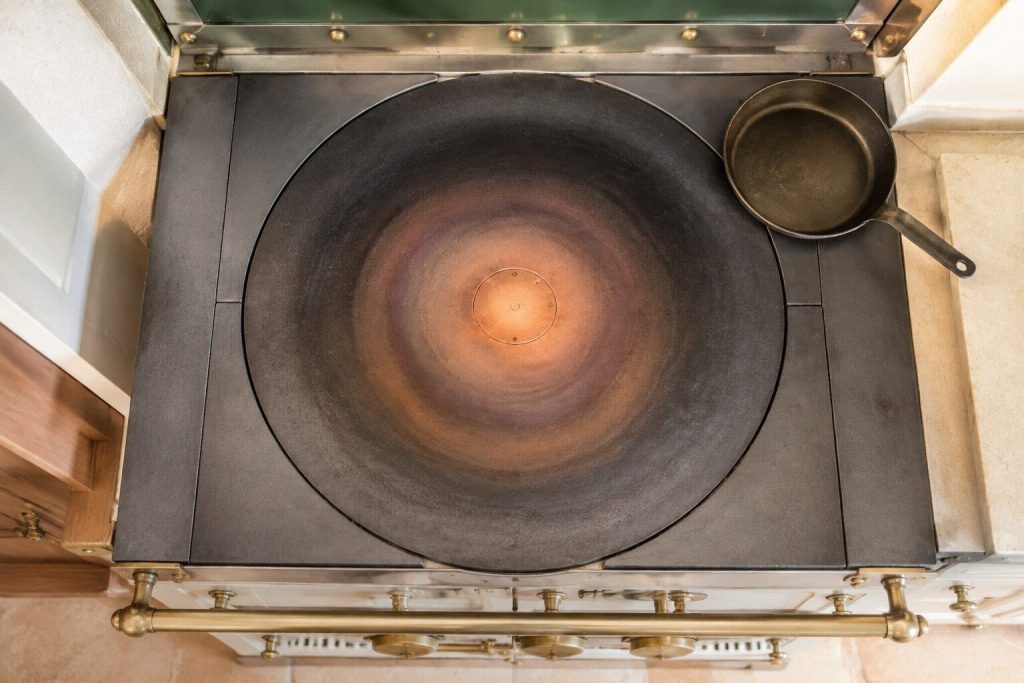
The plaque has cold areas French top heats unevenly
The plaque coup de feu is meant to be uneven — hottest directly above its single burner and cooler as you work outwards, which is the whole point of cooking on one. What is not meant to happen is a cold center, a dead quarter, or a plate that no longer reaches the temperature it used to.
- Graded heat is the design — a cold center is not
- Most plate complaints start with the burner underneath
- Rust and scale on the underside change conduction
-
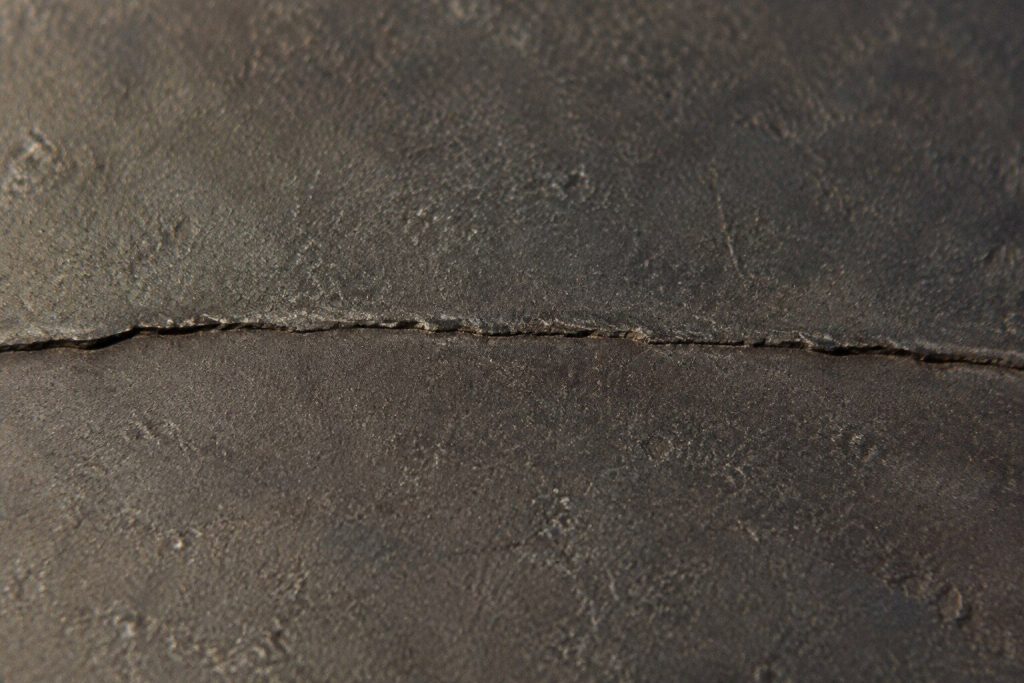
A line across the iron Cracked French top plate
A crack in the plaque is neither cosmetic nor automatically terminal, and the difference matters because a replacement plate is a made-to-order part. Crazing in the seasoning looks alarming and means nothing; a crack through the cast iron changes how heat crosses the plate and can propagate.
- Crazing in the seasoning is not a crack in the iron
- Thermal shock is the usual cause — a wet cloth on a hot plate
- A replacement plate is a made-to-order part, so this gets looked at properly
-
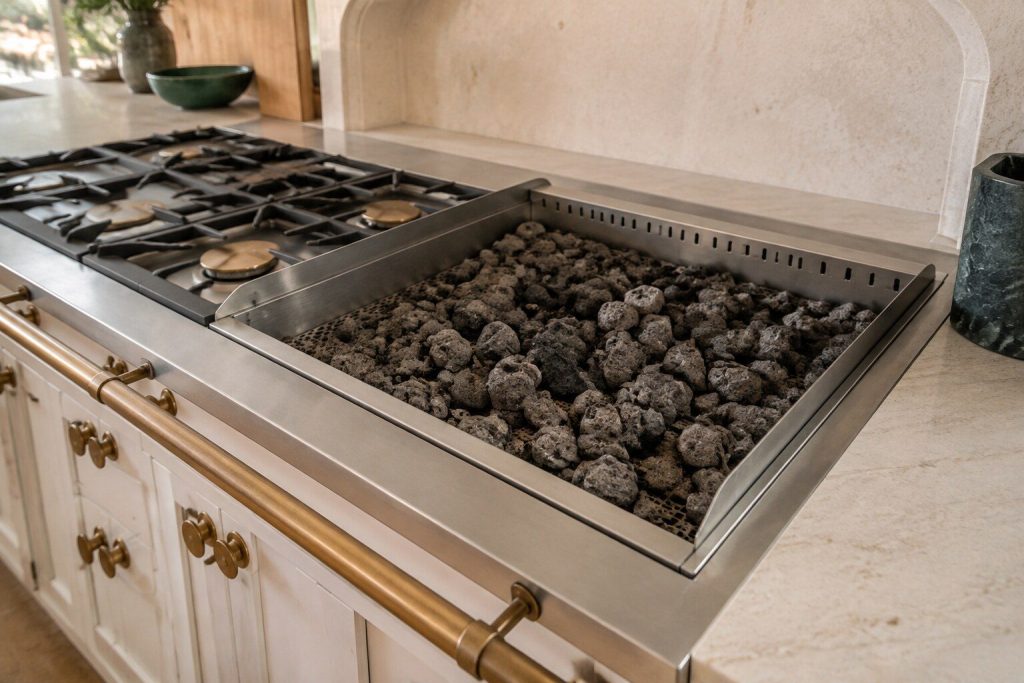
A module that has stopped working Grill or teppanyaki not heating
The lava-rock grill and the electric teppanyaki plate are optional modules, they are used less often than the burners, and they are consequently the ones that turn out not to work on the day somebody planned a dinner around them. They fail for entirely different reasons: one is gas and consumables, the other is an element and a control.
- The grill is gas and lava rock — mostly a consumables job
- The teppanyaki is an element, a sensor and a control
- Both are worth testing before you need them
-
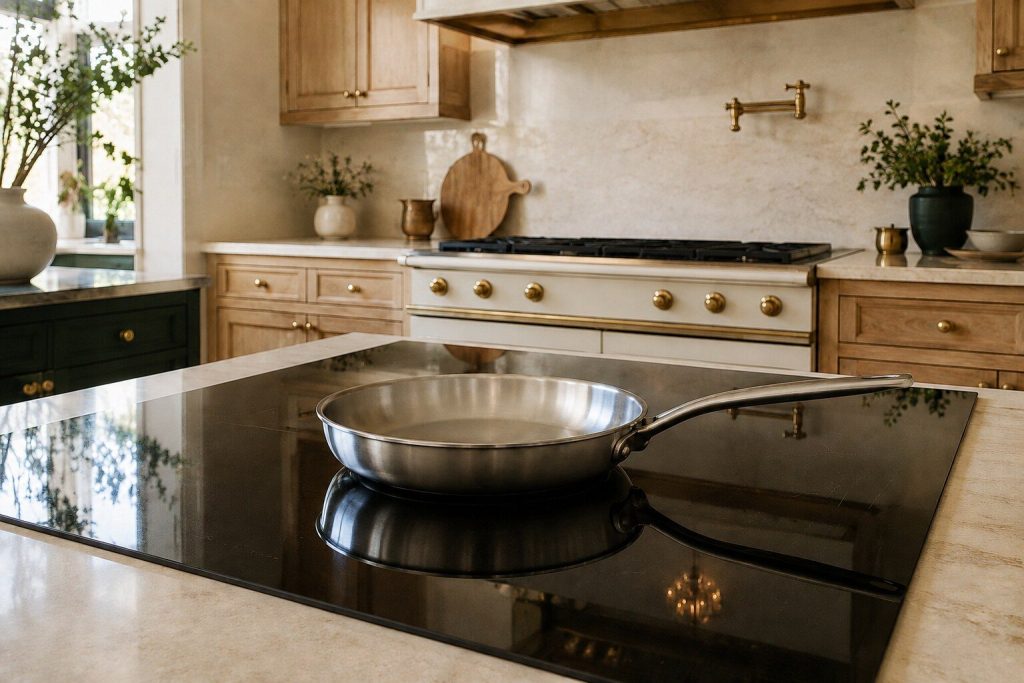
One zone does nothing Induction zone not heating
Before this is a problem it is worth ruling out the two things that are not: a pan that is not induction-compatible, and a pan whose base is smaller than the minimum for that zone. La Cornue publishes those minimums, and a small pan on a large zone will not couple at all — the cooktop is behaving exactly as designed.
- Minimum pan base: 4¾ in front left, 5½ in rear, 8¼ in center
- The pan-missing symbol is an indicator, not a problem
- One dead zone with the others fine is a coil or a sensor
-
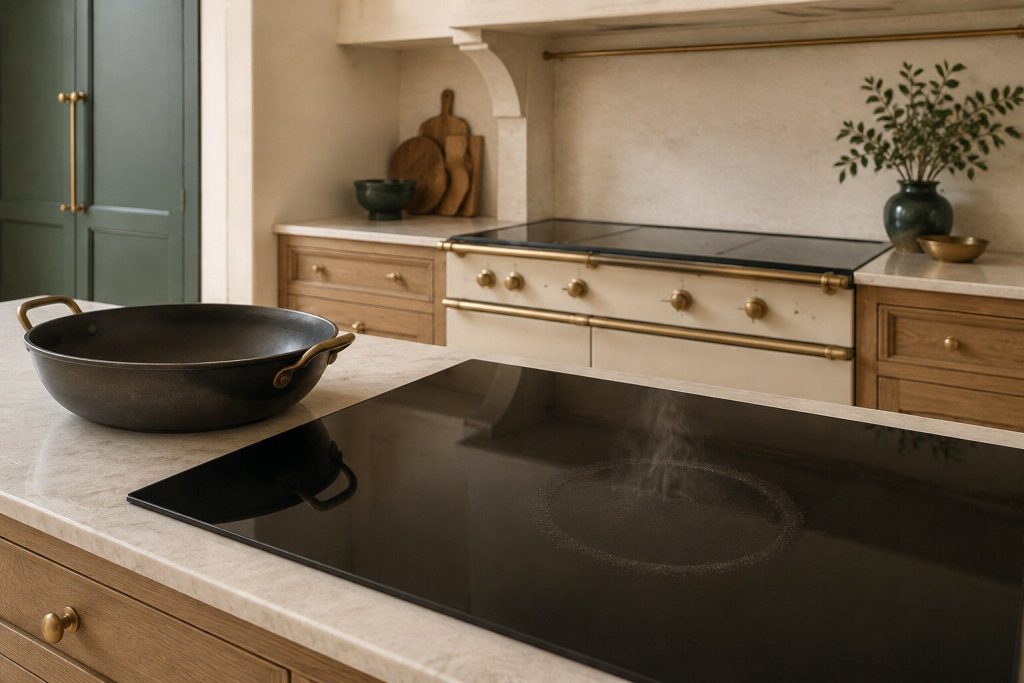
It cuts out under load Induction shows E2 and shuts off
E2 is one of three codes La Cornue prints anywhere in its US documentation, and the manual's own explanation is specific: the electronic unit is too hot. Its first suggestion is not a part — it is to check the installation of the cooker and whether there is sufficient ventilation.
- The maker's own first answer is ventilation, not electronics
- A pan boiled dry produces it too
- Resetting it and carrying on is how a generator board dies
-
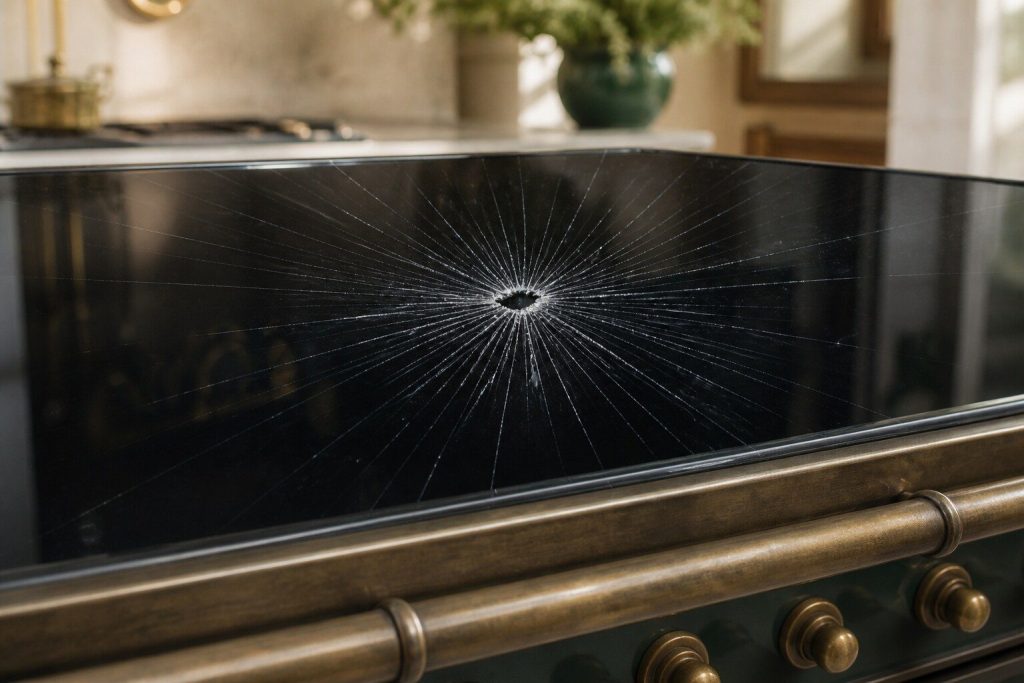
Stop using it now Cracked induction glass
This is the one problem on this appliance with a safety instruction attached, and La Cornue's own guide is unambiguous about it: disconnect the cooker from the power supply immediately and do not use it until it has been repaired. The glass is what separates the coils and the electronics from anything spilled on the surface.
- Disconnect it at the supply — the maker says so, not us
- Do not cook on it, even on the zones that still work
- The replacement panel is ordered to that top's own zone layout
-
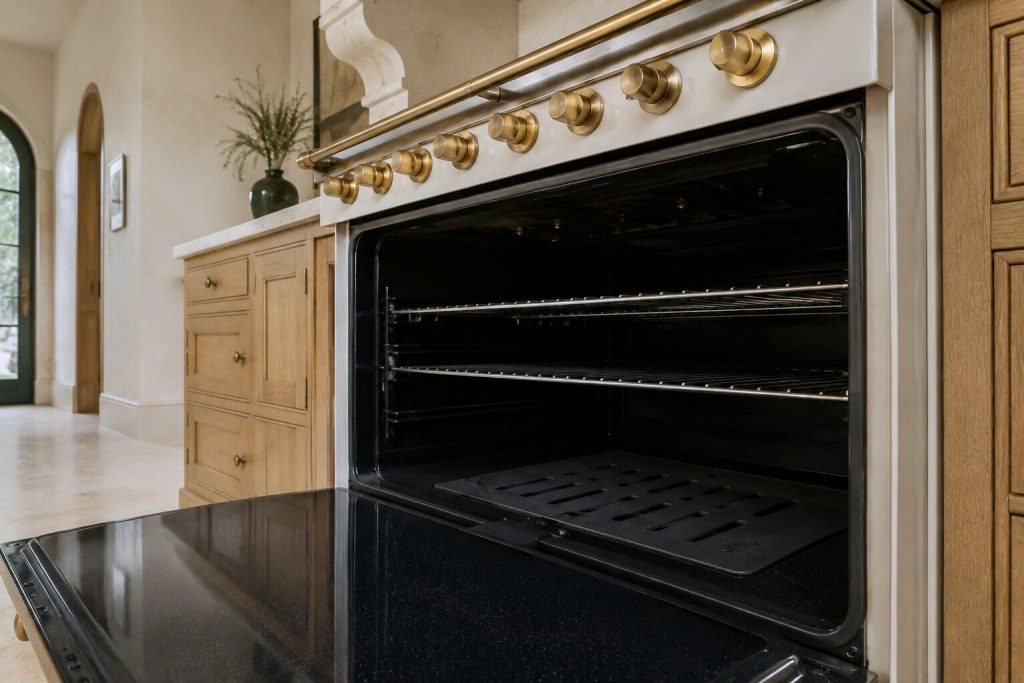
No heat and no explanation Oven will not light
A vaulted gas oven that will not light gives you nothing to work with — no display, no code, no window — because La Cornue's Château guide contains no error codes at all. That is normal for this make. The diagnosis is igniter, safety valve, thermocouple and supply, measured in that order.
- No code is not a symptom — this oven has nothing to print one with
- A glowing igniter with no flame is the classic failure
- Two attempts, then stop and shut the range off at its valve
-
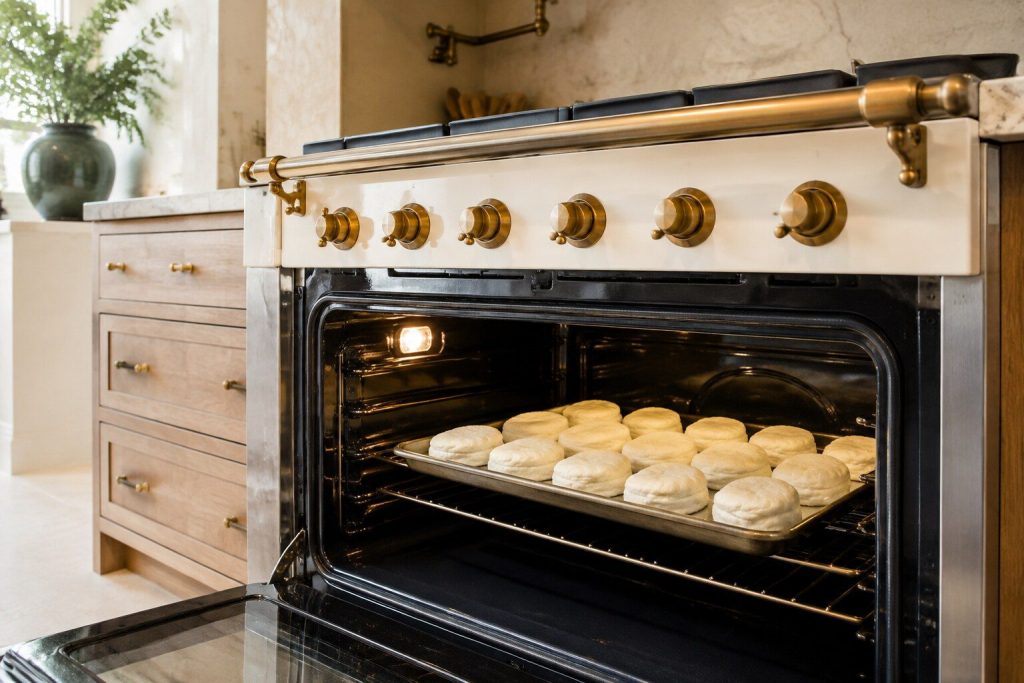
It heats, but not enough Oven not reaching temperature
An oven that gets warm and stalls short of its setting, takes an hour to preheat, or loses temperature the moment the door opens. On a vaulted oven some of this is thermal mass behaving as designed, and separating the design from the problem is the first job.
- A vaulted oven is slow by design — measure before condemning
- Bake and broil are separate circuits on this make
- Door seal and level come before any talk of parts
-
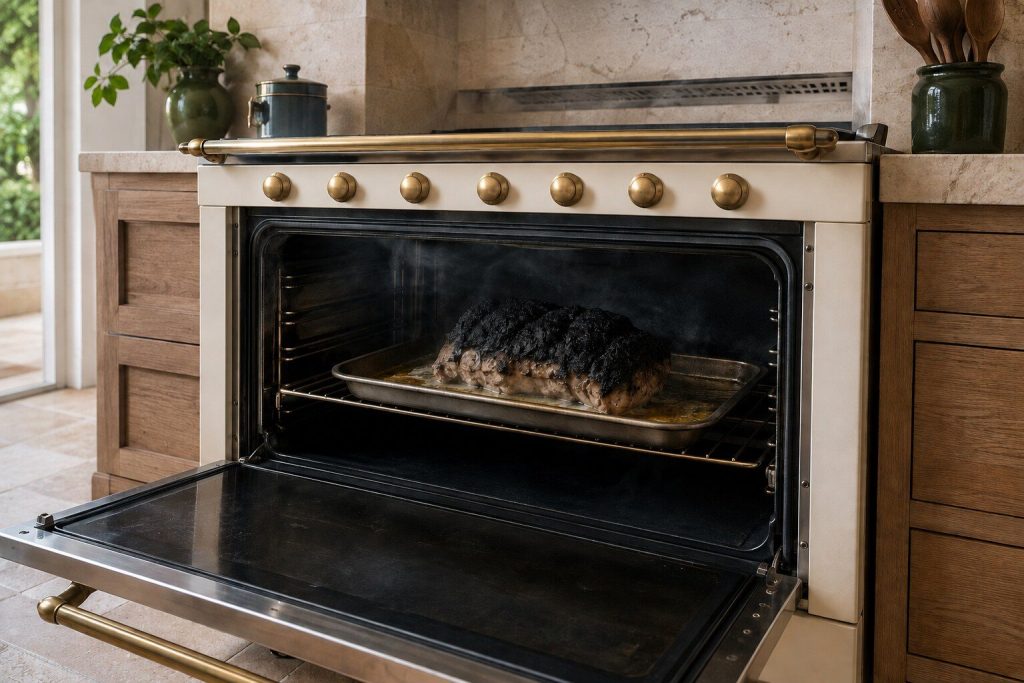
Everything cooks faster than it should Oven runs hot
An oven that has drifted upwards over years, and a cook who has quietly rewritten every recipe around it. The manual is explicit: an oven that gets hotter as the range gets older, and does not come back when the dial is turned down, wants a new thermostat rather than a new habit.
- The maker's own guide names this and names the answer
- Measured through a full cycle, not with one reading
- A corrected oven changes your cooking — expect that
-
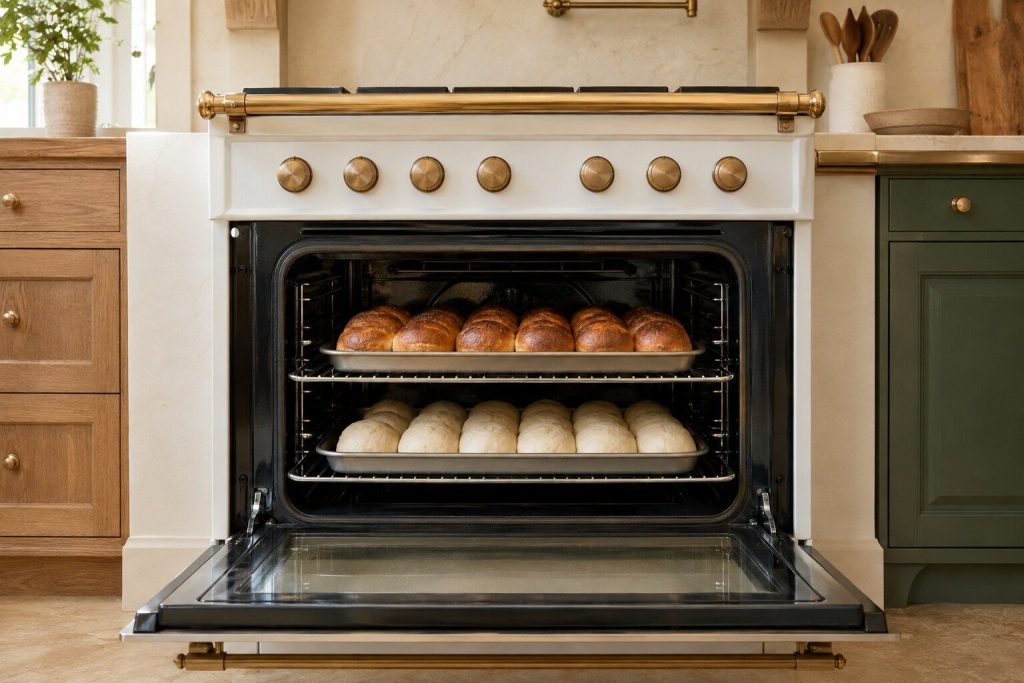
One side browns and the other does not Oven cooks unevenly
On a vaulted oven a degree of unevenness is the design — heat radiates from a dome and the strongest zone is not the geometric center. La Cornue's own cooking notes tell owners to turn a large item during cooking and to leave space between loaded shelves. The job here is to find what has made it worse than designed.
- Some unevenness is designed in — the manual says so
- Level, door seal and tray size come before any part
- A dish of water on the shelf is the maker's own test
-
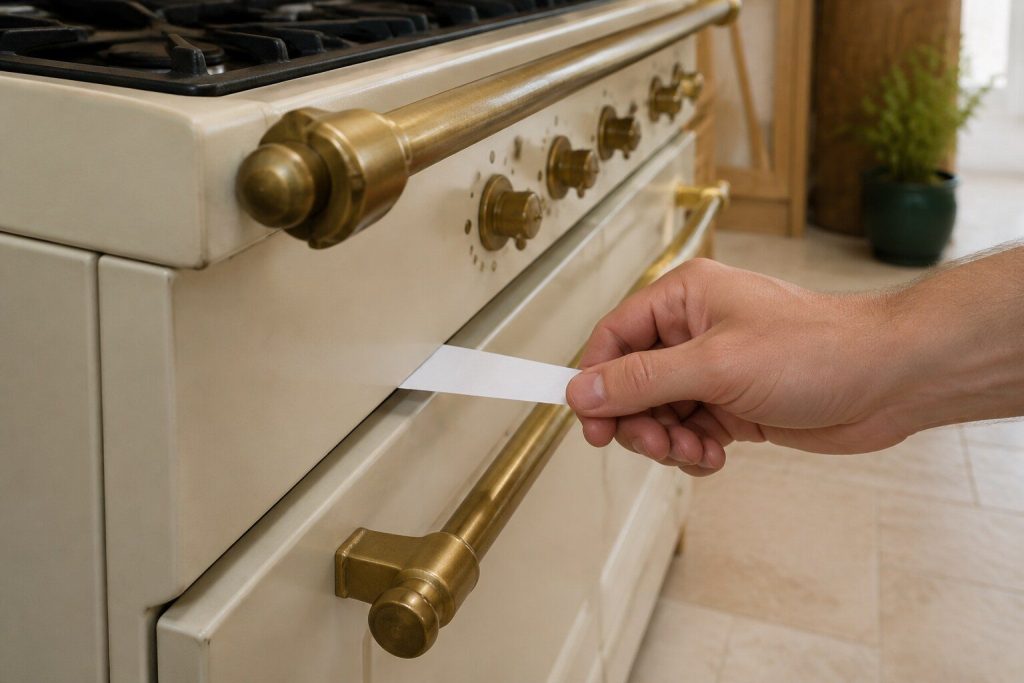
Heat is getting out Oven door will not seal
Long preheats, a cool front shelf, browning on one side, a kitchen that gets hotter than it should while the oven runs. On a vaulted oven the door is part of the cooking mass, so a seal that no longer meets its frame is a cooking complaint long before it is a visible leak.
- The symptom is usually cooking, not a visible gap
- Seal, catch and hinge are adjusted as one system
- Measured hot — everything fits differently at temperature
-
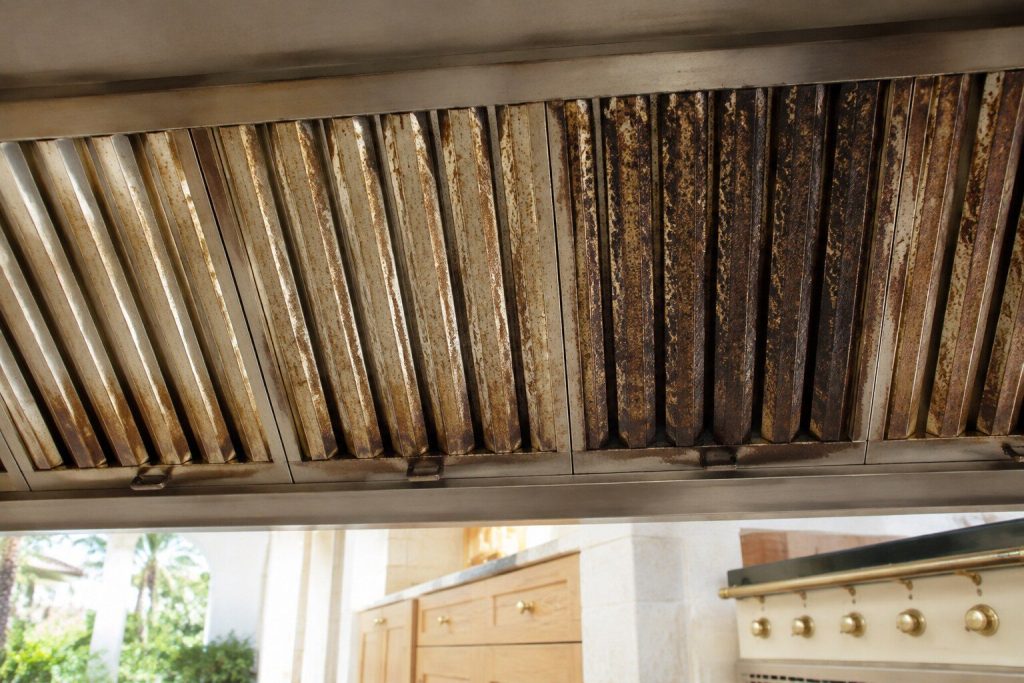
The motor runs and the air does not move Hood suction has faded
Faded extraction with a motor that still sounds healthy is almost never the motor. The 600 CFM these hoods are rated at is specified against an unobstructed six-inch duct — eight inches on the inserts — and the baffle filters are dishwasher safe, so the first fix on this call is frequently free.
- Saturated baffles first, because they cost nothing to rule out
- 600 CFM assumes an unobstructed duct — most losses are in the run
- A coastal termination cap is a salt and grease trap
-
Lights on and nothing turns Hood blower will not start
A hood with working lights and a dead fan has narrowed the problem down for you: the supply and part of the control are alive. What remains is the speed control, the motor and — on the cheapest and commonest failure — the capacitor that gets it turning.
- Lights working means the supply is fine
- The capacitor is cheap, common and tested before the motor is condemned
- A hum with no rotation is the classic capacitor signature
-
It works, but it has changed Hood noisy or vibrating
A hood that has started to rumble, drone or vibrate is a hood that will eventually stop, usually on a day when the kitchen is full. It is also the symptom people put up with longest, because it still extracts — and it is the one where acting early genuinely saves the expensive part.
- A rumble is a bearing, and bearings do not recover
- Ticking is usually contact — a blade or a shifted housing
- On a two-motor hood, one bad blower is easy to miss
Why these pages carry the site
Three codes, and no troubleshooting section at all
The three codes, and what else a display shows
This site's own axis
The same behavior means different things by configuration
Every page here says what the symptom usually means on a gas Château, on a dual-fuel Château, on an all-induction Château, on a factory-built CornuFé and on the electric Tourelle — and says plainly where it does not apply at all. There is nothing to light on an induction top, no plaque on a CornuFé, and no gas anywhere near a Tourelle. That block exists on no sibling site because no sibling make is configured to order.
Free before paid
Four checks that cost nothing
The pan, on induction
- A fridge magnet should grip the base firmly. Weak grip means weak coupling.
- Minimum base diameters: 4¾ inches front left, 5½ at the rear zones, 8¼ in the center.
- A smaller pan will not couple at all and nothing is broken.
- The pan-missing symbol is the hob telling you this, not reporting a problem.
The level, on any oven complaint
- A dish of water on the middle shelf should sit at one depth all over.
- Deeper at the back means the back needs raising or the front lowering.
- It is the maker's own test and it explains a good share of uneven baking.
- A range slid into place and never leveled is a real and common finding.
The door seal
- Close a strip of paper in the door and pull it out at eight or ten points around the perimeter.
- Where it grips, the seal works. Where it slides out freely, it does not.
- Loose along the top edge is usually the hinge or the catch; one corner is usually the seal.
- On a vaulted oven the door is part of the cooking mass, so this shows up as a cooking complaint.
What you cleaned recently
- A splashed spark electrode can take a day to dry at eighty per cent humidity.
- A burner head refitted slightly off its seat changes the flame immediately.
- Never push wire or a pin into a burner port — an enlarged port is permanent.
- This is the leading cause of burner calls in this city, and it fixes itself.
By appliance
Which appliance is doing it
If you would rather start from the appliance than from the behavior.
-
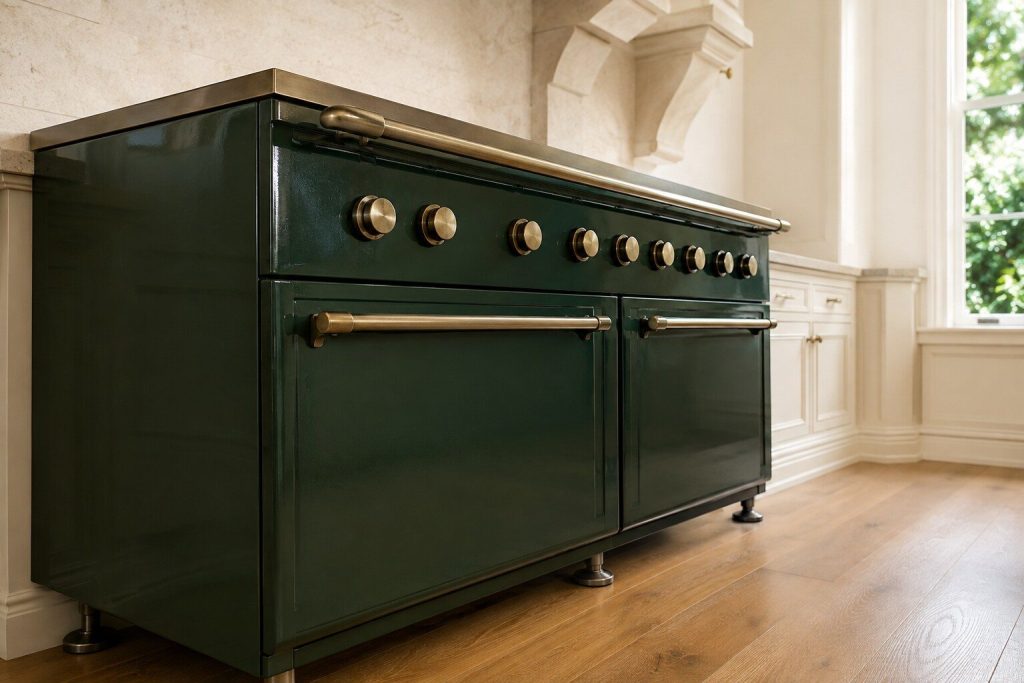
Dual fuel · gas · all-induction — Château, Châtelet, Castel, Grand Palais, CornuFé Ranges
The range is what La Cornue makes, and everything else in the line exists around it. A Château is built to order in France, arrives in a crate weighing over half a ton, and is assembled from parts a customer chose one at a time: which oven is gas and which is electric, whether the top carries a French top, a lava-rock grill, induction or a teppanyaki plate, which of about fifty enamels, which trim metal. Two of them are almost never identical. That is the first thing a repair on one has to take seriously — the model number tells you the size, and the configuration code tells you what is actually under the lids.
- Dual fuel, all gas or all induction — three different ranges, three parts lists
- The configuration code, not just the model, decides what is on the top
- Made-to-order enamel and trim are part of the job, not an extra
-
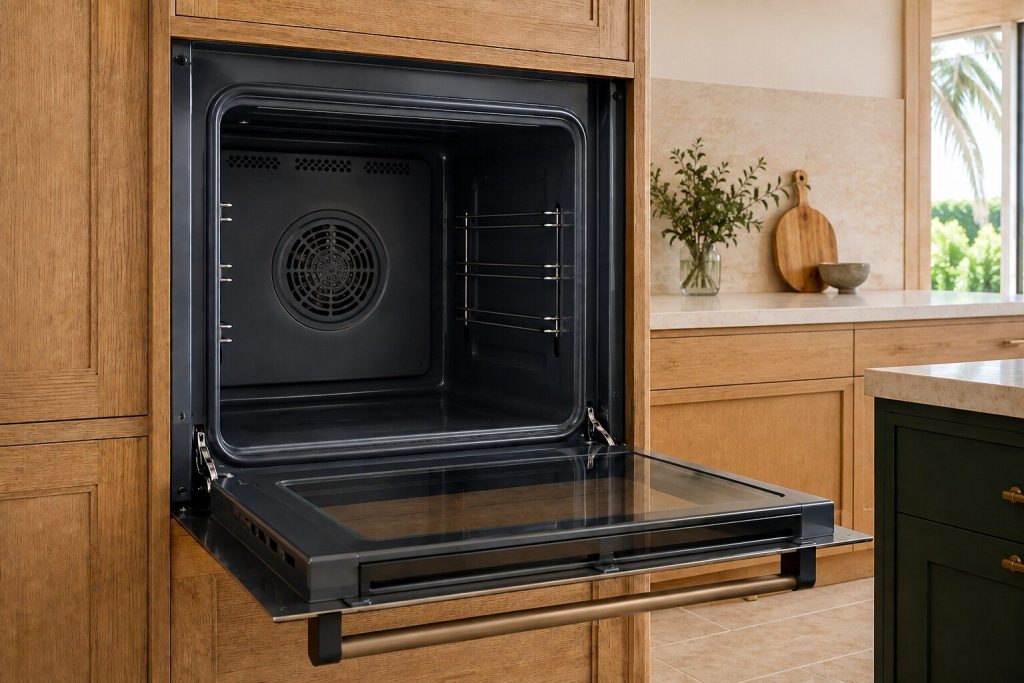
Vaulted ovens and convection ovens — gas, electric, and the Tourelle wall oven Ovens
There are three different ovens on this make and they fail in three different ways. The vaulted gas oven cooks by radiant heat inside a sealed dome and has an electric broiler over it. The vaulted electric oven sits on the other side of the same range. And since 2025 there is a standalone one: the Château Tourelle, a fully electric multifunction wall oven in 60 and 75 centimeter widths, built to sit in a cabinet run next to a Château cooktop. Which of the three you have decides everything about the repair.
- Vaulted gas, vaulted electric and the electric Tourelle wall oven
- Gas ovens carry an electric broiler — browning and baking can fail separately
- Thermostat drift is measured against a probe, never adjusted by feel
-
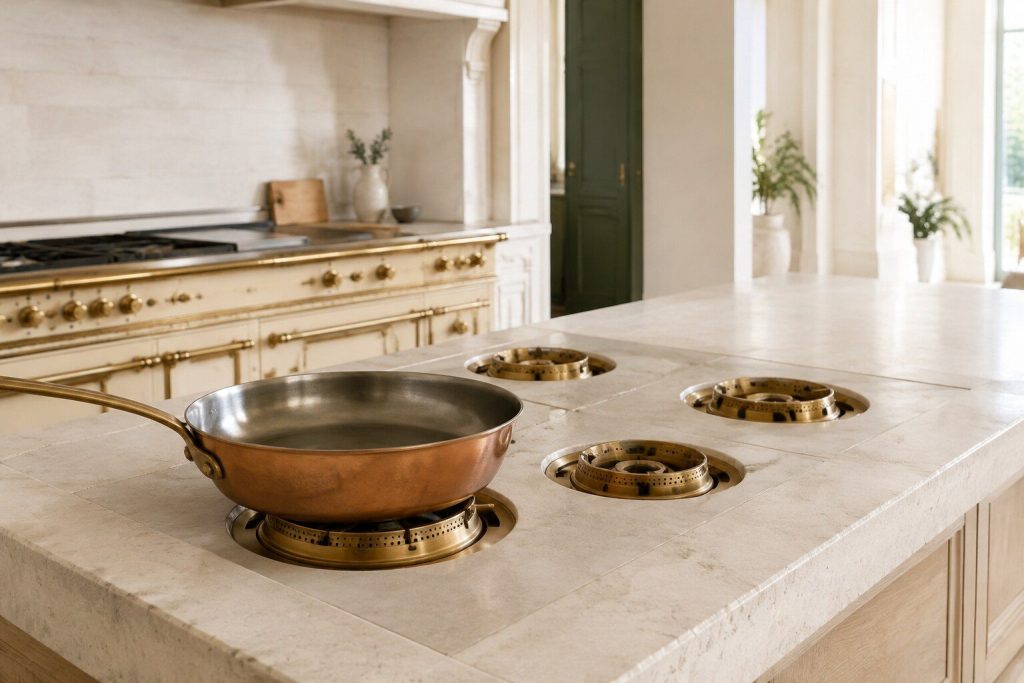
Brass gas burners · plaque coup de feu · lava-rock grill · induction · teppanyaki Cooktops and rangetops
A La Cornue cooktop is a set of modules chosen at order time and dropped into a stainless frame: brass gas burners at 17,000 and 7,500 BTU, a 22,000 BTU power burner, the cast-iron plaque coup de feu heated by a single burner underneath, a lava-rock grill, ceramic-glass induction zones, an electric teppanyaki plate. This is the top of a range, and each module is a different repair. Sold on its own without ovens beneath it, the same top is a rangetop, and it has its own page.
- Gas, induction, French top, grill and teppanyaki modules on one frame
- Induction is the only half of this line that shows a code — E2, U400, Er
- A cracked glass hob is disconnected first and diagnosed second
-
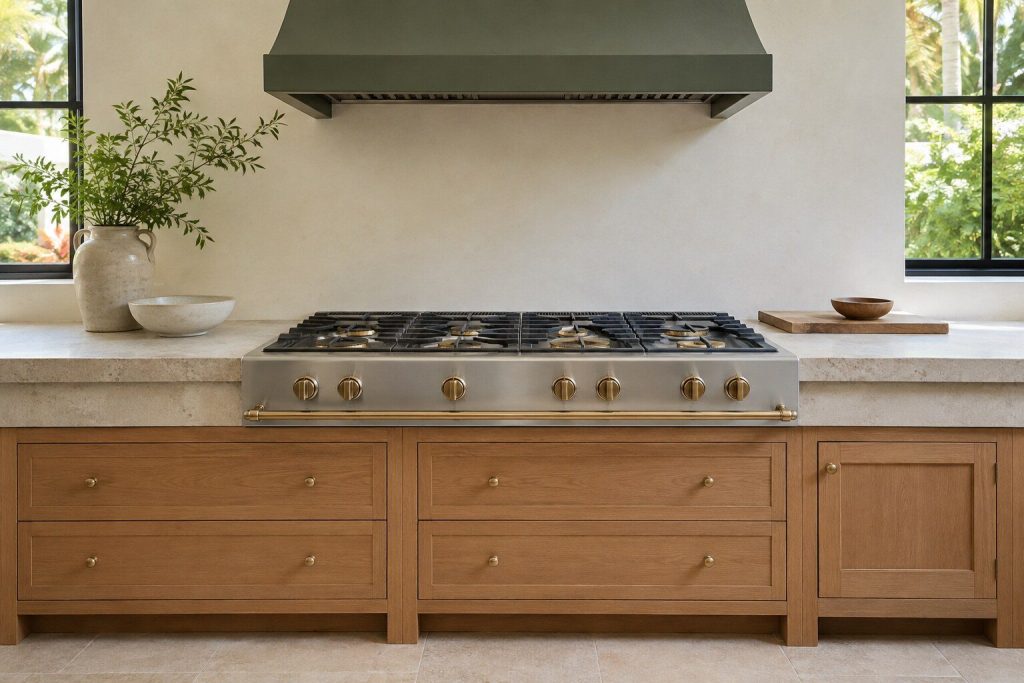
T40 to T48 · 200 mm into the counter · the same modules, no ovens beneath Rangetops
A rangetop is the top half of a La Cornue sold in its own right: the same brass burners, the same plaque coup de feu, the same grill, induction and teppanyaki modules, in a stainless frame 200 mm deep that drops into a counter with nothing underneath it. T40 through T48, from 600 to 1800 mm wide. Every cooktop repair applies to it and no oven repair does — which makes it the simplest appliance in the line and the one most often confused with the range on a booking.
- T40 to T48 — the same configuration codes as the range
- No ovens, no oven thermostats, no door seals
- Much lighter than a range, so the one job that prices weight rarely applies
-
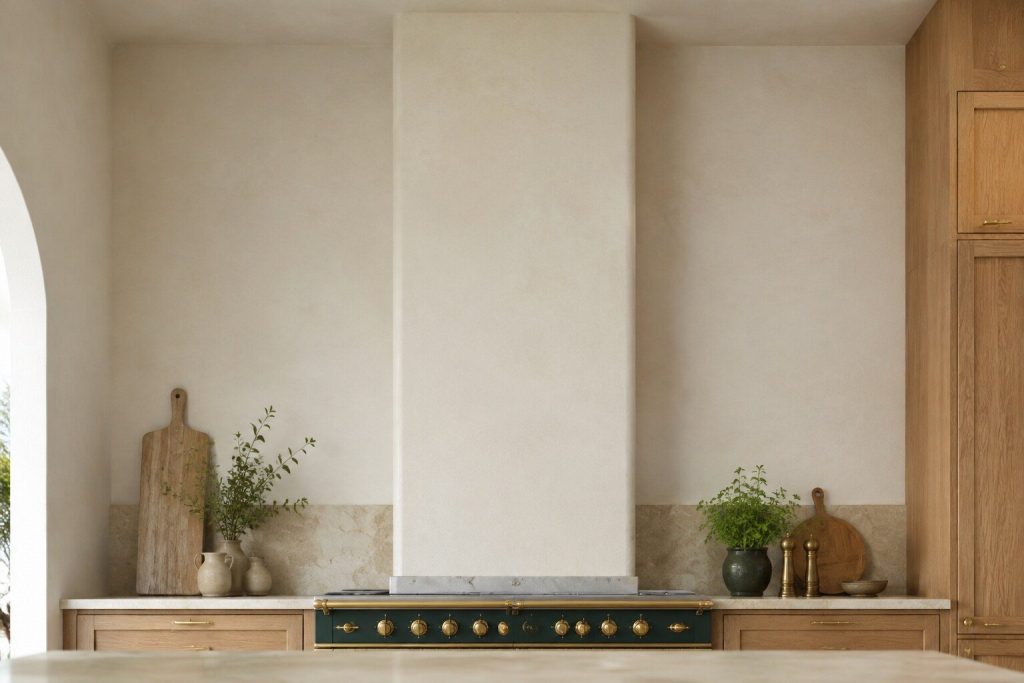
Château motorized hoods H11–H20 · island hoods · inserts · CornuFé Cascade, Euclid, Loge, Marquee Range hoods
The hood over a La Cornue is not an accessory bought to match. A motorized Château hood starts at $17,400 for the 90 and runs past $25,000 for the Grand Palais 180, it is made in the same enamels and trims as the range, and it does real work: a 600 CFM blower on a four-speed variable motor, baffle filters with a grease capture system, three 20-watt lights and a remote. When one stops, the kitchen it was built for stops working properly.
- Motorized Château hoods, island hoods and inserts, plus the CornuFé collection
- 600 CFM blower, four-speed variable motor, baffle filters, remote control
- A hood is finished to match the range — the enamel is part of the repair
Two pages are instructions rather than diagnoses
A gas smell, and a cracked hob
If you can smell gas: turn the range off at its shut-off valve if it is safe to reach, open windows, do not operate switches or the hood, and call the utility or 911 before you call us. If the ceramic hob is cracked: disconnect the cooker from the power supply immediately and do not use it until it has been repaired — that is the maker’s own instruction, not our caution, and the glass is what separates the coils from anything spilled on the surface.
Before you call
Questions we are asked about symptoms
My oven cooks unevenly. Is that a problem or is that the oven?
Some of it is the design, and the maker says so in its own cooking notes: a vaulted oven cooks by radiant heat from a heavy sealed cavity, the strongest zone is not the geometric center, and you are expected to turn a large item during cooking and leave space between two loaded shelves. What is not designed in is a repeatable pattern — consistently pale on one half, or behavior that changed in a fortnight. Do the water test and the paper test first; they are free and they explain most of these.
Why is there no error code for my problem?
Because on this make there almost certainly is not one. Three codes exist in the whole of La Cornue's US documentation — E2, U400 and Er with a number — and all three are on the induction hob. The Château guide has no troubleshooting section at all. A site that invented codes to fill that gap would be doing what a sibling network did for another brand, which was to publish about 38 codes that were really symptoms.
Can I keep using the range while I wait?
It depends which page you are on, and each one says. A single dead burner: yes, use another. A burner that lights and dies: not that one. A gas oven that will not light: stop trying and shut the range off at its valve, because a sealed vaulted cavity is not somewhere to leave unburnt gas. A cracked induction hob: no, and isolate it at the breaker. A hood that rumbles: yes, but book it, because a rumbling blower ends in a seized one.
Nothing here matches what mine is doing.
Then say exactly that when you book and describe it in your own words. Twenty-one pages cover what we are actually called to; they are not a claim to have anticipated everything a hand-built appliance can do after twenty years in a coastal kitchen. The diagnostic is the same either way, and on this make it is measurement rather than matching a symptom to a list.
In more detail
Why symptom pages carry this whole site
Because the maker publishes almost nothing
Three error codes, all on the induction electronics, and no troubleshooting section in the guide for the ranges most of this catalog consists of. There is no display on a gas Château, nothing stored, and no history to read out. So the observable behavior is the diagnostic path, and the instruments do the rest: gas pressure at the manifold, igniter current measured in amps rather than judged by brightness, millivolts across the flame supervision, actual shelf temperature against the dial through a full cycle.
And because the search demand agrees
Of 527 relevant phrases people type about this make, not one contains the word error and not one contains the word code. One contains igniter. What the demand is full of instead is price, comparison and use — is it worth it, how do I use the oven, what do the symbols mean, La Cornue versus Wolf. Nobody troubleshoots this make in a search box, which is exactly why these pages are written for the person standing in the kitchen.
What we ask for
The model code, the top configuration if the paperwork survives, which burner or which oven door, and whether anything changed in the kitchen recently. With those four we can usually name the likely part and the band it falls in before anybody leaves the house.
Tell us what it is doing, in your own words.
Plus the model code and which burner or which oven door. On a make with nothing to read, that description is genuinely the diagnosis starting.
This article is based on:
- Official manufacturer documentation
- Internal repair procedures
- Technician repair history
- Company quality standards