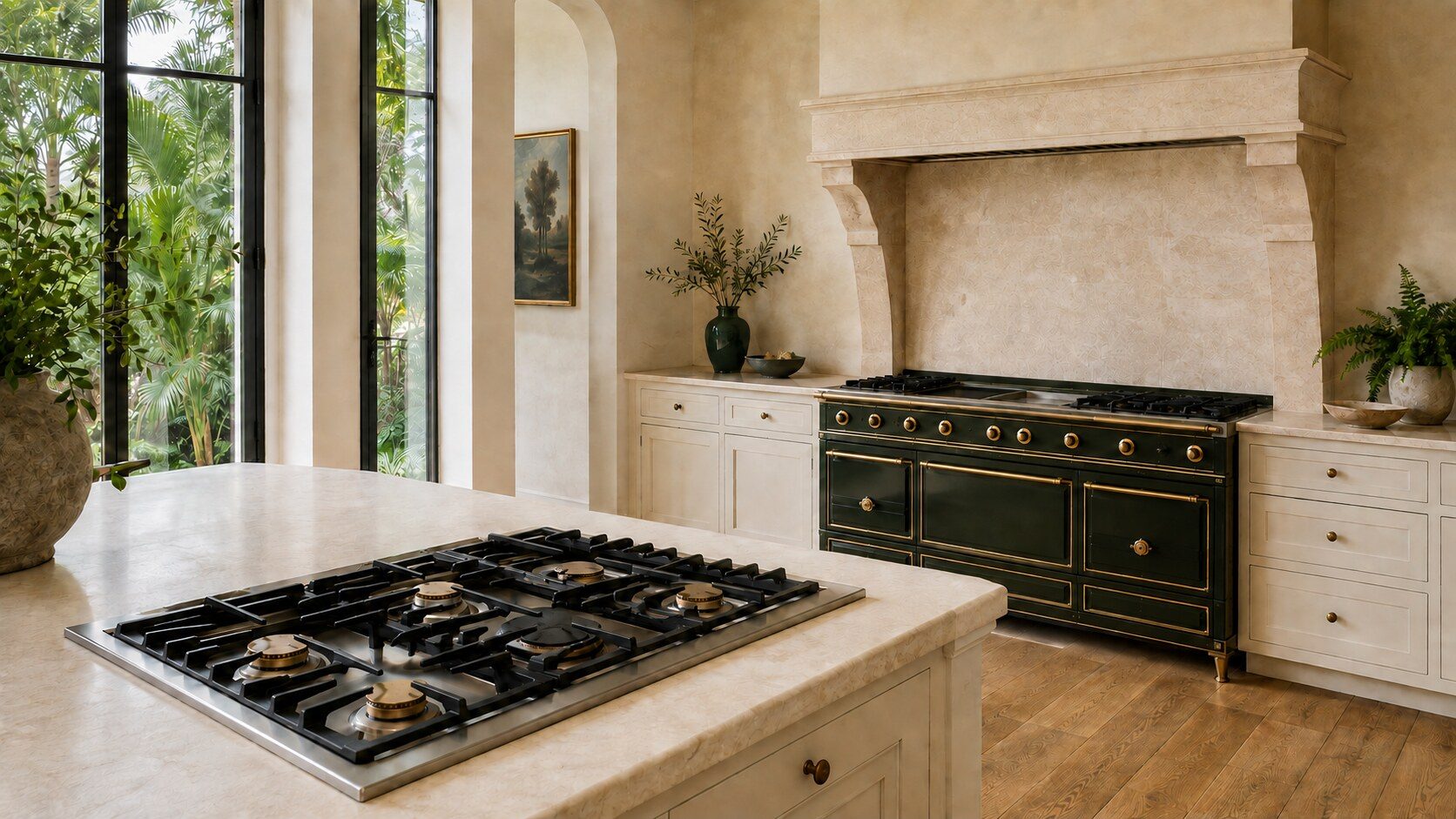
La Cornue prices its cooktop elements individually, which tells you how the appliance is meant to be understood. Two brass gas burners at 17,000 and 7,500 BTU. A 22,000 BTU power burner. The plaque coup de feu, large or petite. A lava-rock grill at 14,500 BTU. Ceramic-glass induction. An electric teppanyaki plate. On one rangetop you might have four of those, and the diagnosis for one tells you nothing about the next.
5 appliances · 47 model codes
La Cornue appliances, and there are five of them.
That is not a short list because we have chosen a narrow specialism. It is the whole of what La Cornue builds: a range, the vaulted oven inside it, the rangetop on top of it and the hood over it. A site offering La Cornue refrigeration or laundry would be advertising appliances the manufacturer has never made.
- 5 appliance types
- 47 model codes from the maker's price list
- 21 symptom pages behind them
- 3 error codes in the entire make
Start from the appliance
What each one is, and what the repair on it involves
Each card says what the appliance actually is on this make — which is not always what the word means elsewhere.
-
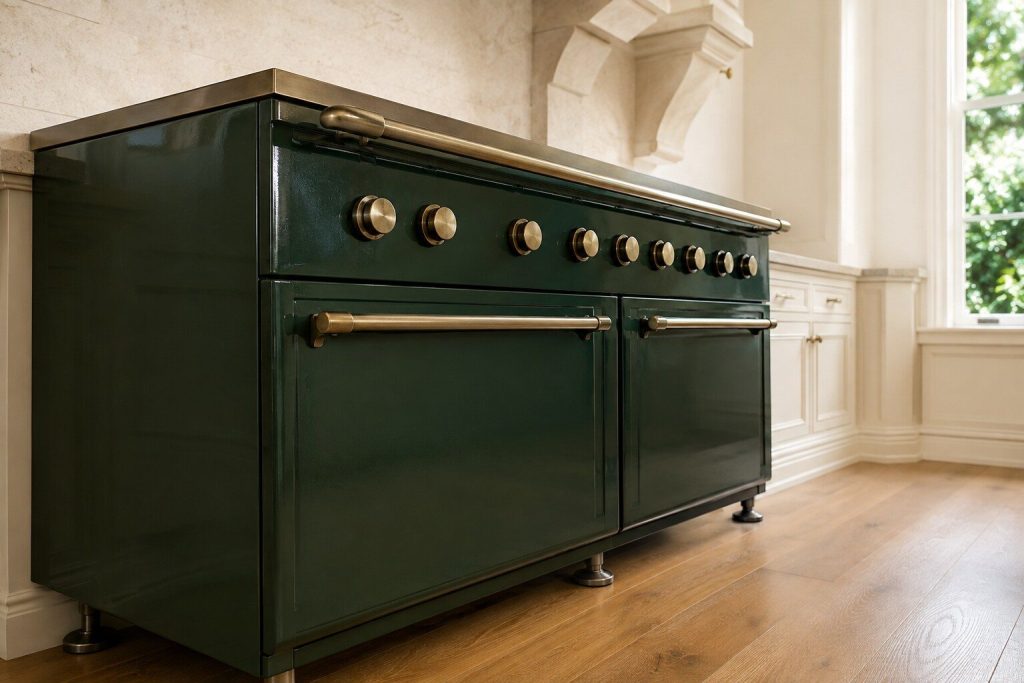
Dual fuel · gas · all-induction — Château, Châtelet, Castel, Grand Palais, CornuFé La Cornue range
The range is what La Cornue makes, and everything else in the line exists around it. A Château is built to order in France, arrives in a crate weighing over half a ton, and is assembled from parts a customer chose one at a time: which oven is gas and which is electric, whether the top carries a French top, a lava-rock grill, induction or a teppanyaki plate, which of about fifty enamels, which trim metal. Two of them are almost never identical. That is the first thing a repair on one has to take seriously — the model number tells you the size, and the configuration code tells you what is actually under the lids.
- Dual fuel, all gas or all induction — three different ranges, three parts lists
- The configuration code, not just the model, decides what is on the top
- Made-to-order enamel and trim are part of the job, not an extra
-
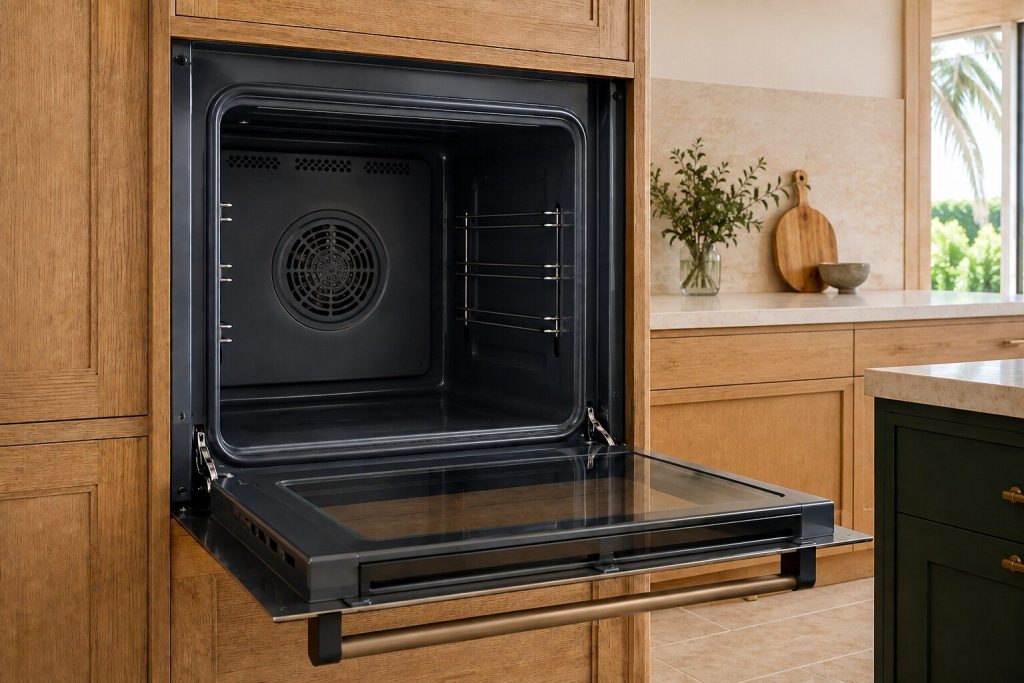
Vaulted ovens and convection ovens — gas, electric, and the Tourelle wall oven La Cornue oven
There are three different ovens on this make and they fail in three different ways. The vaulted gas oven cooks by radiant heat inside a sealed dome and has an electric broiler over it. The vaulted electric oven sits on the other side of the same range. And since 2025 there is a standalone one: the Château Tourelle, a fully electric multifunction wall oven in 60 and 75 centimeter widths, built to sit in a cabinet run next to a Château cooktop. Which of the three you have decides everything about the repair.
- Vaulted gas, vaulted electric and the electric Tourelle wall oven
- Gas ovens carry an electric broiler — browning and baking can fail separately
- Thermostat drift is measured against a probe, never adjusted by feel
-
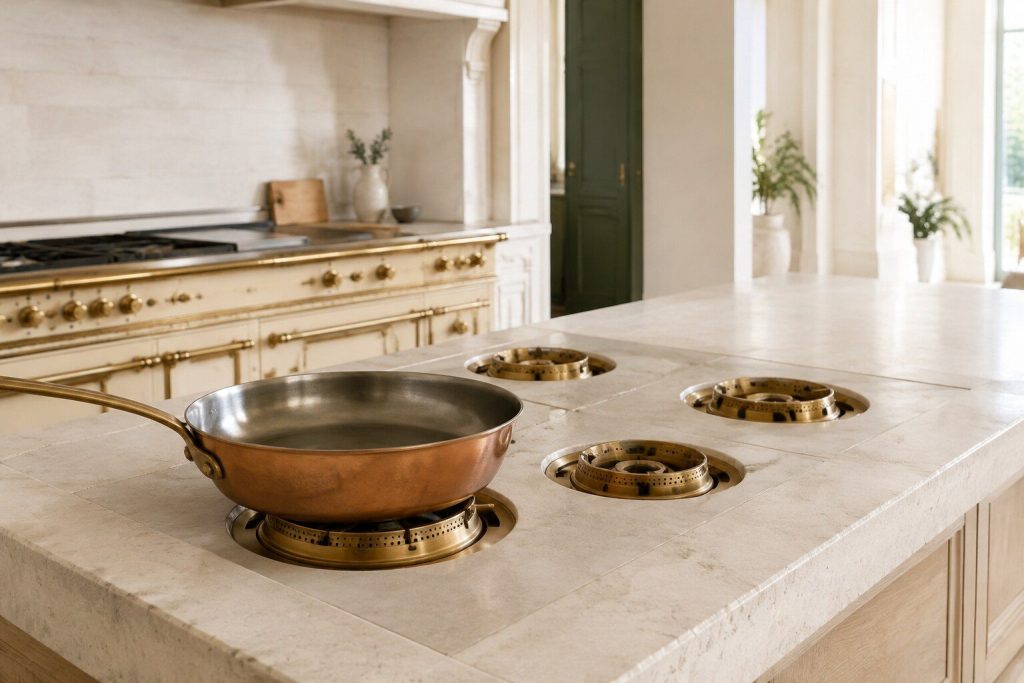
Brass gas burners · plaque coup de feu · lava-rock grill · induction · teppanyaki La Cornue cooktop
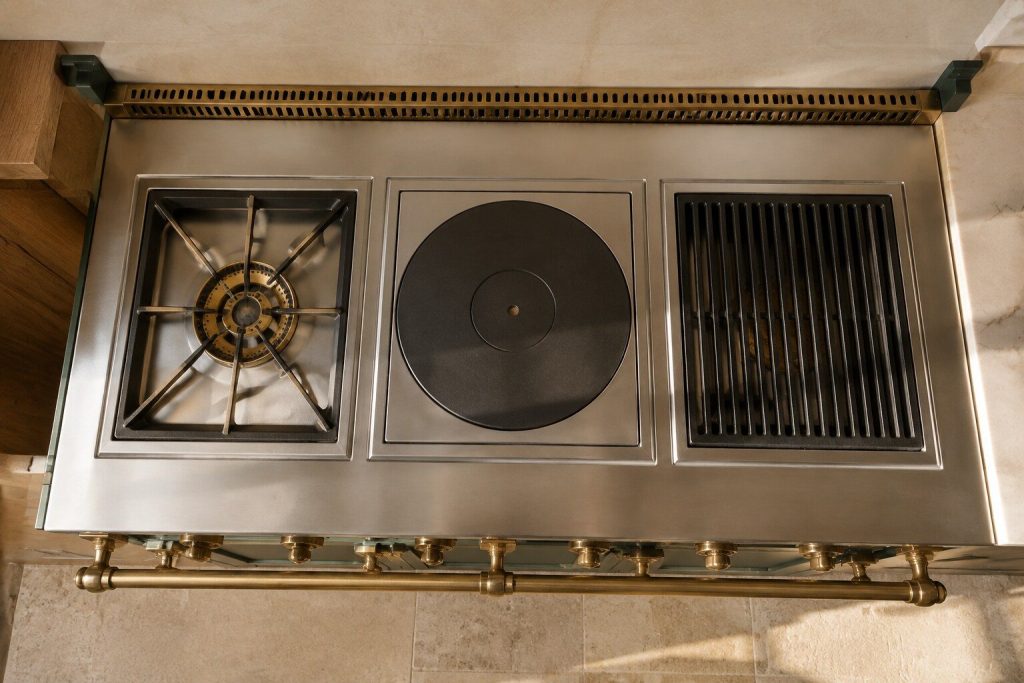
A La Cornue cooktop is a set of modules chosen at order time and dropped into a stainless frame: brass gas burners at 17,000 and 7,500 BTU, a 22,000 BTU power burner, the cast-iron plaque coup de feu heated by a single burner underneath, a lava-rock grill, ceramic-glass induction zones, an electric teppanyaki plate. This is the top of a range, and each module is a different repair. Sold on its own without ovens beneath it, the same top is a rangetop, and it has its own page.
- Gas, induction, French top, grill and teppanyaki modules on one frame
- Induction is the only half of this line that shows a code — E2, U400, Er
- A cracked glass hob is disconnected first and diagnosed second
-
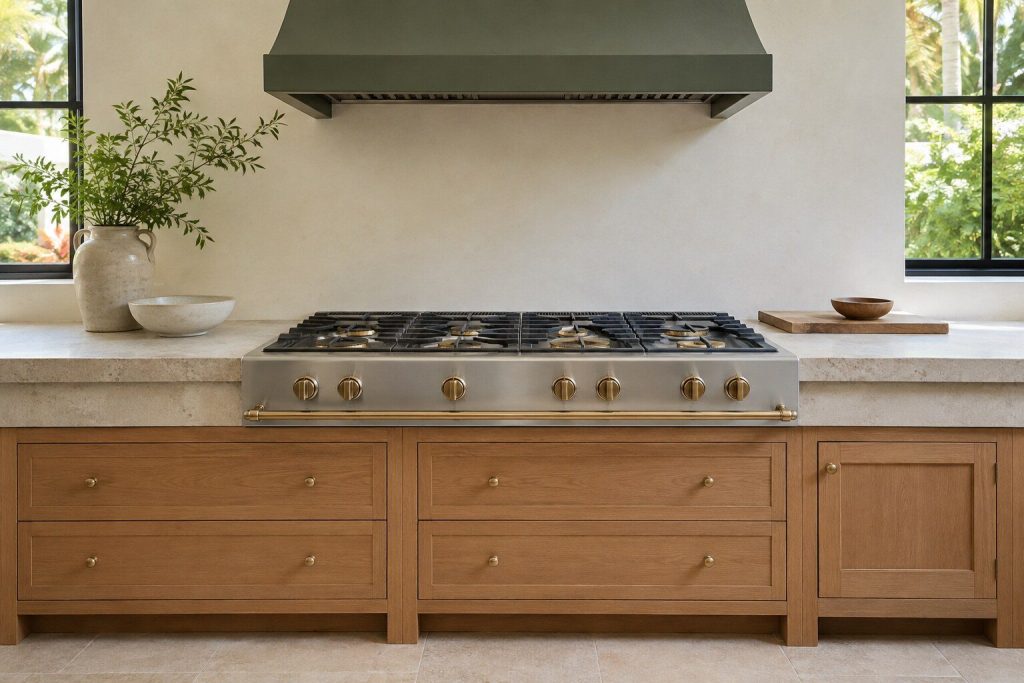
T40 to T48 · 200 mm into the counter · the same modules, no ovens beneath La Cornue rangetop
A rangetop is the top half of a La Cornue sold in its own right: the same brass burners, the same plaque coup de feu, the same grill, induction and teppanyaki modules, in a stainless frame 200 mm deep that drops into a counter with nothing underneath it. T40 through T48, from 600 to 1800 mm wide. Every cooktop repair applies to it and no oven repair does — which makes it the simplest appliance in the line and the one most often confused with the range on a booking.
- T40 to T48 — the same configuration codes as the range
- No ovens, no oven thermostats, no door seals
- Much lighter than a range, so the one job that prices weight rarely applies
-
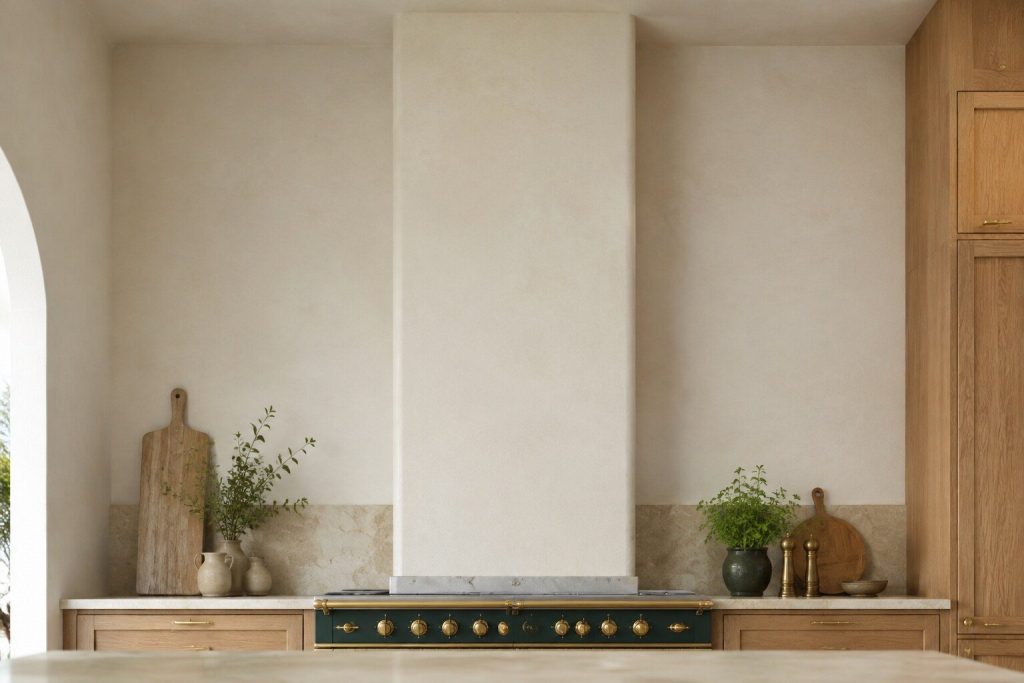
Château motorized hoods H11–H20 · island hoods · inserts · CornuFé Cascade, Euclid, Loge, Marquee La Cornue range hood
The hood over a La Cornue is not an accessory bought to match. A motorized Château hood starts at $17,400 for the 90 and runs past $25,000 for the Grand Palais 180, it is made in the same enamels and trims as the range, and it does real work: a 600 CFM blower on a four-speed variable motor, baffle filters with a grease capture system, three 20-watt lights and a remote. When one stops, the kitchen it was built for stops working properly.
- Motorized Château hoods, island hoods and inserts, plus the CornuFé collection
- 600 CFM blower, four-speed variable motor, baffle filters, remote control
- A hood is finished to match the range — the enamel is part of the repair
The word that means something different here
A cooktop on this make is a set of modules, not a hob
Cooktops and rangetops
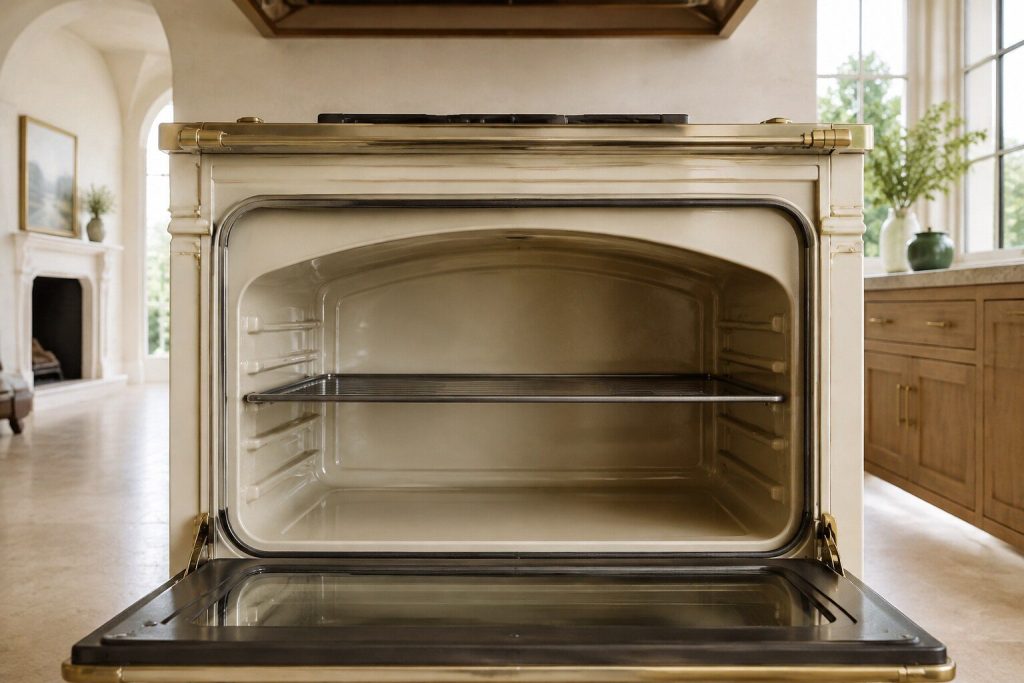
Three ovens, one badge
The vaulted oven, and the two that are not it
A Château 120 and everything above it carries a vaulted gas oven with an electric broiler on one side and a vaulted electric oven on the other — two different appliances in one cabinet. Since November 2025 there is also the Château Tourelle, a standalone fully electric multifunction wall oven in two widths, which the brand research this site was built from says does not exist. Which oven you mean is the first useful thing a booking can say.
Telling them apart
What to look for before you book
Is it a range or a rangetop?
- A range has ovens under the cooktop and stands on adjustable legs — model codes beginning G.
- A rangetop drops into a counter with nothing beneath it — model codes beginning T.
- They share every cooktop module and none of the oven parts.
- The Castel 60 and its rangetop are all-induction by definition rather than by option.
Which oven is the problem?
- On a dual-fuel Château, one side is gas with an electric broiler and the other is electric.
- The gas side has no display, no code and no history. That is normal for this make.
- A Tourelle is a separate appliance in a cabinet run, with its own guide and its own parts.
- A CornuFé has electric convection ovens — one on the 90, two on the 110.
Is the hood a canopy or an insert?
- A motorized canopy is enamelled and trimmed to match the range — codes like H17TOM.
- An insert lives inside a hood the kitchen's own cabinetmaker built — codes like 150LCI18.
- Both use a 600 CFM blower; the canopies duct at six inches and the inserts at eight.
- On the larger canopies there can be two blowers, and one can fail unnoticed.
By job
Or start from the work
If you already know what needs doing rather than which appliance it belongs to.
-
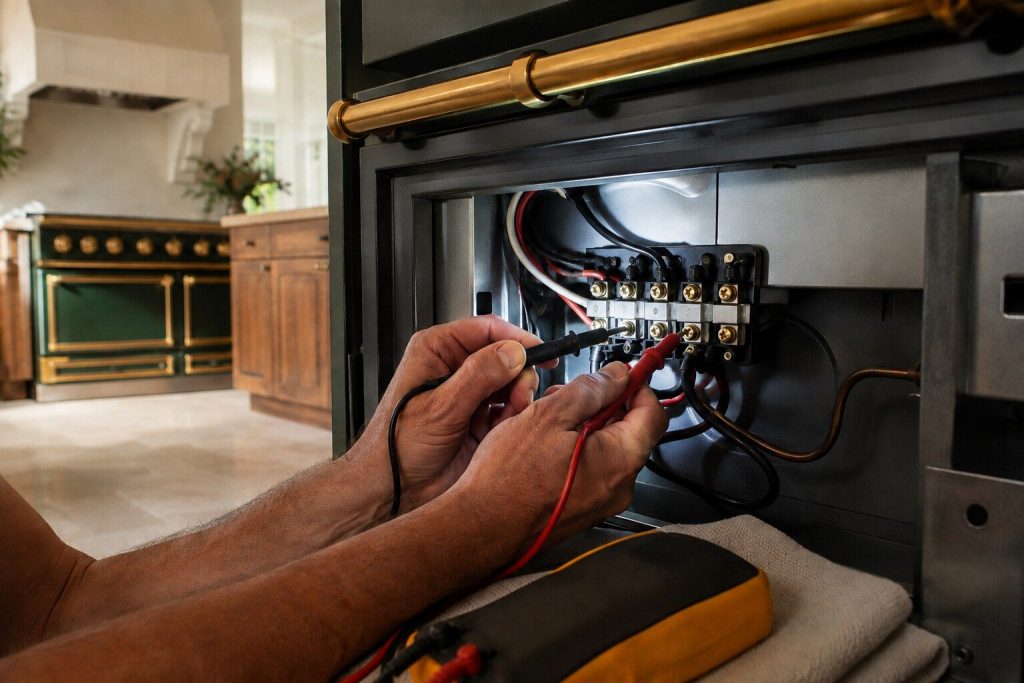
from $95 Diagnostic visit
One visit, one technician, one answer in writing. On a make with three error codes in its entire documentation, the diagnostic is not a formality before the repair — it is the repair's only source of information, and it is done with instruments rather than by elimination.
- Measured, not guessed — this make reports almost nothing on its own
- The configuration code read off the range, because it decides the parts
- Written findings and a from-price before anything is opened
-
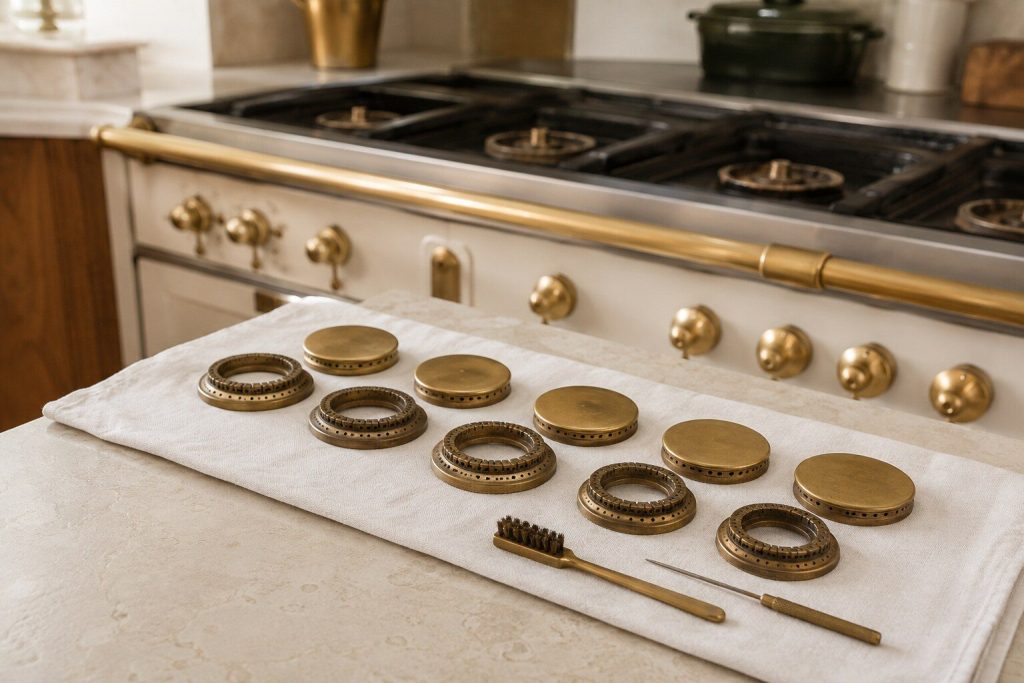
from $195 Appliance maintenance
An annual visit that exists because most of what goes wrong on this make goes wrong slowly. Burners drift rich, thermostats drift hot, baffles saturate, brass tarnishes, and the owner adapts to every one of them without noticing. This is the visit that measures instead of adapting.
- Burner combustion and oven calibration checked against specification
- Baffle filters, duct flow and blower condition on the hood
- Enamel, trim and seals inspected while they are still repairable
-
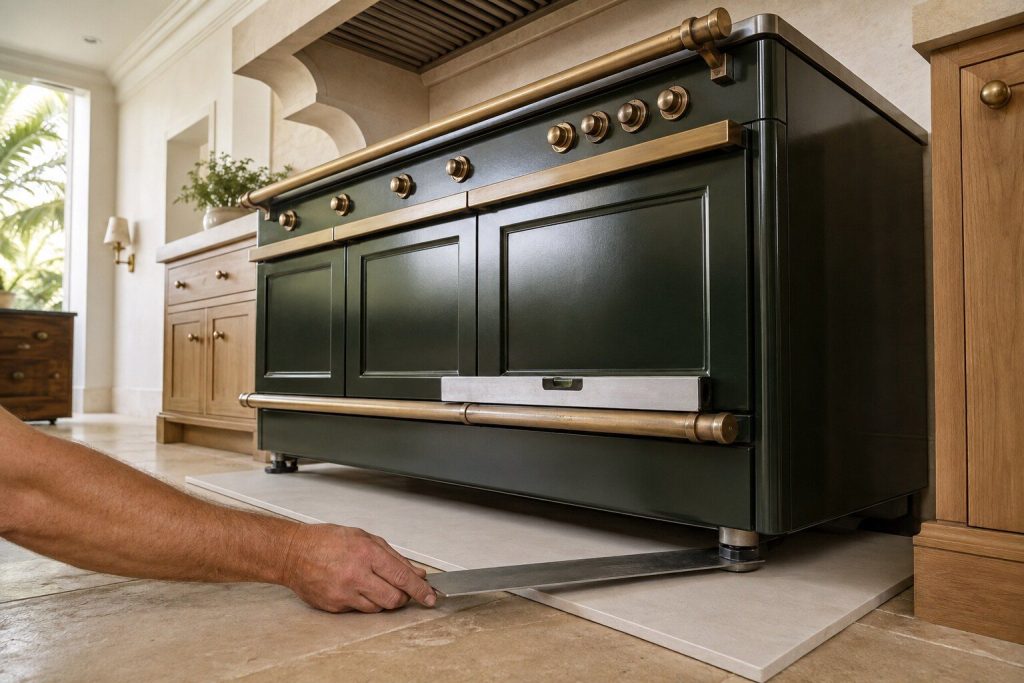
from $295 Appliance installation
A Château is delivered in a crate that can weigh 1,320 lb and is leveled to a specification, not to a spirit level held by eye. Installation covers gas, electrical, leveling, hood duct and the first-use check — and it covers the paperwork, because altitude, fuel type and voltage are specified at order time and have to match what is actually in the house.
- Gas and electrical to the maker's own requirements document
- Leveled to specification — a dish of water sits at one depth all over
- First-use check, and the hood duct measured rather than assumed
-
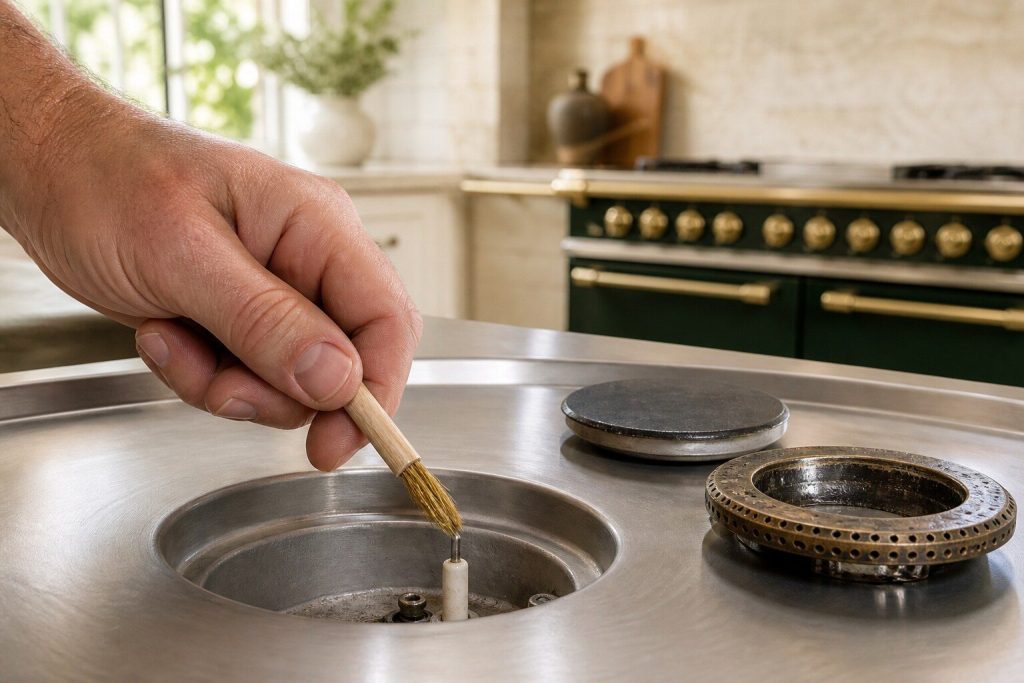
from $155 Surface burner and igniter service
Clicking with no flame, a burner that lights and will not stay lit, a lazy yellow flame. On brass burners in a coastal kitchen these are three symptoms of a short list of causes, and none of them is the ignition module when only one burner is affected.
- One burner out is the electrode or the ports — not the module
- Yellow flame is air mix, fuel or an orifice, and it is measurable
- Ports cleared properly rather than poked at
-
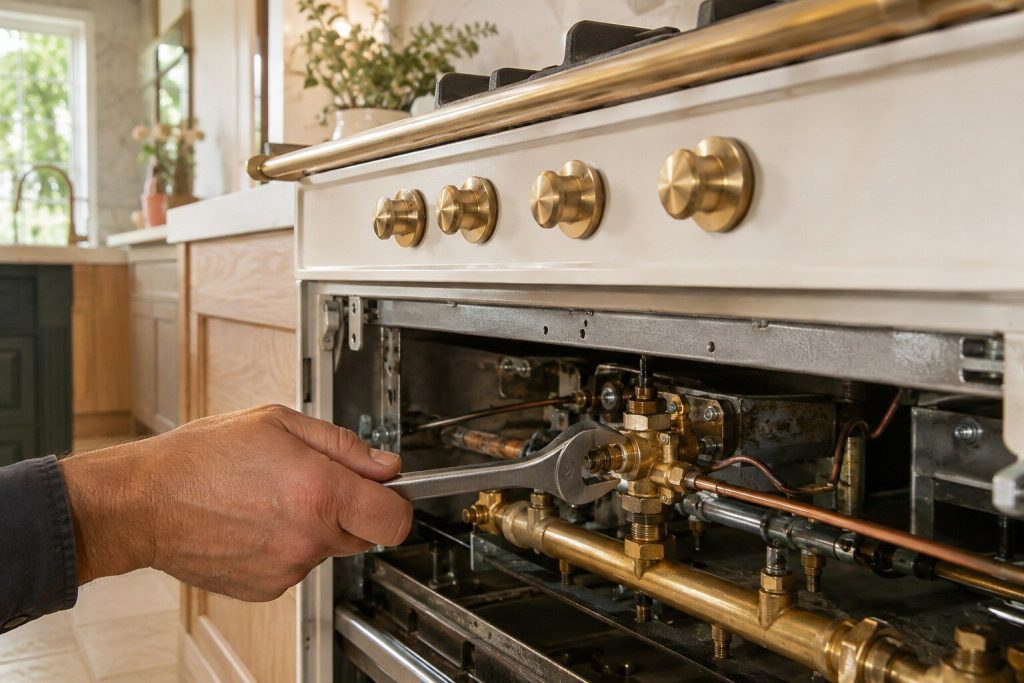
from $265 Gas valve and thermocouple repair
The safety chain: a valve that will not hold open, a thermocouple that no longer tells it to, a knob that has gone stiff or will not shut off cleanly. This is the part of a gas range where nothing gets improvised and nothing gets left half-diagnosed.
- Safety valve and flame supervision tested as a system
- Stiff or leaking knob valves rebuilt or replaced, never lubricated over
- Leak-checked at every joint that was opened
-
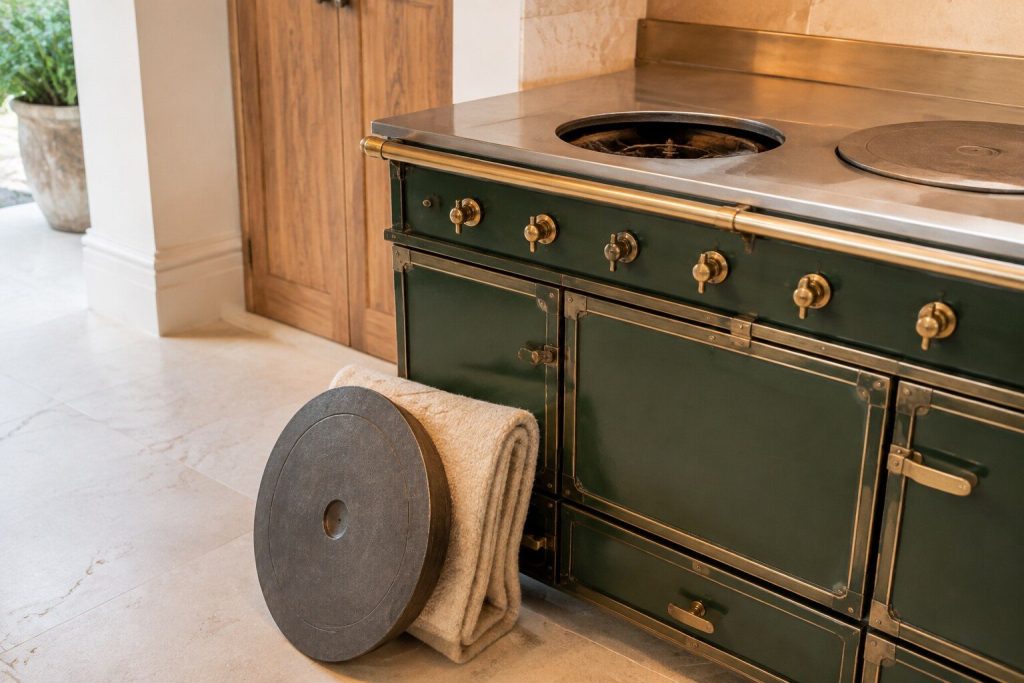
from $245 French top service
The plaque coup de feu is a single cast-iron plate heated by one 7,500 BTU burner directly under its center, and it is the most-used and least-understood part of the range. Cracks, warping, rust, dead cold spots and a burner running wrong underneath are all different problems that present the same way.
- Crazing in the seasoning and a crack through the iron are told apart
- The burner beneath it checked first — most cold spots start there
- Re-seasoned properly, so the plate is handed back working
-
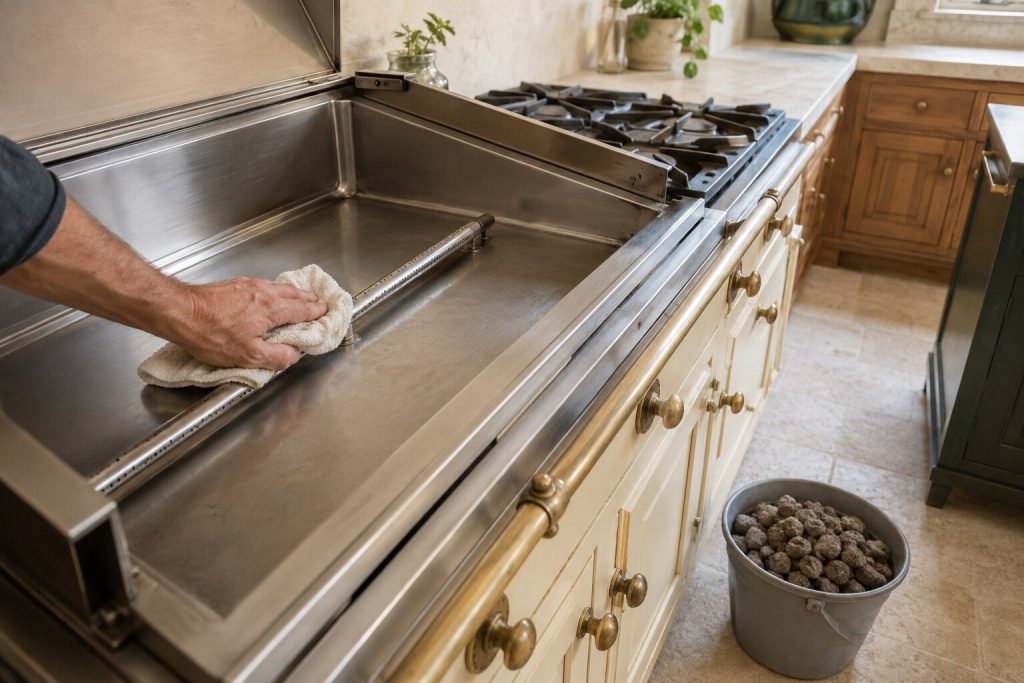
from $225 Lava rock grill service
A linear 14,500 BTU burner under a bed of natural lava rocks, and a module that lives its whole life under fat. Weak or uneven flame, flare-ups, a burner that will not light along its length, and rocks that have turned into a sealed crust are the calls.
- Rock bed replaced rather than raked over
- The linear burner cleared along its whole length
- Drip tray and grate condition treated as part of the job
One rule from the order form
An all-induction top means electric ovens, always
It is worth knowing because it decides which repairs your range can even need. When a Château is specified with the all-induction cooktop — available on the 150, 120, 90 and 60 — the ovens are always electric, without exception. So that range has no gas diagnostics at all, and the three error codes this make publishes become relevant to it. A gas Château is the opposite: nothing to read, everything measured.
Before you call
Questions about the line
Does La Cornue make a wall oven?
Yes, since 2025, and this is worth stating plainly because the research most sources repeat says it does not. The Château Tourelle is a fully electric multifunction wall oven in 60 and 75 centimeter widths — F60 and F75 — built into a cabinet run to a cutout specification, with its own installation guide dated November 2025 and its own line in the January 2026 price list. It is not the range's oven and it does not take the range's parts.
What is the difference between a Château and a CornuFé?
A Château is built to order in France from a configuration somebody chose: vaulted ovens, mix-and-match cooktop modules, about fifty enamels, a crate that can weigh 1,320 lb. A CornuFé is factory-built in two sizes, the 90 Albertine and the 110, each dual-fuel or induction, with electric convection ovens and a five-burner brass cooktop. Both are La Cornue and both are serviced by us; the CornuFé's parts are more standardised, which usually means a shorter wait.
Is a rangetop repair the same as a range repair?
For the cooktop modules, yes — a plaque is a plaque and an induction zone is an induction zone whether there are ovens underneath or not. What differs is everything else: a rangetop has no ovens, no oven thermostats, no vaulted cavities and no door seals, and it sits in a counter rather than on legs. It is also much lighter, which matters on the rare job that needs it moved.
We have a Château and a Tourelle. Do we book one visit or two?
One, and tell us both. Looking at a second appliance on the same visit costs a fraction of a second visit, and a kitchen with both usually has the hood as well. What we ask is that the booking says which appliance the actual problem is on, because that decides which parts travel with us — the commonest booking error on this site is a Tourelle complaint described as an oven complaint.
In more detail
Five appliances, and why the list stops there
What La Cornue has built since 1908
Ranges, and the things that belong to a range. The company was founded in 1908 by Albert Dupuy, it builds to order in Saint-Ouen-l’Aumône with fifty to sixty artisans it calls Compagnons, and its current line is the Château series from the 600 mm Castel 60 to the 1800 mm Grand Palais 180, the Châtelet 135 and 120 with their warming drawers, the factory-built CornuFé 90 and 110, the Château Tourelle wall oven, and the hoods and rotisserie modules that go with them. There is no refrigeration in that catalog, no laundry, no dishwasher and no microwave, and there never has been.
Why that makes this site smaller and deeper
Our full-line sibling sites carry ten or twelve appliance cards and thirty-odd jobs. This one carries five cards and twenty-six jobs, and eight of those jobs exist on no other site in the fleet because no other make in the fleet has a plaque coup de feu, a lava-rock grill, a teppanyaki module, a gas rotisserie or a vaulted gas oven with no display. The pages are longer rather than more numerous, which is the honest shape for a make that does one thing.
What the five have in common
Weight, made-to-order finish, and almost no self-diagnosis. A Grand Palais 180 is about 710 lb uncrated; a motorized hood canopy starts at $17,400 and is enamelled to match the range; and outside the induction electronics there is not a error code in the line. Everything that follows from those three facts — measuring instead of reading, protecting the finish before opening anything, servicing from the front rather than moving the appliance — is what these five pages describe.
Which appliance, and which part of it.
The model code and, on a range, which oven door or which burner. That is usually enough for us to name the likely part before anybody leaves.
This article is based on:
- Official manufacturer documentation
- Internal repair procedures
- Technician repair history
- Company quality standards