Model
La Cornue G48 repair
La Cornue G48 repair in Miami: what owners of this G4 Château Series unit search for, what those symptoms usually point at, and what the work involves. Diagnostic from $95, credited toward the repair.
- From $95 diagnostic, credited to the repair
- 59 cities and neighborhoods covered
- OEM parts available on order
- In writing the price, before anything is opened
The short version
What the number tells us
The full model number decides which parts exist, how quickly they arrive and what a repair on this unit is worth. It is the first thing we ask for.
Model
G48
Give us this number when you book and the technician arrives knowing what the unit is and which parts it takes.
or call (305) 614-3699
Parts
OEM on order; legacy parts take longer
Diagnostic
From $95, credited to the repair
What we can tell you
What this number means for a repair
Not a specification table. Capacity, dimensions and production years are not something we can verify, and a plausible-looking table of them would be invention rather than information.
-
The full number is the first thing we ask for
It decides what the display can tell you and how easily parts are found, and the data plate settles it in one line. Letters after the digits are not decoration — they identify the configuration, and two units sharing the digits can take different components.
-
What we ask you to read off the unit
The data plate, not the crate or the invoice. On this equipment it is inside the appliance rather than on the outside of it: on a range, open the oven door and look along the inside of the frame or behind the plinth at the bottom; on a rangetop, lift a burner grate and look at the deck below it; on a wall oven it is on the door frame. It carries the full number and the configuration code together, and a photograph of it is worth more than any table we could publish.
What owners of this model ask about
The symptoms searched most often with the G48
Taken from real search suggestions rather than from a list we made up. Each page says what the symptom usually points at and what to check first.
-
No flame, and no obvious reason Burner will not light
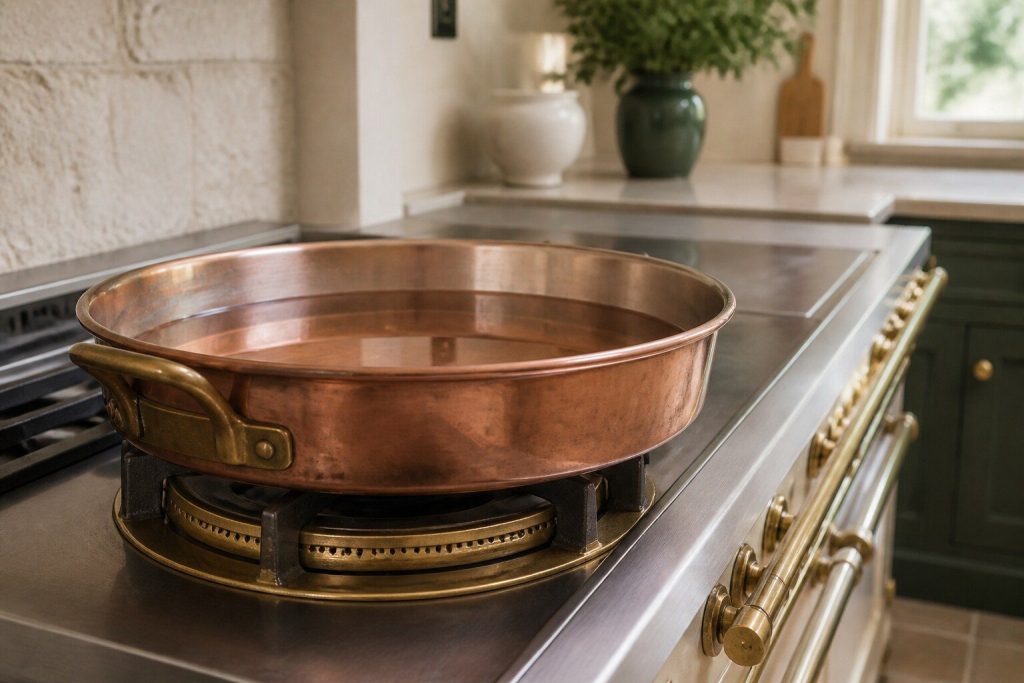
One burner dead while the others work is a different problem from a whole top that will not light, and the two are worth separating before anybody calls anybody. On brass burners in a humid kitchen the single dead burner is nearly always the electrode or the ports; a whole top points at the ignition module or the gas supply.
- One burner out is that burner — not the module
- All of them out is ignition or supply, and it is quick to tell
- Never hold the knob in while it clicks
-
The flame is the wrong color Yellow or orange flame
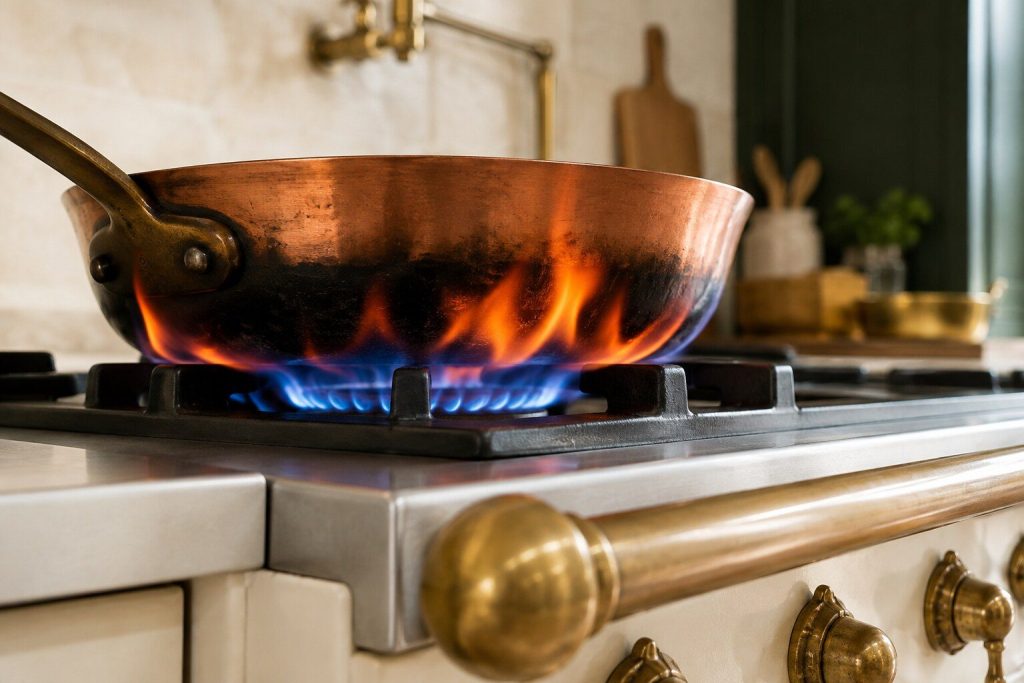
A gas flame on this range should be blue with a defined inner cone. Yellow or orange tips, soot on the bottom of a pan and a smell of unburnt gas mean the air-to-gas mixture is wrong, and on a range that has moved house or changed fuel that has a specific and common cause.
- Blue is correct — yellow is an air, fuel or orifice problem
- A bad propane conversion is the leading cause on a relocated range
- Soot on a pan bottom is the symptom people notice first
-
No heat and no explanation Oven will not light
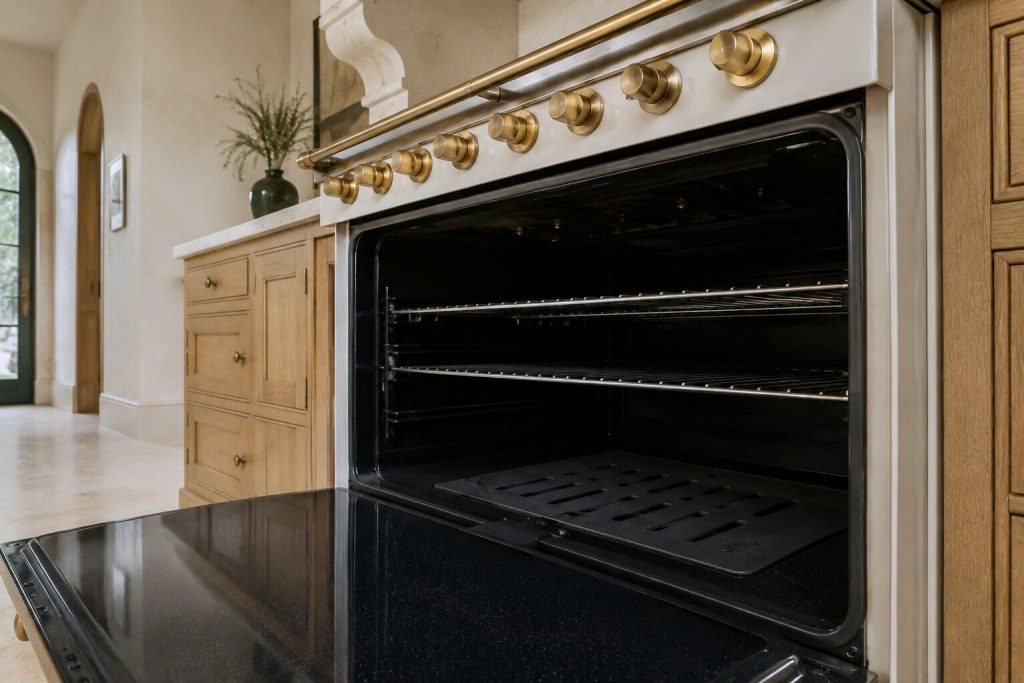
A vaulted gas oven that will not light gives you nothing to work with — no display, no code, no window — because La Cornue's Château guide contains no error codes at all. That is normal for this make. The diagnosis is igniter, safety valve, thermocouple and supply, measured in that order.
- No code is not a symptom — this oven has nothing to print one with
- A glowing igniter with no flame is the classic failure
- Two attempts, then stop and shut the range off at its valve
-
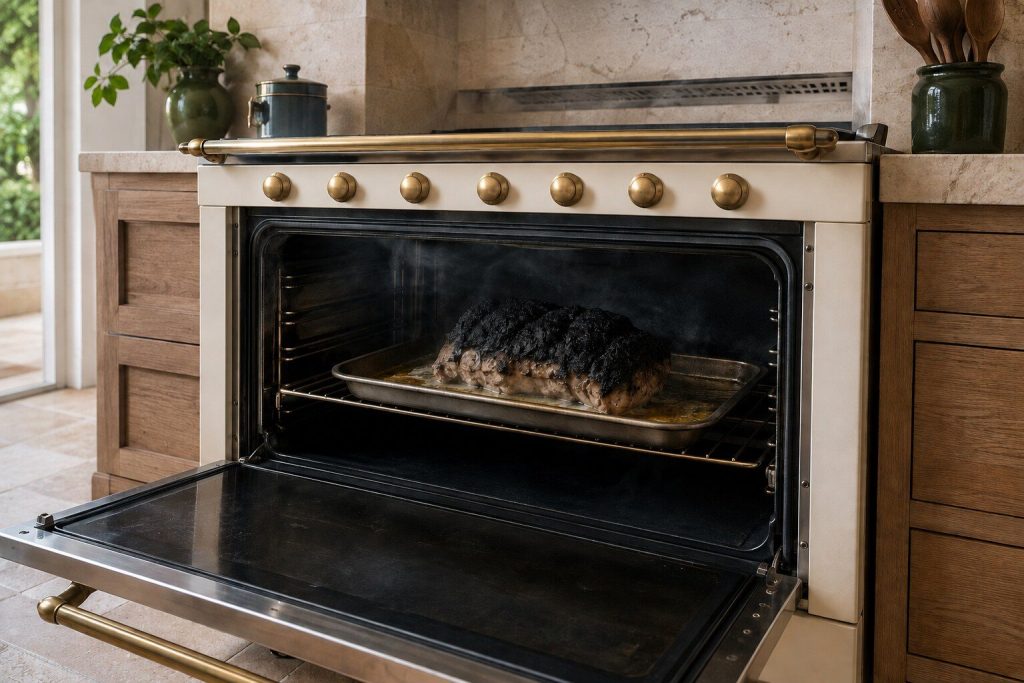
Everything cooks faster than it should Oven runs hot
An oven that has drifted upwards over years, and a cook who has quietly rewritten every recipe around it. The manual is explicit: an oven that gets hotter as the range gets older, and does not come back when the dial is turned down, wants a new thermostat rather than a new habit.
- The maker's own guide names this and names the answer
- Measured through a full cycle, not with one reading
- A corrected oven changes your cooking — expect that
-
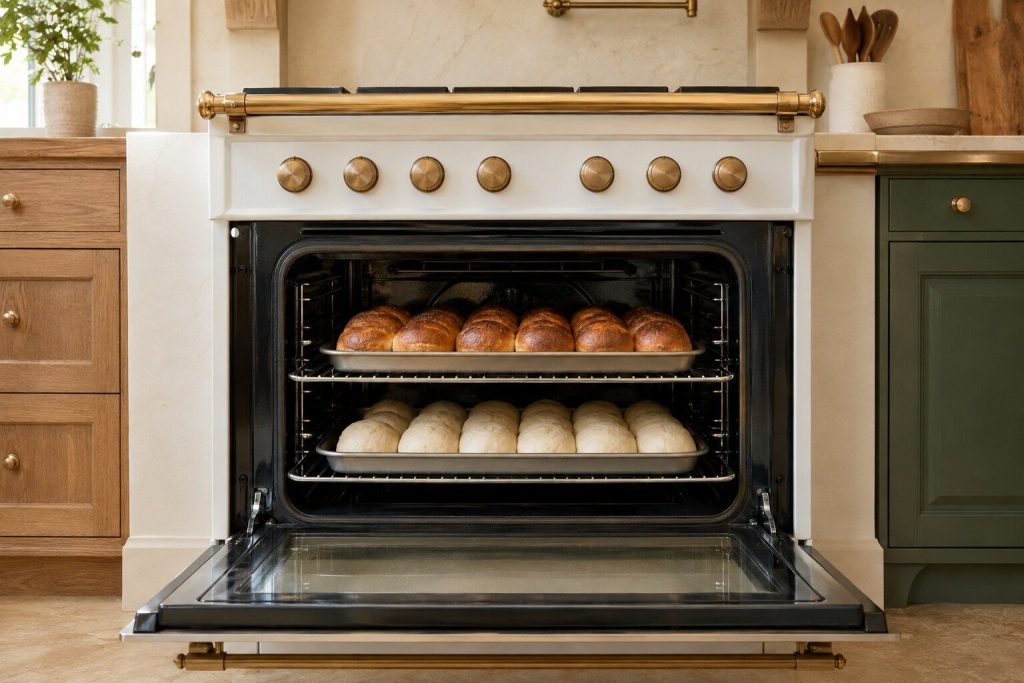
One side browns and the other does not Oven cooks unevenly
On a vaulted oven a degree of unevenness is the design — heat radiates from a dome and the strongest zone is not the geometric center. La Cornue's own cooking notes tell owners to turn a large item during cooking and to leave space between loaded shelves. The job here is to find what has made it worse than designed.
- Some unevenness is designed in — the manual says so
- Level, door seal and tray size come before any part
- A dish of water on the shelf is the maker's own test
Also called out to on this equipment
- Burner clicks but will not ignite
- Burner will not stay lit
- Weak or uneven flame
- Gas smell in the kitchen
- Stiff or stuck burner knob
- French top heats unevenly
- Cracked French top plate
- Grill or teppanyaki not heating
- Induction zone not heating
- Induction shows E2 and shuts off
- Cracked induction glass
- Oven not reaching temperature
- Oven door will not seal
- Hood suction has faded
- Hood blower will not start
- Hood noisy or vibrating
In more detail
About La Cornue G48 repair
What this model is
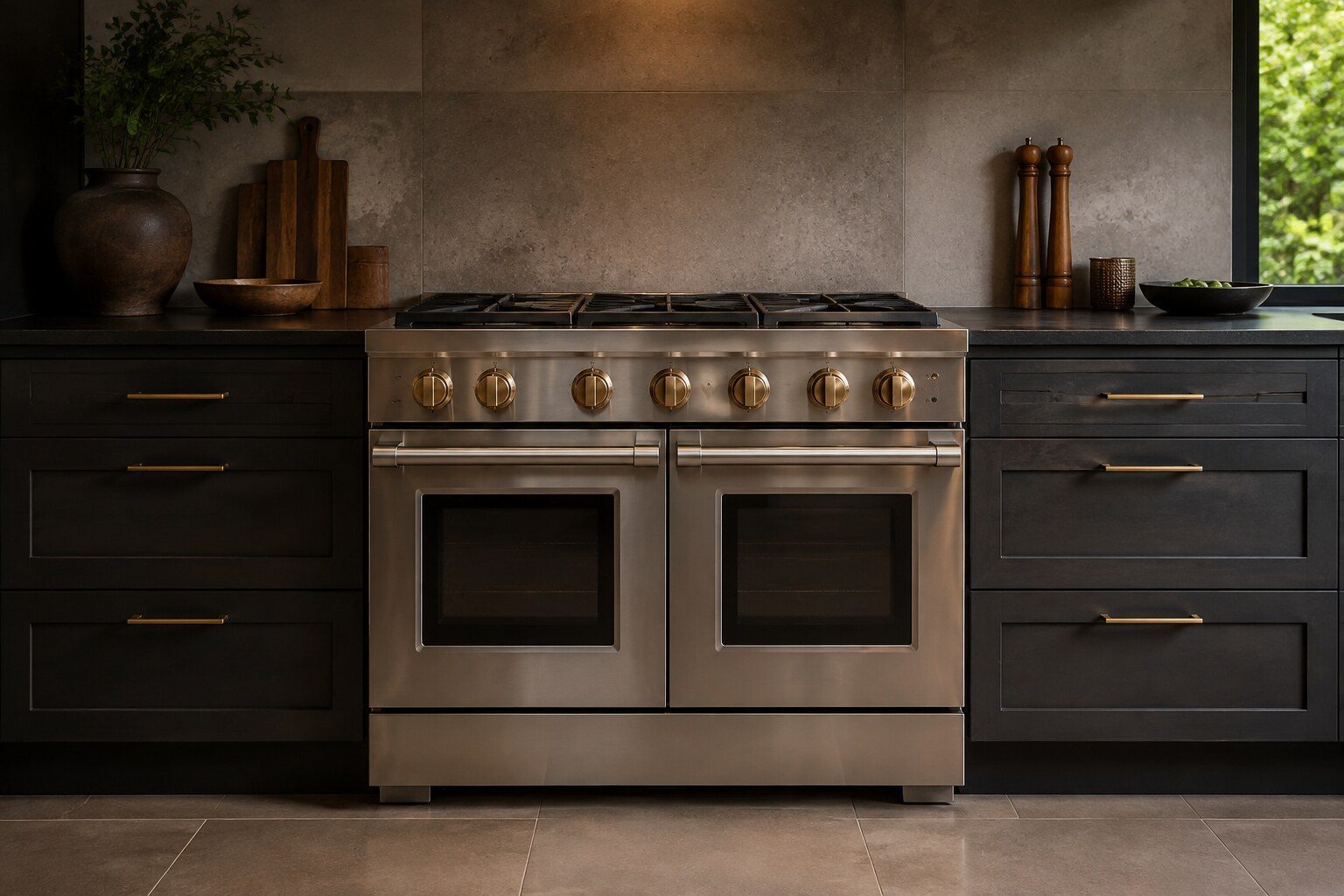
Château Grand Palais 180 — a the flagship — a 70.9-inch dual-fuel range with two grand vaulted ovens. 1800 mm wide, 70.9 inches, and about 710 lb uncrated against 1320 lb crated — the heaviest appliance this company services. Seven top configurations, N1 through N9, and two grand vaulted ovens: gas with an electric broiler at 13,000 BTU and 3.1 cubic feet on one side, electric at 2.7 cubic feet on the other. Everything on this page follows from that weight and from the fact that the two ovens are two different appliances.
One model, no siblings
La Cornue lists exactly one appliance whose model number begins G4, so there is no nearby variant to confuse it with — and no second model to borrow a part from either, which is worth knowing before a repair is agreed.
Does this appliance publish error codes?
This range publishes no error codes. The Château install and user guide has no troubleshooting section at all, and diagnosis on the gas side is igniter, safety valve, thermocouple and pressure, measured.
Checking the number
G48 is a current model in the manufacturer's own catalog, which is where this page took it from. Read the number off the rating plate rather than off a receipt or a delivery note, and photograph it — these numbers are long and one wrong character sends a technician to the wrong parts list.
This article is based on:
- Official manufacturer documentation
- Internal repair procedures
- Technician repair history
- Company quality standards
Before you book
Questions about La Cornue G48 repair
Is the G48 still worth repairing?
Usually. The G4 Château Series was built to be repaired, and a cabinet in good condition with sound cabinetry is worth keeping well past twenty years. Where the work approaches what the unit is worth, or a second major failure is already visible, we say so on the visit rather than after.
Can you still get parts for the G48?
For most of what fails, yes — OEM parts are ordered against your model. Legacy parts can take a few days to source, which is why we confirm a part is the problem before ordering it rather than after.
Where do I find the full model number on a G48?
On the frame inside the door, or behind the bottom drawer if there is one. Photograph the whole plate rather than writing it down — the letters after the digits decide which parts fit, and they are the part people misread most often.
What tends to go wrong on the G48?
Judging by what its owners search for: burner will not light, oven will not light, oven runs hot, oven cooks unevenly, and yellow or orange flame. Each of those has a page explaining the likely causes and what to check before booking anything.
Do you publish specifications for the G48?
No. Capacity, dimensions, configuration and production years are not something we can verify, and a plausible-looking table of them would be invention rather than information. What we can tell you is what the number means for a repair.