Appliance
La Cornue range hoods
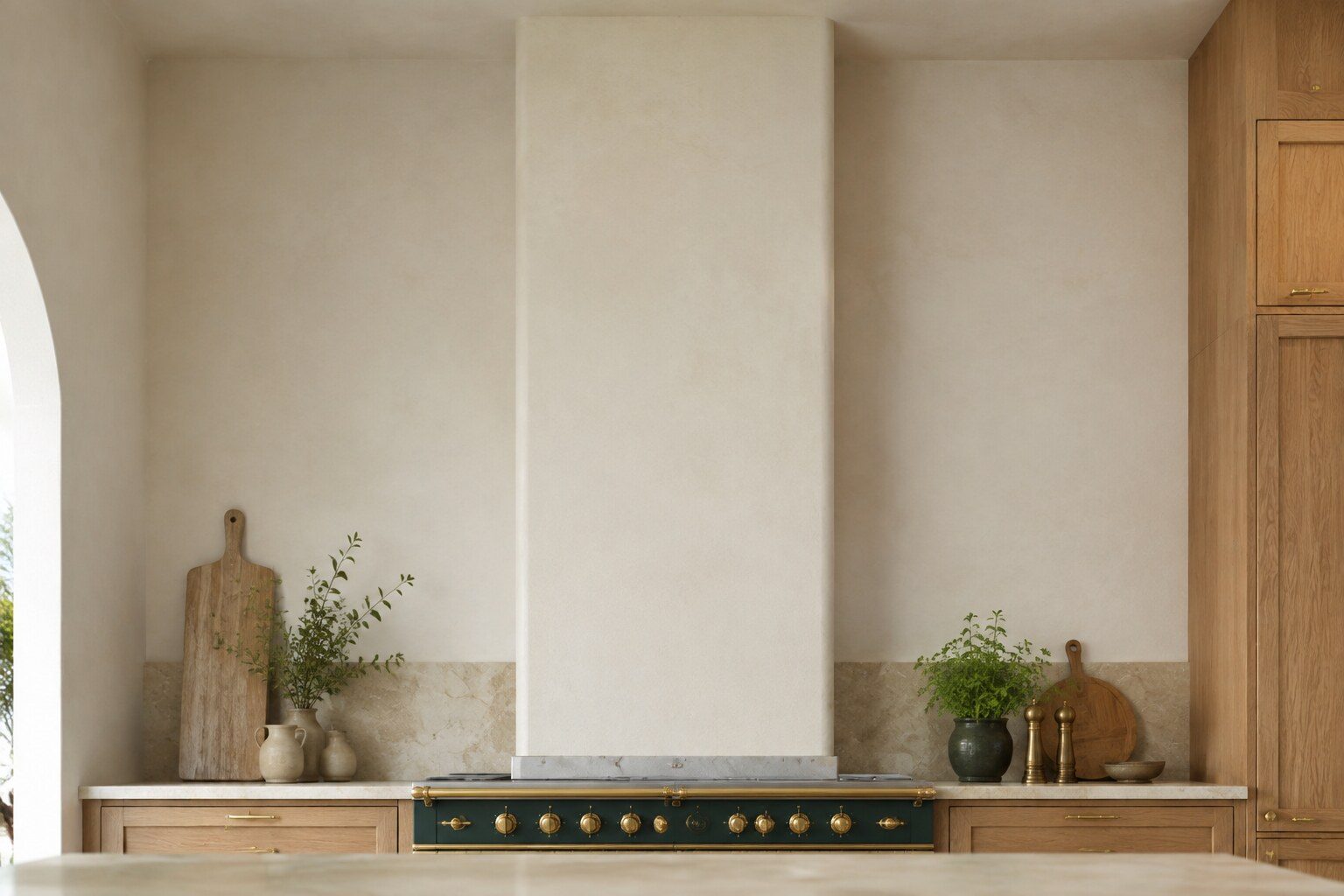
The hood over a La Cornue is not an accessory bought to match. A motorized Château hood starts at $17,400 for the 90 and runs past $25,000 for the Grand Palais 180, it is made in the same enamels and trims as the range, and it does real work: a 600 CFM blower on a four-speed variable motor, baffle filters with a grease capture system, three 20-watt lights and a remote. When one stops, the kitchen it was built for stops working properly.
- 3 symptoms we are called out to
- From $95 diagnostic, credited to the repair
- 59 cities and neighborhoods covered
- OEM parts available on order
The short version
What this equipment is, for a repair
Configurations
Château motorized hoods H11–H20 · island hoods · inserts · CornuFé Cascade, Euclid, Loge, Marquee
Access
Planned before the visit, not discovered on arrival
Parts
OEM, available on order
Diagnostic
From $95, credited to the repair
What goes wrong with it
Symptoms we are called out to on La Cornue range hoods
Each one covers the likely causes in the order they are worth checking, and what to do in five minutes before booking anything.
-
The motor runs and the air does not move Hood suction has faded
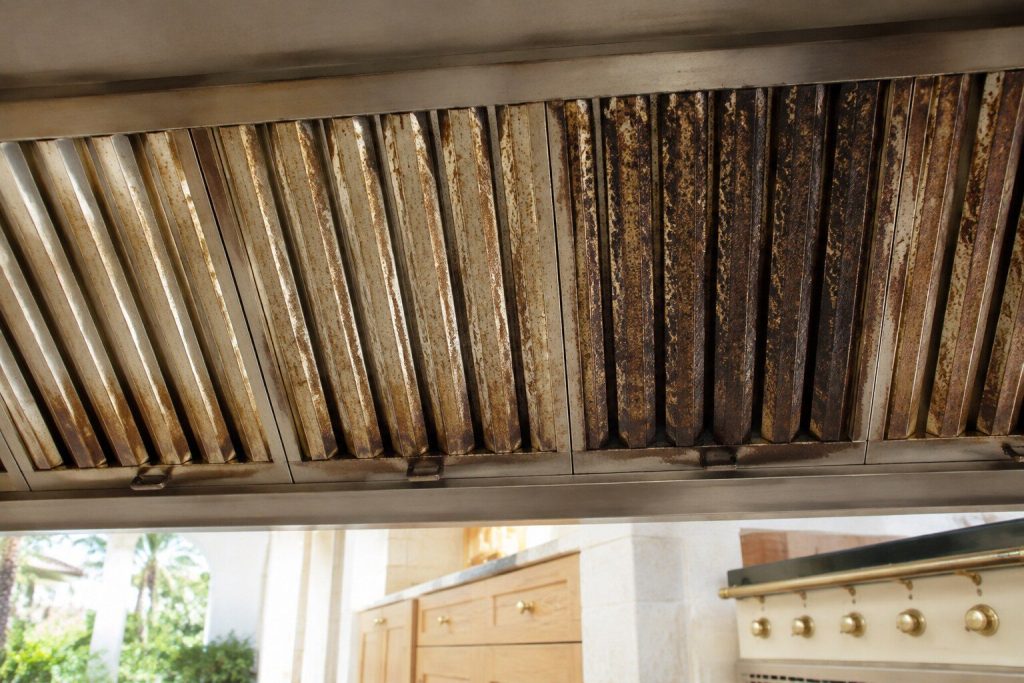
Faded extraction with a motor that still sounds healthy is almost never the motor. The 600 CFM these hoods are rated at is specified against an unobstructed six-inch duct — eight inches on the inserts — and the baffle filters are dishwasher safe, so the first fix on this call is frequently free.
- Saturated baffles first, because they cost nothing to rule out
- 600 CFM assumes an unobstructed duct — most losses are in the run
- A coastal termination cap is a salt and grease trap
-
Lights on and nothing turns Hood blower will not start
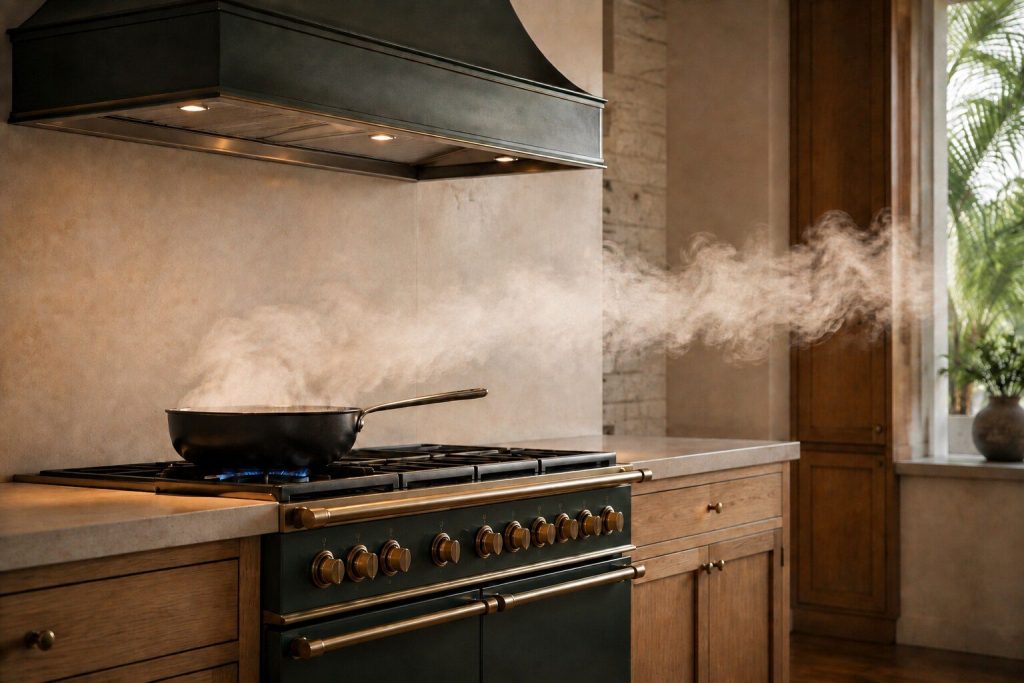
A hood with working lights and a dead fan has narrowed the problem down for you: the supply and part of the control are alive. What remains is the speed control, the motor and — on the cheapest and commonest failure — the capacitor that gets it turning.
- Lights working means the supply is fine
- The capacitor is cheap, common and tested before the motor is condemned
- A hum with no rotation is the classic capacitor signature
-
It works, but it has changed Hood noisy or vibrating
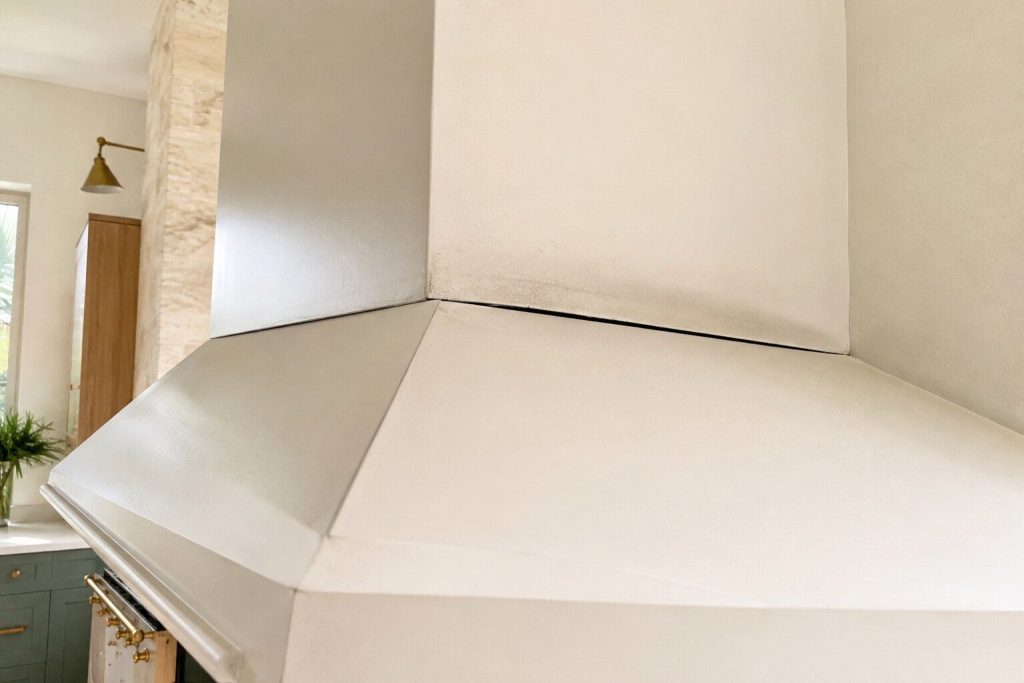
A hood that has started to rumble, drone or vibrate is a hood that will eventually stop, usually on a day when the kitchen is full. It is also the symptom people put up with longest, because it still extracts — and it is the one where acting early genuinely saves the expensive part.
- A rumble is a bearing, and bearings do not recover
- Ticking is usually contact — a blade or a shifted housing
- On a two-motor hood, one bad blower is easy to miss
What we do on it
Repairs we carry out on La Cornue range hoods
Starting figures for this equipment in South Florida. The exact cost is confirmed after an on-site diagnostic — and this is not the whole list of what can go wrong, so call if your problem is not here.
-
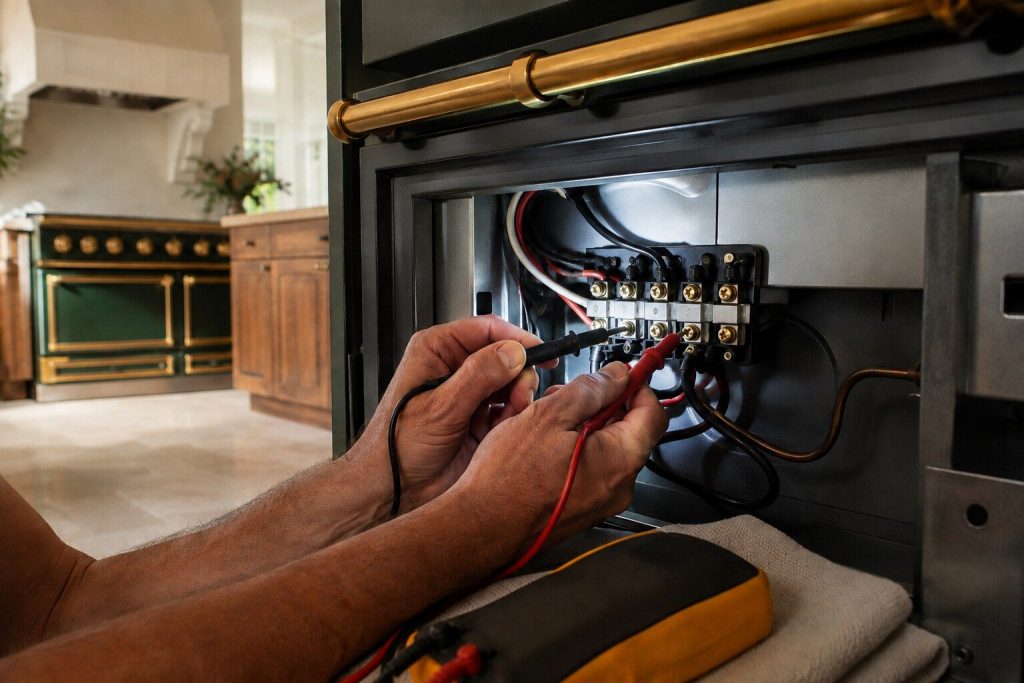
from $95 Diagnostic visit
One visit, one technician, one answer in writing. On a make with three error codes in its entire documentation, the diagnostic is not a formality before the repair — it is the repair's only source of information, and it is done with instruments rather than by elimination.
- Measured, not guessed — this make reports almost nothing on its own
- The configuration code read off the range, because it decides the parts
- Written findings and a from-price before anything is opened
-
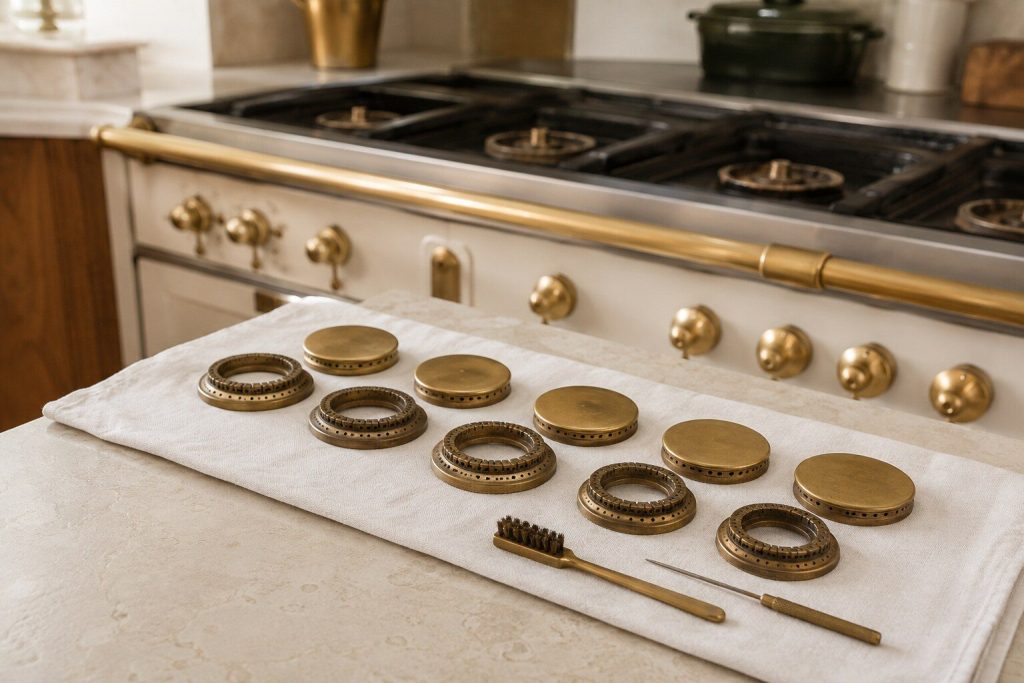
from $195 Appliance maintenance
An annual visit that exists because most of what goes wrong on this make goes wrong slowly. Burners drift rich, thermostats drift hot, baffles saturate, brass tarnishes, and the owner adapts to every one of them without noticing. This is the visit that measures instead of adapting.
- Burner combustion and oven calibration checked against specification
- Baffle filters, duct flow and blower condition on the hood
- Enamel, trim and seals inspected while they are still repairable
-
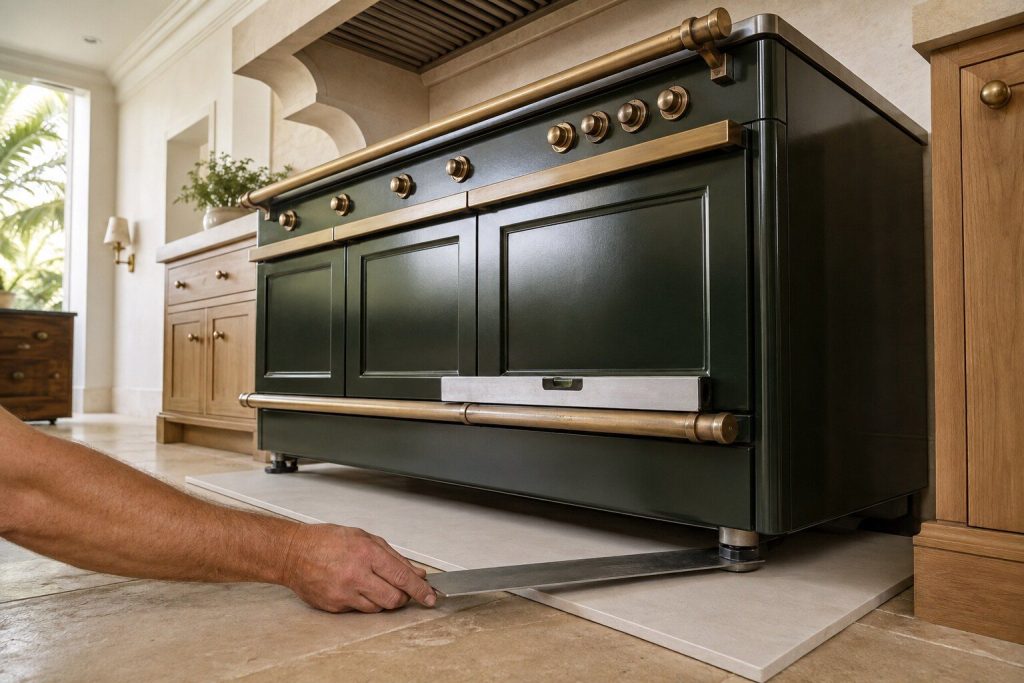
from $295 Appliance installation
A Château is delivered in a crate that can weigh 1,320 lb and is leveled to a specification, not to a spirit level held by eye. Installation covers gas, electrical, leveling, hood duct and the first-use check — and it covers the paperwork, because altitude, fuel type and voltage are specified at order time and have to match what is actually in the house.
- Gas and electrical to the maker's own requirements document
- Leveled to specification — a dish of water sits at one depth all over
- First-use check, and the hood duct measured rather than assumed
-
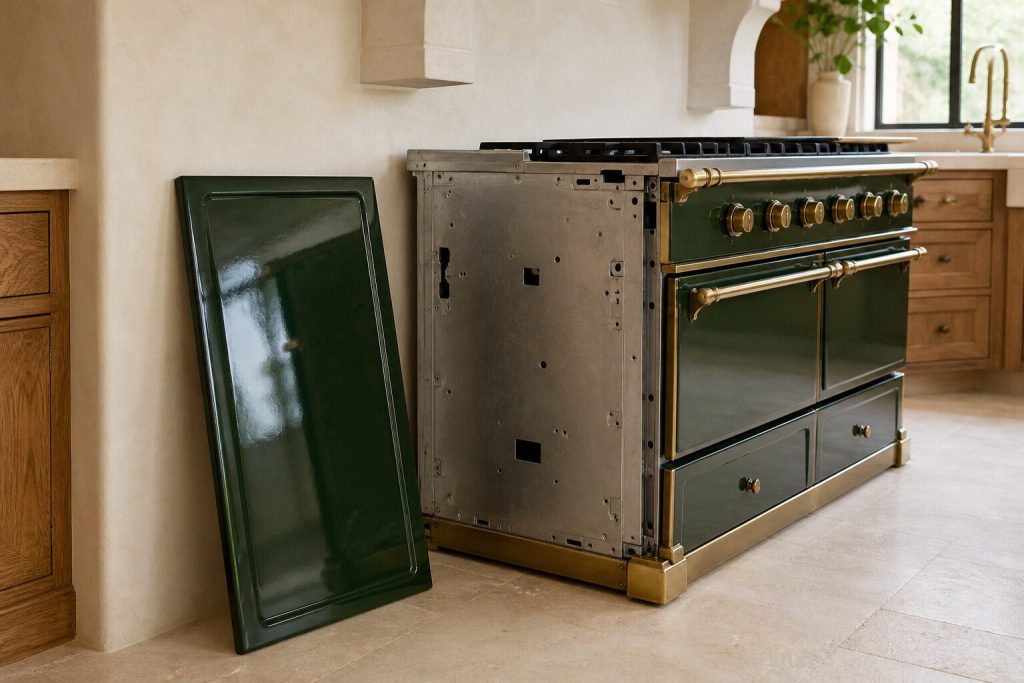
from $265 Enamel panel and trim service
Vitreous enamel is glass fused to steel and about fifty colors of it were available at order time. A chip is not cosmetic in this climate — the steel under it rusts outwards — and a tarnished brass handrail attacked with the wrong product loses its lacquer along with the tarnish.
- Chips stabilized or the part ordered in the range's own color reference
- Brass, copper, nickel and chrome trim treated by what they actually are
- Clear-coated finishes identified before anything is polished
-
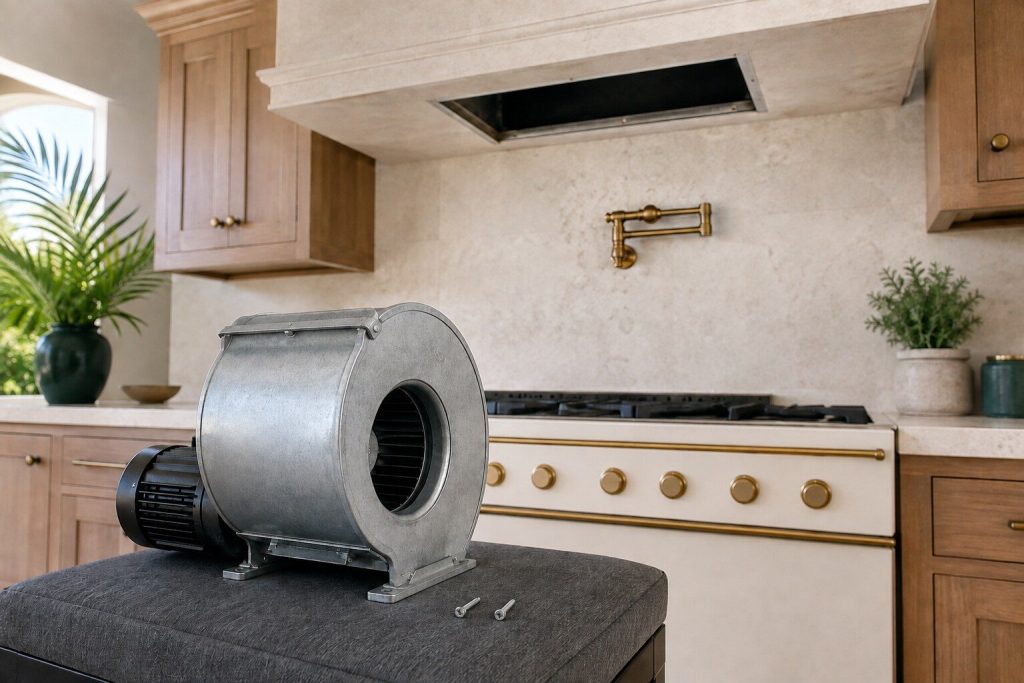
from $285 Hood blower and capacitor repair
One 600 CFM blower on a four-speed variable motor, and on the larger motorized hoods two of them. A blower that has started to rumble will eventually stop, usually on the day the kitchen is full — and where there are two, one can fail silently while the other carries the load.
- Rumble and vibration treated as a failing bearing, not a quirk
- Capacitor tested before the motor is condemned
- On a two-motor hood, both are tested — one can fail unnoticed
-
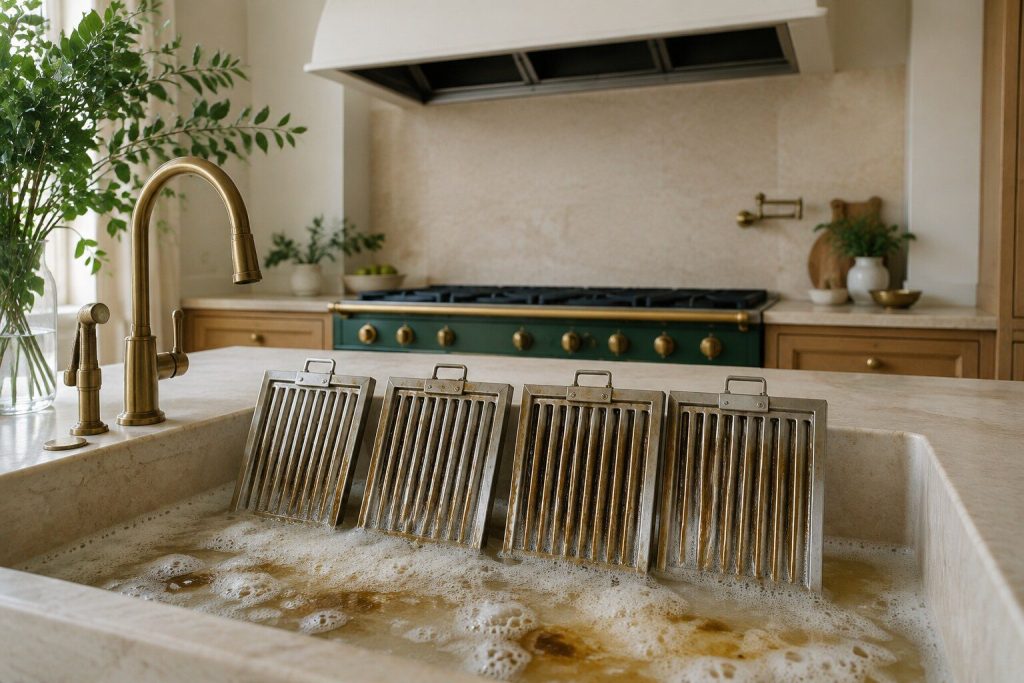
from $175 Hood filter and duct service
Faded suction with a motor that still sounds fine is almost never the motor. Baffle filters with a grease capture system are dishwasher safe, and the 600 CFM figure is specified against an unobstructed six-inch duct — eight on the inserts. Most of this job is the air path.
- Baffles cleaned or replaced first, because it costs nothing to rule out
- Duct run, damper and termination measured rather than assumed
- Airflow verified after the work, not promised
-
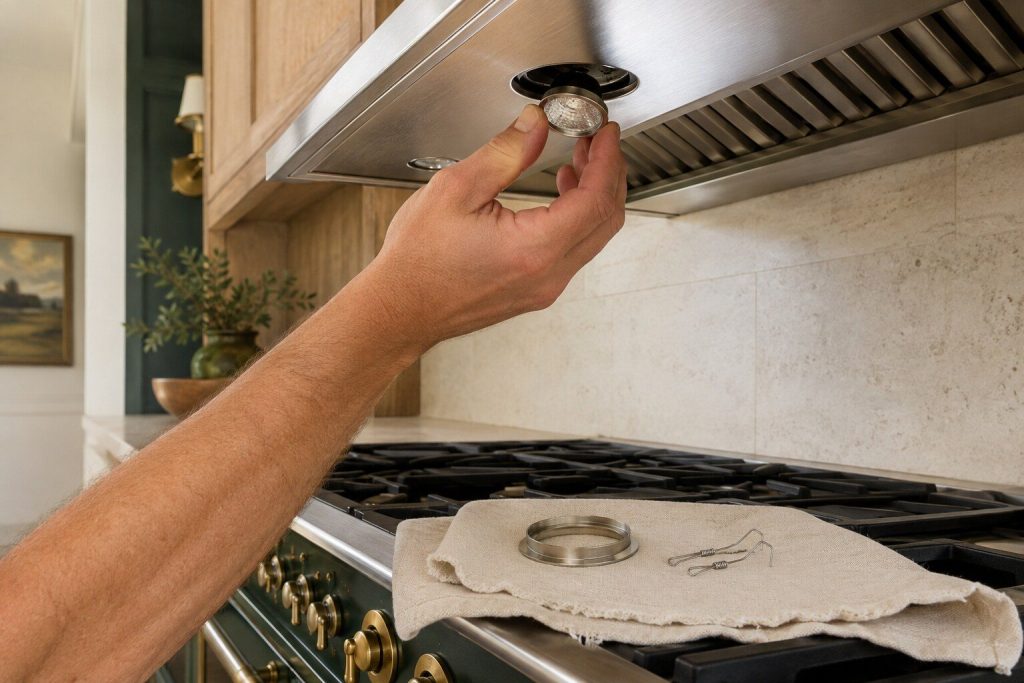
from $165 Hood lighting and remote repair
Three 20-watt high-intensity lamps on the Château hoods, LEDs on the newer inserts, and two separate control paths — in-hood activation and a remote. A hood that answers its own buttons but not the remote is a receiver, not a motor.
- Single lamps are often a customer job and we say so
- Remote and in-hood controls tested as separate paths
- Two or three lamps out at once is a socket or supply problem, not bulbs
-
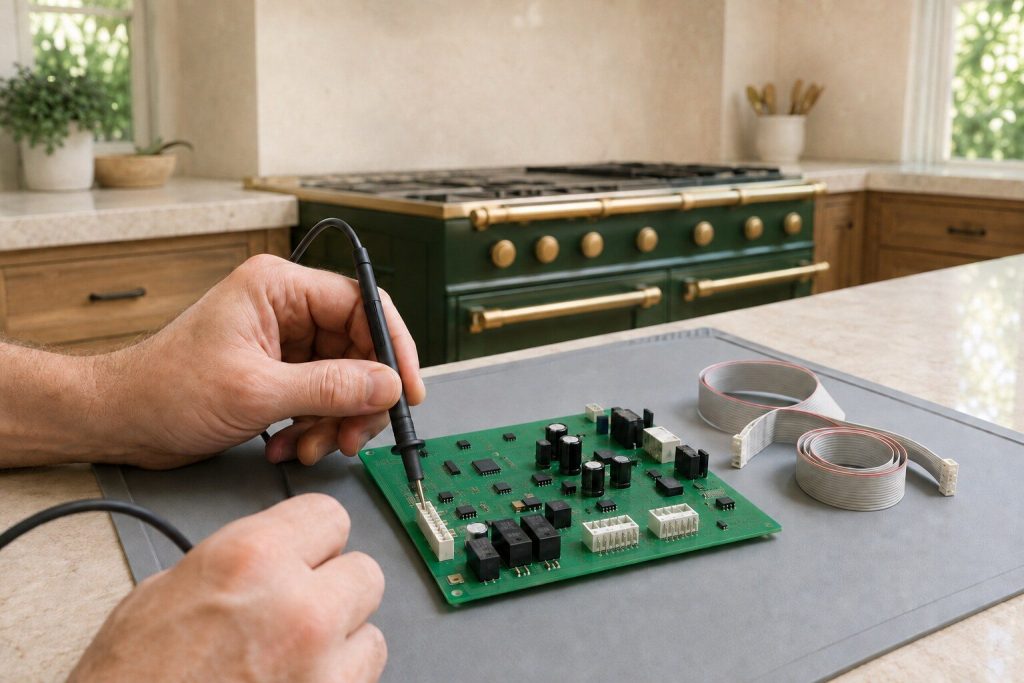
from $345 Appliance control board repair
Only part of this make has electronics at all, and where it does — induction generators, multifunction oven controls, the Tourelle, motorized hood controls — a board is the last suspect rather than the first. An Er code and a measured failure send us here; an unexplained symptom does not.
- Supply, sensors and loads eliminated before a board is blamed
- Er numbers documented and quoted, since only the maker's own board clears them
- Lead time stated up front on a hand-built appliance
In more detail
About La Cornue range hoods
What is actually in a Château hood
One 600 CFM blower on a four-speed variable motor, sized against an unobstructed 6-inch duct. Two dishwasher-safe baffle filters with a grease capture system. Three 20-watt high-intensity lights. Remote control and in-hood activation. Available in every color and trim the range is available in. The motorized wall hoods run H11TOM for the 90, H42TOM for the 120, H15TOM for the 135, H17TOM for the 150, H18TOM for the 165 and H20TOM for the Grand Palais 180, each in a strapped variant as well, alongside motorized island hoods and 18- and 22-inch inserts for the 120, 135 and 150 — the inserts carrying LED lights, an 8-inch duct and their own remote. Widths run from 1100 mm to 2000 mm and all of them stand 850 mm tall and 650 deep. It is a piece of the kitchen, priced from $17,400 to over $25,000, and it deserves the same technician as the range.
The failures, in the order we find them
Saturated baffles first, because they cost nothing to rule out and they are the commonest complaint dressed up as a dying fan. Then the duct: on a coastal house a termination cap is a salt-and-grease trap and a backdraft damper seizes. Then the electrical side, which on these hoods splits cleanly — lights, the four-speed control, the remote receiver, and the blower with its capacitor, each failing on its own. Bearing noise and vibration are the ones people live with longest and should not: a blower that has started to rumble is a blower that will eventually stop, usually on a day when the kitchen is full. Where a hood has two motors, one can fail silently and leave the other doing the work, and the only sign is that the room takes twice as long to clear.
Why an under-performing hood matters more over this range
Look at what is underneath it. A power burner at 22,000 BTU, a lava-rock grill at 14,500, a French top holding heat across a whole cast-iron plate, and on the larger ranges a gas oven venting into the same space. That is a lot of heat, moisture and grease for a kitchen in a climate where the windows stay shut and the air conditioning is working. A hood at half its rated flow puts that grease on the cabinets, the ceiling and eventually inside the range's own electronics — the same electronics whose one documented error code, E2, is about heat and ventilation. Servicing the hood is part of looking after the range, not a separate errand.
This article is based on:
- Official manufacturer documentation
- Internal repair procedures
- Technician repair history
- Company quality standards
Before you book
Questions about La Cornue range hoods
The suction has faded but the motor sounds normal.
Then start with the air path, not the motor. These hoods use baffle filters with a grease capture system rather than mesh, which is better at catching grease and just as capable of being saturated by it — and the baffles are dishwasher safe, so the first fix is often free. After that comes the duct: a 600 CFM blower is specified against an unobstructed 6-inch duct on the motorized hoods and an 8-inch one on the inserts, and a run that has been extended, crushed behind a cabinet, fitted with a stiff backdraft damper or terminated in a mesh cap full of a decade of grease will not move the air the fan is capable of moving. We measure it rather than guess. If the path is clear and the performance is still down, then it is the blower or its capacitor.
Only one speed works, or the remote has stopped.
Both point at the controls rather than the fan, and they are separate paths on these hoods: there is in-hood activation and there is a remote, and a motorized hood that answers its own buttons but not the remote is a receiver or a battery problem, not a motor problem. A four-speed variable motor stuck on one speed is usually the switch or the speed control. It is worth trying both control methods before you book, and telling us which one worked — that single sentence often decides which part we bring.
One of the lights is out. Can I do that myself?
Often yes, and we would rather say so than take the call. The Château hoods carry three 20-watt high-intensity lamps and the newer inserts use LEDs. On the range itself the oven lamp is a 40 W 230 V halogen G9, sold in any electrical shop and explicitly not a warranty part in La Cornue's own guide — power off, oven cold, unscrew the cover counter-clockwise, and expect the cover to be stiff. If two or three lamps have gone at once, or a new lamp does not light, stop there: that is a socket or a supply problem and it is worth a visit.
Can the hood be repaired without damaging the enamel?
That is the whole skill of the job on this make. A Château hood is 850 mm tall and 650 deep, weighs what a hand-built enamelled steel canopy weighs, and is finished in the same color and trim metal as the range under it — which means every mark made while getting the blower out is a mark on a matched pair. We work with the canopy protected and supported, take the load off the mounts before undoing them, and where a motorized hood carries two blowers we plan for both. If a panel does need refinishing, that is a color reference from the original order rather than a guess at a shade.
Where we do it
Across Miami-Dade, Broward, and Palm Beach
Same terms everywhere we go: an on-site diagnostic first, the price agreed in writing, and the exact figure confirmed once we have seen the unit.
Neighborhoods people ask for by name