Appliance
La Cornue rangetops
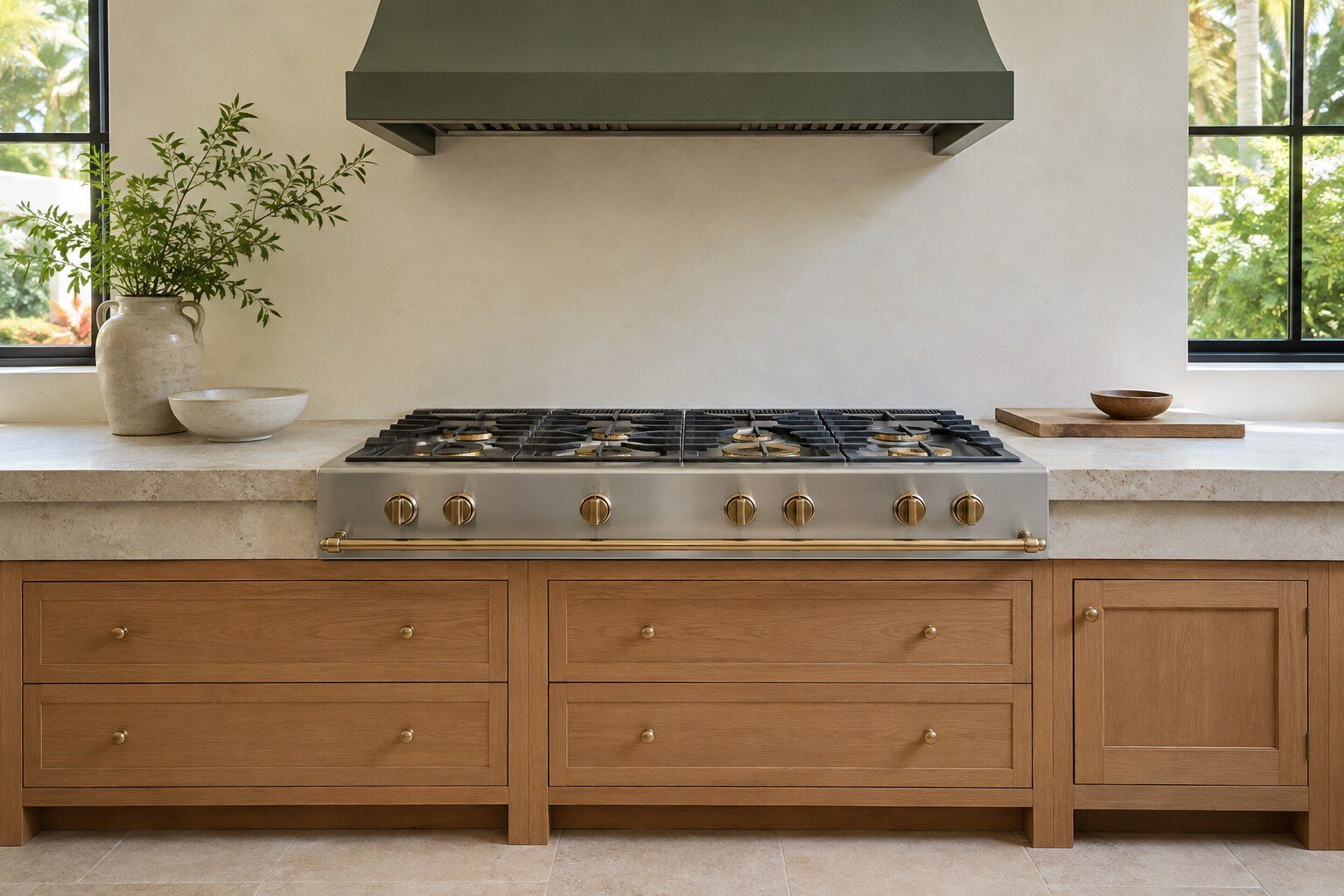
A rangetop is the top half of a La Cornue sold in its own right: the same brass burners, the same plaque coup de feu, the same grill, induction and teppanyaki modules, in a stainless frame 200 mm deep that drops into a counter with nothing underneath it. T40 through T48, from 600 to 1800 mm wide. Every cooktop repair applies to it and no oven repair does — which makes it the simplest appliance in the line and the one most often confused with the range on a booking.
- 10 symptoms we are called out to
- From $95 diagnostic, credited to the repair
- 59 cities and neighborhoods covered
- OEM parts available on order
The short version
What this equipment is, for a repair
Configurations
T40 to T48 · 200 mm into the counter · the same modules, no ovens beneath
Access
Planned before the visit, not discovered on arrival
Parts
OEM, available on order
Diagnostic
From $95, credited to the repair
What goes wrong with it
Symptoms we are called out to on La Cornue rangetops
Each one covers the likely causes in the order they are worth checking, and what to do in five minutes before booking anything.
-
No flame, and no obvious reason Burner will not light
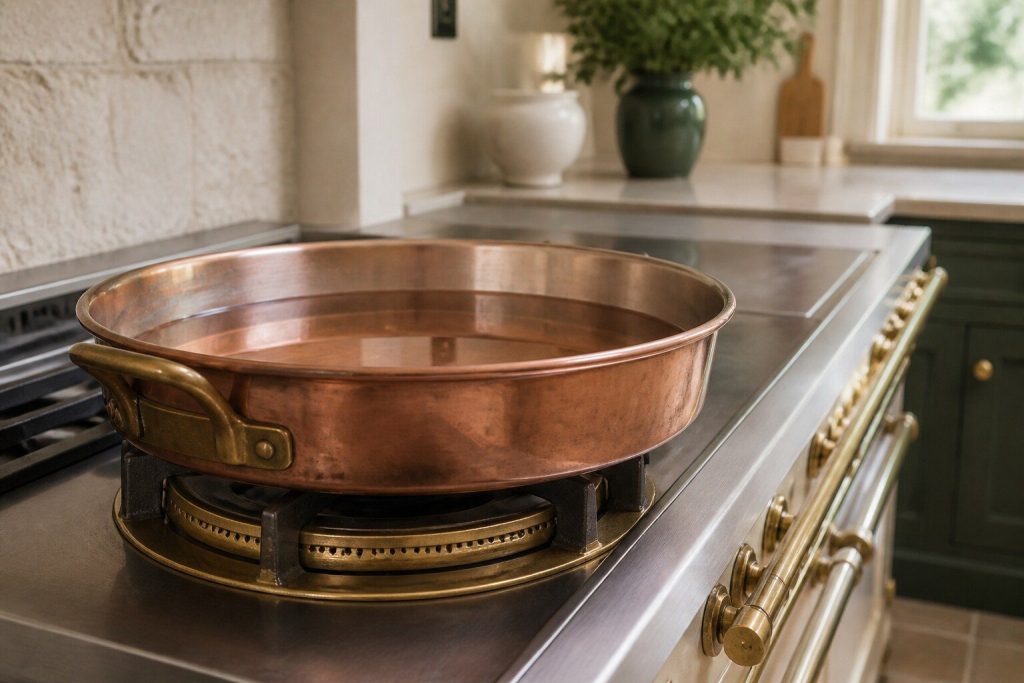
One burner dead while the others work is a different problem from a whole top that will not light, and the two are worth separating before anybody calls anybody. On brass burners in a humid kitchen the single dead burner is nearly always the electrode or the ports; a whole top points at the ignition module or the gas supply.
- One burner out is that burner — not the module
- All of them out is ignition or supply, and it is quick to tell
- Never hold the knob in while it clicks
-
The flame is the wrong color Yellow or orange flame
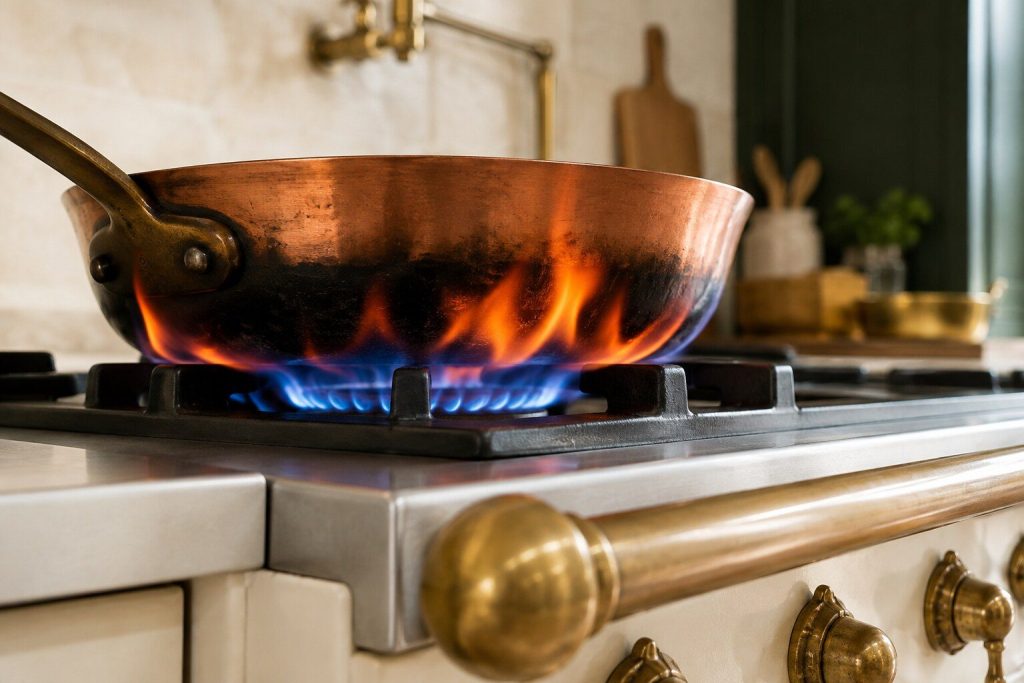
A gas flame on this range should be blue with a defined inner cone. Yellow or orange tips, soot on the bottom of a pan and a smell of unburnt gas mean the air-to-gas mixture is wrong, and on a range that has moved house or changed fuel that has a specific and common cause.
- Blue is correct — yellow is an air, fuel or orifice problem
- A bad propane conversion is the leading cause on a relocated range
- Soot on a pan bottom is the symptom people notice first
-
It lights and then goes out Burner will not stay lit
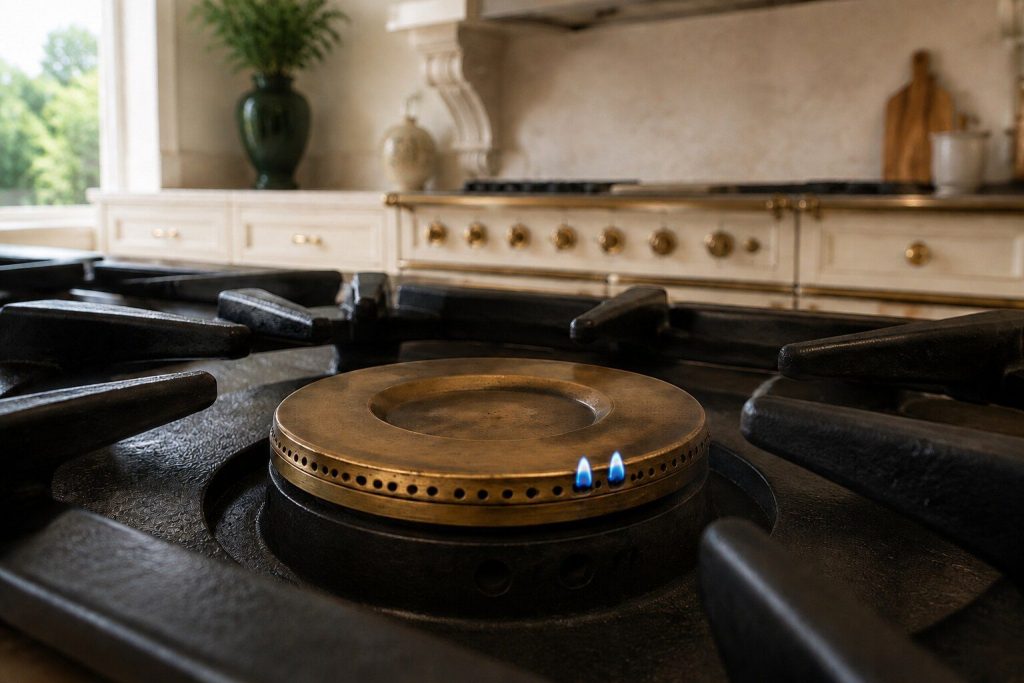
A burner that lights while the knob is held and dies when it is released is a flame supervision failure, and it is the same problem whether it happens on a surface burner or in the oven. The safety system is doing what it exists to do; the reason it no longer trusts the flame is what needs finding.
- The safety chain is working — it just no longer sees the flame
- Thermocouple, then valve, in that order
- An oven that does this is a same-day call
-
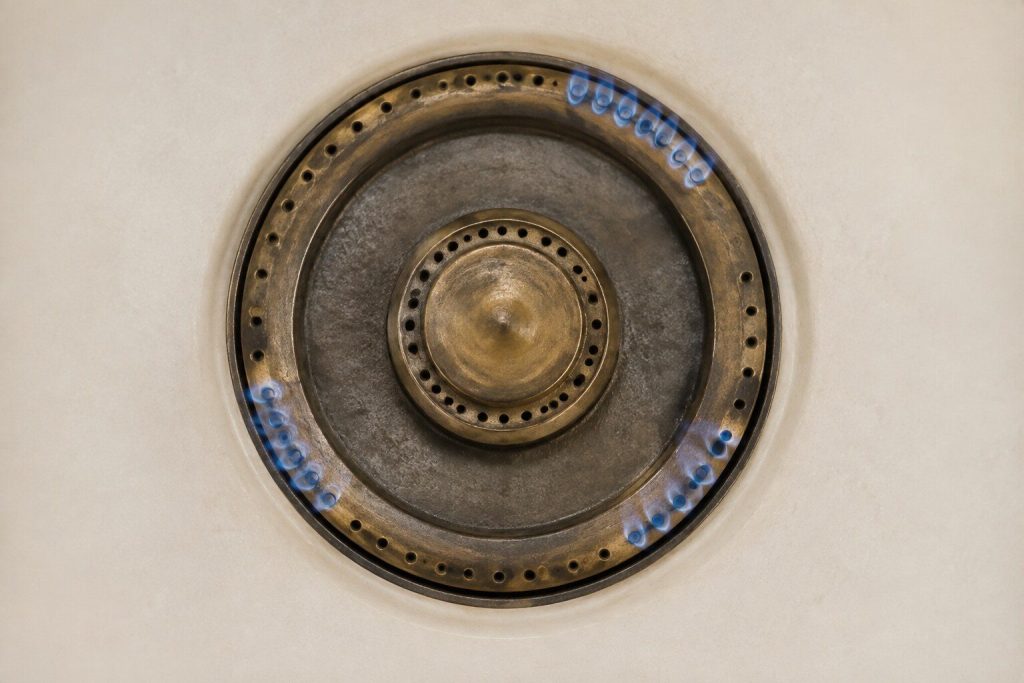
It lights, but there is no heat in it Weak or uneven flame
A burner that lights cleanly and produces half the heat it used to, or a flame that is tall on one side of the crown and absent on the other. On a range whose front burners are rated at 17,000 BTU and whose power burner is rated at 22,000, a weak flame is not a small loss — it changes what the range can do.
- Uneven around the crown is ports or a misseated cap
- Weak on every burner is supply pressure or a regulator
- The plaque burner is the one nobody notices has weakened
-
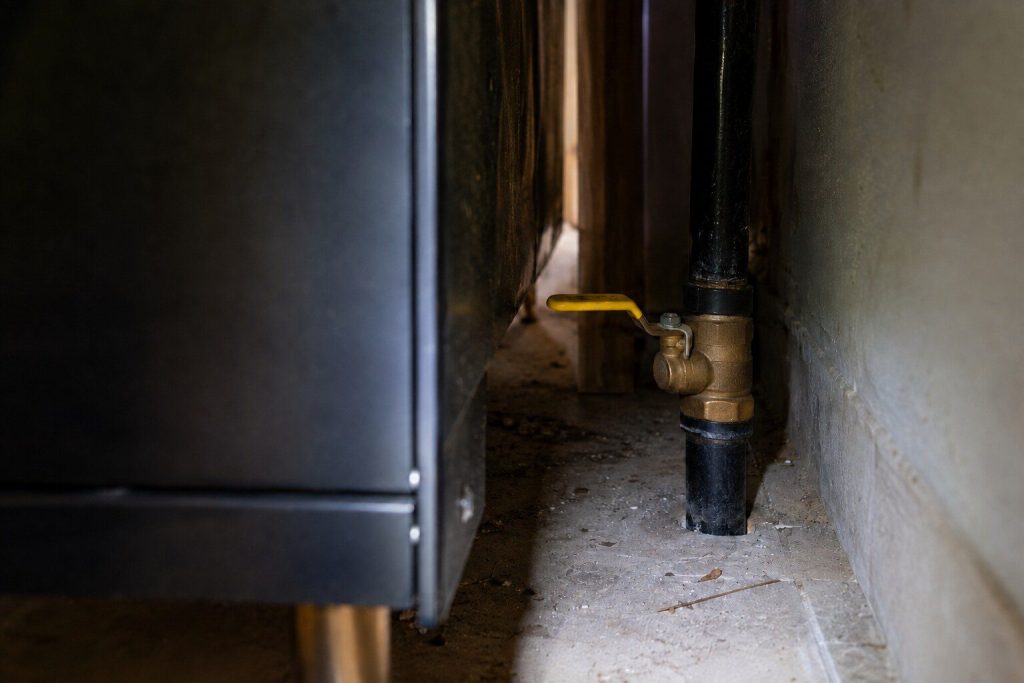
Stop and read this first Gas smell in the kitchen
A smell of gas is the one symptom on this site with instructions rather than a diagnosis. Turn the range off at its shut-off valve, open windows, do not operate switches or the hood, and get everyone out if the smell is strong. Then call the gas utility or 911 first and us second.
- Utility or 911 first, appliance repair second
- Do not operate switches, the hood or a phone in the room
- A faint smell only while lighting is a different matter from a persistent one
-
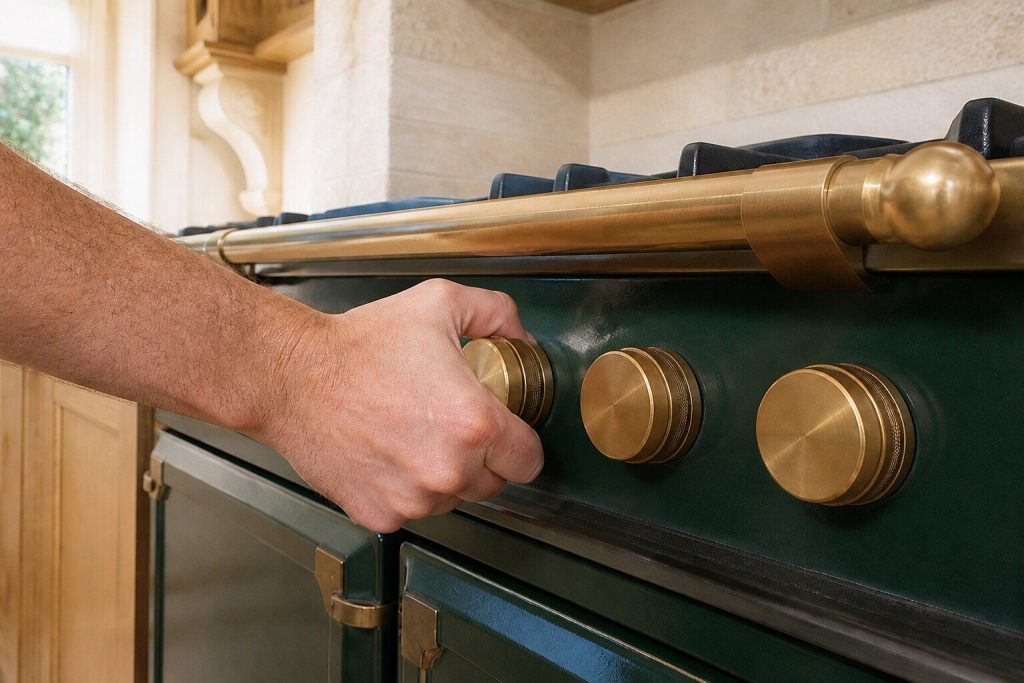
It turns, but not easily Stiff or stuck burner knob
Brass knobs on mechanical valves, used several times a day for years in a humid kitchen. Stiffness is the early warning and it is worth acting on: the failure mode of a stiff valve is not that it becomes hard to turn, but that one day it stops where it is.
- A stiff valve is failing, not dry
- A knob that will not return cleanly to off is urgent
- Every valve gets worked, not only the one complained about
What we do on it
Repairs we carry out on La Cornue rangetops
Starting figures for this equipment in South Florida. The exact cost is confirmed after an on-site diagnostic — and this is not the whole list of what can go wrong, so call if your problem is not here.
-
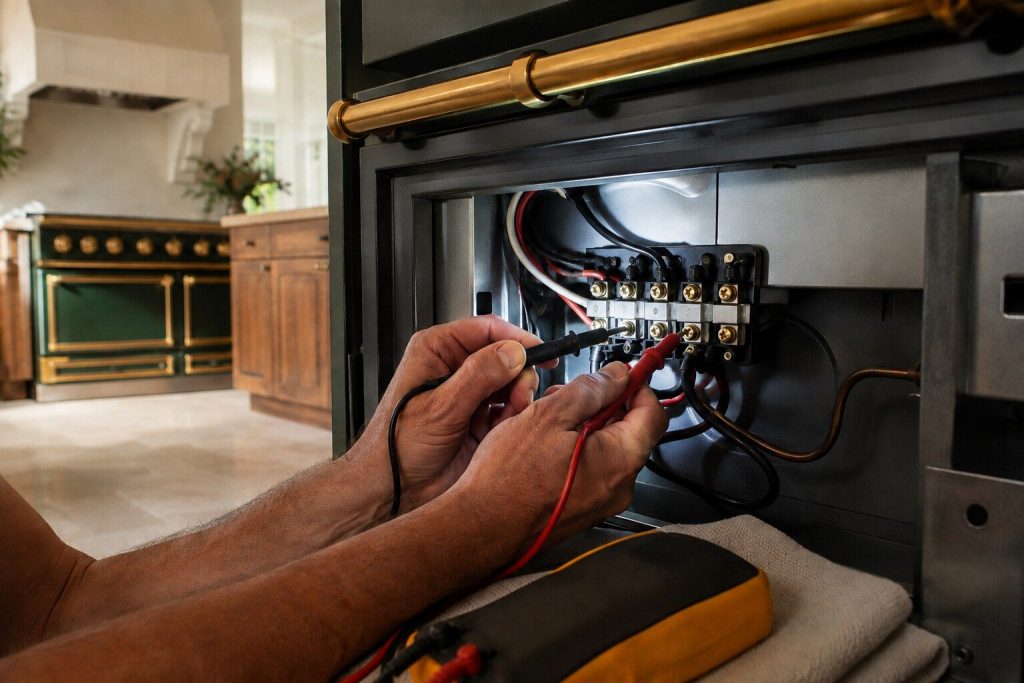
from $95 Diagnostic visit
One visit, one technician, one answer in writing. On a make with three error codes in its entire documentation, the diagnostic is not a formality before the repair — it is the repair's only source of information, and it is done with instruments rather than by elimination.
- Measured, not guessed — this make reports almost nothing on its own
- The configuration code read off the range, because it decides the parts
- Written findings and a from-price before anything is opened
-
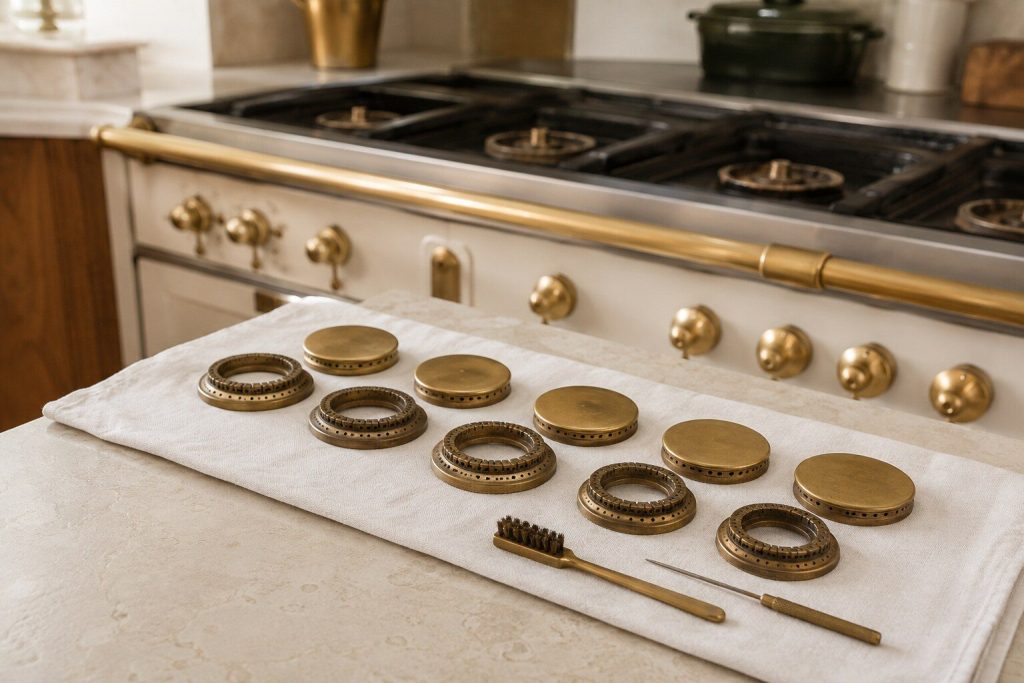
from $195 Appliance maintenance
An annual visit that exists because most of what goes wrong on this make goes wrong slowly. Burners drift rich, thermostats drift hot, baffles saturate, brass tarnishes, and the owner adapts to every one of them without noticing. This is the visit that measures instead of adapting.
- Burner combustion and oven calibration checked against specification
- Baffle filters, duct flow and blower condition on the hood
- Enamel, trim and seals inspected while they are still repairable
-
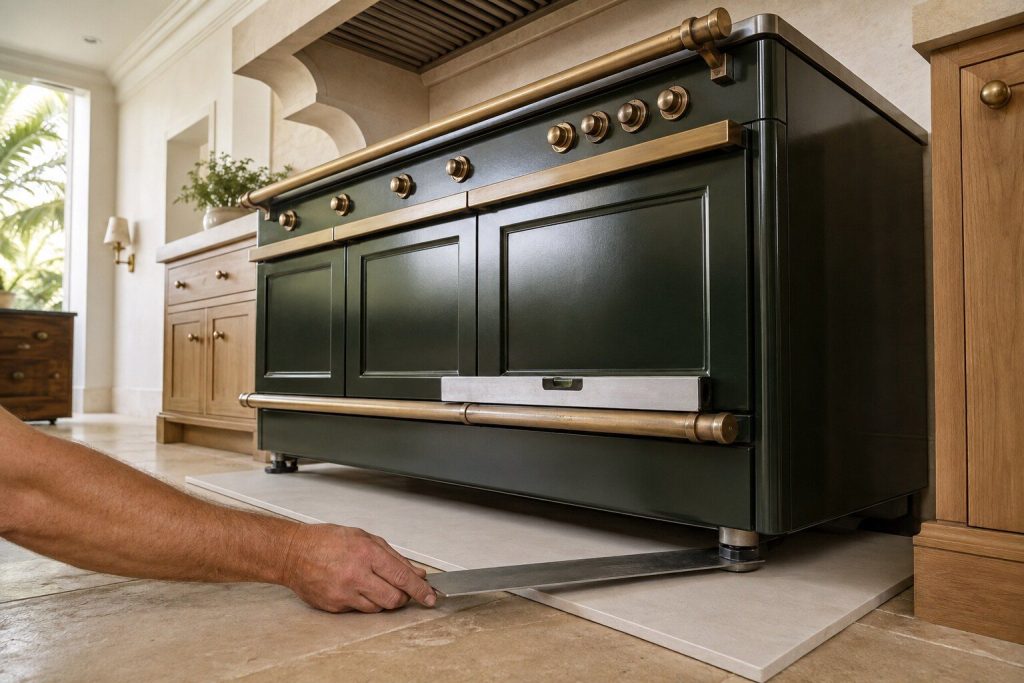
from $295 Appliance installation
A Château is delivered in a crate that can weigh 1,320 lb and is leveled to a specification, not to a spirit level held by eye. Installation covers gas, electrical, leveling, hood duct and the first-use check — and it covers the paperwork, because altitude, fuel type and voltage are specified at order time and have to match what is actually in the house.
- Gas and electrical to the maker's own requirements document
- Leveled to specification — a dish of water sits at one depth all over
- First-use check, and the hood duct measured rather than assumed
-
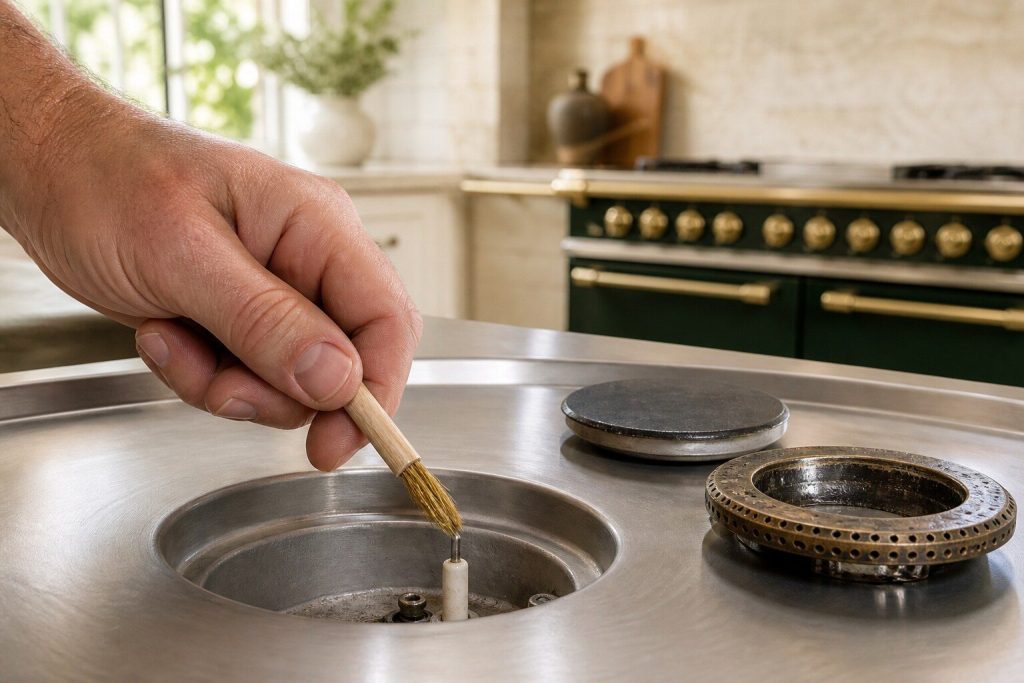
from $155 Surface burner and igniter service
Clicking with no flame, a burner that lights and will not stay lit, a lazy yellow flame. On brass burners in a coastal kitchen these are three symptoms of a short list of causes, and none of them is the ignition module when only one burner is affected.
- One burner out is the electrode or the ports — not the module
- Yellow flame is air mix, fuel or an orifice, and it is measurable
- Ports cleared properly rather than poked at
-
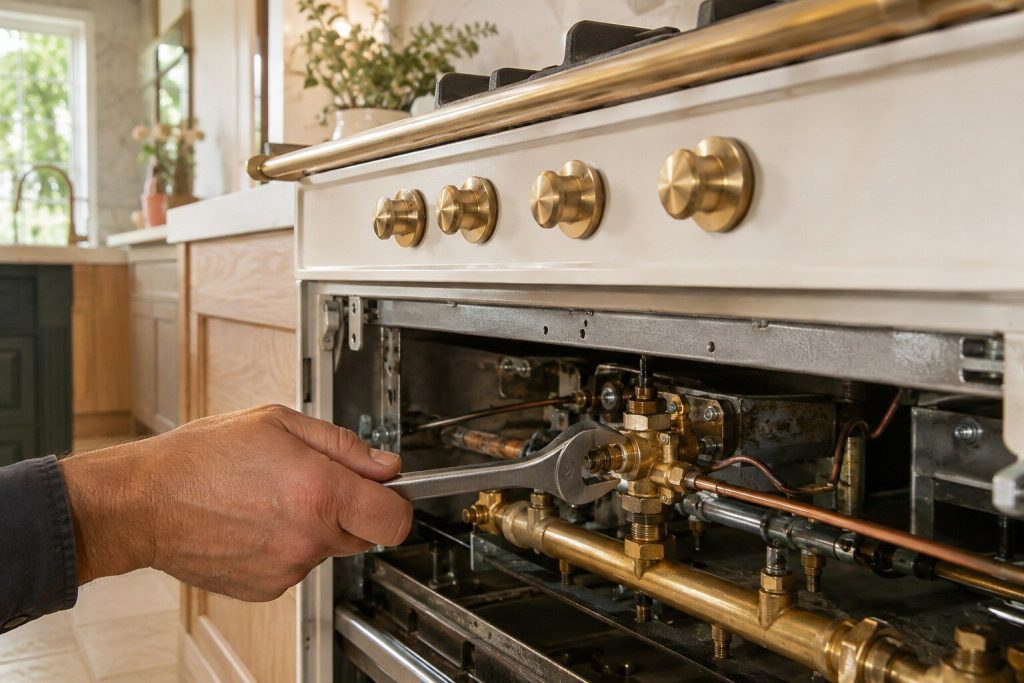
from $265 Gas valve and thermocouple repair
The safety chain: a valve that will not hold open, a thermocouple that no longer tells it to, a knob that has gone stiff or will not shut off cleanly. This is the part of a gas range where nothing gets improvised and nothing gets left half-diagnosed.
- Safety valve and flame supervision tested as a system
- Stiff or leaking knob valves rebuilt or replaced, never lubricated over
- Leak-checked at every joint that was opened
-
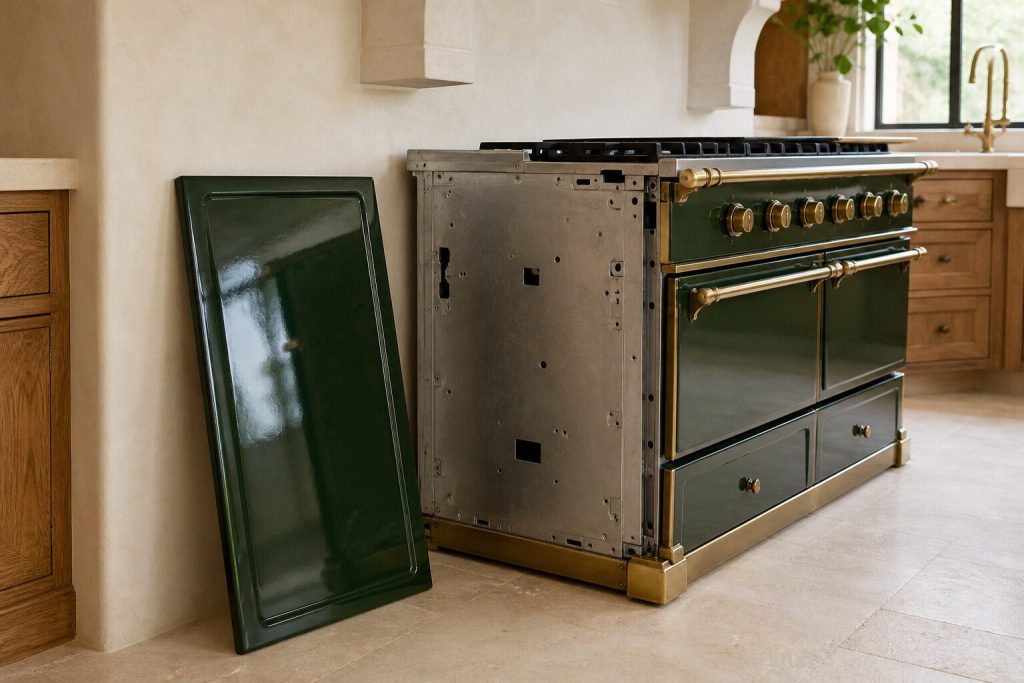
from $265 Enamel panel and trim service
Vitreous enamel is glass fused to steel and about fifty colors of it were available at order time. A chip is not cosmetic in this climate — the steel under it rusts outwards — and a tarnished brass handrail attacked with the wrong product loses its lacquer along with the tarnish.
- Chips stabilized or the part ordered in the range's own color reference
- Brass, copper, nickel and chrome trim treated by what they actually are
- Clear-coated finishes identified before anything is polished
-
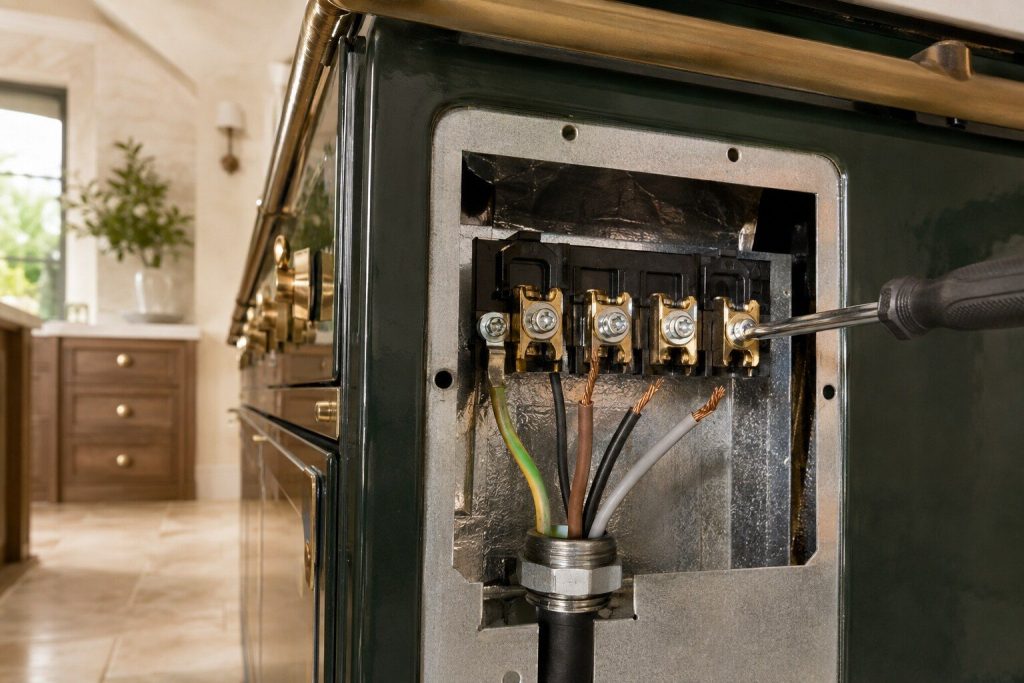
from $295 Cooktop control and wiring repair
U400 latched on the display, a hob with no display at all, a fuse or residual-current device that trips repeatedly. All three are supply-and-connection problems in the maker's own words, and all three turn up after something in the house changed.
- The appliance connection checked against the maker's specification
- Over-voltage and lost supply distinguished from a dead control
- Findings written down when the problem is upstream of the range
-
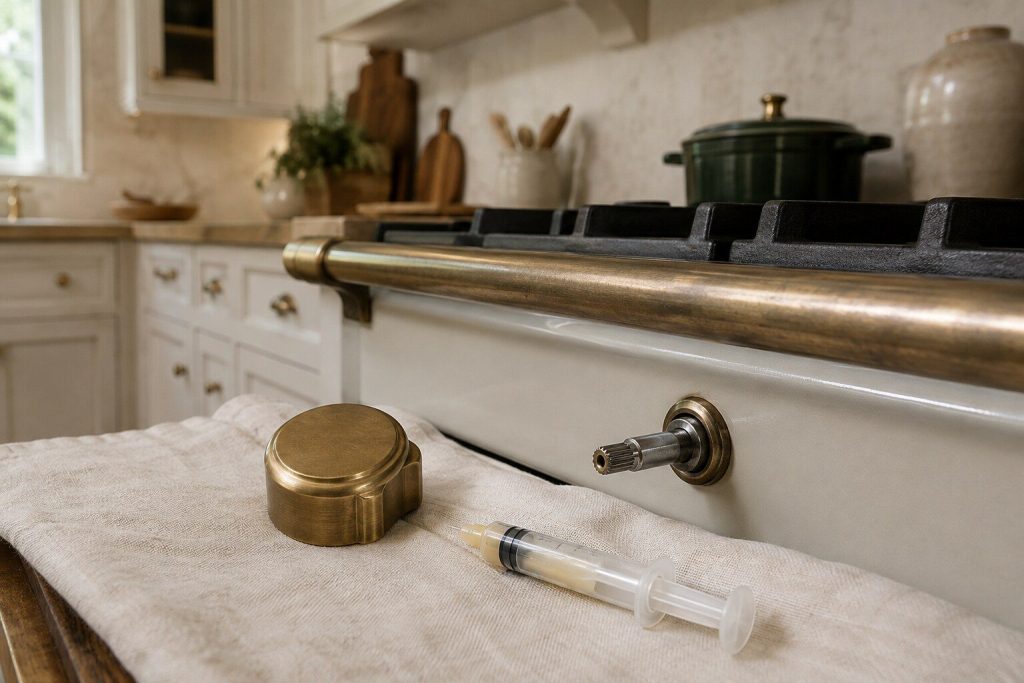
from $195 Burner knob and valve rebuild
Brass knobs on mechanical valves, used several times a day for decades in a humid kitchen. Stiffness is the early warning; a knob that will not return cleanly to off is the reason this is not a job to postpone.
- A stiff valve is failing, not dry — it is rebuilt or replaced
- Knobs, bezels and stems treated as wear parts
- Every valve on the range checked, not only the one complained about
-
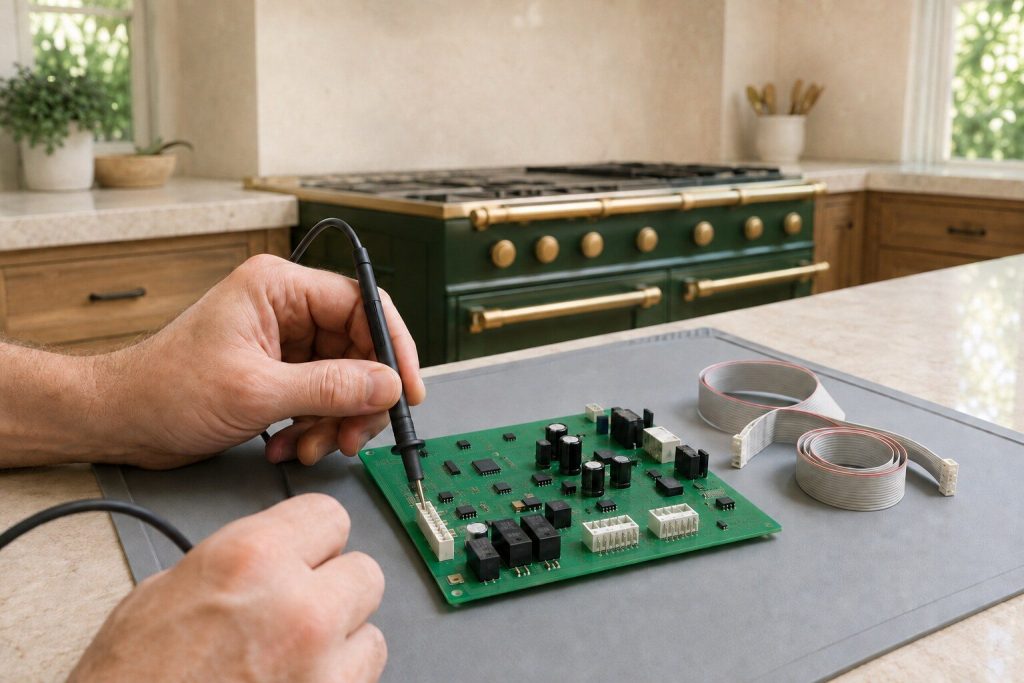
from $345 Appliance control board repair
Only part of this make has electronics at all, and where it does — induction generators, multifunction oven controls, the Tourelle, motorized hood controls — a board is the last suspect rather than the first. An Er code and a measured failure send us here; an unexplained symptom does not.
- Supply, sensors and loads eliminated before a board is blamed
- Er numbers documented and quoted, since only the maker's own board clears them
- Lead time stated up front on a hand-built appliance
In more detail
About La Cornue rangetops
The same top, sold without the range under it
T48 for the Grand Palais 180 at 1800 mm, T46 for the 165, T45 for the 150, T43 for the Châtelet 135, T42 for the 120, T49 for the Grand Castel 90, T47 for the Castel 75 and T40 for the Castel 60. All of them 700 mm deep and 200 mm high, dropping into a counter. Weights run from about 121 lb uncrated on a T40 to 290 lb on a T48 — against 710 lb for the range of the same width, which is the practical difference between the two appliances when anything has to move. The configuration codes are the range’s own, so a T45 can arrive in any of nine top layouts and the code is what says which modules are actually in the frame.
What a rangetop cannot do, and what that means for a repair
It has no ovens. So there is no oven thermostat to drift, no vaulted cavity, no door seal to harden, no oven igniter and no electric broiler — which removes about half the failure list of a range at a stroke. What is left is the top: brass burners and their electrodes, the gas valves and their stems, the plaque and the burner beneath it, the grill module and its rock bed, induction coils and their generator, and the teppanyaki element. Every one of those is reached from the front with the unit in place. It also means a rangetop kitchen usually has a second appliance doing the baking, and on this make that is either a Château Tourelle wall oven or somebody else’s oven entirely — worth telling us which.
The confusion worth clearing up before a visit
“Range top” and “cooktop only” are both things people type, and on most makes they mean the same appliance as a cooktop. On La Cornue the rangetop is its own product line with its own price list entries, and the owner of this site asked for it to be its own page for that reason. So: if there are oven doors under it, you have a range. If it sits in a counter with cabinetry or a drawer beneath, you have a rangetop. If it is a ceramic panel with no brass on it at all, you have either a T40 or the induction module of a mixed top. Those three answers send different parts to your kitchen.
This article is based on:
- Official manufacturer documentation
- Internal repair procedures
- Technician repair history
- Company quality standards
Before you book
Questions about La Cornue rangetops
Is a rangetop repair the same as a range repair?
For the cooktop itself, yes: a plaque is a plaque and an induction zone is an induction zone whether there are ovens beneath it or not, and the configuration codes are the same — N1 to N9 on a 180, K1 to K6 on a 150, B1 to B3 on a 75. What differs is everything else. There are no oven thermostats to drift, no vaulted cavities, no door seals and no igniters for an oven burner. So the diagnosis is narrower, and a booking that says rangetop rather than range saves us bringing parts for an oven that does not exist.
Ours is set into a stone counter. Does that make access difficult?
Less than people fear, and it is the reason to say so before the visit. The modules lift out and the controls are reached from the front, so most work on a rangetop happens without disturbing the counter at all. What does need planning is anything requiring the unit to come up out of its cutout — a stone counter is somebody's fabrication and a rangetop sealed into one is not something to lever at. Tell us the counter material when you book and we will bring what the job actually needs.
Can a rangetop have ovens added underneath later?
Not by converting it. A range is a different appliance with a different body, a different frame, adjustable legs and cavities built into it — a T45 is 200 mm high and a G45 stands 914 mm on its legs. What people do instead is pair a rangetop with a Château Tourelle wall oven in a cabinet run, which is exactly what the Tourelle was designed for. That is two appliances, and we service both.
The Castel 60 rangetop has no burners at all.
Correct, and it is the one member of the family that is induction by definition rather than by option: a large induction hob with four cooking zones, integrated induction controls and a flush integrated backsplash, ordered as T40USAA. So it is the only rangetop where all three of the error codes this make publishes — E2, U400 and Er with a number — are always the relevant vocabulary, and where none of the gas diagnostics apply.
Where we do it
Across Miami-Dade, Broward, and Palm Beach
Same terms everywhere we go: an on-site diagnostic first, the price agreed in writing, and the exact figure confirmed once we have seen the unit.
Neighborhoods people ask for by name