Service
La Cornue propane conversion service
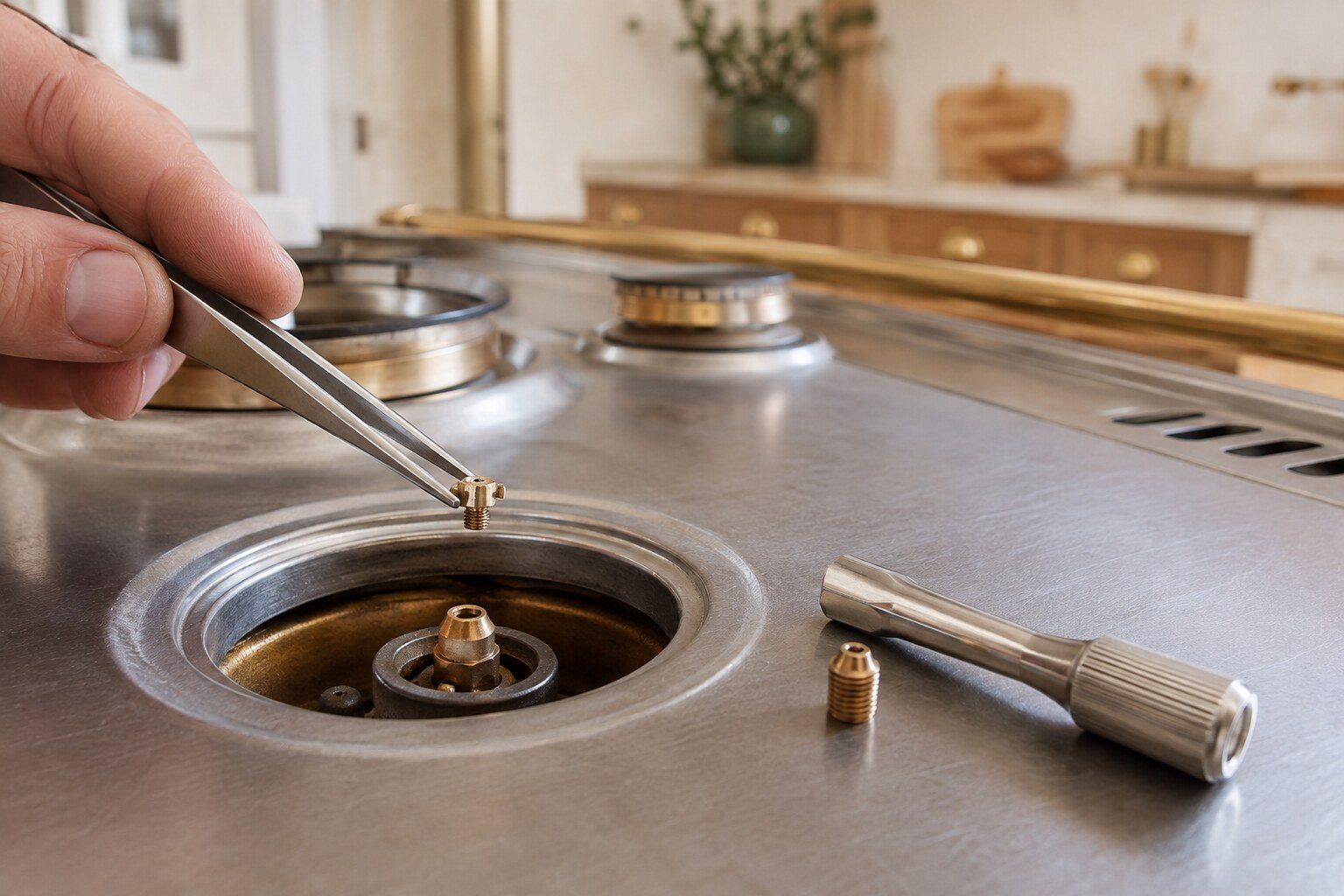
La Cornue publishes a conversion procedure and a specific parts set for the CornuFé 90 and 110, and specifies fuel at order time on a Château. A conversion done with approximate parts gives yellow flames, soot and burners that will not hold a simmer — and it is one of the most common things we undo on a range that has changed house or fuel.
- From $95 diagnostic, credited to the repair
- 59 cities and neighborhoods covered
- OEM parts available on order
- In writing the price, before anything is opened
Before you read on
What this job costs and how it is agreed
A starting figure, not a quote. What moves it is the model, how the unit is built in and which part it needs — settled after the on-site diagnostic.
Starts at
from $325
After a diagnostic from $95, which comes off the bill when you go ahead.
or call (305) 614-3699
Diagnostic
From $95, credited to the repair
The price
In writing, before anything is opened
Warranty
On the labor we performed
On the visit
How this visit actually goes
The same order every time, so nothing is opened and nothing is charged before you have seen the figure and said yes.
-
01
Establish what it is set for now
Orifices, regulator, air shutters. A half-converted range is common and dangerous to assume about.
-
02
Fit the maker's own parts
The published orifice set and regulator for that model. A universal kit is where yellow flames and soot come from.
-
03
Set every burner
Fronts, rears, power burner, the plaque burner, the grill. Missing the ones nobody uses is how this comes back.
-
04
Both ovens and the broiler
The oven burners are converted too, and their flame is the one nobody sees.
-
05
Leak check, then label it
Every joint tested, and the range left with a written record of the fuel it is now set for.
Applies to
The La Cornue units we carry this work out on
-
Dual fuel · gas · all-induction — Château, Châtelet, Castel, Grand Palais, CornuFé La Cornue range repair in Miami
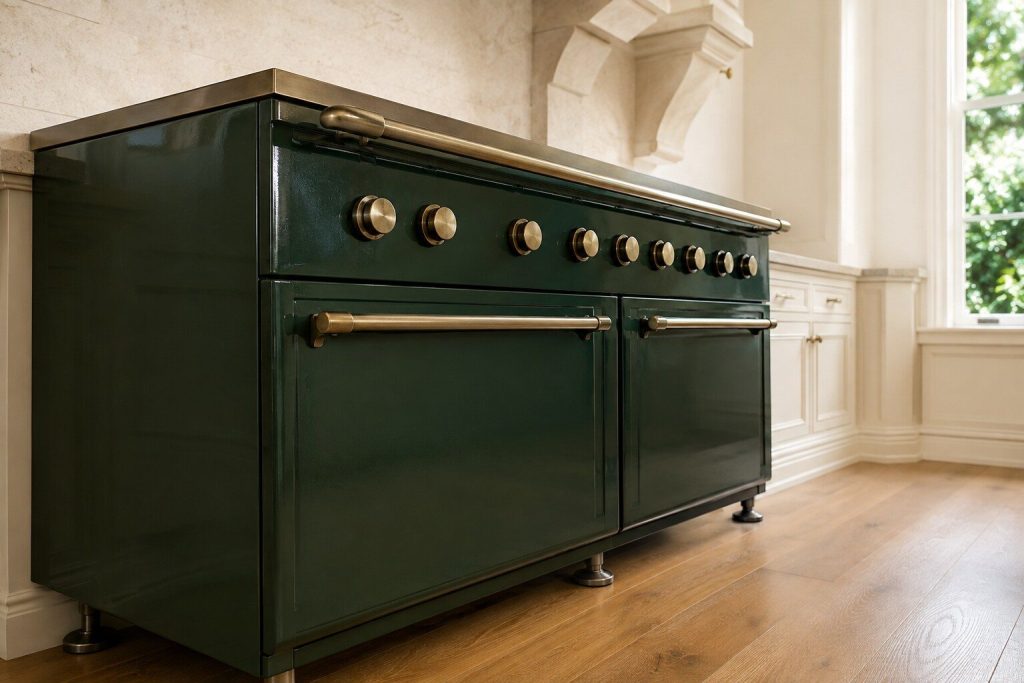
The range is what La Cornue makes, and everything else in the line exists around it. A Château is built to order in France, arrives in a crate weighing over half a ton, and is assembled from parts a customer chose one at a time: which oven is gas and which is electric, whether the top carries a French top, a lava-rock grill, induction or a teppanyaki plate, which of about fifty enamels, which trim metal. Two of them are almost never identical. That is the first thing a repair on one has to take seriously — the model number tells you the size, and the configuration code tells you what is actually under the lids.
- Dual fuel, all gas or all induction — three different ranges, three parts lists
- The configuration code, not just the model, decides what is on the top
- Made-to-order enamel and trim are part of the job, not an extra
-
Brass gas burners · plaque coup de feu · lava-rock grill · induction · teppanyaki La Cornue cooktop repair in Miami
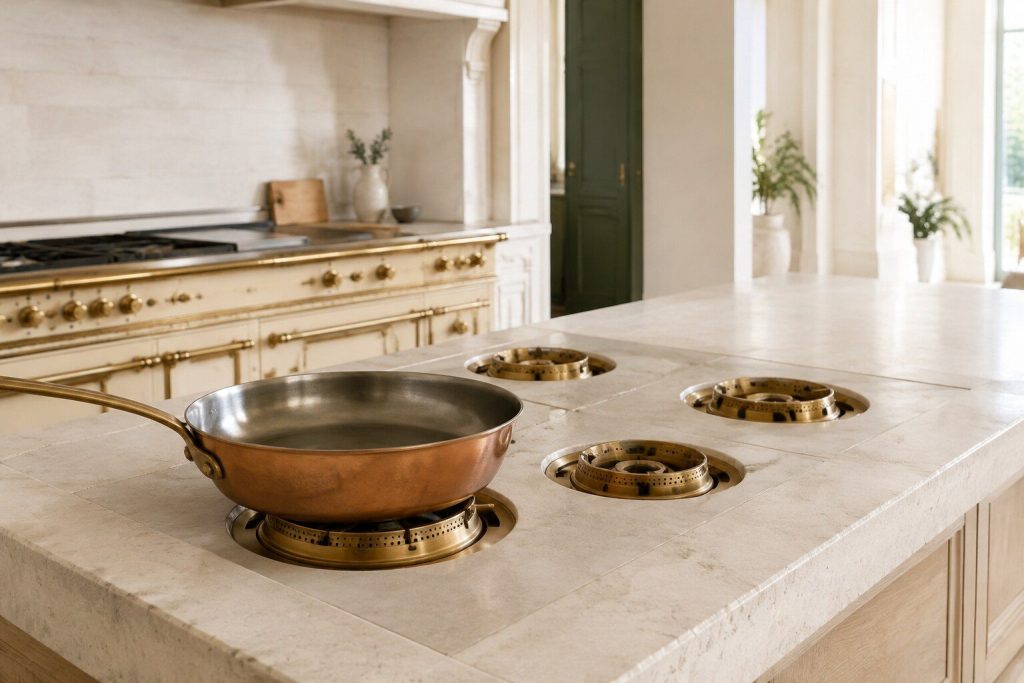
A La Cornue cooktop is a set of modules chosen at order time and dropped into a stainless frame: brass gas burners at 17,000 and 7,500 BTU, a 22,000 BTU power burner, the cast-iron plaque coup de feu heated by a single burner underneath, a lava-rock grill, ceramic-glass induction zones, an electric teppanyaki plate. This is the top of a range, and each module is a different repair. Sold on its own without ovens beneath it, the same top is a rangetop, and it has its own page.
- Gas, induction, French top, grill and teppanyaki modules on one frame
- Induction is the only half of this line that shows a code — E2, U400, Er
- A cracked glass hob is disconnected first and diagnosed second
In more detail
About La Cornue propane conversion service
About converting one of these to propane, properly
La Cornue publishes a conversion procedure and a defined parts set for the CornuFé 90 and 110, and specifies fuel at order time on a Château. What we see is ranges converted with universal kits, ranges converted in part — the front burners done and the plaque burner forgotten — and ranges moved from a propane house to a natural-gas one with nothing changed at all. All three give yellow flames, soot and burners that will not hold a simmer. Doing it properly means the maker's own orifices, every burner and both oven burners set, a leak check, and a written record of the fuel the range is now on.
This article is based on:
- Official manufacturer documentation
- Internal repair procedures
- Technician repair history
- Company quality standards
Before you book
Questions about La Cornue propane conversion service
The range came with a conversion kit in the box. Can I fit it?
The CornuFé models do ship with one and the procedure is published. Whether you fit it is a question about gas work rather than difficulty: every orifice changed is a joint that must be leak-tested, and a burner set by eye is the yellow-flame page. If you are qualified for gas work, the documentation is there. If not, this is the wrong job to learn on.
How do I know if mine was converted properly?
Look at every burner, including the ones you never use. Blue flames with a defined inner cone, no soot on a pan bottom, and a low flame that holds. If any burner runs yellow — or if the range has changed house and nobody mentioned fuel — it is worth a diagnostic.
Where we do it
Across Miami-Dade, Broward, and Palm Beach
Same terms everywhere we go: an on-site diagnostic first, the price agreed in writing, and the exact figure confirmed once we have seen the unit.
Neighborhoods people ask for by name