Common Problems
Every Symbol on a La Cornue Oven Dial, and What It Actually Does
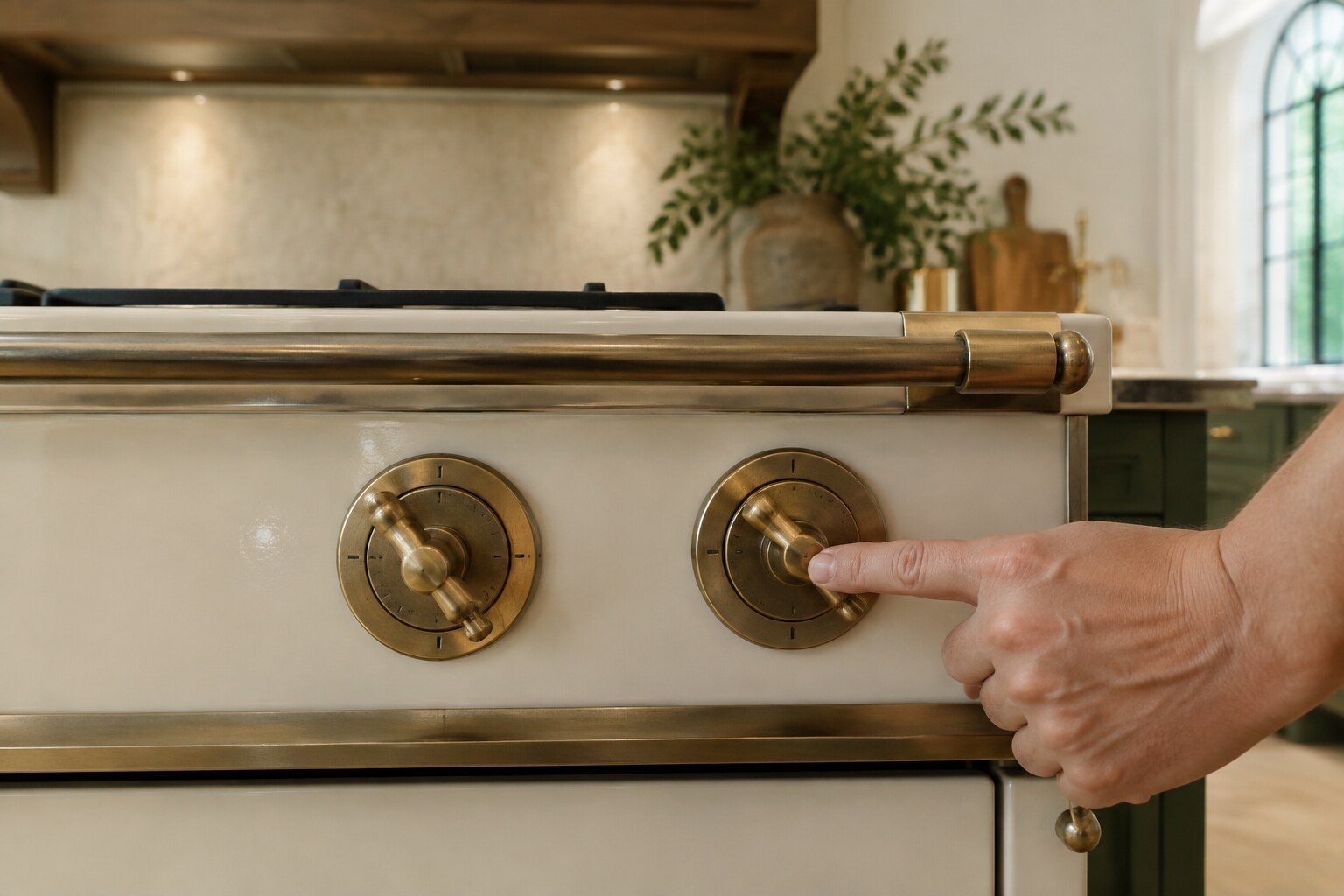
Read the dial in two halves. The mode dial selects which heat sources run: a fan alone moves air without heating for defrosting, a fan inside a circle adds the ring element for even convection baking, bars at the top and bottom together are conventional baking, a bar at the top alone is broiling, a bar at the bottom alone is base heat for pastry, and a bar at the top with a fan is fan-assisted browning. The temperature dial is separate, and on a multifunction oven both have to be set — a temperature with no mode selected produces an oven that does nothing, which the maker's own troubleshooting section lists as a cause of 'oven not coming on'. On a Château vaulted gas oven there is no mode dial at all: one gas burner, one electric broiler, one thermostat. And the letters on an induction hob display are indicators rather than modes: H is residual heat above 140 °F, L is child lock, A is automatic heat-up, P is power boost.
The full guide
La Cornue oven symbols meaning: why this page exists
Of every question people type about this make, the largest single group is about the dial. Not about problems — about what the marks mean. Oven symbols, symbols meaning, knob symbols, icons, settings explained, broil symbol, modes, dials. It is the biggest cluster in the whole harvest and the manufacturer's own answer is a PDF most owners never find.
There is a reason it happens on this make more than on others. A La Cornue is bought for how it looks and cooks, the controls are drawn rather than labeled, and a great many of these ranges change hands with the house. Somebody moves in, finds a French range in the kitchen, and has no document and no dealer.
First, work out which oven you are looking at
This is the step that saves the rest of the page, because there are three different ovens wearing one badge and only one of them has a symbol set at all.
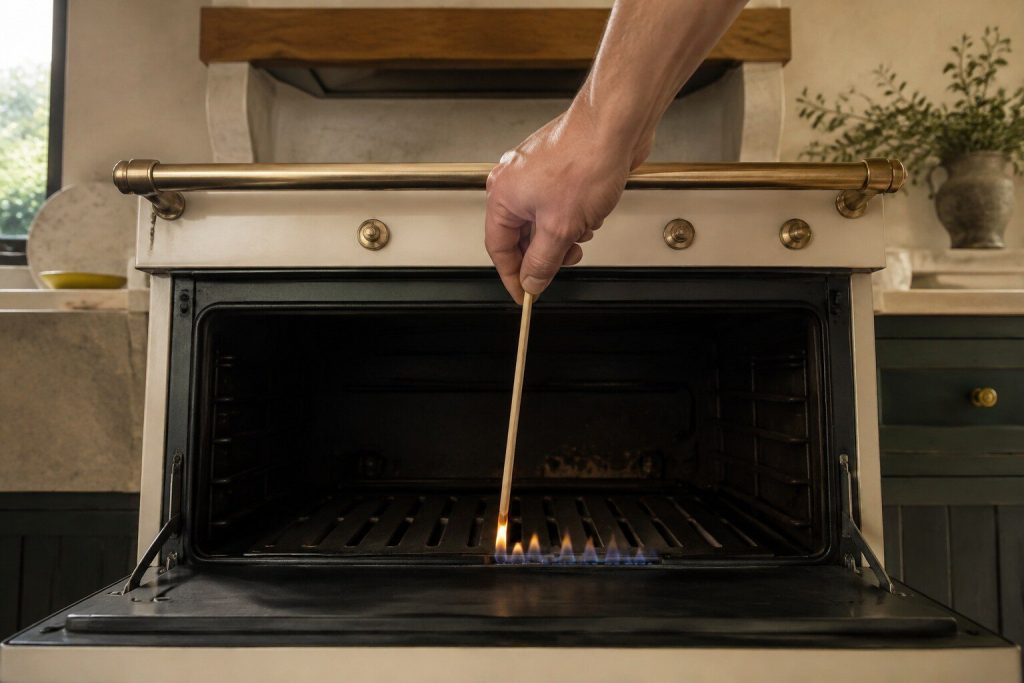
A vaulted gas oven — the Château's own oven — has no mode dial. It is a single gas burner under a sealed dome with an electric broiler above it, and it has a thermostat and a broil control. That is the whole interface. If your dials are unlabelled apart from numbers, nothing is missing.
A vaulted electric oven sits on the other side of a dual-fuel Château. Elements top and bottom, a thermostat, sometimes a broil position.
A multifunction electric oven — the CornuFé ovens and the Château Tourelle wall oven — is where the icons live. The CornuFé 90's oven carries seven cooking modes, two convection fans and eight heating elements, and the mode dial is how you choose between them.
So on a dual-fuel Château you have a plain dial on one side and an icon dial on the other, doing quite different things.
The symbols, and what each one switches on
Every one of these is a statement about *which heat sources run*, and once you read them that way they stop being decorative.
A fan on its own. Air moves, nothing heats. This is defrosting, and it is the symbol most often chosen by mistake by somebody looking for convection. If your oven is running and staying cold with a fan noise, look here first.
A fan inside a circle. The ring element around the fan plus the fan itself: even heat, all shelves usable, faster than conventional. This is the everyday setting on a multifunction oven and it is what most people mean by convection.
Two bars, one at the top and one at the bottom. Conventional baking — both elements, no fan. Slower, more graded, better for a single tray and for anything that wants a bottom crust.
A bar at the top only. Broil. Radiant heat from above, door usually shut on these ovens rather than ajar.
A bar at the top with a fan. Fan-assisted browning: the broil element with air moving, which browns a larger area more evenly than the broiler alone.
A bar at the bottom only. Base heat. Pastry, pizza, anything where the underside needs to set before the top colors.
A lamp. The oven light on its own, without heat.
The temperature dial is a separate decision
On a multifunction oven, the mode dial and the temperature dial are two independent controls and both have to be set. Turning the temperature up while the mode dial sits at off produces an oven that sits there doing nothing at all.
That is not a problem and it is not obvious. La Cornue's own troubleshooting section lists it explicitly under *oven not coming on*, alongside "is the power on" and "is the range supply on at the circuit breaker" — which tells you how often it happens.
The marks that are not oven functions
Two groups of symbols get filed under "oven symbols" in a search box and are neither symbols nor oven.
The hob display letters. On an induction cooktop or rangetop the display shows H for residual heat above 140 °F, a pan symbol when a zone has no pan on it or a pan below its minimum base diameter, A for automatic heat-up, L for child lock, L1 and L2 for the low and simmer settings, and P for power boost. None of those is a cooking mode and none of them means anything has failed. If a zone is completely unresponsive, check for L before anything else.
The three actual error codes. E2, U400 and Er followed by a number. That is the entire published set for this make, all three belong to the induction electronics, and they have their own pages on this site.
The gas side has no symbols because it has nothing to select
Worth stating plainly, because the absence reads as a missing feature.
A Château vaulted gas oven has one burner, one electric broiler and one thermostat. There is no fan to switch on, no ring element, no base-heat mode and no multifunction control — the oven cooks by radiant heat from the mass of the cavity, which is the entire point of a voûte. The graded heat that a fan oven works hard to eliminate is the thing you bought.
So there is no icon set to learn, and there is no code to read either: the Château installation and user guide contains no troubleshooting section at all. Diagnosis on that oven is measurement, not reading.
Two mistakes worth naming
Choosing the bare fan for convection. Air with no heat. The oven runs, sounds busy, and cooks nothing.
Assuming the broil symbol implies a fan. On a vaulted gas oven the broiler is a separate electric element over a gas burner. It means the oven can lose browning and keep baking perfectly, or the reverse — two circuits, and which one still works tells a technician which part to bring.
If the dial and the oven disagree
There is one situation where the symbols are fine and the oven is not, and it is common enough to mention here: an oven that has drifted hot over the years. La Cornue's own guide says that if turning the temperature down has not worked, or has only worked for a short time, you may need a new thermostat.
That is a measurement rather than a judgement. Put a thermometer on the middle shelf, set 350 °F, and read it every ten minutes for forty. An oven that spikes and settles at 350 is behaving normally. One that settles at 390 has drifted, and no amount of reading the dial correctly will fix it.
If it turns out to be a repair
What this leads to, and what it costs
Every job on this site is priced the same way: an on-site diagnostic first, the figure agreed in writing before anybody starts.
-
Ovens
There are three different ovens on this make and they fail in three different ways. The vaulted gas oven cooks by radiant heat inside a sealed dome and has an electric broiler over it. The vaulted electric oven sits on the other side of the same range. And since 2025 there is a standalone one: the Château Tourelle, a fully electric multifunction wall oven in 60 and 75 centimeter widths, built to sit in a cabinet run next to a Château cooktop. Which of the three you have decides everything about the repair.
- Vaulted gas, vaulted electric and the electric Tourelle wall oven
- Gas ovens carry an electric broiler — browning and baking can fail separately
- Thermostat drift is measured against a probe, never adjusted by feel
-
La Cornue oven: an oven that has drifted hot over the years wants a thermostat, in the maker’s own words
La Cornue — an indicator rather than a code. This is the closest thing La Cornue publishes to a diagnosis, and it is a good one: if turning the temperature down with the oven control knob has not worked, or has only worked for a short time, then you may need a new thermostat — and the guide says it should be fitted by a service person.
What the machine is telling you -
La Cornue oven: an electric oven that does nothing, and the maker’s three questions before anything else
La Cornue — an indicator rather than a code. For an oven that will not come on at all, the guide asks three things in order: is the power on, is the range supply on at the circuit breaker, and — if you are using the multifunction oven — have you actually set a cooking function.
What the machine is telling you -
Oven thermostat calibration
An oven that has drifted hot over years, and a cook who has quietly rewritten every recipe around it. The manual is explicit: an oven that gets hotter as the range ages and does not come back when the dial is turned down wants a thermostat, not a new habit.
- Measured with a calibrated probe through a full cycle
- Drift distinguished from a vaulted oven's designed unevenness
- The owner warned that a corrected oven changes their cooking
Questions people ask about this
My Château has no symbols at all, just two dials.
Then you have a vaulted oven rather than a multifunction one, and there is nothing missing. A Château gas oven is one burner with an electric broiler over it and a thermostat: temperature, and broil or not. The symbol set belongs to the electric multifunction platforms — the CornuFé ovens, the Tourelle wall oven, and the electric side of a dual-fuel range.
Which symbol is convection?
The fan drawn inside a circle. A bare fan with no circle around it is air movement without heat, which is the defrost setting, and choosing it when you wanted convection gives you a cold oven and a fan noise. It is the single most common misreading of this dial.
I set a temperature and nothing happens.
On a multifunction oven, check that a cooking function is actually selected and not just a temperature. La Cornue's own guide lists exactly that as a cause under 'oven not coming on', ahead of the power and the breaker. It is not a problem and it catches people who have moved from an oven with a single knob.
What is the H on my hob?
Residual heat. The zone is still above 140 °F and can burn, and it clears itself as the glass cools. It is an indicator rather than a code — this make publishes only three error codes in total, and H is not one of them.
Common Problems
More guides like this one
-
What Is Actually Different About a La Cornue Range
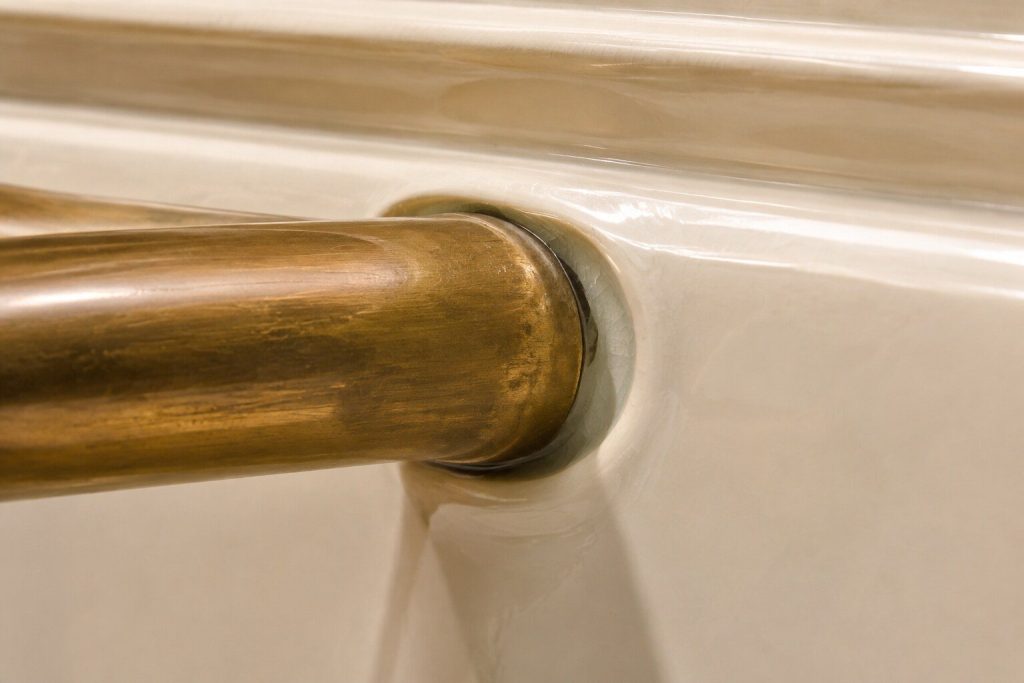
Hand-built to order since 1908, a vaulted radiant oven, a cast-iron plate heated by one burner, and a crate weighing up to 1,320 lb. Written by people who take them apart.
Read more -
What a French Top Is For, and How to Cook on One
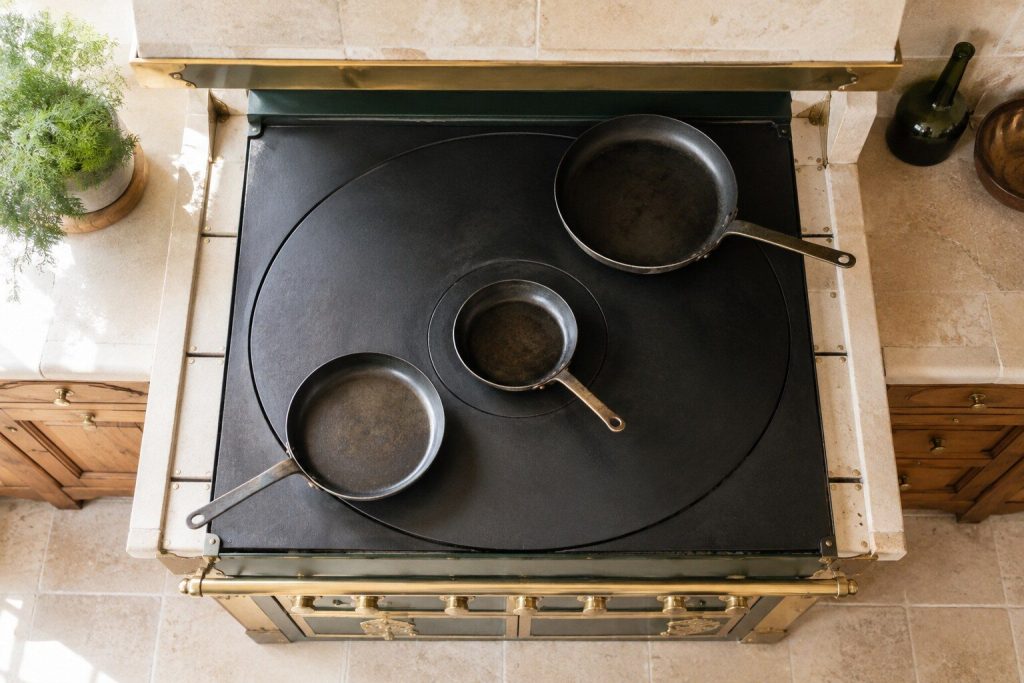
One 7,500 BTU burner under a solid cast-iron plate, hottest at the center and cooler outwards. You cook on it by moving pans, not by turning a knob.
Read more -
How to Turn On a La Cornue Oven, Gas Side and Electric Side
It is a real question, not a beginner's one: the two ovens on a dual-fuel range are lit differently, and a multifunction oven with no mode selected does nothing at all.
Read more
Tell us the model number and what it is doing.
This article is based on:
- Official manufacturer documentation
- Internal repair procedures
- Technician repair history
- Company quality standards