Common Problems
How to Turn On a La Cornue Oven, Gas Side and Electric Side
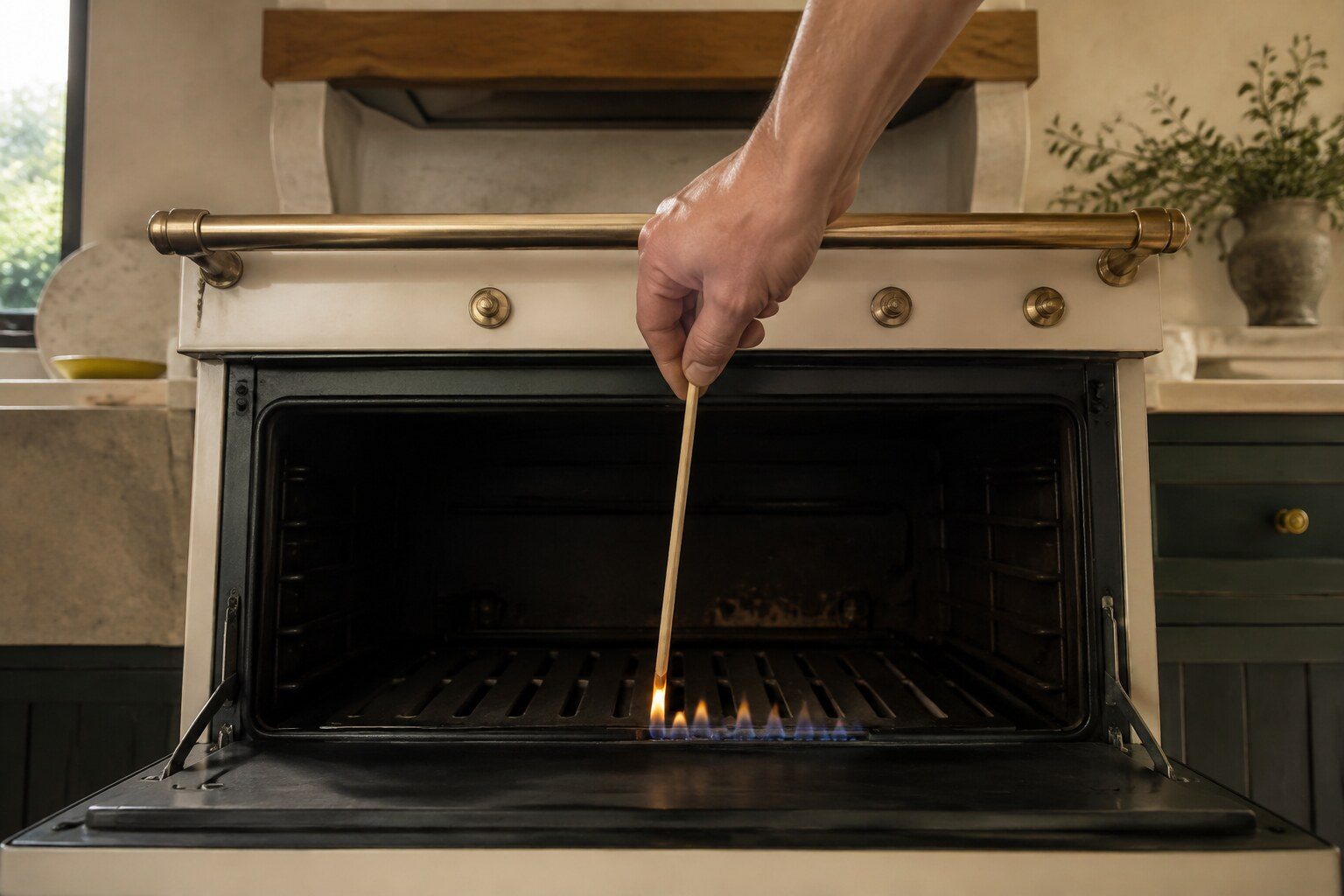
Establish which oven first. On a vaulted gas oven, turn the thermostat to the temperature you want and hold it while the igniter heats — the safety valve only opens once the igniter draws enough current, so it takes several seconds and there is no display to tell you it worked. Listen for ignition and look for a glow. On a vaulted electric oven, the thermostat alone is enough. On a multifunction oven — the CornuFé ovens and the Tourelle wall oven — you must set a cooking function on the mode dial as well as a temperature, because a temperature with no mode selected leaves the oven idle; La Cornue's own troubleshooting section lists exactly that under 'oven not coming on'. If nothing happens on any of them, check the range supply at the breaker and any isolating switch before anything else.
The full guide
How to turn on La Cornue oven: why this is a real question
Three separate phrasings of it turn up in what people type about this make, and it is not because the owners are helpless. It is because there are three different ovens behind one badge, they are operated differently, and on a dual-fuel range two of them sit side by side in the same cabinet with dials that look similar.
Add the fact that a great many of these ranges arrive with a house rather than with a manual, and "how do I turn this on" is the honest first question.
Step one, always: which oven
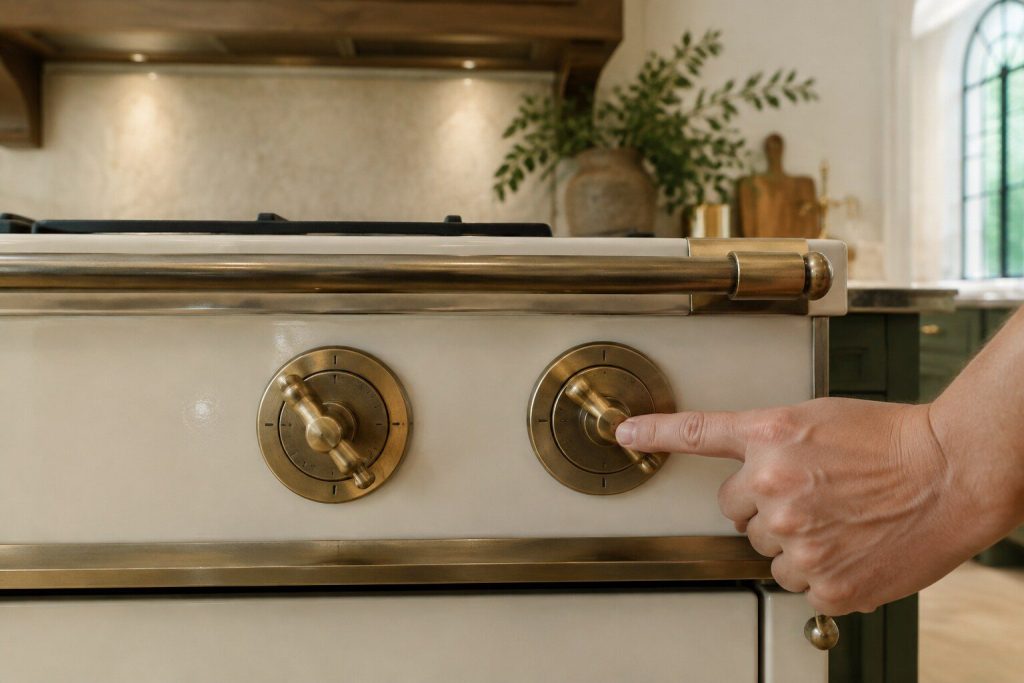
A vaulted oven has a thermostat and a broil control and no mode dial. If your dials carry numbers and nothing else, this is you. The gas version has no window in the door.
A multifunction electric oven — the CornuFé ovens, the Château Tourelle wall oven — has a mode dial with icons on it, and it needs both dials set.
On a dual-fuel Château you have both, one per side. The left cavity on those models is usually the vaulted gas oven with its electric broiler and the right is electric, but it is specified at the factory and worth confirming rather than assuming.
Turning on the gas side
Set the thermostat to the temperature you want and hold the control in. Then wait longer than feels natural.
The reason is worth understanding, because it explains most of the failed attempts. A gas oven's safety valve does not open because you turned a knob — it opens when the igniter draws enough electrical current to prove it is hot enough to light gas safely. From cold that takes several seconds. There is no display and, on a Château, no window, so nothing confirms progress except sound, then smell, then heat at the door.
If it lights, let go and cook. If it lights and then goes out when you release the control, that is flame supervision rather than ignition — a different problem, with its own page.
Two attempts, then stop. This is the one place we are firm. A vaulted cavity is sealed, insulated and behind a heavy door, and it holds whatever it is given. Four or five tries over half an hour puts a quantity of unburnt gas somewhere you cannot see it. Turn the range off at its shut-off valve and call somebody.
Turning on the electric side
The thermostat alone. Elements, a thermostat and, on the vaulted electric ovens, a broil position. Nothing to select and nothing to hold.
If it does nothing, the checks are electrical: the breaker for the range, and any isolating switch. On a fitted kitchen that switch is sometimes inside a cabinet, and it gets knocked.
Turning on a multifunction oven
Here is the one that catches people, and it catches them because it is not intuitive.
Both dials have to be set. The mode dial chooses which heat sources run; the temperature dial chooses how hot. A temperature with the mode dial at off produces an oven that sits there, silent and cold, looking exactly like a broken appliance.
La Cornue's own troubleshooting section lists it as a cause of *oven not coming on*, in this order: is the power on, is the range supply on at the circuit breaker, and — if you are using the multifunction oven — have you set a cooking function. Third on the maker's own list, which tells you how common it is.
While you are there: a fan inside a circle is convection. A bare fan is defrost, which moves air and heats nothing. Choosing the second when you meant the first gives you a busy-sounding oven and a raw dinner.
If nothing works on either side
Then it is probably not the oven, and the checks are cheap.
The breaker. The range has its own supply and it is a large one — a CornuFé 110 wants a 30 amp breaker.
Any isolating switch. Behind a cabinet door, above a counter, sometimes in a pantry.
Whether anything else in the kitchen lost power at the same time.
If the supply is proved good and the oven is still dead, that is a visit. On an induction or all-electric model there may be a code to read — a latched U400 means the cooker has been incorrectly connected, and a completely dead display is attributed by the maker to over-voltage or lost supply. On a gas Château there will be nothing to read at all, which is normal for this make and not a sign the electronics have died.
The one thing worth photographing before you call
Not the display — most of these have none. The model code and, if the paperwork survives, the top configuration code. G45 and K3 together tell a technician more than a paragraph of description, because they say which modules the range actually carries and therefore which parts to bring.
If it turns out to be a repair
What this leads to, and what it costs
Every job on this site is priced the same way: an on-site diagnostic first, the figure agreed in writing before anybody starts.
-
Oven will not light
A vaulted gas oven that will not light gives you nothing to work with — no display, no code, no window — because La Cornue's Château guide contains no error codes at all. That is normal for this make. The diagnosis is igniter, safety valve, thermocouple and supply, measured in that order.
- No code is not a symptom — this oven has nothing to print one with
- A glowing igniter with no flame is the classic failure
- Two attempts, then stop and shut the range off at its valve
-
La Cornue oven: an electric oven that does nothing, and the maker’s three questions before anything else
La Cornue — an indicator rather than a code. For an oven that will not come on at all, the guide asks three things in order: is the power on, is the range supply on at the circuit breaker, and — if you are using the multifunction oven — have you actually set a cooking function.
What the machine is telling you -
Ovens
There are three different ovens on this make and they fail in three different ways. The vaulted gas oven cooks by radiant heat inside a sealed dome and has an electric broiler over it. The vaulted electric oven sits on the other side of the same range. And since 2025 there is a standalone one: the Château Tourelle, a fully electric multifunction wall oven in 60 and 75 centimeter widths, built to sit in a cabinet run next to a Château cooktop. Which of the three you have decides everything about the repair.
- Vaulted gas, vaulted electric and the electric Tourelle wall oven
- Gas ovens carry an electric broiler — browning and baking can fail separately
- Thermostat drift is measured against a probe, never adjusted by feel
-
Vaulted gas oven ignition repair
The vaulted gas oven has no display, no window and no error code — La Cornue's own Château guide contains no troubleshooting section at all. So an oven that will not light is diagnosed the way gas has always been diagnosed: igniter, safety valve, thermocouple, supply, in that order and with instruments.
- A glowing igniter that never opens the valve is the classic failure here
- Safety valve and flame supervision measured rather than swapped
- Same-day priority — an oven that smells of gas is not a next-week call
Questions people ask about this
I set the temperature and the oven does nothing.
On a multifunction oven, check that a cooking function is selected on the mode dial and not just a temperature — that is the maker's own third question under 'oven not coming on', ahead of anything mechanical. On a gas oven, hold the control for longer: the safety valve does not open until the igniter has drawn enough current, which takes several seconds from cold.
How do I know the gas oven has lit? There is no window.
By sound and by smell, and after a few minutes by heat at the door. A Château gas oven has no window because the door is part of the cooking mass. If you have tried twice and heard nothing, stop — do not keep filling a sealed cavity with unburnt gas. Turn the range off at its shut-off valve and book it.
Which side is the gas oven on?
On the dual-fuel Château models the gas oven with its electric broiler is usually the left cavity and the electric oven the right, but it is specified at order time and it is worth confirming rather than assuming. The gas side has no mode dial. If both dials look identical and neither has icons, you may have two of the same kind.
Does the range need electricity to light a gas oven?
Yes. The igniter is electrical and the safety valve opens on igniter current, so a gas oven with no power will not light at all. That is why the maker's checklist starts with the power and the breaker even for a gas appliance.
Common Problems
More guides like this one
-
What Is Actually Different About a La Cornue Range
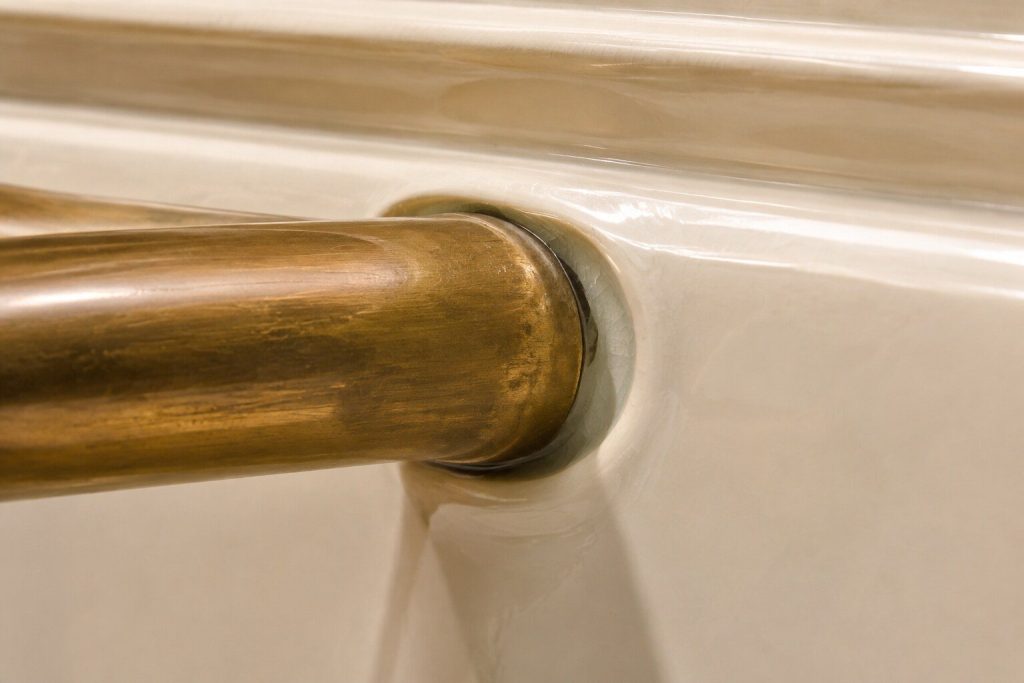
Hand-built to order since 1908, a vaulted radiant oven, a cast-iron plate heated by one burner, and a crate weighing up to 1,320 lb. Written by people who take them apart.
Read more -
What a French Top Is For, and How to Cook on One
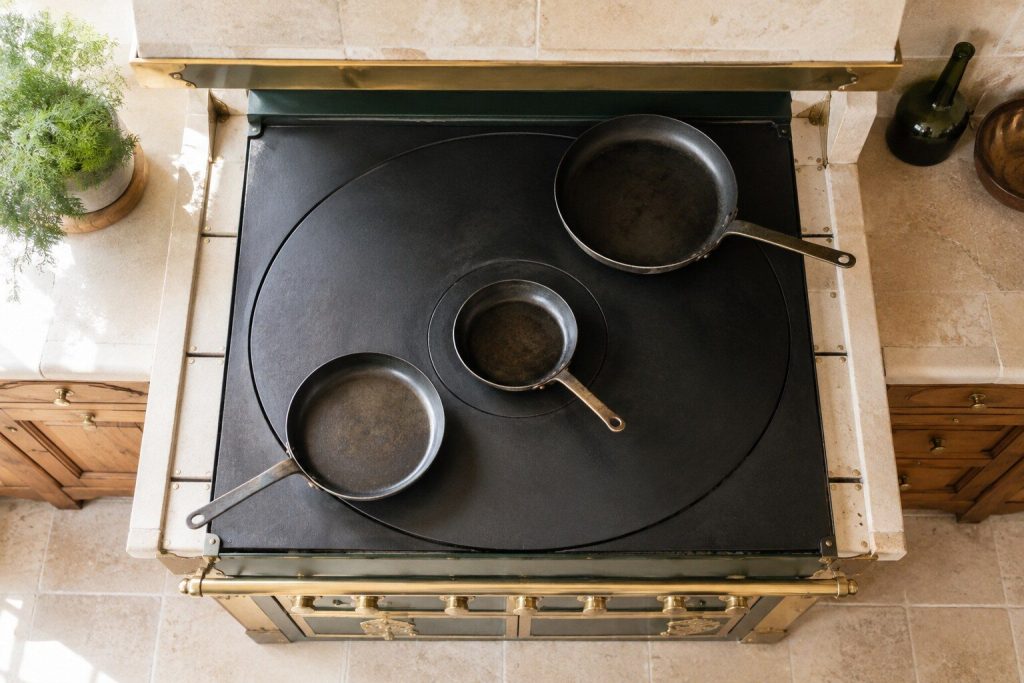
One 7,500 BTU burner under a solid cast-iron plate, hottest at the center and cooler outwards. You cook on it by moving pans, not by turning a knob.
Read more -
Every Symbol on a La Cornue Oven Dial, and What It Actually Does
A La Cornue dial is iconography rather than words. Here is what each mark selects, why the gas side has fewer of them, and which symbols are not functions at all.
Read more
Tell us the model number and what it is doing.
This article is based on:
- Official manufacturer documentation
- Internal repair procedures
- Technician repair history
- Company quality standards