Common Problems
How to Preheat a Vaulted Oven, and How to Tell When It Is Ready
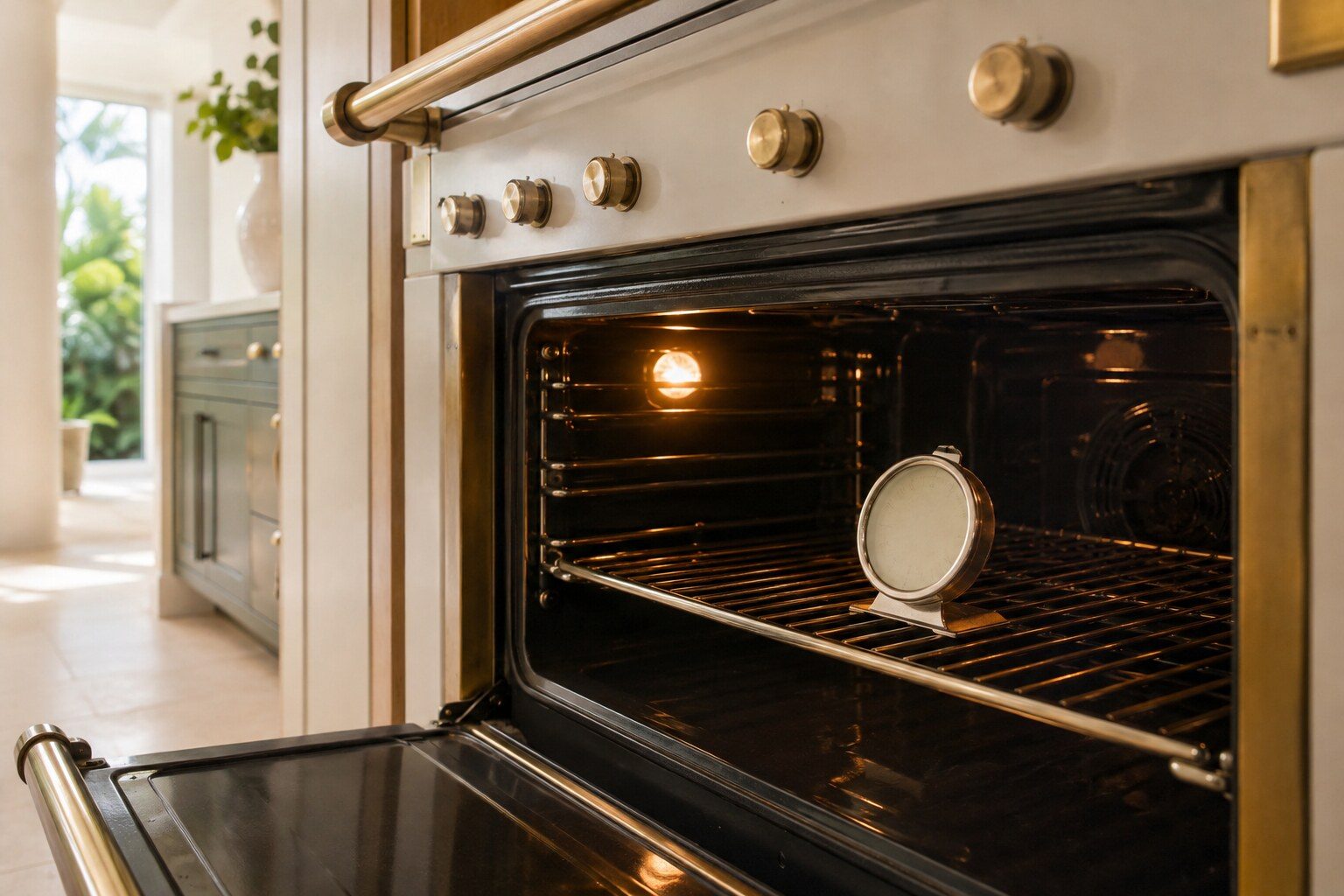
Allow twenty-five to thirty minutes for a moderate temperature and longer for high heat or with a stone or heavy pan in the cavity — a vaulted oven heats a heavy sealed dome rather than a volume of air, and the mass is what does the cooking. On a Château gas oven there is no preheat signal and no window, so the only reliable confirmation is an oven thermometer on the middle shelf; buy one, leave it in, and after a week you will know your own oven's timing and stop needing it. What the thermostat dial tells you is what the thermostat believes, which is a different thing: an oven that has drifted will announce a temperature it is not holding. If it takes forty minutes to reach 300 °F and stops, that is not slowness — that is a problem, and it is measurable.
The full guide
How to know when La Cornue oven is preheated: two questions, one answer
People ask this two ways — how long does it take, and how do I know it is done — and both come from the same place: a fan oven tells you, and a vaulted oven does not.
A fan oven heats a volume of air, which happens quickly, and then beeps. A vaulted oven heats a heavy sealed cast and enamelled dome, and the dome is what cooks. Air is up long before the mass is, so a signal based on air temperature — where one exists at all — is optimistic by several minutes.
On a Château gas oven there is no signal to be optimistic. No beep, no light, and no window, because the door is part of the mass.
The number, honestly
Twenty-five to thirty minutes to a moderate temperature, 350 to 375 °F, on a grand vaulted oven.
Longer for high heat. Getting to a real 450 or 475 °F takes what it takes, and it is not linear.
Longer again with anything in it. A baking stone, a heavy roasting pan or a cast-iron dish is additional mass that has to come up, and it is usually the thing you are actually waiting for. Add ten minutes at least.
Those figures are for a healthy oven. What makes them useless as a diagnostic is that "slow" and "short" are different problems and people describe both the same way. Slow means it arrives eventually. Short means it stops climbing and holds below the setting. A thermometer tells you which in one preheat.
Why waiting past the point it feels ready pays
Because of what is radiating.
In a vaulted oven a good share of the heat that cooks comes off the cavity walls and the door, not out of the air. Food that goes in when the air is up but the walls are not is being cooked by the weaker half of the oven, and it shows most on the things people care about: bread that does not spring, pastry that does not set, a roast that does not take color early.
Five more minutes than you think you need is the single cheapest improvement available on this appliance.
The dial is a belief, not a measurement
A thermostat reports what it thinks. On a range that has done twenty years, what it thinks and what the shelf is doing can differ by thirty degrees, and it drifts slowly enough that the cook adapts without noticing.
La Cornue's own guide is unusually direct about it: if turning the temperature down has not worked, or has only worked for a short time, you may need a new thermostat, and it should be fitted by a service person.
So the thermometer is not a temporary measure while you learn the oven. It is the only thing in the kitchen telling you the truth. Leave it in.
What "not preheating" actually means
Three different things, separated by one measurement.
It arrives, slowly. Normal for the appliance, if the figures above are met.
It arrives late and low. A weak or restricted oven burner on the gas side, a partly failed element on the electric side, or a door seal that is losing heat as fast as the oven makes it. All measurable, all repairable.
It stops climbing well below the setting. A control that believes it has arrived, or a heat source that can no longer overcome the losses at that temperature.
And one more that is not the oven at all: an unlevel range. The maker's own test is a dish of water on the middle shelf sitting at one depth all over — deeper at the back means the back needs raising or the front lowering. We find ranges that were slid into place, connected, and never leveled.
On the multifunction ovens
The CornuFé ovens and the Tourelle wall oven have more instrumentation and a fan, so they behave more like an oven most people have used. Two things still apply.
A signal is about the air. Give it a few more minutes if you are baking.
And a mode has to be selected, not just a temperature. A multifunction oven with a temperature set and no cooking function chosen sits there doing nothing — the maker's own troubleshooting section lists it under *oven not coming on*, which tells you how many people have found out the hard way.
If it turns out to be a repair
What this leads to, and what it costs
Every job on this site is priced the same way: an on-site diagnostic first, the figure agreed in writing before anybody starts.
-
Oven not reaching temperature
An oven that gets warm and stalls short of its setting, takes an hour to preheat, or loses temperature the moment the door opens. On a vaulted oven some of this is thermal mass behaving as designed, and separating the design from the problem is the first job.
- A vaulted oven is slow by design — measure before condemning
- Bake and broil are separate circuits on this make
- Door seal and level come before any talk of parts
-
Oven thermostat calibration
An oven that has drifted hot over years, and a cook who has quietly rewritten every recipe around it. The manual is explicit: an oven that gets hotter as the range ages and does not come back when the dial is turned down wants a thermostat, not a new habit.
- Measured with a calibrated probe through a full cycle
- Drift distinguished from a vaulted oven's designed unevenness
- The owner warned that a corrected oven changes their cooking
-
Ovens
There are three different ovens on this make and they fail in three different ways. The vaulted gas oven cooks by radiant heat inside a sealed dome and has an electric broiler over it. The vaulted electric oven sits on the other side of the same range. And since 2025 there is a standalone one: the Château Tourelle, a fully electric multifunction wall oven in 60 and 75 centimeter widths, built to sit in a cabinet run next to a Château cooktop. Which of the three you have decides everything about the repair.
- Vaulted gas, vaulted electric and the electric Tourelle wall oven
- Gas ovens carry an electric broiler — browning and baking can fail separately
- Thermostat drift is measured against a probe, never adjusted by feel
-
La Cornue oven: cooking times that differ from your previous oven, which the maker treats as calibration of the cook rather than the oven
La Cornue — an indicator rather than a code. La Cornue's own answer to food cooking too slowly, too quickly or burning begins with something no repair company would think to say: cooking times may differ from your previous oven.
What the machine is telling you
Questions people ask about this
Forty minutes to preheat. Is that normal?
It depends entirely on the temperature, which is why the honest answer needs a number. A grand vaulted gas oven at 13,000 BTU coming to a genuine 450 °F in forty minutes is a heavy oven doing its job. Forty minutes to reach 300 °F and stalling there is a problem. Measure it once with a thermometer and you will know which you have.
Why is there no preheat light?
Because the Château's ovens are not that kind of appliance — a thermostat, a burner or elements, and no electronics to signal with. On the multifunction platforms there is more instrumentation, but even there the signal is about the air rather than the cavity: walls, racks and door glass keep catching up for several minutes after any signal, and that is the heat which actually cooks.
Can I speed it up by setting it higher first?
It works, and it needs care. Setting the oven above your target and dropping it once the mass is up does get you there faster — but on a graded radiant oven it also overshoots the surfaces, so anything that goes in immediately can scorch underneath. If you do it, drop the dial and give it five minutes to settle.
Does it matter if I put food in early?
More here than on a fan oven. In a vaulted oven the cavity mass radiates a good share of the heat that cooks, so food that goes in before the walls are up is being cooked by air alone at first. Bread and pastry notice it most.
Common Problems
More guides like this one
-
What Is Actually Different About a La Cornue Range
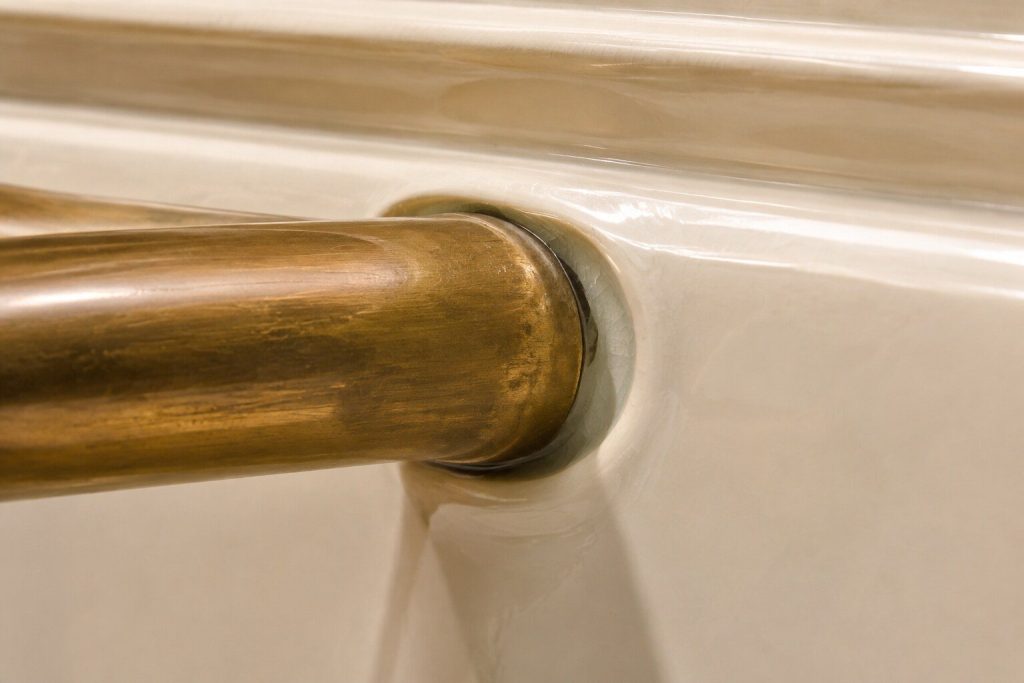
Hand-built to order since 1908, a vaulted radiant oven, a cast-iron plate heated by one burner, and a crate weighing up to 1,320 lb. Written by people who take them apart.
Read more -
What a French Top Is For, and How to Cook on One
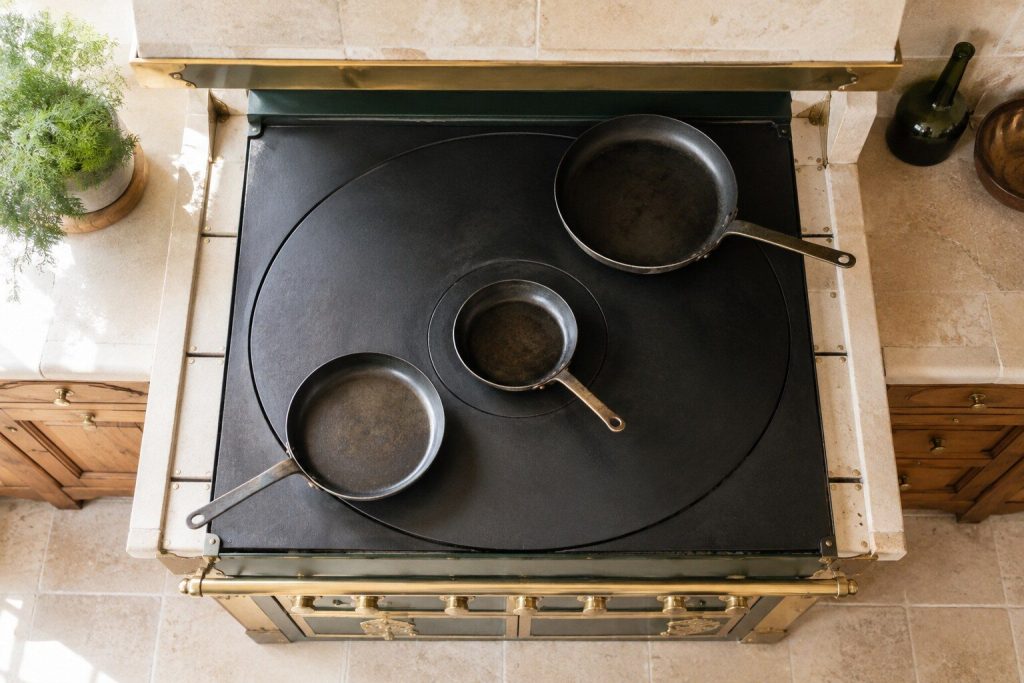
One 7,500 BTU burner under a solid cast-iron plate, hottest at the center and cooler outwards. You cook on it by moving pans, not by turning a knob.
Read more -
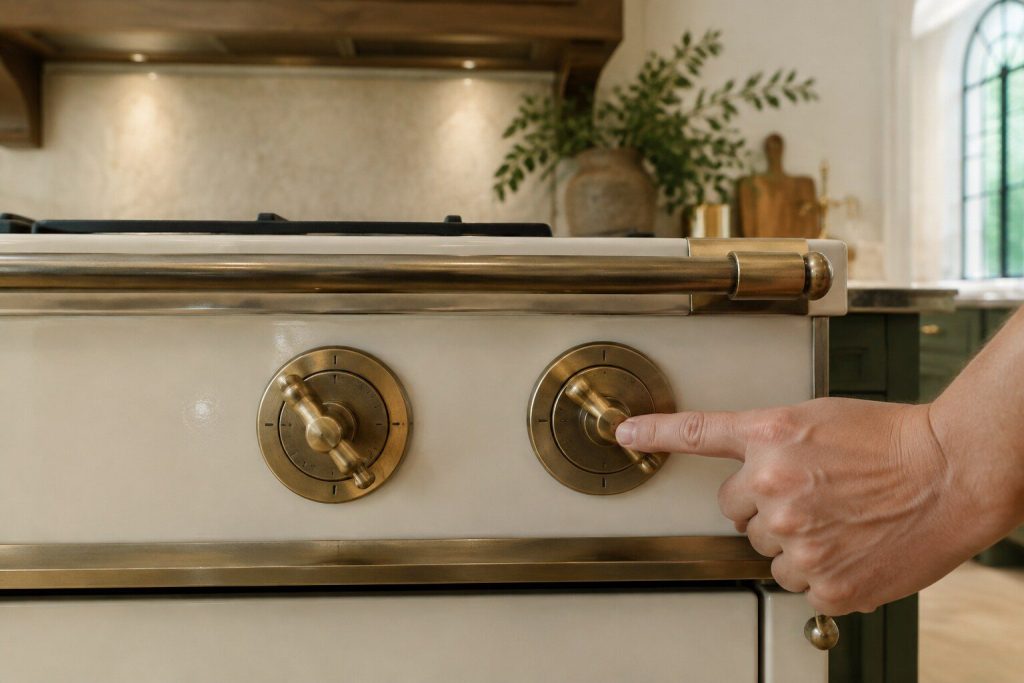
Every Symbol on a La Cornue Oven Dial, and What It Actually Does
A La Cornue dial is iconography rather than words. Here is what each mark selects, why the gas side has fewer of them, and which symbols are not functions at all.
Read more
Tell us the model number and what it is doing.
This article is based on:
- Official manufacturer documentation
- Internal repair procedures
- Technician repair history
- Company quality standards