Safety & Risks
A Grease Fire on the Cooktop: Four Things, In Order
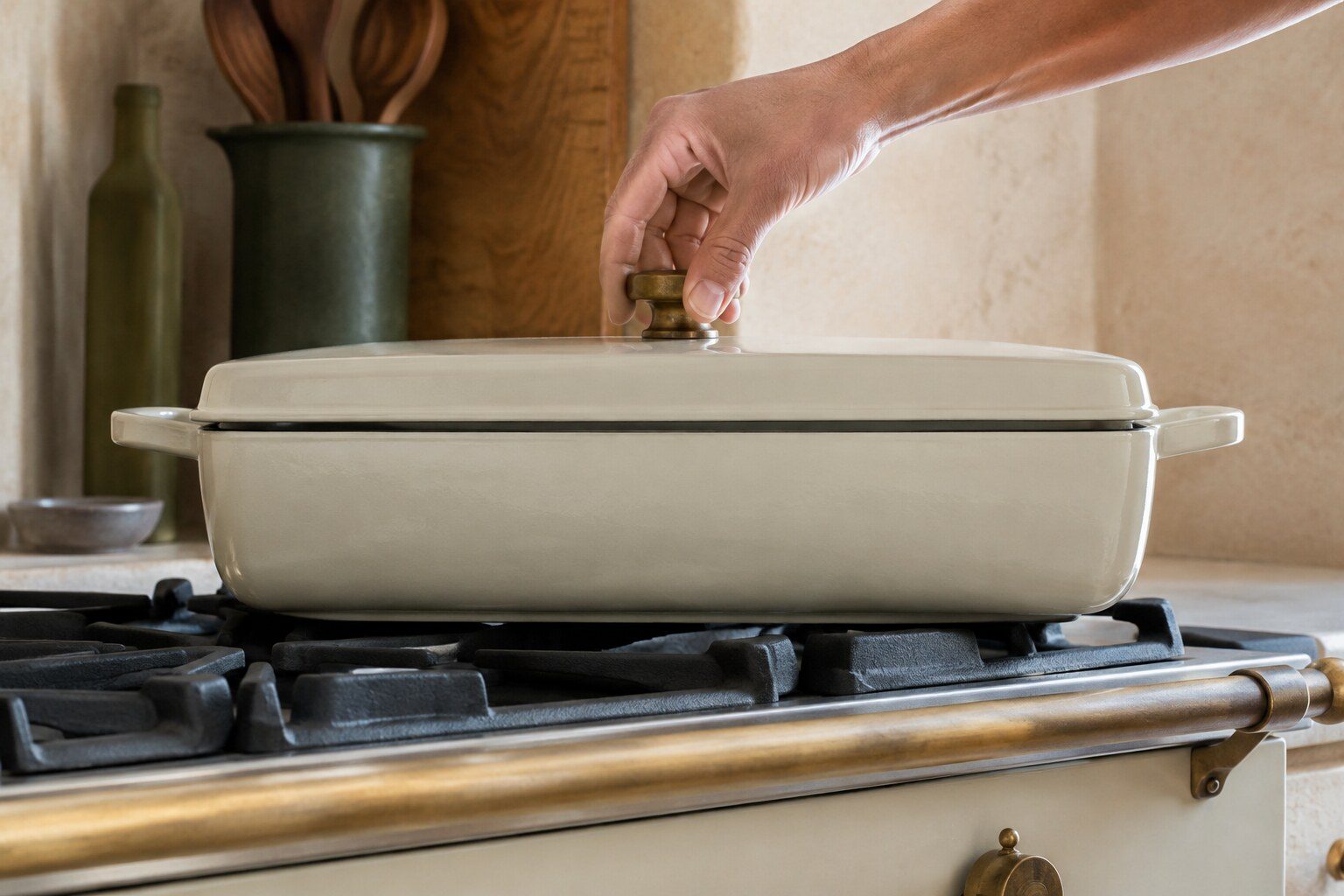
Never water — it turns burning oil into a fireball. In order: cut the heat at the knob if you can reach it without leaning over the flames; slide a metal lid or a baking sheet over the pan from the side rather than dropping it on from above, and leave it there; if you have no lid, smother with baking soda or salt in quantity, never flour; and if the fire has left the pan, has reached the hood, or you are not certain, get everyone out and call 911 from outside. Do not move a burning pan and do not carry it to a sink or a door. Leave the lid on for a full twenty minutes after the flames stop, because hot oil re-ignites. A grease fire in an oven is different and simpler: turn the oven off, keep the door shut, and let it starve.
The full guide
How to put out grease fire on stove: this page is instructions, not an article
There is nothing to explain and nothing to sell. The searches exist, the wrong answer kills people, and the right answer fits on a card.
Never water.
Cut the heat. Cover the pan. Leave it covered. Get out if it has left the pan.
Why never water
Water is denser than burning oil and boils at a far lower temperature. Poured onto a pan fire it sinks, flashes instantly to steam, and expands several hundred times its volume — throwing the burning oil up and out as it goes.
A cup of water on a pan of burning oil produces a fireball that reaches the ceiling. That is not a caution; it is what happens, every time.
The same applies to a wet cloth, to a damp tea towel, and to anything else with water in it.
In order
1. Cut the heat. At the knob, if you can reach it without putting your hand or arm through the plume. If you cannot reach it safely, skip this and go to step two — smothering matters more than the knob.
2. Cover the pan with metal. A saucepan lid, a frying pan lid, a baking sheet. Slide it on from the side, keeping your hand behind and below the flames, and leave it there. Do not drop a lid on from above: it pushes air out and can carry burning oil with it.
3. No lid? Smother it. Baking soda or salt, in quantity, poured from as far back as you can manage. Not a small sprinkle — enough to blanket the surface.
Never flour. Flour is combustible; it is a dust explosion waiting to happen and it will make things dramatically worse.
4. Leave it covered for twenty minutes. Oil that has been burning is above its auto-ignition temperature. Take the lid off after two minutes and it restarts without needing a flame.
What not to do, ever
Do not move the pan. Not to the sink, not to the door, not out onto a terrace. Carrying a burning pan is how people receive serious burns and how a hob fire becomes a house fire. The pan stays where it is.
Do not fan it, blow on it or beat at it with a cloth. All three feed it air and spread it.
Do not turn the hood on. The instinct is to clear the smoke. What you are doing is pulling flames into a duct lined with years of grease, which is the one path out of the kitchen you least want a fire to find.
When to stop and leave
If the fire has left the pan — flames in the hood, on the wall, on a cabinet, anywhere other than inside the pan — the answer is not a technique. Get everyone out, close doors behind you, and call 911 from outside. Do not go back for anything.
The same applies if you are simply not certain. Standing next to a spreading fire to try one more thing is the decision that turns an insurance claim into an injury.
A grease fire in the oven
Different, and simpler, and the instruction runs against instinct:
Turn the oven off. Keep the door shut.
A closed oven cavity starves a fire of oxygen and contains it. Opening the door gives it air and lets it out into the room.
On a Château vaulted gas oven this is easier advice to follow than on most appliances, because there is no window in the door to tempt you into looking. Turn it off, leave it shut, and let it go out.
If smoke is coming out around the door, or it does not subside within a few minutes, leave and call 911.
What this range changes
Three things, and they are worth knowing before there is a fire rather than during one.
A 22,000 BTU power burner puts a great deal of energy into a pan very quickly. Oil gets to its smoke point faster than people expect, and from smoke point to ignition is not far. That burner is not the one to leave a shallow pan of oil on unattended.
A lava-rock grill is fat dripping onto a bed of rock over a lit linear burner. Flare-ups are part of how it works, and a saturated rock bed makes them dramatically worse because the rock holds fat and gives it back all at once. Replacing the rock bed once a year is a fire-safety measure as much as a cooking one.
A 600 CFM hood with baffles that have not been cleaned in a year has a duct lined with grease and a canopy full of it. That is the fire path out of the kitchen. Cleaning baffles every four to six weeks is not only about extraction.
Afterwards
Once it is genuinely out and cold: do not use the range until somebody has looked at it. A grease fire heats things that were never meant to see that temperature — wiring behind a fascia, a knob bezel, a seal, the underside of a hood — and the damage is usually where you cannot see it.
Photograph everything before you clean up. It matters for insurance, and it matters for us.
If it turns out to be a repair
What this leads to, and what it costs
Every job on this site is priced the same way: an on-site diagnostic first, the figure agreed in writing before anybody starts.
-
Brass gas burners · plaque coup de feu · lava-rock grill · induction · teppanyaki Cooktops and rangetops
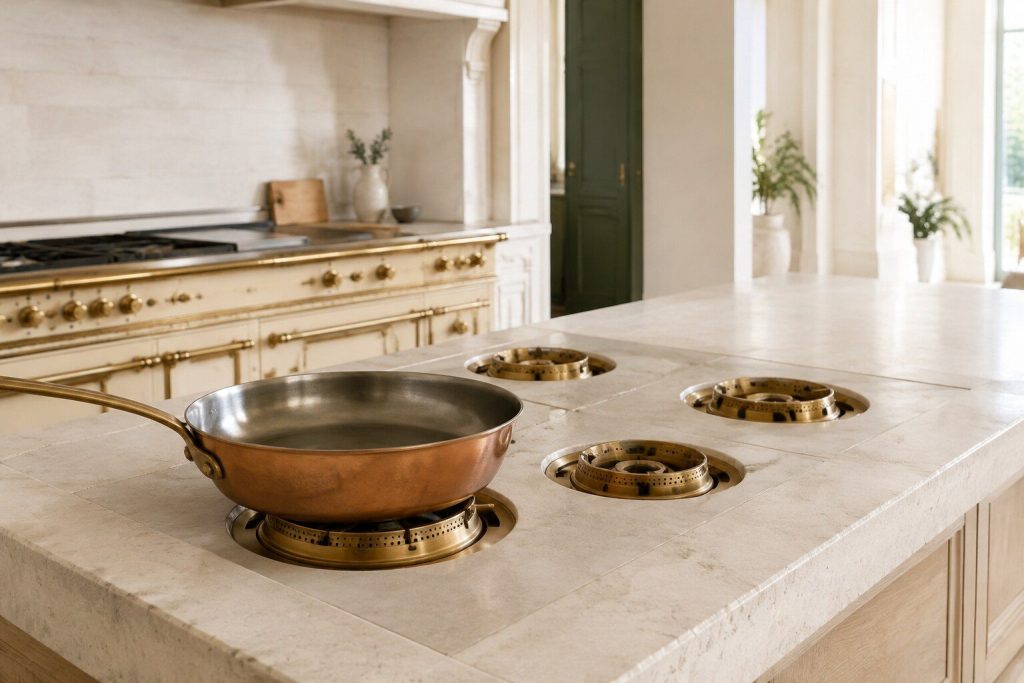
A La Cornue cooktop is a set of modules chosen at order time and dropped into a stainless frame: brass gas burners at 17,000 and 7,500 BTU, a 22,000 BTU power burner, the cast-iron plaque coup de feu heated by a single burner underneath, a lava-rock grill, ceramic-glass induction zones, an electric teppanyaki plate. This is the top of a range, and each module is a different repair. Sold on its own without ovens beneath it, the same top is a rangetop, and it has its own page.
- Gas, induction, French top, grill and teppanyaki modules on one frame
- Induction is the only half of this line that shows a code — E2, U400, Er
- A cracked glass hob is disconnected first and diagnosed second
-
from $175 Hood filter and duct service
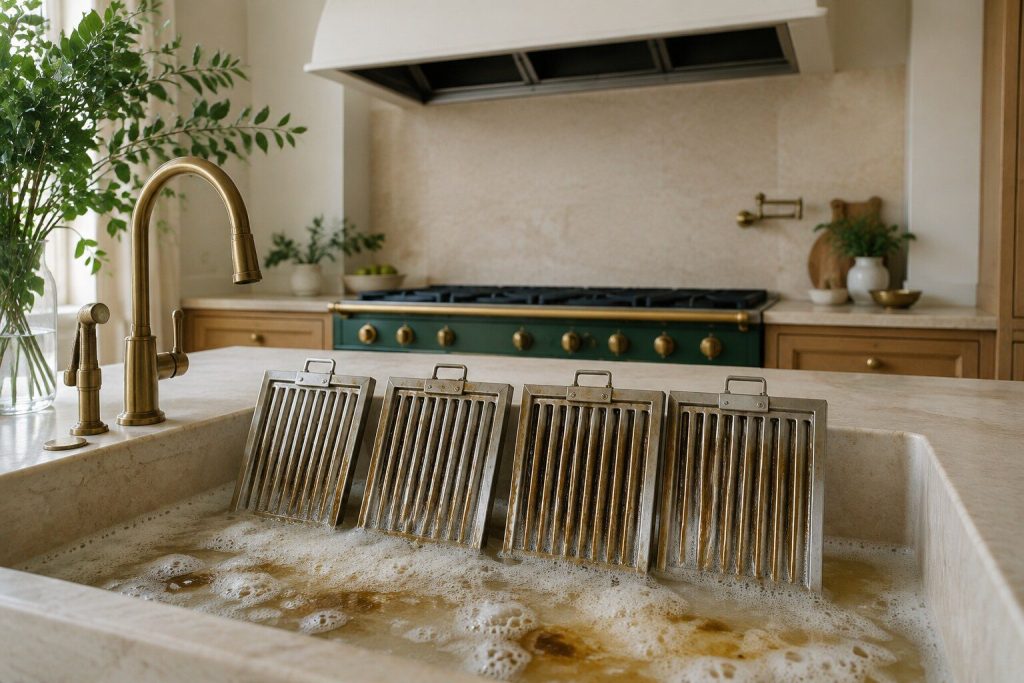
Faded suction with a motor that still sounds fine is almost never the motor. Baffle filters with a grease capture system are dishwasher safe, and the 600 CFM figure is specified against an unobstructed six-inch duct — eight on the inserts. Most of this job is the air path.
- Baffles cleaned or replaced first, because it costs nothing to rule out
- Duct run, damper and termination measured rather than assumed
- Airflow verified after the work, not promised
-
Château motorized hoods H11–H20 · island hoods · inserts · CornuFé Cascade, Euclid, Loge, Marquee Range hoods
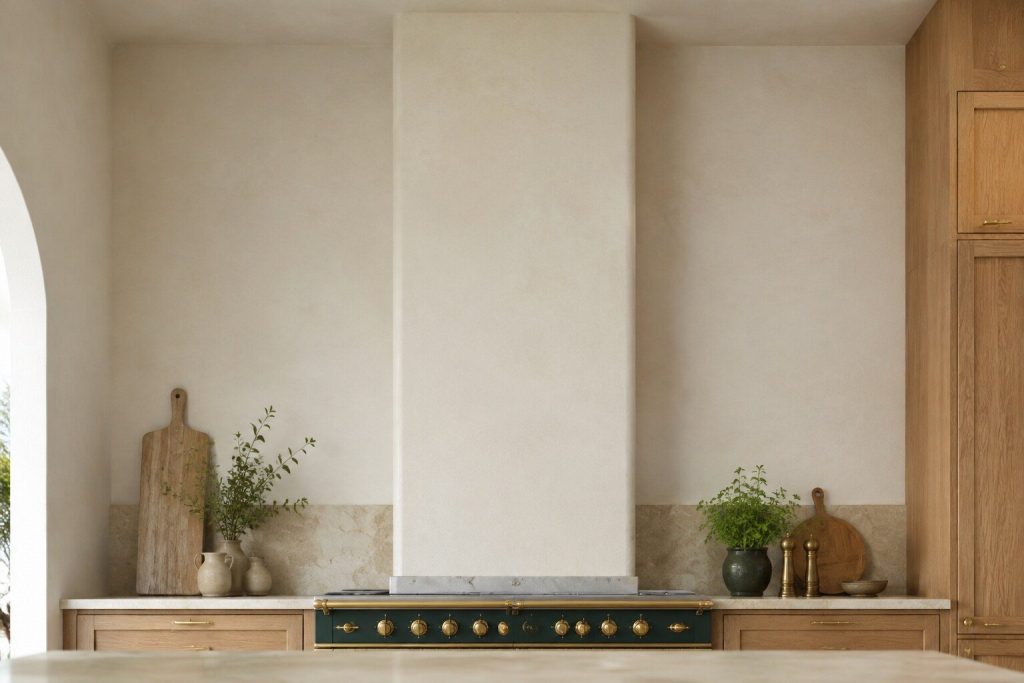
The hood over a La Cornue is not an accessory bought to match. A motorized Château hood starts at $17,400 for the 90 and runs past $25,000 for the Grand Palais 180, it is made in the same enamels and trims as the range, and it does real work: a 600 CFM blower on a four-speed variable motor, baffle filters with a grease capture system, three 20-watt lights and a remote. When one stops, the kitchen it was built for stops working properly.
- Motorized Château hoods, island hoods and inserts, plus the CornuFé collection
- 600 CFM blower, four-speed variable motor, baffle filters, remote control
- A hood is finished to match the range — the enamel is part of the repair
-
from $95 Diagnostic visit
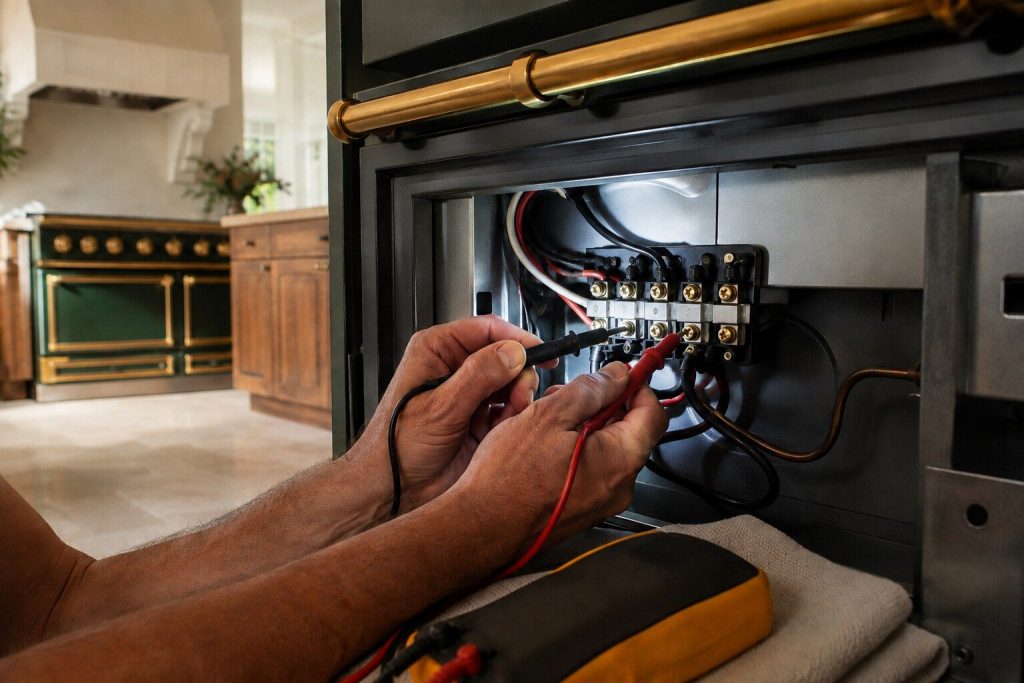
One visit, one technician, one answer in writing. On a make with three error codes in its entire documentation, the diagnostic is not a formality before the repair — it is the repair's only source of information, and it is done with instruments rather than by elimination.
- Measured, not guessed — this make reports almost nothing on its own
- The configuration code read off the range, because it decides the parts
- Written findings and a from-price before anything is opened
Questions people ask about this
Why not water?
Because water is denser than oil and boils at a far lower temperature. It sinks through burning oil, flashes instantly to steam, and throws the burning oil upwards and outwards as it expands — several hundred times its own volume, in an instant. A cup of water on a pan fire produces a fireball that reaches the ceiling. This is the single most important sentence on the page.
Can I use a fire extinguisher?
A Class K or a dry-chemical ABC extinguisher, from a distance, aimed at the base — and only if the fire is small, you have a clear exit behind you, and you are confident. What we would say plainly is that no extinguisher is worth standing next to a spreading fire for. If there is doubt, leave and call 911. A kitchen is replaceable.
It went out and then came back.
That is why the lid stays on for twenty minutes. Oil that has been burning is above its auto-ignition temperature, so removing the cover while it is still that hot re-introduces oxygen to fuel that does not need a flame to restart. Cut the heat, cover it, and leave the room to cool with the pan where it is.
What if it is in the oven?
Simpler, and the instruction is the opposite of instinct: turn the oven off and keep the door shut. A closed oven starves the fire of oxygen and contains it, and opening the door feeds it and lets it out. On a vaulted oven that is easier to follow than on most, because there is no window tempting you to look.
Safety & Risks
More guides like this one
-
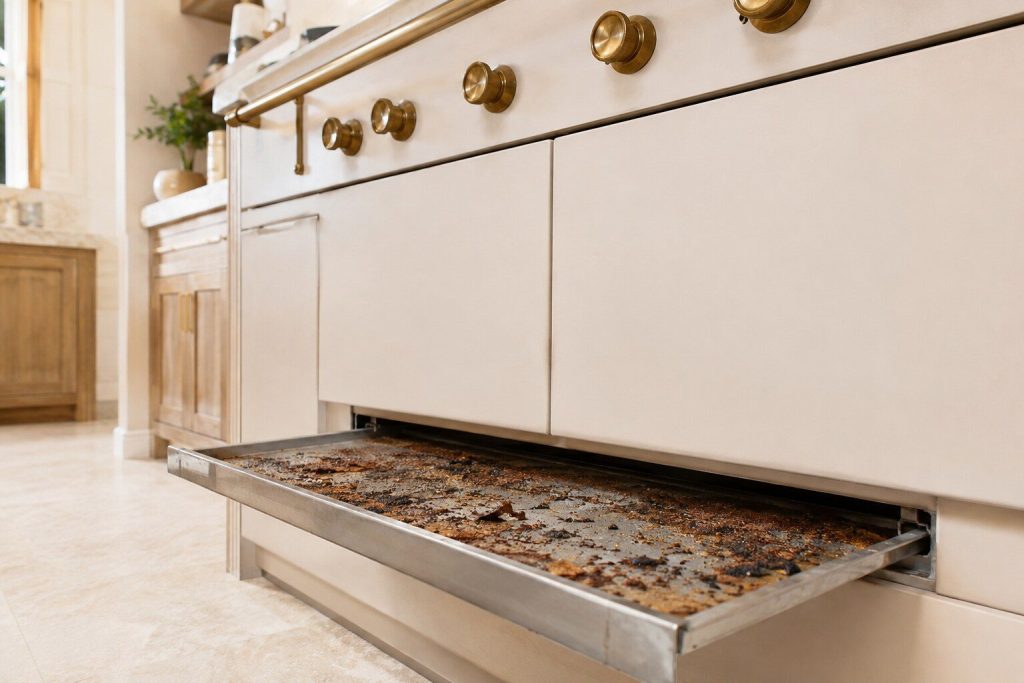
Why an Oven Smells of Burning, and Which Smells Matter
Seven ways people describe it, and each one means something different. Dust and residue are harmless. Hot plastic and hot wiring are not.
Read more -
A Gas Smell From the Oven: What Is Normal and What Is Not
A brief smell as gas reaches a burner before it lights is ordinary. A smell after the flame is established, or with everything off, is not. Here is the line between them.
Read more
Tell us the model number and what it is doing.
This article is based on:
- Official manufacturer documentation
- Internal repair procedures
- Technician repair history
- Company quality standards