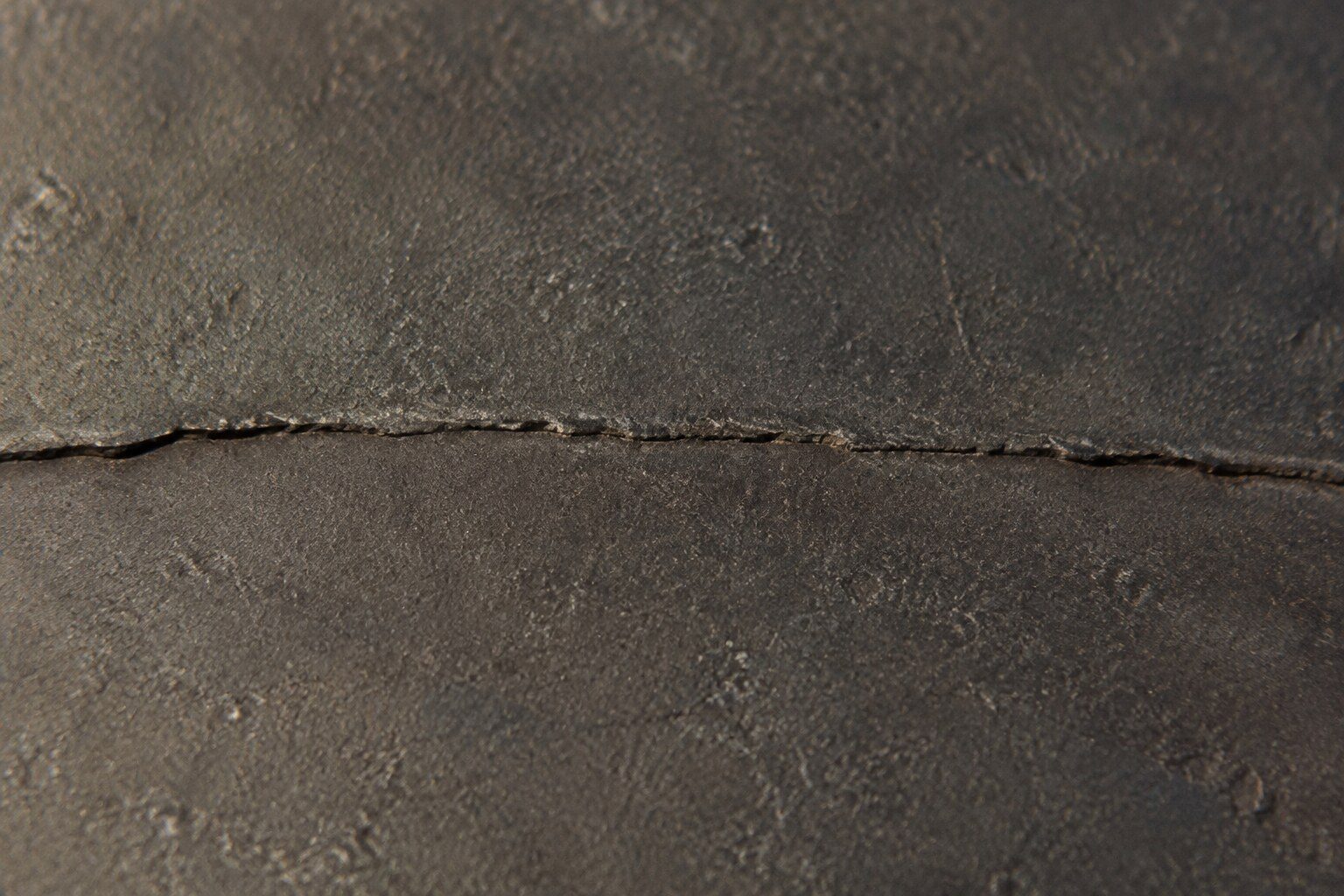
- “Crazing in the seasoning is not a crack in the iron”
- “Thermal shock is the usual cause — a wet cloth on a hot plate”
- “A replacement plate is a made-to-order part, so this gets looked at properly”
Symptom
La Cornue cracked French top plate
A crack in the plaque is neither cosmetic nor automatically terminal, and the difference matters because a replacement plate is a made-to-order part. Crazing in the seasoning looks alarming and means nothing; a crack through the cast iron changes how heat crosses the plate and can propagate.
- From $95 diagnostic, credited to the repair
- 59 cities and neighborhoods covered
- OEM parts available on order
- In writing the price, before anything is opened
Five ordinary causes
What this usually turns out to be
Cheapest and commonest first, which is also the order we check them in. They sit hundreds of dollars apart, and only the unit settles which one is yours.
-
Thermal shock
A wet cloth, a pan of cold liquid or a wash-down on a hot plate. The most common cause and the most preventable.
French top service from $245 -
A burner running too hot in one spot
A rich or misaligned flame concentrates heat where the plate was designed to spread it.
Surface burner and igniter service from $155 -
Impact
Cast iron is hard and brittle. A dropped stockpot on a cold plate does this.
French top service from $245 -
Long-term rust from the underside
Corrosion thins the iron until a normal thermal cycle finishes it.
French top service from $245 -
Age and cycles
Some plates simply reach the end of a long life, and on a range from the 1990s that is a fair outcome.
French top service from $245
In five minutes
Before you call anybody
None of it needs tools, and all of it makes the visit shorter.
-
01
Let it go cold first
Everything about this assessment is wrong on a warm plate, including whether the line is even there.
-
02
Run a fingernail across it
Crazing does not catch. A crack does.
-
03
Look for a rust line
Moisture in a crack leaves a trace. It is the clearest confirmation there is.
-
04
Stop using it if it is through
A cracked plate can move, and a moving plate on a lit burner is not worth the risk.
How it shows up
What people describe when they call
In more detail
About La Cornue cracked French top plate
Tell crazing from a crack
Let the plate go completely cold and clean it back with a dry brush. Crazing is a fine spider web in the black seasoning layer, it does not catch a fingernail, and it is the normal appearance of a well-used plate. A crack is a single line, usually running from an edge or from the hot center outwards, it catches a nail, and it often shows a rust line along it because moisture has got in. If you can photograph it cold and clean, that photograph is genuinely useful to us.
What it usually means, by the kind of La Cornue appliance
La Cornue sells one appliance in several forms, and the same behavior points at different things on each of them. A built-in side-by-side and an integrated column are not the same service situation, and a dual-fuel range and an induction range fail in different halves.
- Château with a large plaque — A large plate has more thermal gradient across it and takes the most punishment. Most cracks we see are here.
- Château with a petite plaque — Smaller, more even, and less prone. A crack in a petite plaque usually has an identifiable event behind it.
- CornuFé — No plaque on the factory-built models.
What we can and cannot do about it
A stabilized hairline at the edge of a plate, away from the hot center, on a range that is otherwise sound: that is something to monitor, keep dry and season, and it can go on for years. A crack through the center, or one that has opened enough to show light or rust along its length, is a plate at the end of its service life. We will tell you which one you have and we will not tell you it is fine when it is not — but nor will we condemn a plate because it has a line on it, which on this make is an expensive mistake to make on somebody's behalf.
Ordering a plate
The plaque is part of a made-to-order cooktop configuration, so a replacement is ordered against the range's own size and configuration code — a large plaque for a K3 Château 150 is not a catalog line you pick off a shelf. Expect a lead time, and expect us to quote it before ordering rather than after. In the meantime the rest of the top is usable, and that is worth knowing: this is one module of several on a range that has plenty of other ways to cook.
This article is based on:
- Official manufacturer documentation
- Internal repair procedures
- Technician repair history
- Company quality standards
Before you book
Questions about La Cornue cracked French top plate
Can a cracked cast-iron plate be welded?
In principle cast iron can be repaired, and in practice we do not recommend it here. A plaque is a precision-flat thermal surface that has to sit down onto its seat and conduct evenly across its whole area; a weld introduces a hard zone with different expansion behavior, and the repair usually distorts the flatness that makes the plate work. You end up with the uneven-heating page instead of this one. On a plate near the end of its life we say so honestly and quote the replacement.
How do I stop it happening to the new one?
Three rules and they are not onerous. Never put anything wet on a hot plate — no cloths, no cold liquids, no washing it down until it has cooled. Let it come up and cool down on its own time rather than forcing either. And keep it seasoned and dry, particularly around the edges and underneath, because rust is what turns a normal thermal cycle into a crack after twenty years. That is the whole of it.
Where we do it
Across Miami-Dade, Broward, and Palm Beach
Same terms everywhere we go: an on-site diagnostic first, the price agreed in writing, and the exact figure confirmed once we have seen the unit.
Neighborhoods people ask for by name