Cost Expectations
Why a La Cornue Costs What It Costs, From Somebody Who Repairs Them
Six things, and most of them are visible when you take one apart. It is hand-built to order in Saint-Ouen-l'Aumône by fifty to sixty artisans, so no two are the same appliance and every one is assembled from a configuration somebody chose. The mass is real: a Grand Palais 180 is about 710 lb uncrated and 1,320 lb crated, in enamelled steel and cast iron rather than pressed panels. The vaulted oven and the cast-iron plaque are components with no mass-market equivalent. The finish is one of about fifty vitreous enamels with a choice of ten trim metals, priced individually, and a custom color was $3,400 at order time. It is mechanical rather than electronic, which is why parts still exist for ranges from 2008 and why there is no board to fail. And a motorized hood alone starts at $17,400. The honest counter-argument: lead times on made-to-order parts, and an appliance that asks you to learn it rather than the other way round.
The full guide
Why is La Cornue so expensive? Why ask a repair company
Because showrooms describe the appliance when it is new, and we meet it at fifteen and twenty years old. That is a different vantage point, and it produces a different answer.
Seven different phrasings of this question turn up in what people search about this make — why is it so expensive, why are the stoves so expensive, is it worth the money, is it worth it, how much. Here is what the money is actually buying, from the outside in.
It is made to order, and not in a marketing sense
The cooktop modules are priced individually and combined per order. The range in your kitchen carries a configuration code recording what somebody chose — N1 to N9 on a Grand Palais 180, K1 to K6 on a 150, C1 to C5 on a Grand Castel 90 — and that code says whether the top holds two gas burners and a plaque, a lava-rock grill, induction zones or a teppanyaki plate.
Which means two ranges with the same model number can be different appliances. From a repair point of view that is the single most consequential fact about the make, and from a purchase point of view it is what you are paying for: a range specified rather than selected.
It is built in Saint-Ouen-l'Aumône by fifty to sixty artisans the company calls Compagnons, and it has been building this way since 1908.
The mass is not decorative
A Grand Palais 180: about 710 lb uncrated, 1,320 lb crated. A Château 150 is around 620 lb. Even the smallest, the Castel 60, is about 331 lb.
That is enamelled steel and cast iron rather than pressed panels over a frame, and it has two consequences you feel. The oven cooks by radiation from that mass, which is the thing a fan oven cannot reproduce. And the range is built to be worked on where it stands: the gas train, the valves, the igniters and the cooktop modules are all reached from the front, with adjustable legs and a specified height range so it is leveled rather than shimmed.
Two components with no equivalent
The vaulted oven. A sealed dome that cooks by radiant heat, with no window on the gas side because the door is part of the mass. There is nothing in the mass market that does this, and it is why bread and roasting meat behave differently in one.
The plaque coup de feu. A solid cast-iron plate heated by a single 7,500 BTU burner beneath its center, giving you a whole graded cooking surface from one burner. Sear at the center, hold a sauce at the edge, keep something warm at the corner, all at once.
Neither is a feature that could be added to a cheaper appliance. They are the appliance.
The finish is priced like a finish
About fifty vitreous enamels, plus one-of-a-kind at $3,400 at order time. Ten trim metals: polished and brushed brass, brushed stainless, brushed nickel, polished chrome, polished and brushed copper, matte black, matte bronze, polished stainless — with clear-coated varnish available on some.
A single induction element was a $3,500 upcharge. A teppanyaki element, $3,500. A flush integrated backsplash, $7,500.
Those numbers are worth knowing for a practical reason as well as a curious one: they are why a $595 figure to replace a cracked ceramic panel is proportionate rather than steep. The panel protects elements that cost several times that.
And a motorized hood starts at $17,400 for the 90 and passes $25,000 for the Grand Palais 180 — a hood, enamelled and trimmed to match the range.
It is mechanical, and that is the part that ages well
This is what we notice most, and what gets mentioned least at the point of sale.
A gas Château has brass valves with mechanical stems, a thermocouple, a safety valve, an igniter, a thermostat and a cast-iron plate. There is no control board. La Cornue publishes three error codes in the whole of its US documentation — E2, U400 and Er with a number — and all three belong to the induction electronics. The Château installation and user guide has no troubleshooting section at all, because there is nothing to report.
So the failure list is short, the parts are the kind that keep being made, and there is no firmware to become unsupported. The company still publishes the installation and user guide for the Centenaire ranges of 2008 to 2016, which are in South Florida kitchens now and entirely serviceable.
What wears out, in order: igniters and thermocouples, then valve stems and door seals, then thermostats, then hood capacitors and bearings. Every one of those is a small fraction of one per cent of what the range cost.
What does not wear out: the body, the cavities, the plaque, the manifold, the hood canopy.
The honest counter-argument
We would not be much use if we only made the case for the appliance.
Lead times. Common wear items — igniters, thermocouples, valves, elements, thermostats, seals, lamps — are sourced domestically and are same-week jobs. A color-matched enamel panel, a plaque, a vaulted-cavity component or a control specific to one configuration is made to order in France. That is a wait, and it is part of a repair conversation before the order rather than after.
It asks you to learn it. A vaulted oven is slow, graded and windowless. A French top needs twenty minutes and a change of technique. Neither will tell you when it is ready. A significant share of the "my La Cornue is broken" calls we take are ranges working exactly as designed, and that is a real cost in frustration even though it is not a cost in money.
It is not convenient. No self-clean cycle. No preheat signal on the gas side. No app.
And it will not make you a better cook. It will reward one.
What we would actually tell a friend
If the vaulted oven and the French top are things you want, buy one and keep it serviced annually — the failures here are gradual and invisible, and an annual visit is the difference between a part and a panel. It will outlive the kitchen.
If what you want is a range that is fast, even, self-cleaning and forgettable, spend a quarter of the money elsewhere and be happier. There is no shame in that answer and we give it fairly often.
If it turns out to be a repair
What this leads to, and what it costs
Every job on this site is priced the same way: an on-site diagnostic first, the figure agreed in writing before anybody starts.
-
Dual fuel · gas · all-induction — Château, Châtelet, Castel, Grand Palais, CornuFé Ranges
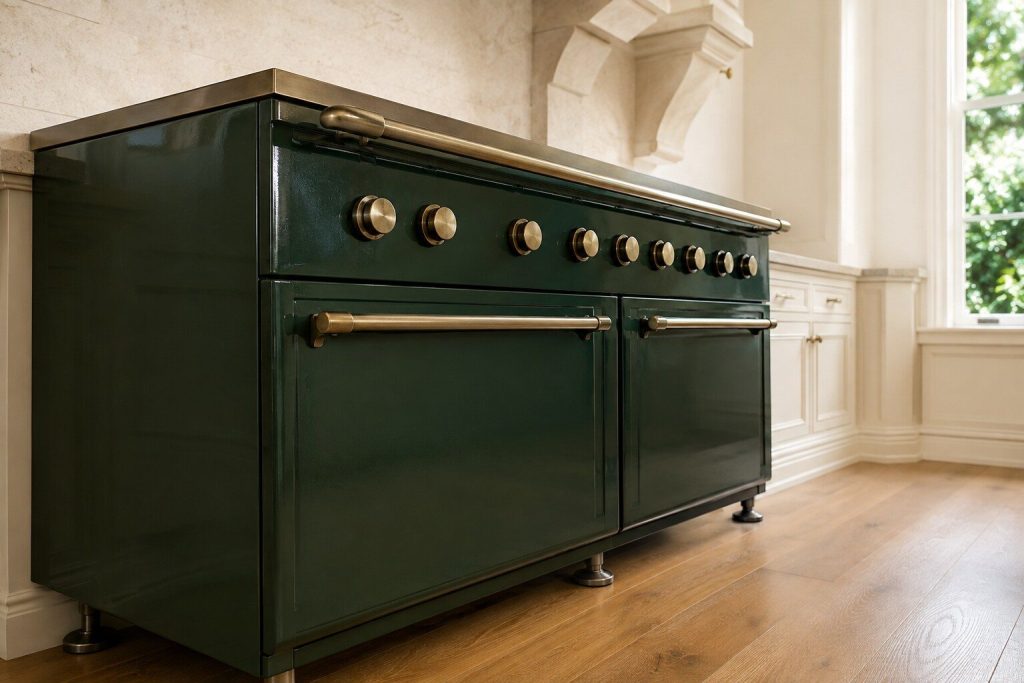
The range is what La Cornue makes, and everything else in the line exists around it. A Château is built to order in France, arrives in a crate weighing over half a ton, and is assembled from parts a customer chose one at a time: which oven is gas and which is electric, whether the top carries a French top, a lava-rock grill, induction or a teppanyaki plate, which of about fifty enamels, which trim metal. Two of them are almost never identical. That is the first thing a repair on one has to take seriously — the model number tells you the size, and the configuration code tells you what is actually under the lids.
- Dual fuel, all gas or all induction — three different ranges, three parts lists
- The configuration code, not just the model, decides what is on the top
- Made-to-order enamel and trim are part of the job, not an extra
-
G4 Château Series La Cornue G48 repair
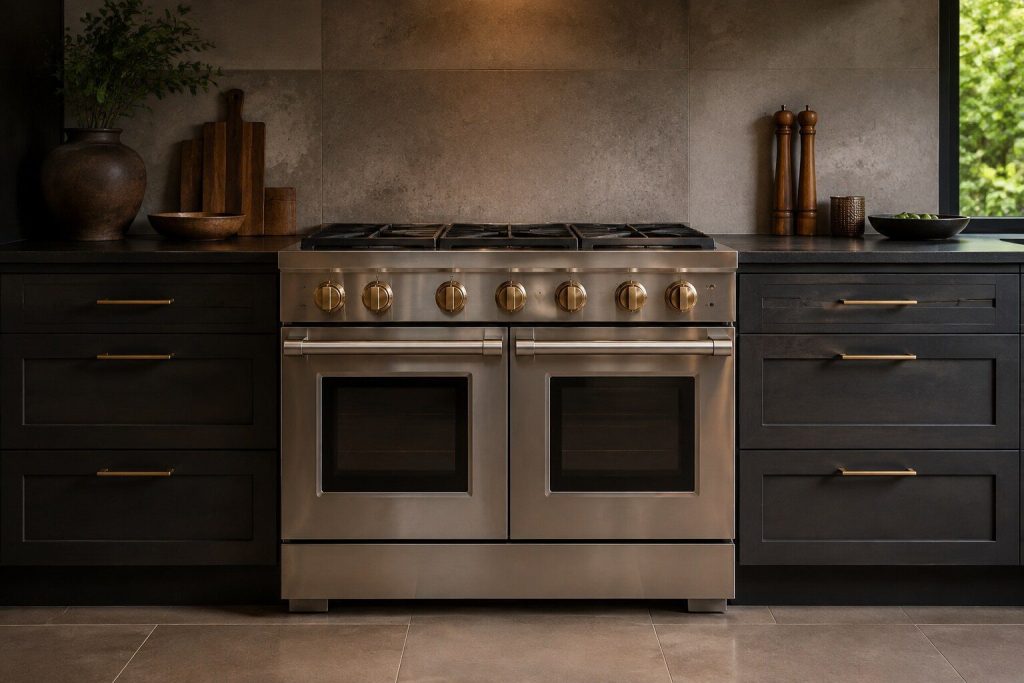
La Cornue G48 repair in Miami: what owners of this G4 Château Series unit search for, what those symptoms usually point at, and what the work involves. Diagnostic from $95, credited toward the repair.
- Burner will not light
- Burner clicks but will not ignite
- Yellow or orange flame
-
from $195 Appliance maintenance cost
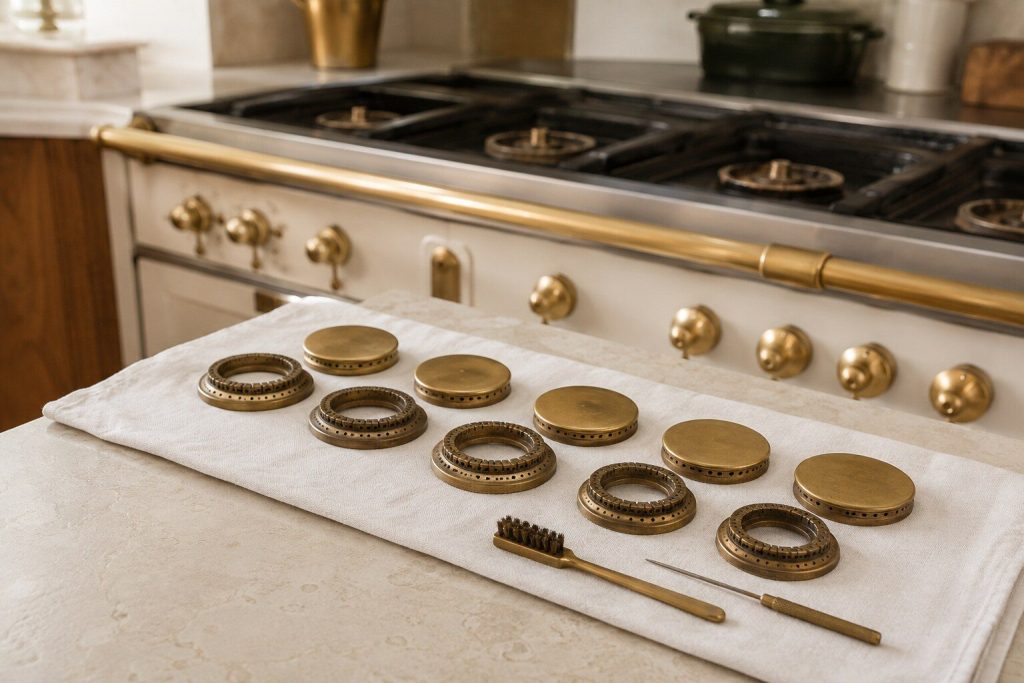
An annual visit that exists because most of what goes wrong on this make goes wrong slowly, and the owner adapts to every stage of it without noticing.
- from $195 — longer than the fleet's standard visit, and here is why
- Two ovens calibrated on a dual-fuel range, not one
- The hood is part of it, because the hood protects the range
-
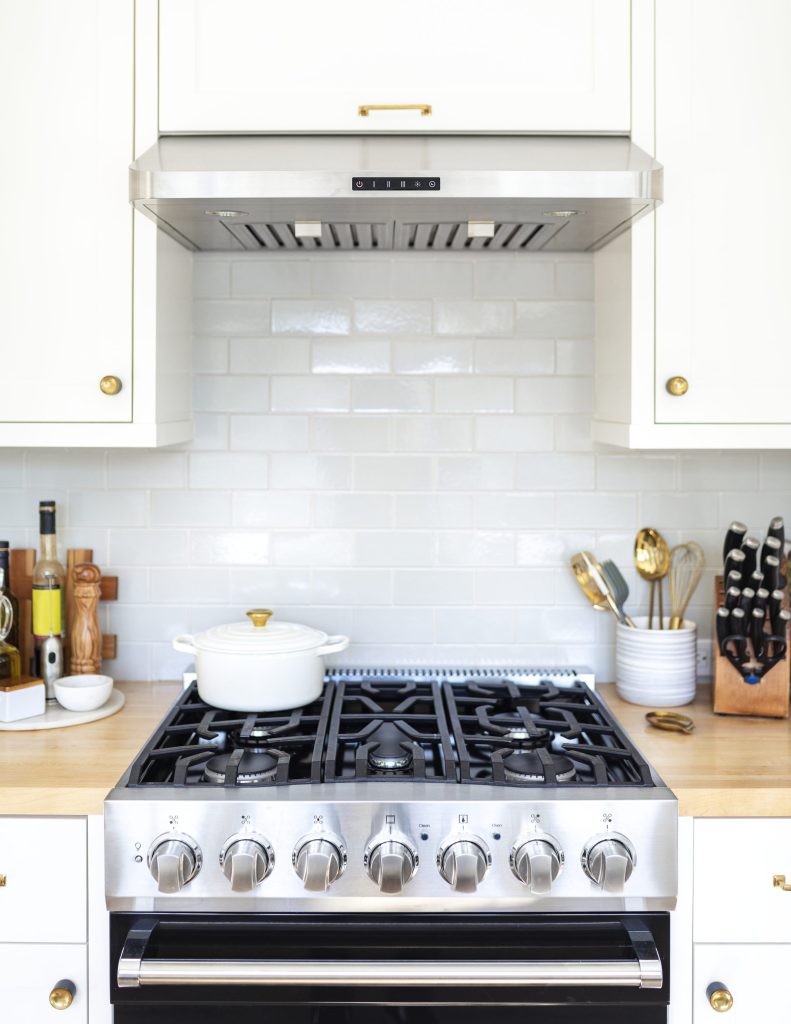
Legacy La Cornue Centenaire repair
La Cornue Centenaire repair in Miami: what owners of this Legacy unit search for, what those symptoms usually point at, and what the work involves. Diagnostic from $95, credited toward the repair.
- Burner will not light
- Burner clicks but will not ignite
- Yellow or orange flame
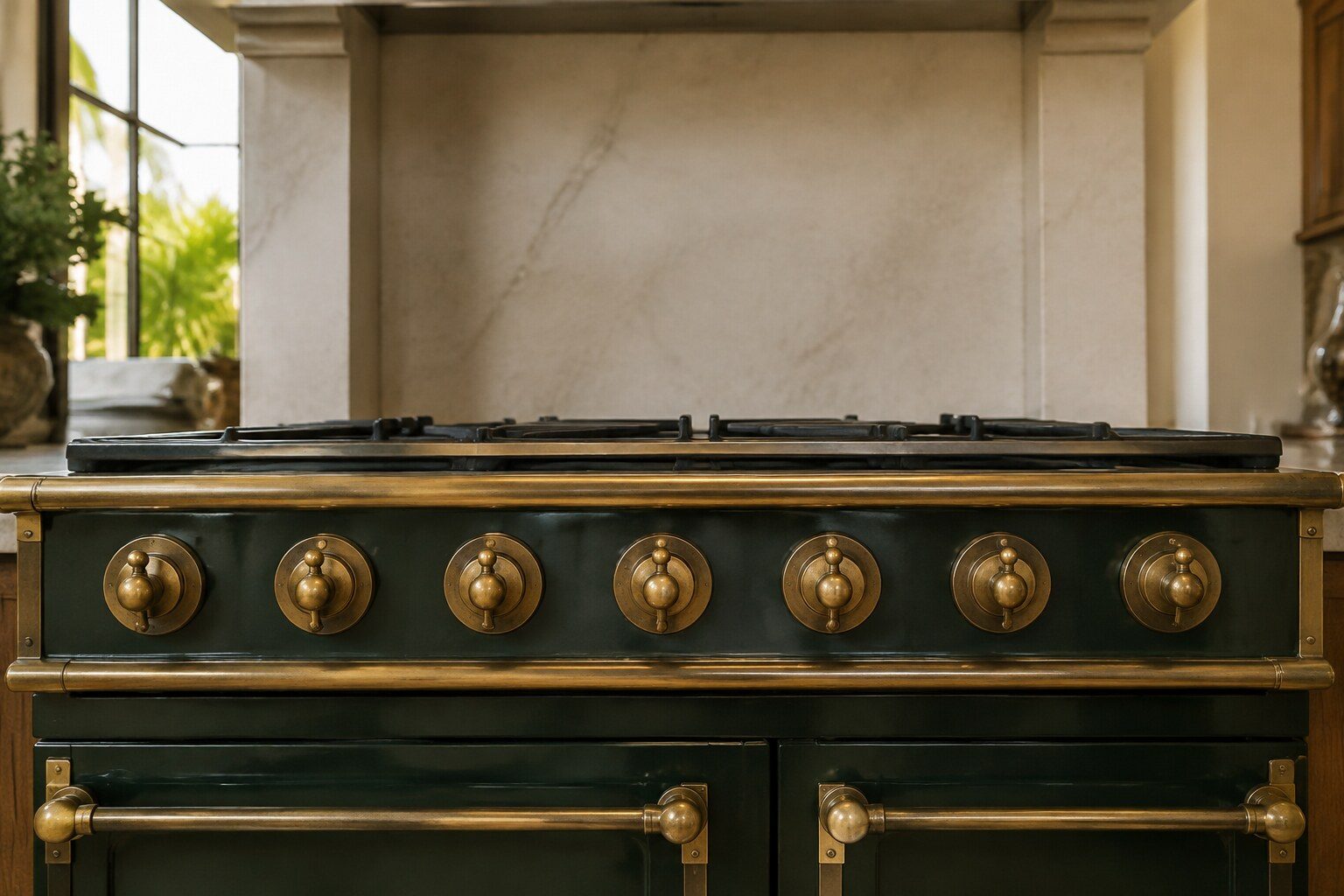
Questions people ask about this
Is it worth it?
It depends entirely on what you want from a range, and we would rather answer honestly than flatter the appliance. If you want radiant vaulted cooking, a French top, mechanical controls that will still work in thirty years and a piece of furniture in your kitchen, then yes and there is no real substitute. If you want convenience, speed, precise repeatability and an appliance you never think about, this is the wrong purchase and an expensive way to discover it.
Do repairs cost proportionally more?
Some do and some do not, and the split is interesting. The gas side is inexpensive to service because there is no control system to interrogate — an igniter, a thermocouple, a valve, a thermostat, measured. The electronic side and the ceramic glass sit above the fleet's other cooking sites. And exactly one job is priced by weight rather than by part, because moving half a ton of range needs equipment and people.
Would a Lacanche, a Wolf or an AGA be better value?
They are different propositions rather than cheaper versions. A Wolf is a professional-style appliance with excellent burners and conventional ovens. An AGA is a heat-storage range that is closer in philosophy and quite different in use. A Lacanche is the nearest direct comparison — French, built to order, similar architecture. Which is better value depends on whether you actually want the vaulted oven and the plaque, because those are what the premium buys.
What holds its value?
These do, unusually well, and the reason is on this page: the expensive parts do not wear out. A twenty-year-old Château with fresh igniters, a new thermostat and a serviced hood is a functioning appliance rather than a tired one, and the body, the cavities and the plaque are as good as the day they were made. That is not true of most appliances at any price.
Cost Expectations
More guides like this one
-
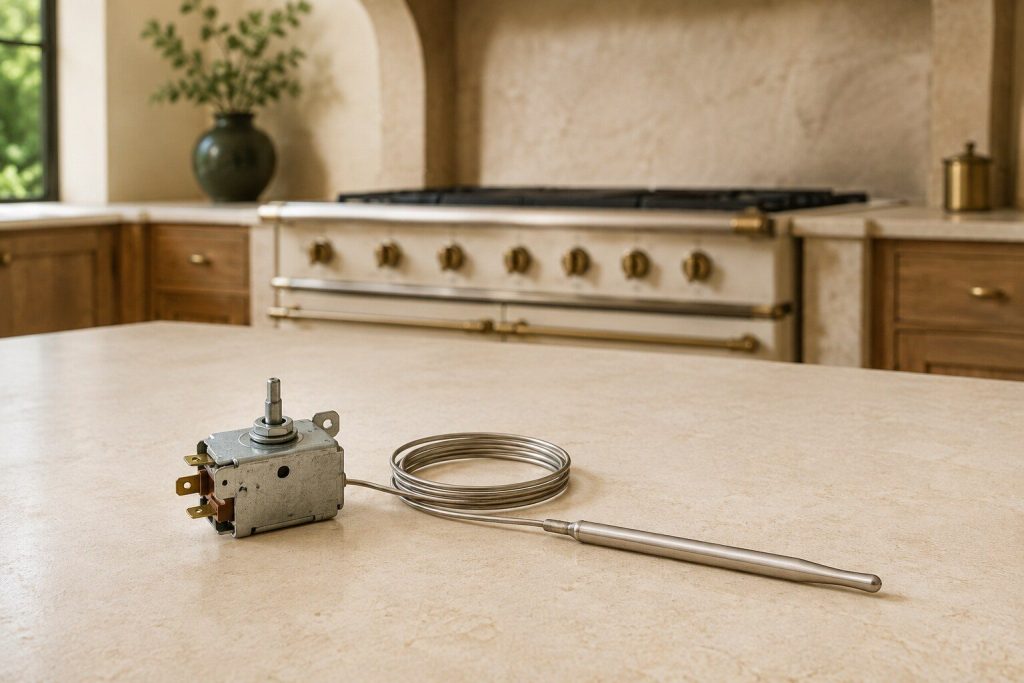
What an Oven Thermostat Costs to Put Right, and What Sets the Figure
Often calibration rather than a part. What moves the figure is whether the thermostat can be adjusted, which oven it is, and three free checks that produce the same complaint.
Read more
Tell us the model number and what it is doing.
This article is based on:
- Official manufacturer documentation
- Internal repair procedures
- Technician repair history
- Company quality standards