Common Problems
What Is Actually Different About a La Cornue Range
Five things, and none of them is styling. It is hand-built to order in Saint-Ouen-l'Aumône by fifty to sixty artisans the company calls Compagnons, so no two are quite the same appliance. The oven is a voûte — a sealed vaulted dome that cooks by radiant heat from its own mass rather than by blowing air, with no window on the gas side. The cooktop is a set of modules chosen individually at order time: brass gas burners at 17,000 and 7,500 BTU, a 22,000 BTU power burner, a lava-rock grill at 14,500, ceramic induction, an electric teppanyaki plate, and the plaque coup de feu — a solid cast-iron plate heated by a single burner beneath its center. The finish is one of about fifty vitreous enamels with a choice of trim metals. And it is heavy: a Grand Palais 180 is about 710 lb uncrated and 1,320 lb crated, which is why these are designed to be serviced from the front for decades rather than replaced.
The full guide
What is special about La Cornue range? Written from the other side
Most descriptions of this make are written by people selling one. This one is written by people who take them apart, which changes what seems worth mentioning.
The showroom talks about color and about France. Both are true. But what you notice ten or twenty years in — which is when we meet these ranges — is different, and more interesting.
It is genuinely made to order, and that has consequences
Not "customisable" in the sense of picking a finish from four. The cooktop modules are priced individually and combined to the order, so the range in your kitchen has a configuration code recording what somebody chose: N1 to N9 on a Grand Palais 180, K1 to K6 on a 150, C1 to C5 on a Grand Castel 90.
Two ranges with the same model number can therefore hold different equipment and need different parts for the same complaint. That is the single most practical fact on this page, and it is why a booking that carries the configuration code gets the right parts on the first visit.
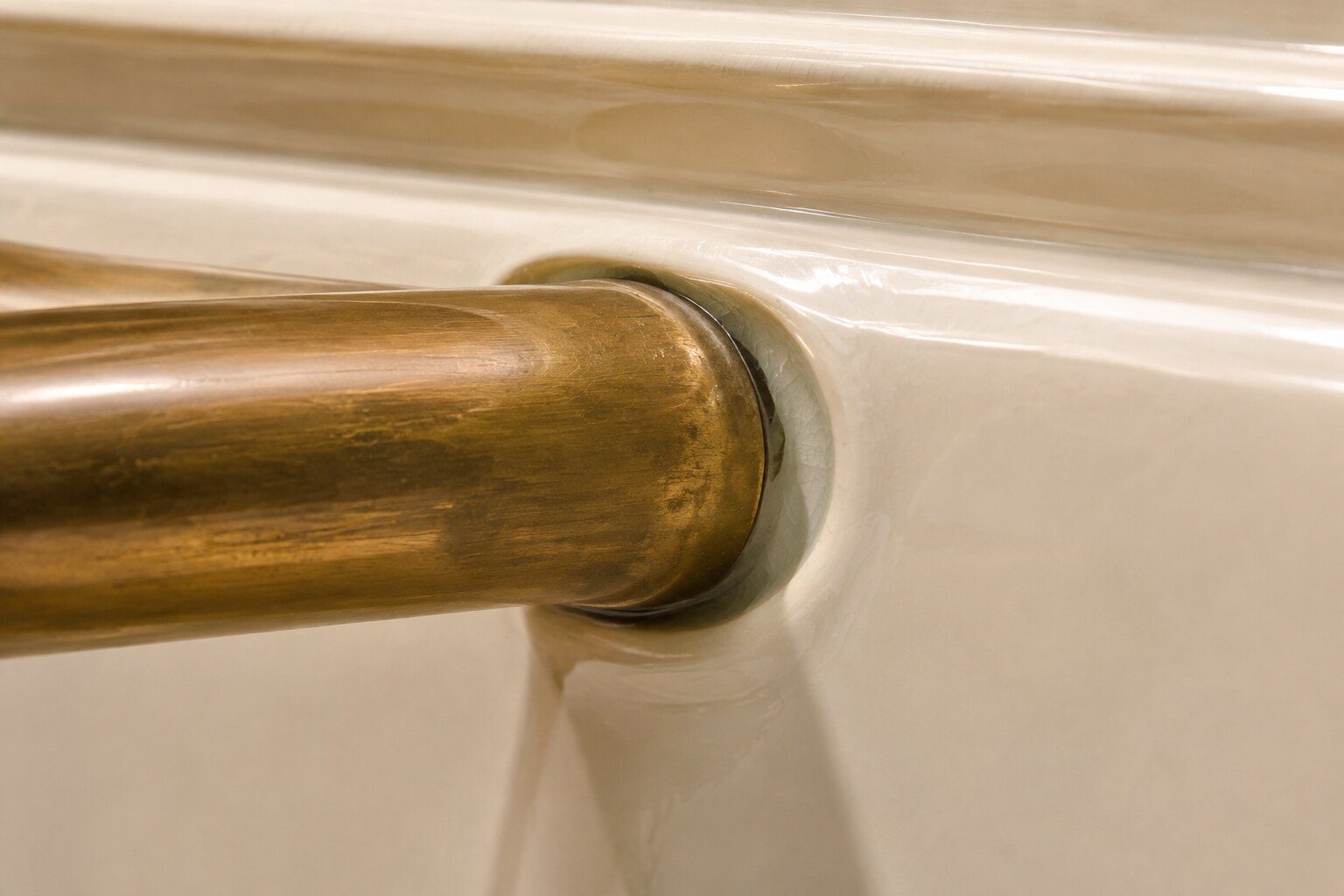
It also means the finish is a catalog reference rather than a color name. About fifty vitreous enamels, plus one-of-a-kind at an upcharge, and trims from polished brass to matte bronze with some of them clear-coated. A replacement panel is ordered against that reference, not matched by eye.
The oven cooks by radiation, not by air
The *voûte* is a sealed vaulted dome. Heat comes off the mass of the cavity rather than out of moving air, and on a Château gas oven there is no window because the door is part of that mass.
Practically:
- it comes up slowly, twenty-five to thirty minutes, and there is no beep;
- it holds superbly and recovers slowly;
- it is graded rather than even, which is why the maker's own notes ask you to turn a large item during cooking;
- and it does something to bread and roasting meat that a fan oven does not.
Every vaulted gas oven carries an electric broiler above the gas burner. Two heat sources, two circuits, one cavity — which is why a range can lose browning and keep baking.
The French top is the part nobody else has
One 7,500 BTU burner under a solid cast-iron plate, hottest at the center and cooler outwards. You cook by moving pans around it rather than by adjusting a flame: sear at the center, hold a sauce at the mid zone, keep something warm at the corner, all at once from one burner.
It is also the thing that most often gets described as broken when it is working. A plaque judged five minutes after lighting looks dead; it needs twenty.
It is mechanical, and that is why it lasts
This is the part that matters most in year twenty and gets mentioned least at year zero.
A gas Château has brass valves with mechanical stems, a thermocouple, a safety valve, an igniter, a thermostat and a cast-iron plate. There is no control board to fail, no display to go blank, no firmware. La Cornue's Château installation and user guide contains no troubleshooting section at all — not as an oversight, but because there is nothing to report.
So the failure list is short and the parts are the kind that get made for decades: igniters, thermocouples, valves, elements, thermostats, seals, lamps. The company still publishes the installation and user guide for the Centenaire ranges of 2008 to 2016, which are in South Florida kitchens now and entirely serviceable.
The weight, and why it is a design decision
A Grand Palais 180 is about 710 lb uncrated and 1,320 lb crated. Even a Grand Castel 90 is around 330 lb.
That sounds like a shipping problem and it is really a service philosophy. These are built to be worked on where they stand: the gas train, the valves, the igniters and the cooktop modules are all reached from the front, and the legs are adjustable to a specified height range so the range is leveled rather than shimmed. Almost nothing on the appliance requires it to move.
Which is a good thing, because moving one is a planned job with enough people and the right equipment — and it is the only repair on this site priced by mass rather than by the part.
What it is not
It is not fast, it is not convenient, and it is not the appliance to learn on if you cook by timer and indicator light. A vaulted oven asks you to wait, a French top asks you to move pans, and neither will tell you when it is ready.
It also has almost no self-diagnosis. Three error codes exist in the whole of the maker's US documentation — E2, U400 and Er with a number — and all three belong to the induction electronics. On a gas range there is nothing to read at all, which means a diagnosis here is measurement rather than a display.
The vocabulary, so you can use it
Voûte — the vaulted oven. Plaque coup de feu — the French top. Flamberge — the gas rotisserie module. Étoiles — the stars engraved on the plaque, sitting where it is hottest. Compagnons — the artisans who build them. Piano de cuisson — what the French call a range of this kind.
Using those words on the phone tells a technician you know what you have, and it genuinely changes the conversation.
If it turns out to be a repair
What this leads to, and what it costs
Every job on this site is priced the same way: an on-site diagnostic first, the figure agreed in writing before anybody starts.
-
Dual fuel · gas · all-induction — Château, Châtelet, Castel, Grand Palais, CornuFé Ranges
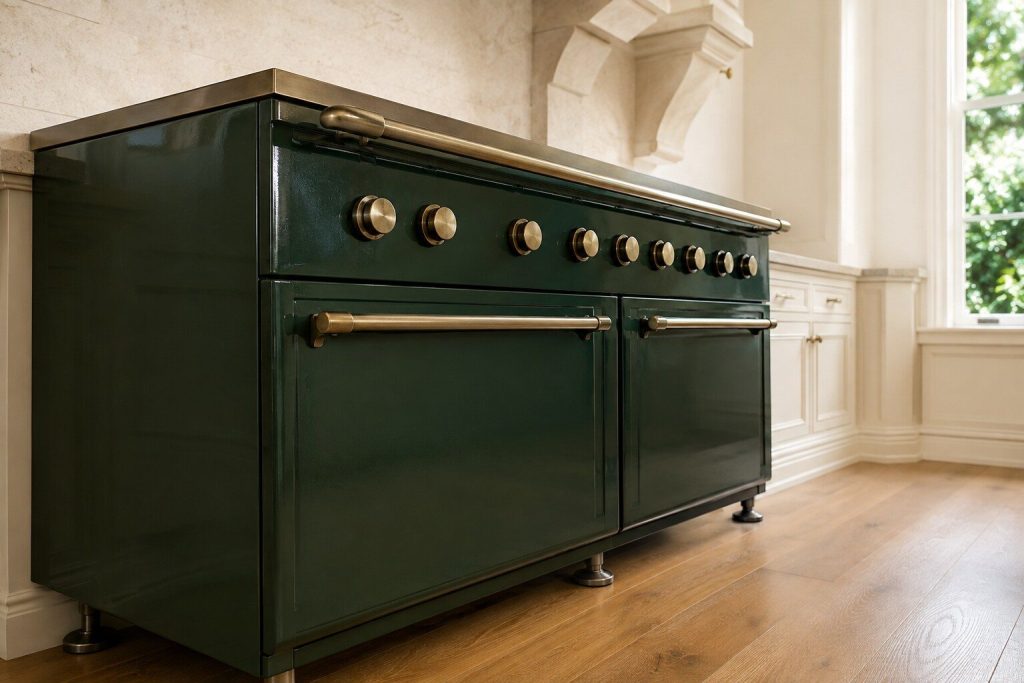
The range is what La Cornue makes, and everything else in the line exists around it. A Château is built to order in France, arrives in a crate weighing over half a ton, and is assembled from parts a customer chose one at a time: which oven is gas and which is electric, whether the top carries a French top, a lava-rock grill, induction or a teppanyaki plate, which of about fifty enamels, which trim metal. Two of them are almost never identical. That is the first thing a repair on one has to take seriously — the model number tells you the size, and the configuration code tells you what is actually under the lids.
- Dual fuel, all gas or all induction — three different ranges, three parts lists
- The configuration code, not just the model, decides what is on the top
- Made-to-order enamel and trim are part of the job, not an extra
-
G4 Château Series La Cornue G48 repair
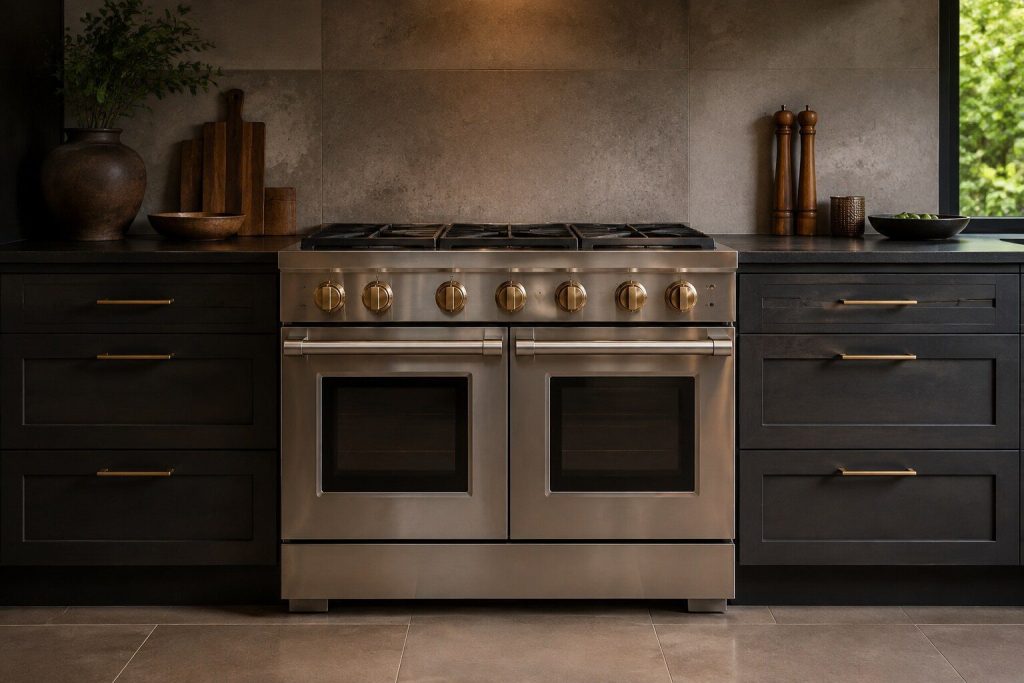
La Cornue G48 repair in Miami: what owners of this G4 Château Series unit search for, what those symptoms usually point at, and what the work involves. Diagnostic from $95, credited toward the repair.
- Burner will not light
- Burner clicks but will not ignite
- Yellow or orange flame
-
CornuFé La Cornue C9 repair
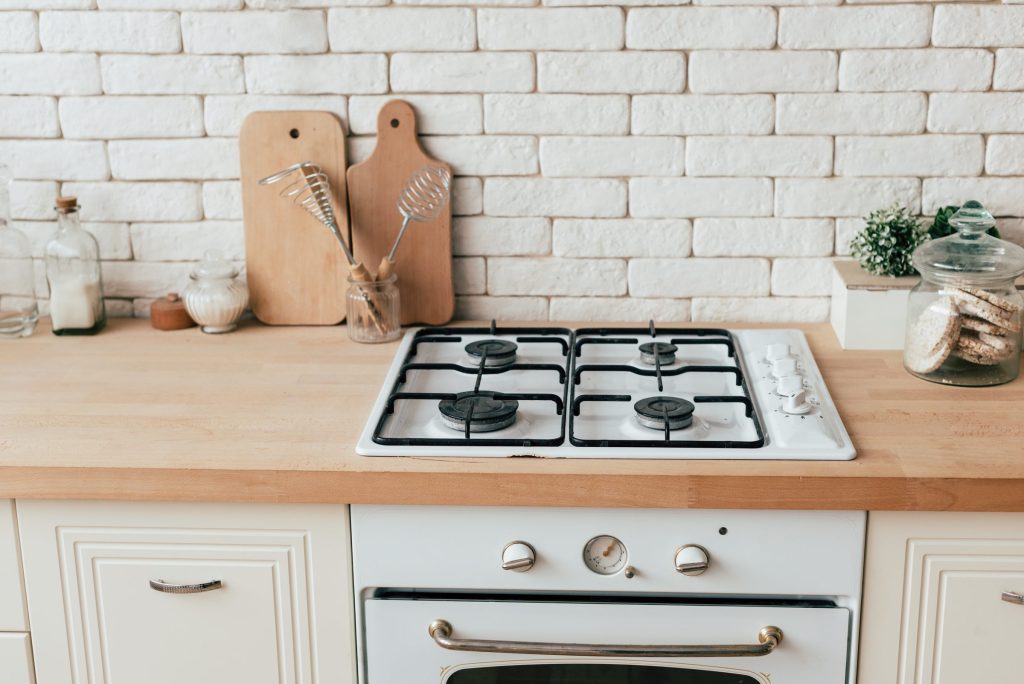
La Cornue C9 repair in Miami: what owners of this CornuFé unit search for, what those symptoms usually point at, and what the work involves. Diagnostic from $95, credited toward the repair.
- Burner will not light
- Burner clicks but will not ignite
- Yellow or orange flame
-
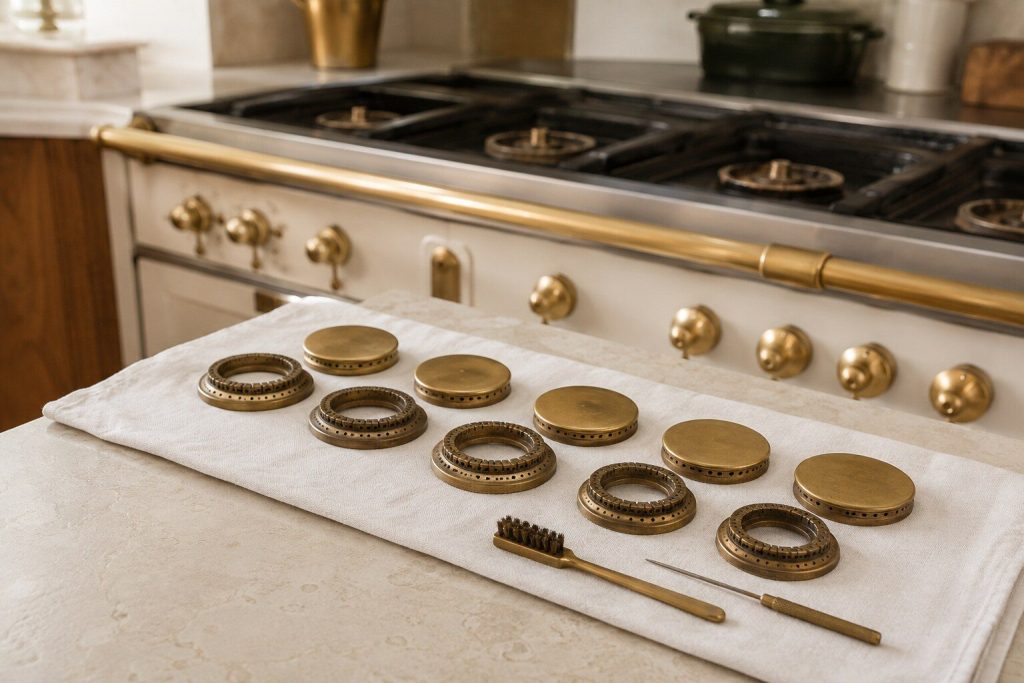
from $195 Appliance maintenance
An annual visit that exists because most of what goes wrong on this make goes wrong slowly. Burners drift rich, thermostats drift hot, baffles saturate, brass tarnishes, and the owner adapts to every one of them without noticing. This is the visit that measures instead of adapting.
- Burner combustion and oven calibration checked against specification
- Baffle filters, duct flow and blower condition on the hood
- Enamel, trim and seals inspected while they are still repairable
Questions people ask about this
How do you pronounce it?
Roughly la kor-NEW, stress on the last syllable, final e silent — it is a French family name. Three separate phrasings of this question turn up in what people search about the make, so you are in good company. The range being called a piano in French is not a joke about keyboards: piano de cuisson is simply what a range of this kind is called there.
Is it actually better, or is it jewelry?
Both claims are usually overstated. What is objectively different: radiant vaulted cooking that a fan oven cannot reproduce, a French top that gives you a whole graded surface from one burner, and mechanical construction with almost no electronics to fail. What it is not: faster, more convenient, or easier to learn. If you want convenience, this is the wrong appliance and an expensive way to find out.
Where is it made?
Saint-Ouen-l'Aumône, north-west of Paris, where the company has built to order since long before the current ownership. It has been part of Middleby via AGA Rangemaster since 2015, and since 2025 the group has been Composition Brands after 26North took a majority of Middleby Residential — the footer of La Cornue's own site says so.
What is the difference between a Château and a CornuFé?
A Château is built to order from a configuration somebody chose, with vaulted ovens and mix-and-match cooktop modules. A CornuFé is factory-built in two sizes — the 90 Albertine and the 110 — each dual-fuel or induction, with electric convection ovens and a five-burner brass cooktop. Both are La Cornue. The CornuFé's parts are more standardised, which usually means a shorter wait.
Common Problems
More guides like this one
-
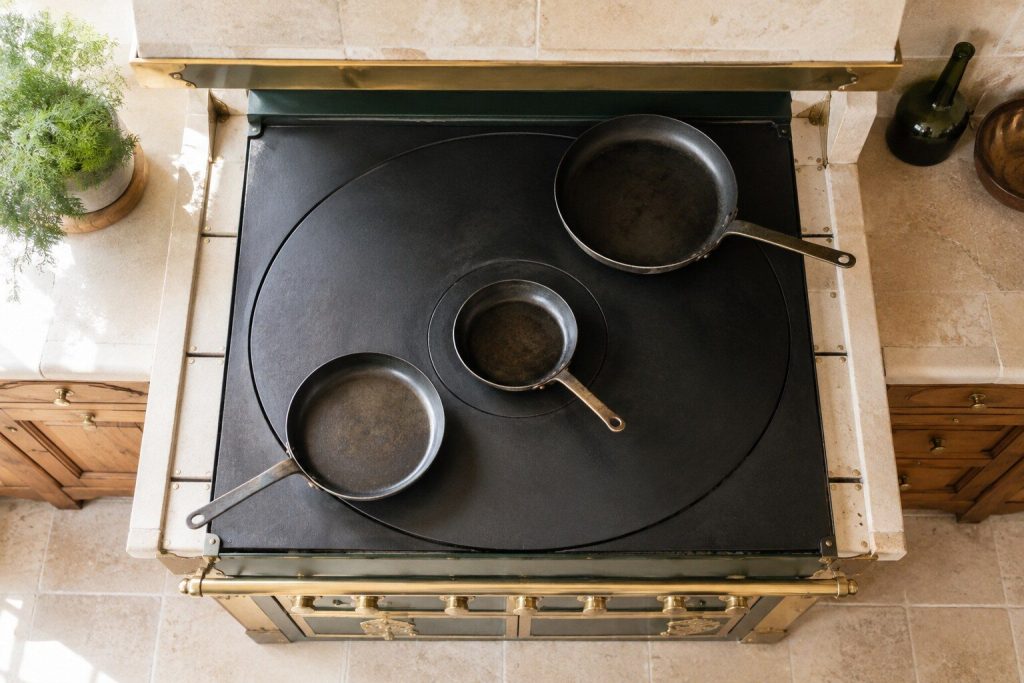
What a French Top Is For, and How to Cook on One
One 7,500 BTU burner under a solid cast-iron plate, hottest at the center and cooler outwards. You cook on it by moving pans, not by turning a knob.
Read more -
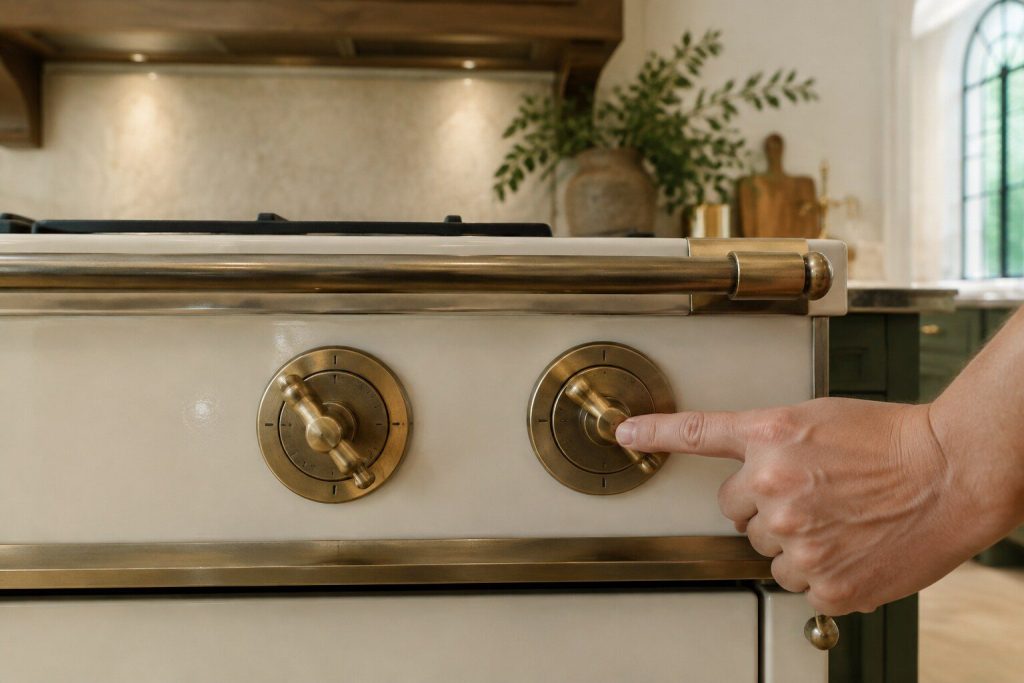
Every Symbol on a La Cornue Oven Dial, and What It Actually Does
A La Cornue dial is iconography rather than words. Here is what each mark selects, why the gas side has fewer of them, and which symbols are not functions at all.
Read more -
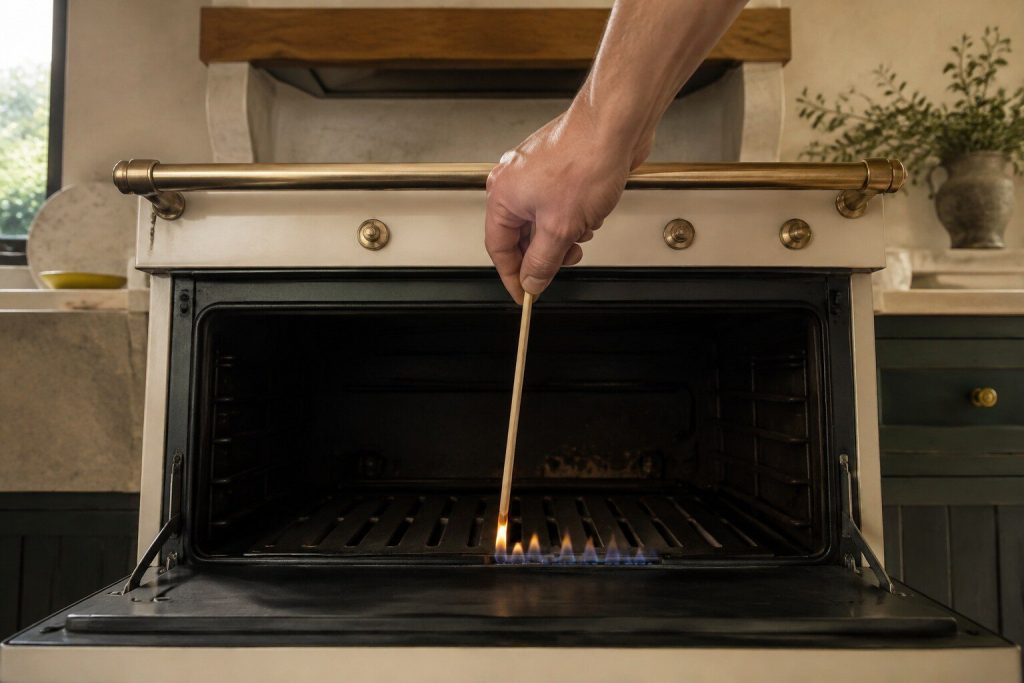
How to Turn On a La Cornue Oven, Gas Side and Electric Side
It is a real question, not a beginner's one: the two ovens on a dual-fuel range are lit differently, and a multifunction oven with no mode selected does nothing at all.
Read more
Tell us the model number and what it is doing.
This article is based on:
- Official manufacturer documentation
- Internal repair procedures
- Technician repair history
- Company quality standards