Troubleshooting
The Broil Symbol on a La Cornue, and Why Browning Fails on Its Own
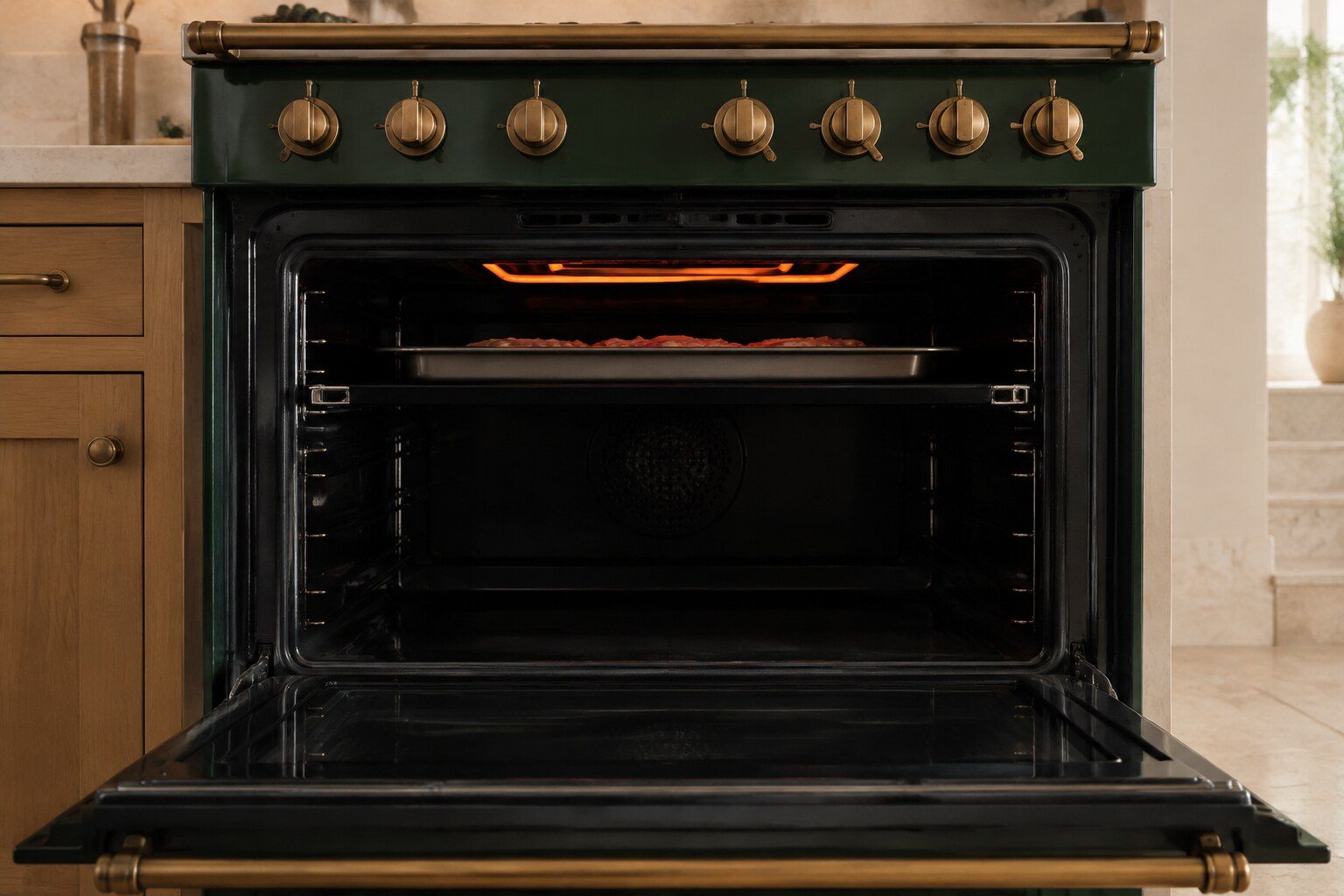
The broil symbol is a single bar at the top of the icon — heat from the roof of the cavity only. On this make it matters more than usual because every vaulted gas oven carries an electric broiler above a gas bake burner: two separate heat sources on two separate switched circuits in one cavity. That means browning and baking can fail independently, and which one still works is a free and precise diagnosis. An oven that broils but will not bake has already proved its supply, its control, its door and its temperature sensing are healthy, and has narrowed the repair to the bake half alone. Broil with the door closed on these ovens rather than ajar, use the top shelf position, and preheat the broiler for a few minutes before food goes in — the element radiates immediately but the cavity roof does not.
The full guide
La Cornue oven broil setting: the symbol, first
A single bar at the top of the icon: heat from the roof of the cavity only. That is broil.
Two related ones get confused with it. A bar at the top with a fan is fan-assisted browning — the broil element with air moving, which colors a larger area more evenly and is gentler. Two bars, top and bottom, is conventional baking with both elements and no fan; that is not broiling, and choosing it to brown something gives you a hot oven and a slow result.
Why this matters more on a La Cornue
Because of an arrangement most owners never have explained to them.
Every vaulted gas oven on this make carries an electric broiler above a gas bake burner. Two heat sources. Two separate switched circuits. One cavity.
The practical consequence is that browning and baking are independent. A range can brown perfectly and refuse to bake, or bake perfectly and never brown, and owners describe both as "the oven is half working" — which is exactly right.
The free diagnosis
This is the useful part of the page.
An oven that broils but will not bake has already proved four things: it has power, its control works, its door is closing, and its temperature sensing is alive. All of that is common to both circuits. So the problem is in the bake half alone — on the gas side that is the igniter, the safety valve or the thermocouple, and on the electric side the bake element or its terminals.
An oven that bakes but will not brown is the reverse, and simpler: the broil element or its circuit.
Either way, one sentence on the phone narrows the visit before anybody sets off, and it takes about a minute to establish.
How to actually use it
Preheat the broiler for three to five minutes. The element is radiating from the moment it is switched on, but the roof of the cavity is not, and on a radiant oven that second contribution is worth having. It is the difference between color and color with some cooking underneath it.
Door closed. The habit of propping the door open comes from ovens with a separate broiler drawer, where a thermostat would otherwise cut the element out. A vaulted cavity is designed to be sealed and works better closed. The maker's own answer to hot knobs, incidentally, is specifically not to leave the oven door open.
Top shelf, with room. As close to the element as the food allows.
Be in the kitchen. On a Château gas oven there is no window in the door, so broiling is the one job where you check by opening rather than by looking. Nothing about a broiler on any appliance rewards leaving the room.
When it is the element and when it is not
On the electric side, a broil element is measured cold and under load. An open circuit is unambiguous; a partly failed element heats and stalls, which reads as weak browning rather than none.
While we are in there, the terminals and supports get looked at. That is where elements actually fail — twenty years of heating and cooling at a connection — and a burnt terminal block will destroy a new element as efficiently as it destroyed the old one. Replacing the element and leaving the cause is a part bought twice.
On the multifunction platforms there is a control in the path as well, and it gets proved rather than assumed: a board condemned with a failed element still attached fails again on the first cycle.
One thing not to conclude
Weak browning on one side of the food is not automatically a broiler problem. A vaulted oven is graded by design, the maker's own notes ask you to turn a large item during cooking, and an unlevel range puts food closer to one radiating surface than the other — the dish-of-water test on a shelf is free and it is the manufacturer's own first check.
Rule that out, then blame the element.
If it turns out to be a repair
What this leads to, and what it costs
Every job on this site is priced the same way: an on-site diagnostic first, the figure agreed in writing before anybody starts.
-
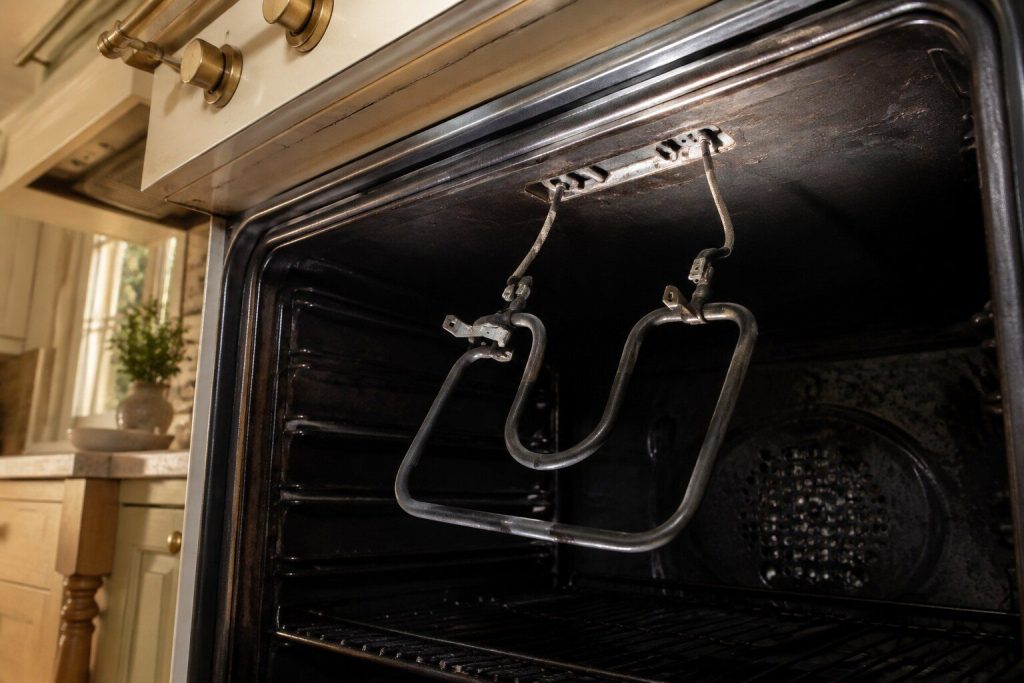
from $255 Oven element and broiler replacement
Every vaulted gas oven on this make carries an electric broiler above it, and the electric ovens are elements throughout. That means a range can lose browning and keep baking perfectly, or the reverse, and the two are separate parts.
- Bake and broil are separate circuits and separate failures
- Elements measured cold and under load
- Element supports and terminals checked, because that is where they burn out
-
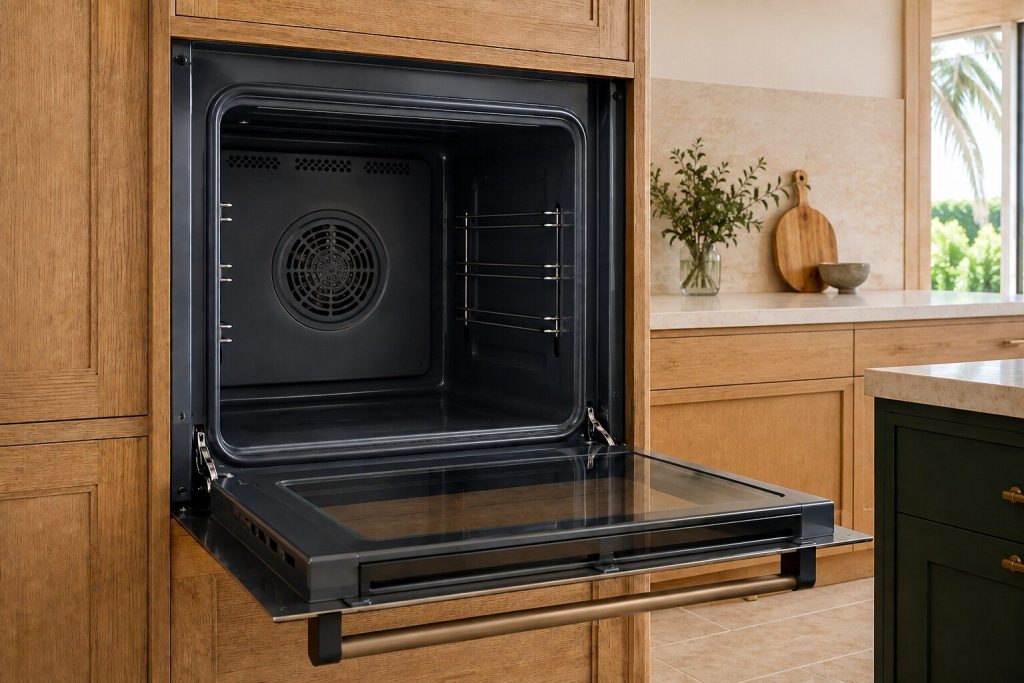
Vaulted ovens and convection ovens — gas, electric, and the Tourelle wall oven Ovens
There are three different ovens on this make and they fail in three different ways. The vaulted gas oven cooks by radiant heat inside a sealed dome and has an electric broiler over it. The vaulted electric oven sits on the other side of the same range. And since 2025 there is a standalone one: the Château Tourelle, a fully electric multifunction wall oven in 60 and 75 centimeter widths, built to sit in a cabinet run next to a Château cooktop. Which of the three you have decides everything about the repair.
- Vaulted gas, vaulted electric and the electric Tourelle wall oven
- Gas ovens carry an electric broiler — browning and baking can fail separately
- Thermostat drift is measured against a probe, never adjusted by feel
-
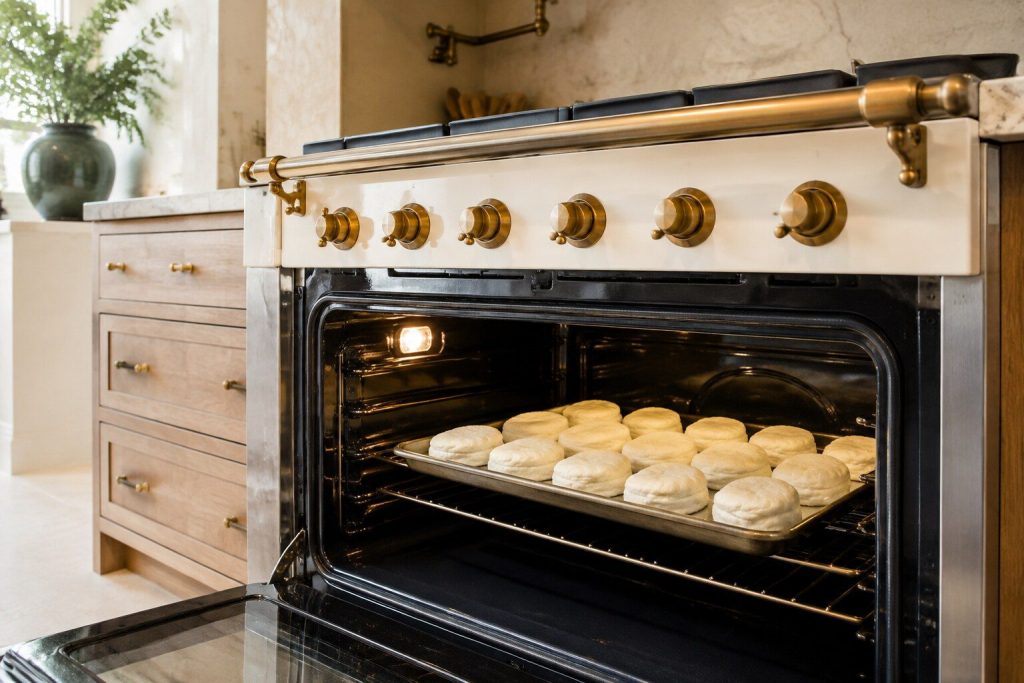
It heats, but not enough Oven not reaching temperature
An oven that gets warm and stalls short of its setting, takes an hour to preheat, or loses temperature the moment the door opens. On a vaulted oven some of this is thermal mass behaving as designed, and separating the design from the problem is the first job.
- A vaulted oven is slow by design — measure before condemning
- Bake and broil are separate circuits on this make
- Door seal and level come before any talk of parts

Questions people ask about this
It broils but it will not bake. What does that tell you?
A great deal, and all of it good news. The supply is fine, the control is fine, the door and the temperature sensing are fine, and the problem is in the bake half alone — on a gas oven that is the igniter, the safety valve or the thermocouple, and on an electric one the bake element or its terminals. Say that sentence when you book and the right parts travel with us.
Should the door be open or closed when broiling?
Closed, on these ovens. The habit of propping a broiler door comes from appliances with a separate broil drawer and a thermostat that would otherwise cut out. A vaulted cavity is designed to be sealed, and holding the door open loses the cavity heat that is doing half the work — the maker's own answer to hot knobs is specifically not to leave the oven door open.
Nothing happens when I select broil.
On a multifunction oven, confirm both dials are set — a mode with no temperature, or a temperature with no mode, leaves the oven idle. Then it is the broil element or its circuit, which is separate from the bake side. If neither function works at all, look upstream: the breaker, and any isolating switch.
Is there a separate broiler drawer?
No. The broiler is an element in the roof of the same cavity you bake in, which is why the top shelf position matters and why you use the oven's own shelves rather than a special pan position.
Troubleshooting
More guides like this one
-
Your Oven Has Not Broken, It Has Drifted: Testing a Thermostat
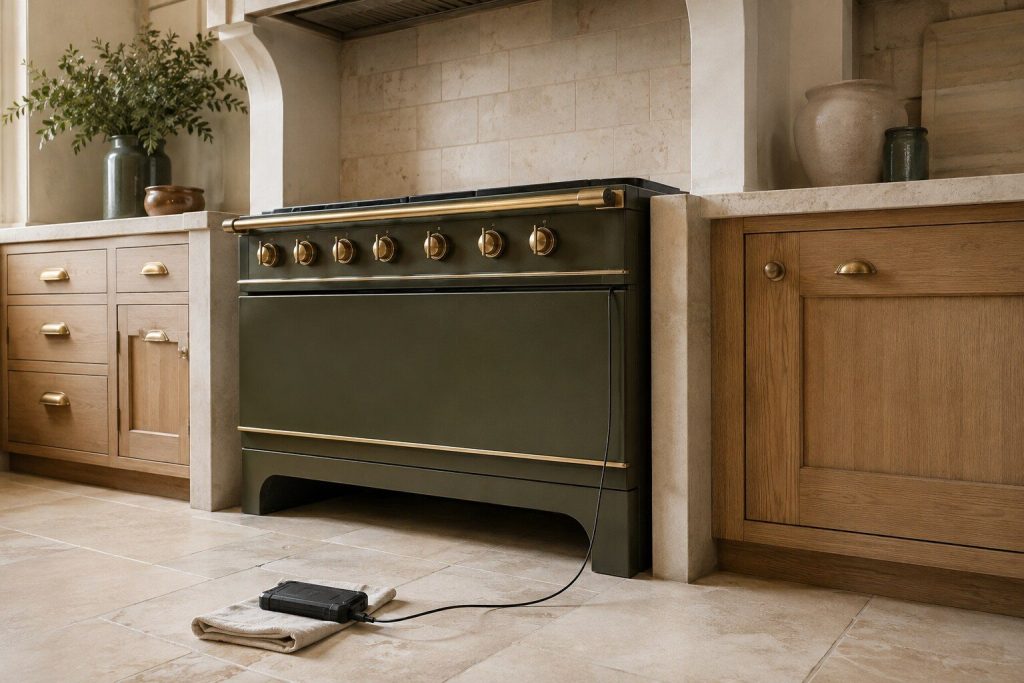
The maker's own guide says an oven that gets hotter with age and does not come back wants a thermostat. What nobody warns you about is that your cooking will change.
Read more -
Resetting an Oven Control, and When Resetting Is the Wrong Move
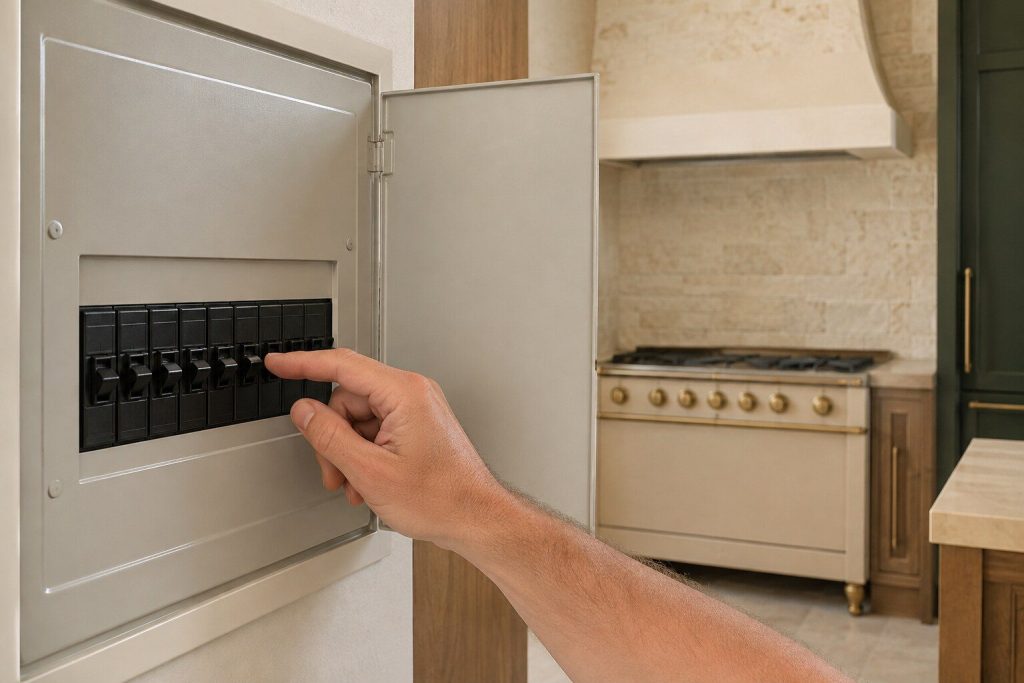
The internet's answer to every appliance message is to reset it. On this make there is one code where doing that repeatedly is what destroys the board it protects.
Read more -
Finding the Right La Cornue Manual, and What Is Actually in It
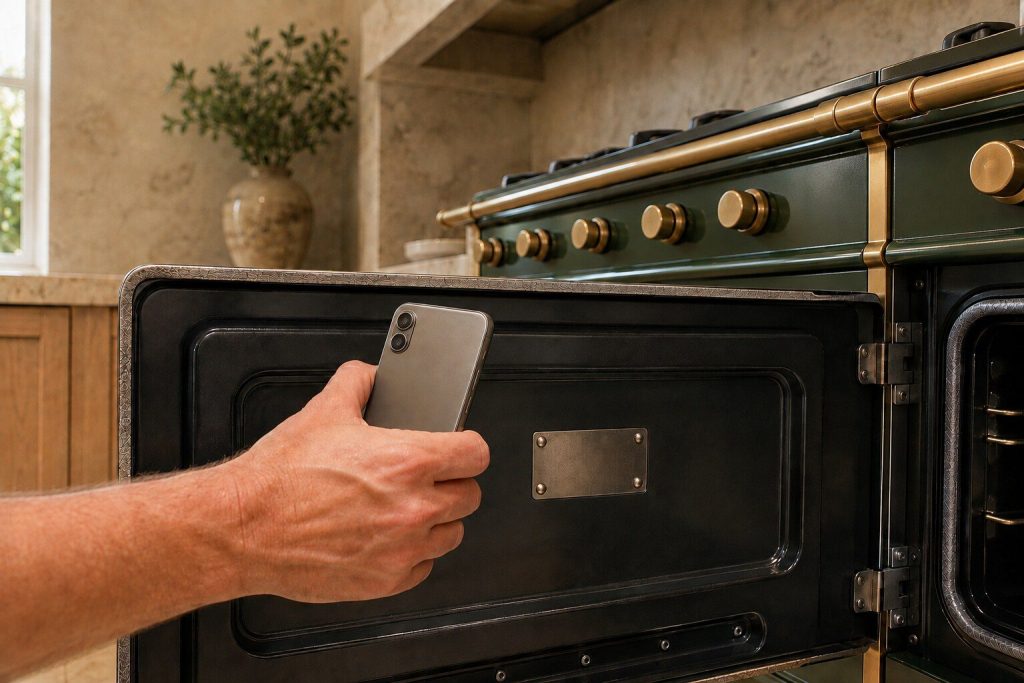
The guides are per model and per fuel, and reading the wrong one gives you the wrong troubleshooting section — and in one case a European lamp voltage.
Read more
Tell us the model number and what it is doing.
This article is based on:
- Official manufacturer documentation
- Internal repair procedures
- Technician repair history
- Company quality standards