Common Problems
How to Use a La Cornue Oven Without Ruining the First Fortnight
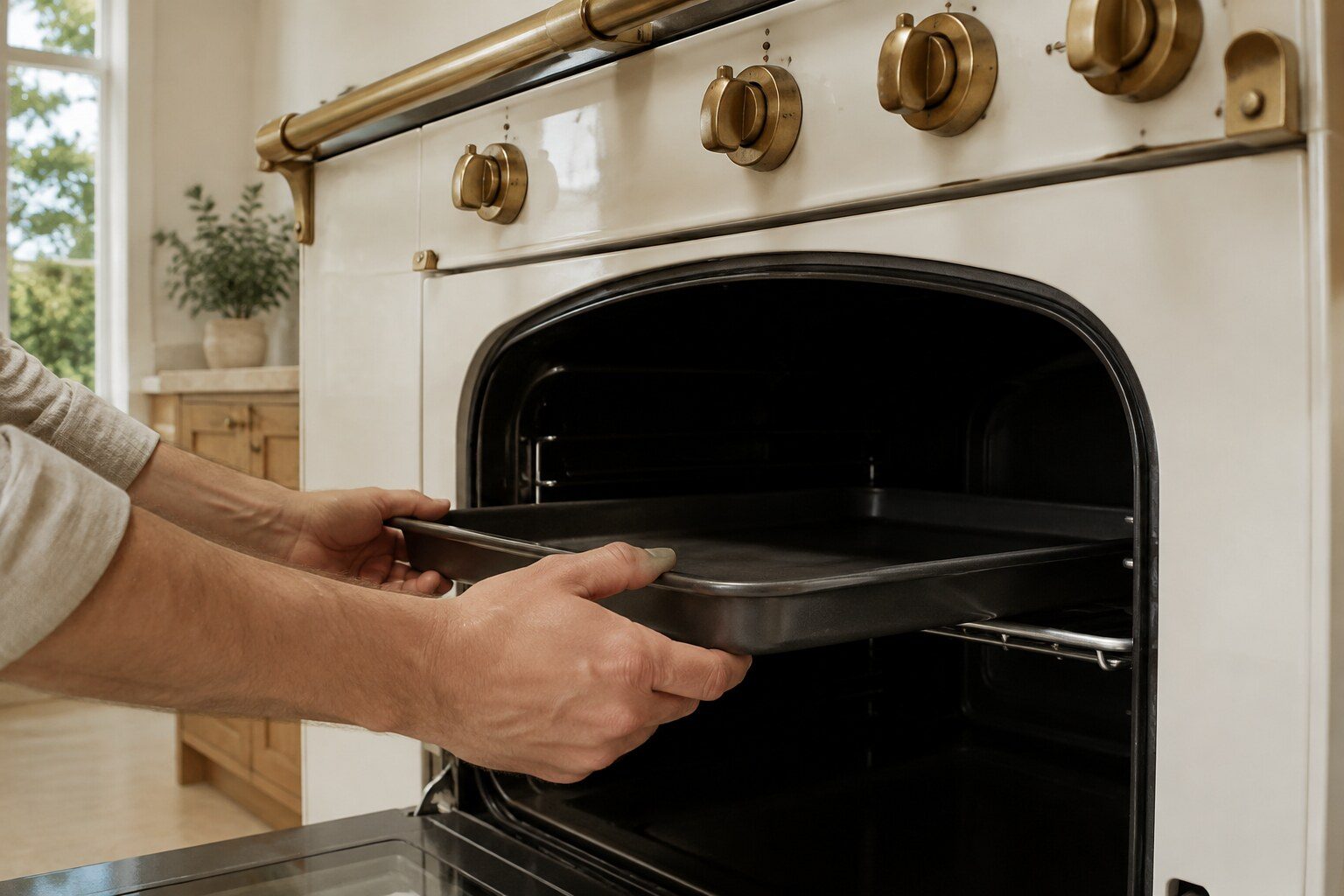
Treat it as a heat reservoir rather than a hot box. Give a vaulted oven a genuine twenty-five to thirty minutes to come up rather than the ten a fan oven needs, and expect it to be hottest towards the back and center rather than evenly hot everywhere — the maker's own cooking notes tell you to turn a large item during cooking and to leave space between two loaded shelves. Use one shelf where you can, keep trays within the specified size so heat can circulate, and open the door as little as possible because the cavity mass is what does the cooking and it recovers slowly. On a dual-fuel range the gas oven is the one for roasting and bread and the electric oven is the one for anything that wants even, controlled heat. If cooking times are wrong rather than uneven, check the range is level with a dish of water on a shelf before you suspect the oven.
The full guide
How to use La Cornue oven: the most common problem on this make is not a problem
We get called to ovens that are working exactly as designed more often on La Cornue than on any other make in South Florida. It is not that owners are careless; it is that a *voûte* is genuinely a different appliance from the oven they had before, and nothing in the kitchen says so.
A fan oven is engineered to eliminate variation: heat the air, move it, make every shelf the same. A vaulted oven does the opposite on purpose. It heats a heavy sealed dome and cooks by radiation from that mass, hottest towards the center and back, and it is that graded heat that produces the crust people buy the range for.
If you have just inherited one with a house, this page is the fortnight of learning compressed into ten minutes.
What a vaulted oven actually is
A sealed cast and enamelled cavity with a single gas burner beneath it — 13,000 BTU on a grand oven, 11,000 on a standard one — and an electric broiler above. On a Château gas oven there is no window, because the door is part of the mass. There is no fan, and there is nothing to select: temperature, and broil or not.
That gives you four practical consequences.
It is slow to come up. Twenty-five to thirty minutes to a moderate temperature, and longer if there is a stone or a heavy pan in it. There is no beep, and it does not need one.
It holds superbly. Once up, the cavity is a reservoir. A door opened for ten seconds costs you very little; a door left open while you arrange three trays costs you minutes.
It recovers slowly. Which is the flip side, and the reason people who check food constantly find this oven frustrating on the first fortnight.
It is uneven by design. The guide says to turn large items. A dish of water on a shelf being level all over is its own test, and it is not about baking evenly — it is about the range sitting square.
Four things to do before you decide it is broken
These are free, they are in the maker's own troubleshooting section, and between them they account for most of the complaints we are called to.
Level. A dish of water on the middle shelf should sit at one depth all over. If it is deeper at the back, the back of the range needs raising or the front lowering — the legs are adjustable across a specified range. We find ranges that were slid into place, connected and never leveled.
The door seal. Close a strip of paper in the door and pull it out at eight or ten points around the perimeter. Where it grips, the seal works; where it slides out freely, it does not. On a vaulted oven the door is part of the cooking mass, so a seal that has stopped meeting its frame along the top edge presents as an oven losing its power rather than as a draft.
Tray size and loading. Nothing bigger than the specified size, placed centrally, and space left between two loaded shelves. The guide names both.
Temperature, measured. An oven thermometer on the middle shelf, 350 °F set, read every ten minutes for forty. If it settles at 350 you have a working oven and a technique question. If it settles at 390 you have drift, which is a thermostat, and the maker's guide says so itself.
Which oven for what, on a dual-fuel range
A Château 120 and above gives you two, and they are good at different things.
The gas side — vaulted, radiant, no window, an electric broiler over it. Roasting. Bread. Anything with a crust. Anything where you want the outside to set while the inside comes up slowly.
The electric side — vaulted or, on a CornuFé, multifunction with a fan. Baking that wants evenness. Delicate things. Anything you need to be able to repeat exactly.
A range ordered with an all-induction cooktop has electric ovens on both sides, without exception — that is a rule of La Cornue's order form rather than a preference, and it is worth knowing if you are trying to work out what you have.
The broiler is a separate circuit, and that is useful
Every vaulted gas oven on this make carries an electric broiler above a gas bake burner. Two heat sources, two switched circuits.
It matters for cooking, because it means you can brown something in an oven that is otherwise off. And it matters for diagnosis, because an oven that broils but will not bake has already proved its supply, its control, its door and its temperature sensing are healthy. Telling us which half still works narrows the repair before anybody sets off.
What not to do
Do not line the oven floor with foil. On a gas oven you are covering the path the heat takes into the cavity.
Do not leave the door open to cool the kitchen. The maker's own answer to hot knobs is that heat rises from the oven, and its instruction is not to leave the door open.
Do not use caustic or corrosive cleaners. La Cornue's cleaning notes rule them out, and enamel is glass fused to steel — once it is broken, in this climate, the steel under it rusts outwards from that day.
Do not adjust your recipes around a drift. If the oven is measurably out, put the oven right. Adapting works until the drift moves again, and it always moves again.
And the pronunciation, since you asked
Three separate phrasings in the search data ask how to say it. Roughly *la kor-NEW*, with the stress on the last syllable and the final *e* silent — it is a French family name. The range being called a *piano* in French is not a joke about the keyboard: *piano de cuisson* is simply what a range of this kind is called there.
If it turns out to be a repair
What this leads to, and what it costs
Every job on this site is priced the same way: an on-site diagnostic first, the figure agreed in writing before anybody starts.
-
Ovens
There are three different ovens on this make and they fail in three different ways. The vaulted gas oven cooks by radiant heat inside a sealed dome and has an electric broiler over it. The vaulted electric oven sits on the other side of the same range. And since 2025 there is a standalone one: the Château Tourelle, a fully electric multifunction wall oven in 60 and 75 centimeter widths, built to sit in a cabinet run next to a Château cooktop. Which of the three you have decides everything about the repair.
- Vaulted gas, vaulted electric and the electric Tourelle wall oven
- Gas ovens carry an electric broiler — browning and baking can fail separately
- Thermostat drift is measured against a probe, never adjusted by feel
-
Oven cooks unevenly
On a vaulted oven a degree of unevenness is the design — heat radiates from a dome and the strongest zone is not the geometric center. La Cornue's own cooking notes tell owners to turn a large item during cooking and to leave space between loaded shelves. The job here is to find what has made it worse than designed.
- Some unevenness is designed in — the manual says so
- Level, door seal and tray size come before any part
- A dish of water on the shelf is the maker's own test
-
La Cornue oven: cooking times that differ from your previous oven, which the maker treats as calibration of the cook rather than the oven
La Cornue — an indicator rather than a code. La Cornue's own answer to food cooking too slowly, too quickly or burning begins with something no repair company would think to say: cooking times may differ from your previous oven.
What the machine is telling you -
Oven thermostat calibration
An oven that has drifted hot over years, and a cook who has quietly rewritten every recipe around it. The manual is explicit: an oven that gets hotter as the range ages and does not come back when the dial is turned down wants a thermostat, not a new habit.
- Measured with a calibrated probe through a full cycle
- Drift distinguished from a vaulted oven's designed unevenness
- The owner warned that a corrected oven changes their cooking
Questions people ask about this
Why does everything take longer than in my old oven?
Because it is a different appliance. A vaulted oven heats a heavy sealed cavity and cooks by radiation from it; a fan oven heats air and moves it. The maker's own guide puts it plainly: cooking times may differ from your previous oven, so check the recommended temperatures and shelf positions, and try a higher setting. What it should not do is fail to reach temperature — that is measurable and it is a different page.
Is it meant to cook unevenly?
To a degree, yes, and that is the design rather than a defect. La Cornue's own notes ask you to turn a large item during cooking. What is not designed in is a repeatable pattern — consistently pale on one half, or behavior that changed within a fortnight. Those are problems, and the free checks come first: level, door seal, tray size.
Should I use the gas oven or the electric one?
Gas for roasting, bread and anything you want a crust on: radiant heat from a sealed dome does that better than moving air. Electric for baking that wants precision and evenness, and for anything delicate. On a Château 120 and above you have both, which is the whole argument for dual fuel.
How often should I open the door?
As little as you can manage. Every opening costs you cavity heat rather than air heat, and a vaulted oven takes minutes rather than seconds to get it back. If you are checking something repeatedly, that is a good reason to use the electric side or to trust a probe instead of your eyes.
Common Problems
More guides like this one
-
What Is Actually Different About a La Cornue Range
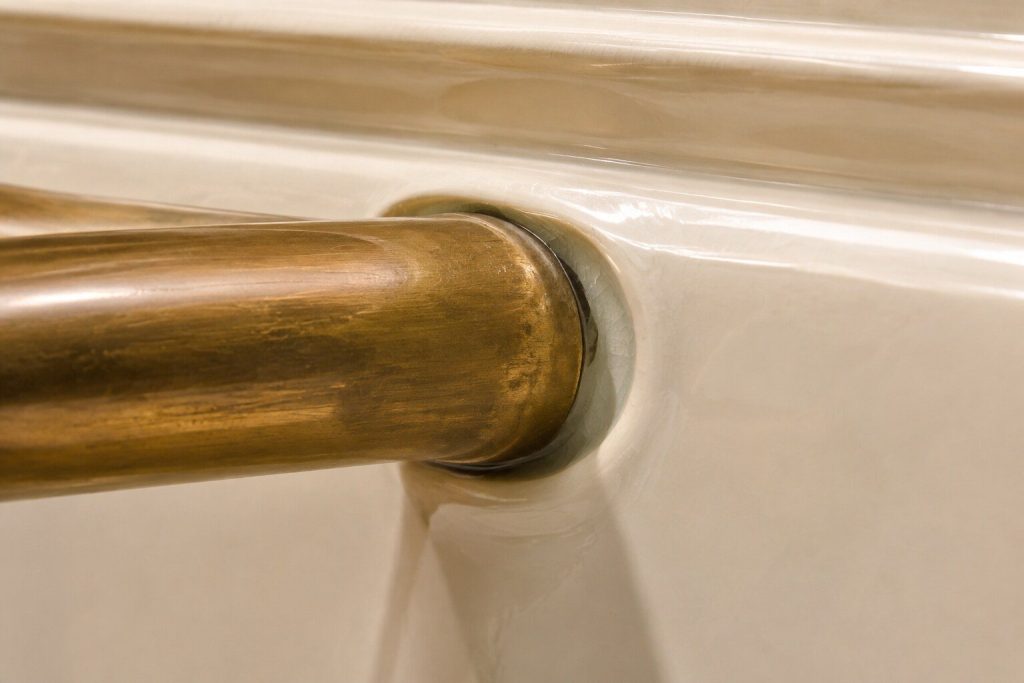
Hand-built to order since 1908, a vaulted radiant oven, a cast-iron plate heated by one burner, and a crate weighing up to 1,320 lb. Written by people who take them apart.
Read more -
What a French Top Is For, and How to Cook on One
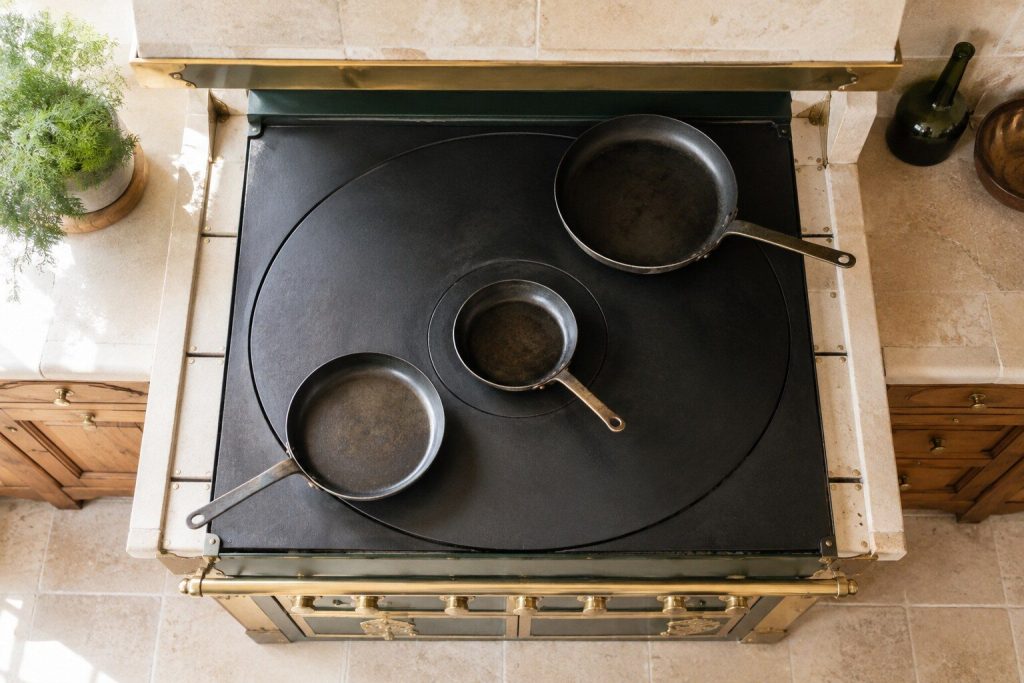
One 7,500 BTU burner under a solid cast-iron plate, hottest at the center and cooler outwards. You cook on it by moving pans, not by turning a knob.
Read more -
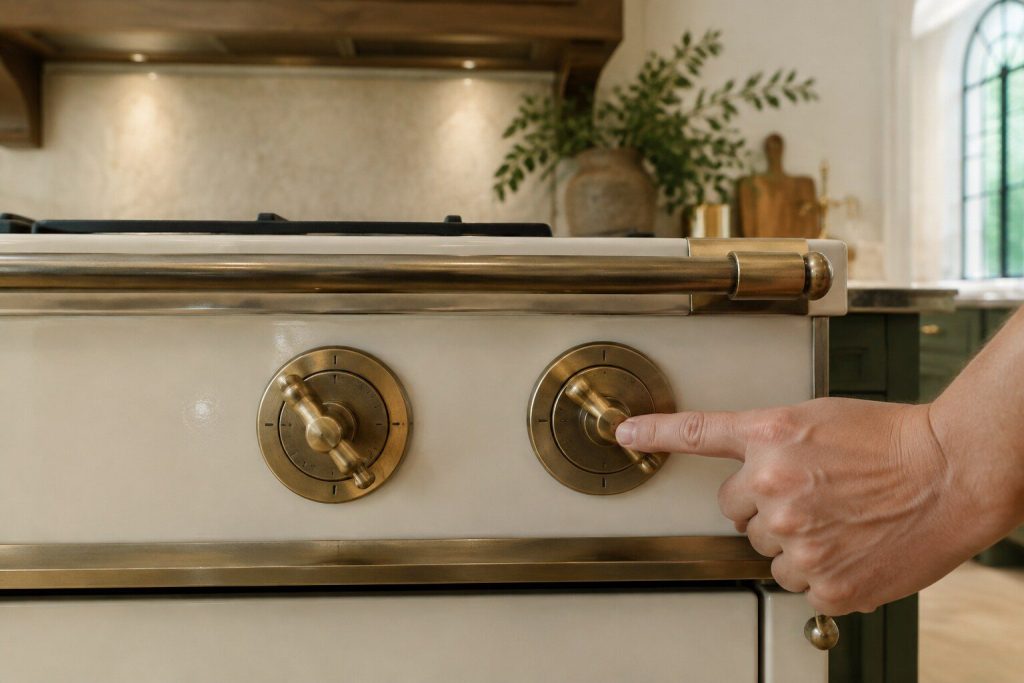
Every Symbol on a La Cornue Oven Dial, and What It Actually Does
A La Cornue dial is iconography rather than words. Here is what each mark selects, why the gas side has fewer of them, and which symbols are not functions at all.
Read more
Tell us the model number and what it is doing.
This article is based on:
- Official manufacturer documentation
- Internal repair procedures
- Technician repair history
- Company quality standards