Common Problems
How Long Does a La Cornue Range Last, and What Wears Out First
Expect decades rather than years, and expect the wear to arrive in a predictable order. First the consumables of ignition: spark electrodes and their ceramics, oven igniters, thermocouples — typically between years eight and fifteen in a coastal kitchen. Then mechanical wear: valve stems going stiff, door seals hardening, hinges settling, knobs and bezels. Then the thermostats, which drift slowly enough that the cook adapts without noticing. On the hood, blower capacitors and then bearings. What almost never fails is everything expensive: the enamelled body, the vaulted cavities, the cast-iron plaque, the manifold. La Cornue still publishes the installation and user guide for the Centenaire ranges of 2008 to 2016, which tells you what the company expects the service life to be.
The full guide
How long do La Cornue ranges last? The honest answer, and the useful one
The honest answer is decades. We work on Château ranges from the 1990s that need nothing structural, and La Cornue still publishes the installation and user guide for the Centenaire ranges of 2008 to 2016 — which is a company telling you, in the only way that matters, what service life it expects.
The useful answer is the *order*. Things wear in a sequence on this appliance, and knowing the sequence tells you what to expect next and what to stop worrying about.
The order, roughly
Years 8 to 15: the ignition consumables. Spark electrodes and their ceramic insulators, oven igniters, thermocouples. These are the parts that live in flame and moisture, and in a coastal kitchen they go first. They are also inexpensive and reached from the front.
The classic signature is an oven that has been getting slower to light — a minute, then two, then not at all — because an igniter degrades gradually and crosses the threshold on one particular day. If you noticed that happening, it was the range telling you.
Years 12 to 20: mechanical wear. Brass valve stems going stiff, oven door seals hardening and flattening, hinges settling so the catch no longer lands where it expects, knobs and bezels. None of it dramatic; all of it worth catching, because a stiff valve is a valve on its way to stopping where it is, and a settled door presents as an oven losing its power.
Years 15 upward: the thermostats. And you will not notice, which is the problem. An oven that has drifted twenty-five degrees over three years has a cook who has quietly rewritten every recipe around it. The maker's own guide is direct: if turning the temperature down has not worked, or has only worked for a short time, you may need a new thermostat.
Whenever the hood has been ignored: capacitors, then bearings. A blower rumble is a bearing already worn, and the sequence from there is predictable — more noise, more current, a thermal trip, then a seized motor. Usually on a day the kitchen is full.
What does not wear out
The expensive half of the appliance.
The enamelled steel body. The vaulted cavities. The cast-iron plaque — kept dry and seasoned, it will outlast the kitchen it stands in. The manifold. The brass burner bodies. The hood canopy, which starts at $17,400 and is not what fails in a hood.
That asymmetry is the whole economic argument for repairing one of these. The parts that fail are cheap; the parts that would make replacement rational do not fail.
What South Florida does to the clock
Three things, all manageable, none of them inevitable.
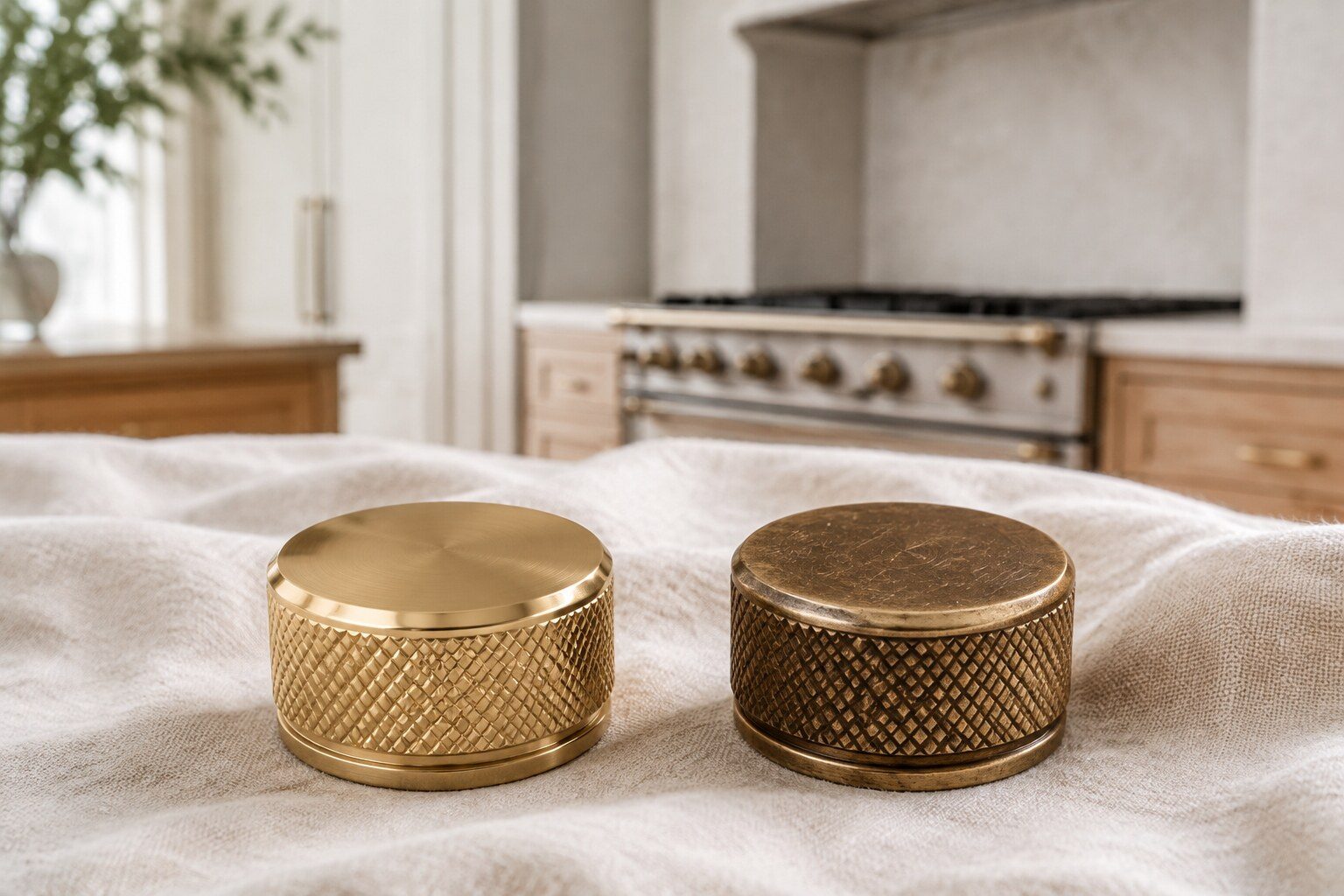
Salt air on brass and on iron. Polished brass on these ranges is often natural, uncoated metal that is meant to patina, and a coastal kitchen with the windows open does a season's worth in a month. That is cosmetic. What is not cosmetic is the underside of a French top and the inside of a chip in the enamel, where exposed steel rusts from the day it is exposed.
Humidity on electrodes and thermocouples. Eighty per cent humidity is hard on a spark gap and on a sensor that sits in flame. It is also the reason a burner cleaned and reassembled wet will click and do nothing for a day — the single most common finding on a burner call here.
Grease from a hood that is not keeping up. A 600 CFM hood over a 22,000 BTU power burner and a lava-rock grill saturates its baffles faster than the interval most people assume. Grease the hood does not catch ends up in the cabinet under the cooktop, where an induction generator lives — and the one overheating code this make documents, E2, is about exactly that.
The one visit that changes the curve
An annual check, because everything on the list above is gradual.
Combustion on every burner including the plaque and grill burners nobody uses. Both ovens calibrated against a probe through full cycles — they drift independently, so a range can have one perfect oven and one well out. The hood's baffles, duct and blower current. The finish inspected while a chip is still stabilisable rather than a panel order.
On a mass-market appliance an annual service is a nice idea. Here it is the difference between a part and a panel.
If yours is a Centenaire, or older
Say so when you book. The diagnosis is the same and the parts question is different: common wear items are generally fine, and a component specific to a discontinued configuration may be a wait or occasionally unavailable. We would rather establish that on the phone than after the visit, and a range with one working oven is still a range while a part is on order.
If it turns out to be a repair
What this leads to, and what it costs
Every job on this site is priced the same way: an on-site diagnostic first, the figure agreed in writing before anybody starts.
-
from $195 Appliance maintenance
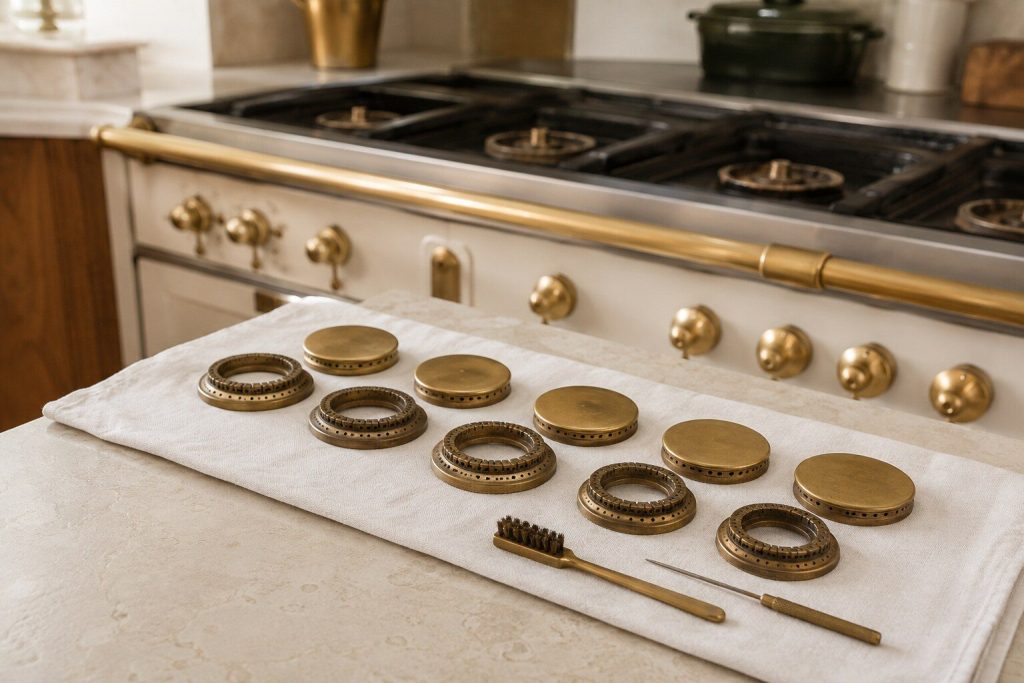
An annual visit that exists because most of what goes wrong on this make goes wrong slowly. Burners drift rich, thermostats drift hot, baffles saturate, brass tarnishes, and the owner adapts to every one of them without noticing. This is the visit that measures instead of adapting.
- Burner combustion and oven calibration checked against specification
- Baffle filters, duct flow and blower condition on the hood
- Enamel, trim and seals inspected while they are still repairable
-
Legacy La Cornue Centenaire repair
La Cornue Centenaire repair in Miami: what owners of this Legacy unit search for, what those symptoms usually point at, and what the work involves. Diagnostic from $95, credited toward the repair.
- Burner will not light
- Burner clicks but will not ignite
- Yellow or orange flame
-
from $95 Diagnostic visit
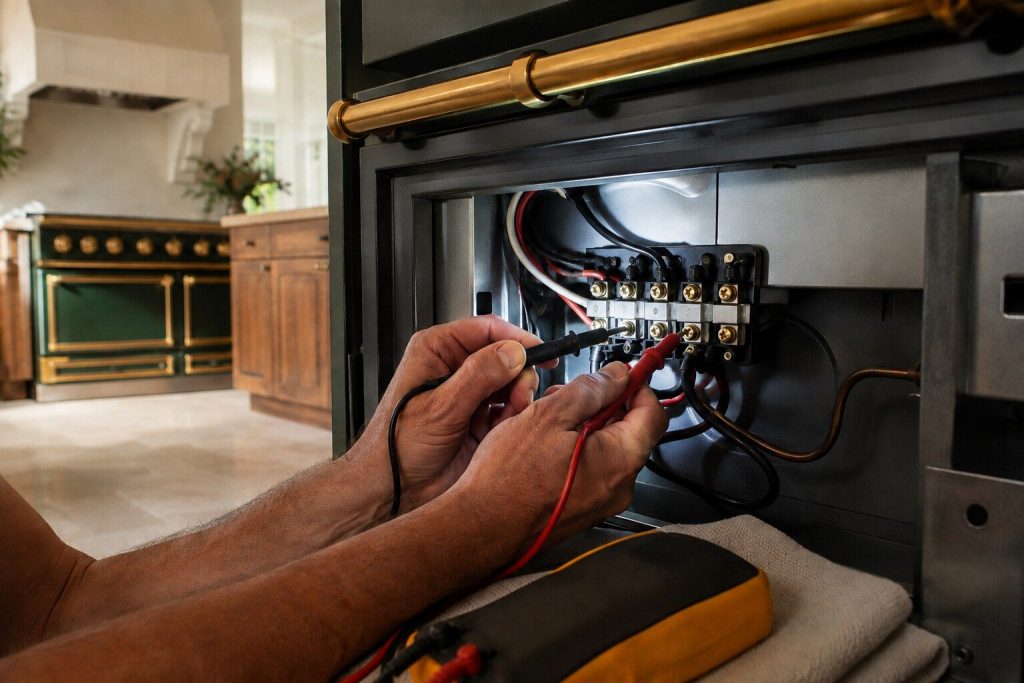
One visit, one technician, one answer in writing. On a make with three error codes in its entire documentation, the diagnostic is not a formality before the repair — it is the repair's only source of information, and it is done with instruments rather than by elimination.
- Measured, not guessed — this make reports almost nothing on its own
- The configuration code read off the range, because it decides the parts
- Written findings and a from-price before anything is opened

Questions people ask about this
Is twenty years old too old to repair?
No, and it is not close on this make. The parts that fail at twenty years are igniters, valves, seals, thermostats, elements and blowers — all of them a fraction of one per cent of what the range cost. The parts that would make a repair uneconomic are the body, the cavities and the plaque, and those do not fail. We will tell you honestly if a range is genuinely finished; it very rarely is.
What shortens the life of one of these in Florida?
Salt air on trim and on the underside of a French top, humidity on spark electrodes and thermocouples, and grease from an under-performing hood getting into the cabinet where an induction generator lives. All three are maintenance rather than fate, and all three are why an annual visit here is worth more than it is on a mass-market appliance.
Are parts still available for older ones?
For the common wear items, generally yes, and the company still publishes the Centenaire guide for the 2008 to 2016 ranges. What can be a long wait — or occasionally unavailable — is a color-matched enamel panel, a configuration-specific control or a vaulted-cavity component. We establish that before ordering rather than after.
Should I service it if nothing is wrong?
On most appliances we would say every couple of years. On this one, annually, because the failures are gradual and invisible: a burner drifted rich, a thermostat twenty-five degrees out, baffles at half flow, an igniter on its way out. All of those present as "fine" to somebody who cooks on it daily and has adjusted around each one.
Common Problems
More guides like this one
-
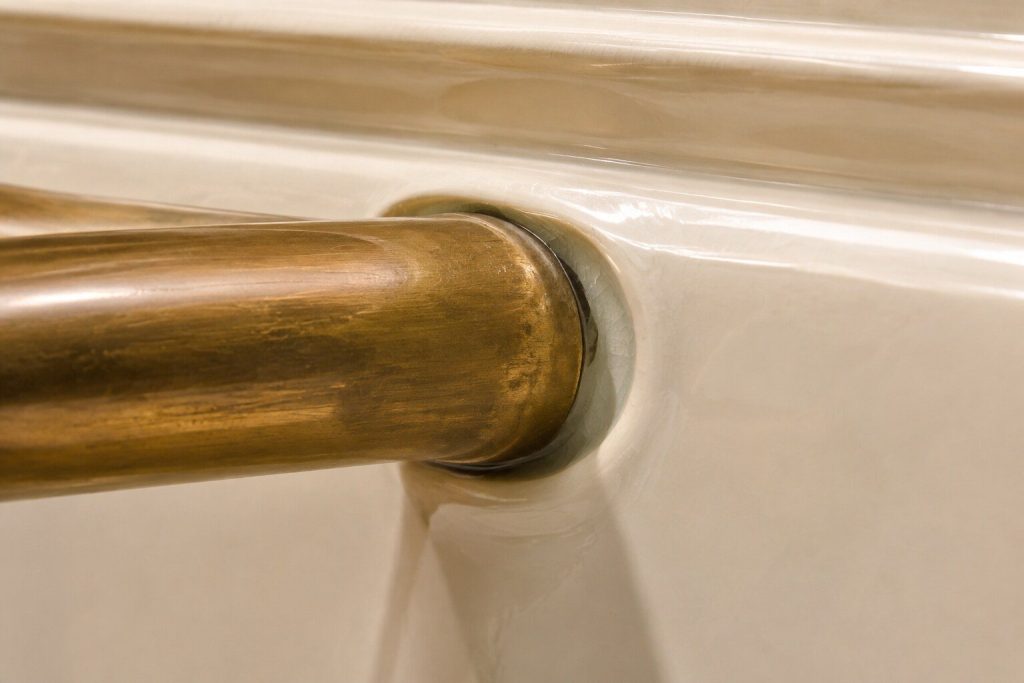
What Is Actually Different About a La Cornue Range
Hand-built to order since 1908, a vaulted radiant oven, a cast-iron plate heated by one burner, and a crate weighing up to 1,320 lb. Written by people who take them apart.
Read more -
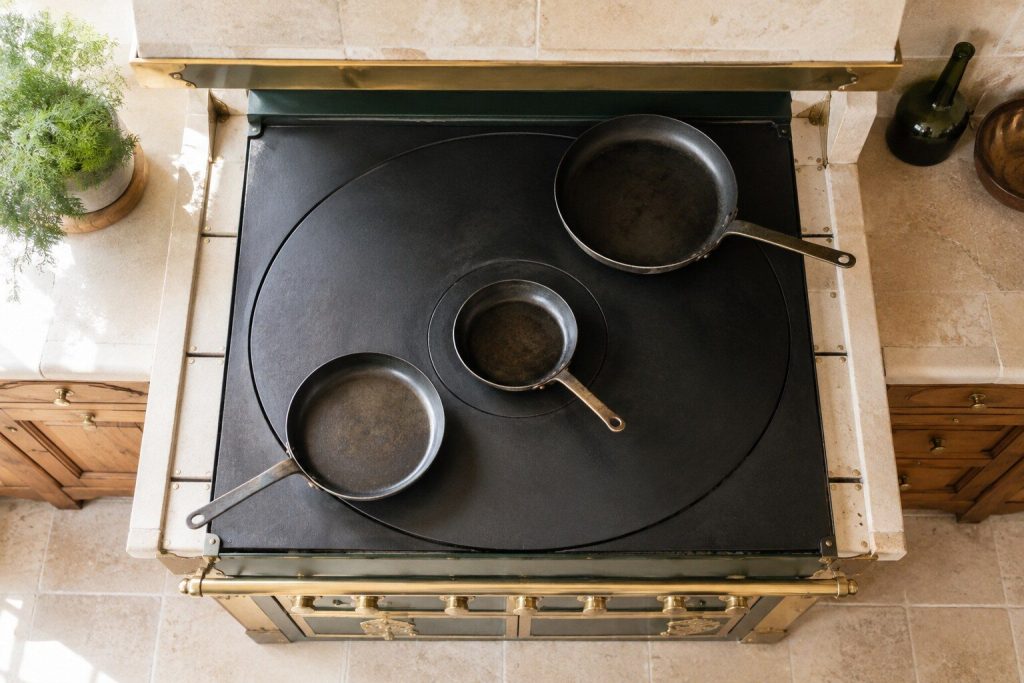
What a French Top Is For, and How to Cook on One
One 7,500 BTU burner under a solid cast-iron plate, hottest at the center and cooler outwards. You cook on it by moving pans, not by turning a knob.
Read more -
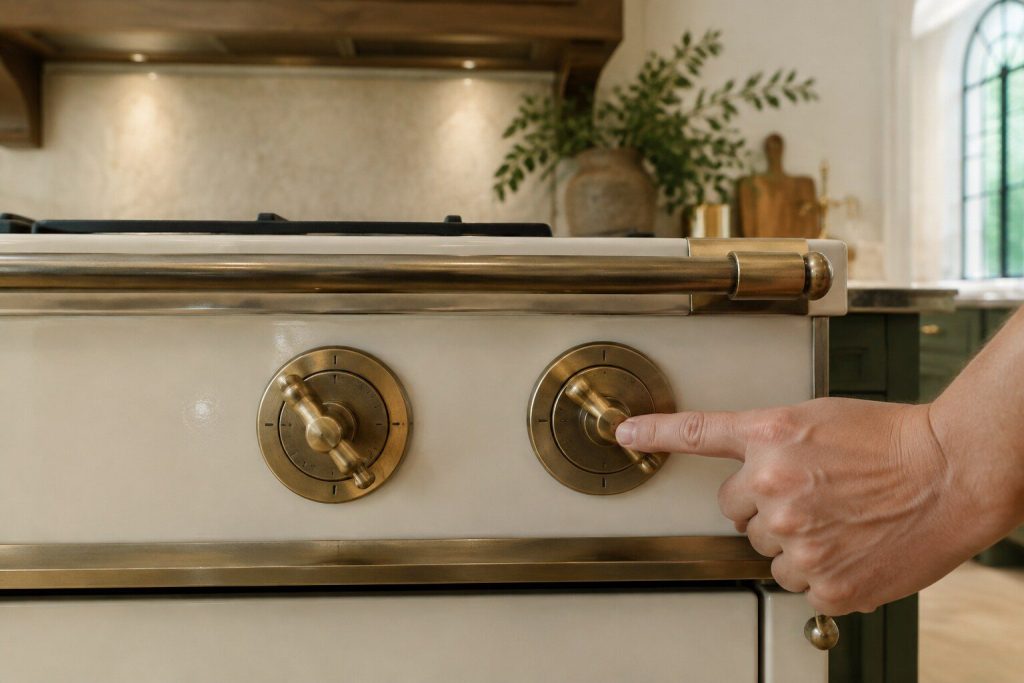
Every Symbol on a La Cornue Oven Dial, and What It Actually Does
A La Cornue dial is iconography rather than words. Here is what each mark selects, why the gas side has fewer of them, and which symbols are not functions at all.
Read more
Tell us the model number and what it is doing.
This article is based on:
- Official manufacturer documentation
- Internal repair procedures
- Technician repair history
- Company quality standards