Common Problems
Gas or Electric: Which Oven You Have, and Why It Matters
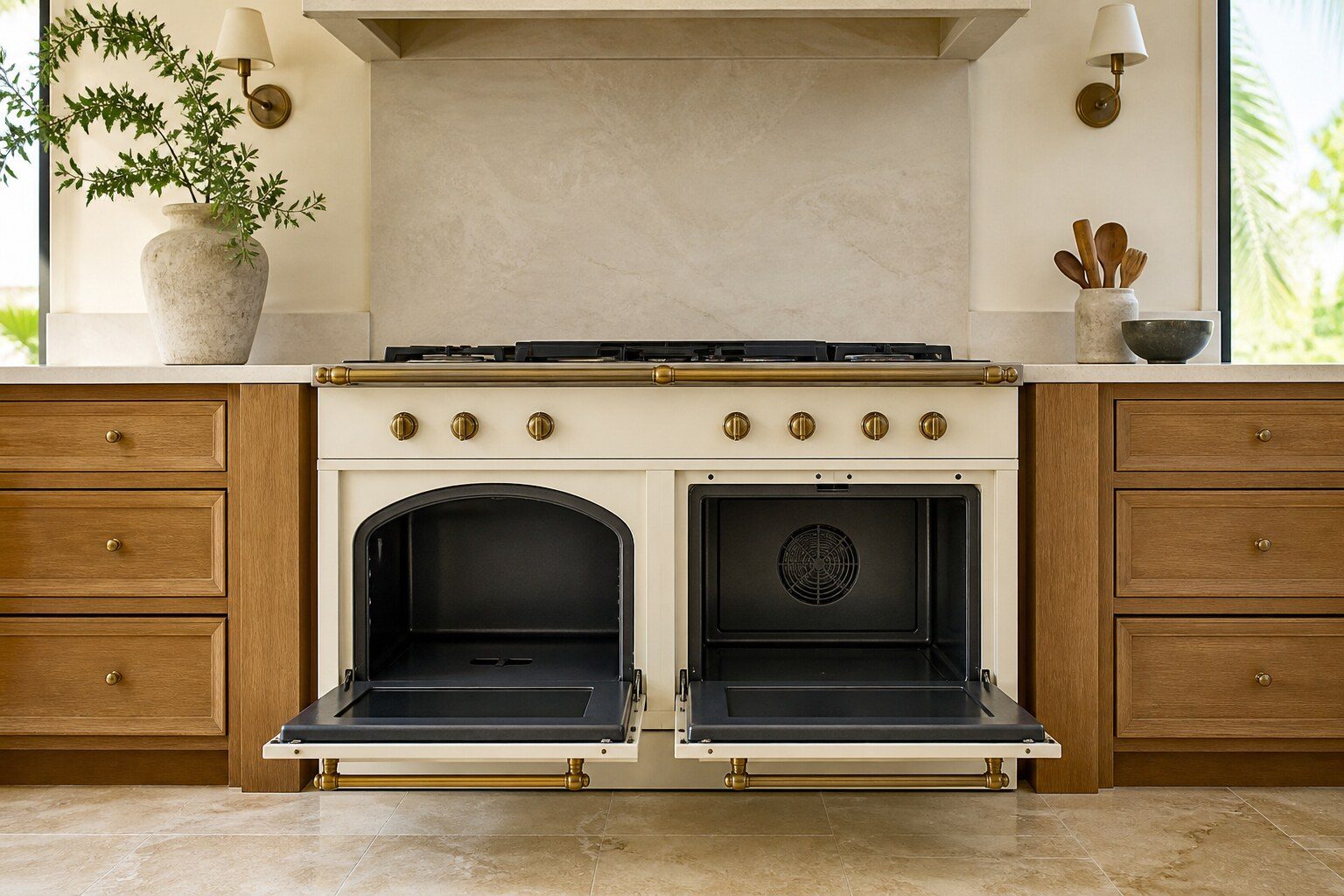
A Château 120, 135, 150, 165 or Grand Palais 180 is dual fuel by design: one side is a vaulted gas oven with an electric broiler above it, the other is a vaulted electric oven with its own broiler. They share a cabinet, a control panel and almost nothing else — different heat source, different thermostat, different failure list, different parts. The smaller ranges vary: the Castel 60 is fully electric with an induction hob, and a Châtelet has one oven plus a warming drawer. On a CornuFé the ovens are electric convection whether the cooktop is gas or induction. And one rule from the order form matters more than any of it: when an all-induction cooktop is specified, both ovens are always electric, without exception.
The full guide
La Cornue oven gas or electric: the most useful sentence you can say on the phone
"It is the left oven."
On a Château 120 and everything above it, the two cavities are two different appliances that happen to live in one enamelled body. One is a vaulted gas oven with an electric broiler above it. The other is a vaulted electric oven with its own broiler. Same door style, same handles, same brass, and nothing else in common.
That means the sentence "the oven is not heating" is two different diagnoses on this make, and which door you opened decides which parts a technician brings.
What each one is
The vaulted gas oven. A single gas burner beneath a sealed dome — 13,000 BTU on a grand oven at 3.1 cubic feet, 11,000 BTU on a standard one at 2.3 — with an electric broiler over it. No window in the door, because the door is part of the cooking mass. No fan. No display, no code, and nothing stored: the Château installation and user guide contains no troubleshooting section at all.
Its failure list is gas: an igniter that no longer draws enough current to open the safety valve, a thermocouple that no longer holds it, the valve itself, and the thermostat.
The vaulted electric oven. The other side of the same range: elements top and bottom, a thermostat, a broiler, 2.7 cubic feet on a grand oven and 2.0 on a standard one.
Its failure list is electric: elements measured cold and under load, a sensor, terminals and supports where elements actually burn out, and on the multifunction platforms a control board.
The rest of the line, briefly
Châtelet 135 and 120 — one grand vaulted oven, gas *or* electric, plus an electric warming drawer running 130 to 240 °F with a 110 lb limit per shelf. That drawer is a heated appliance in its own right and it fails on its own.
Grand Castel 90 and Castel 75 — a single vaulted oven.
Castel 60 — not a gas range at all. A four-zone induction hob with integrated controls and an electric multifunction convection oven. This is the one Château where the three published error codes are always relevant and the gas diagnostics never are.
CornuFé 90 and 110 — electric convection ovens regardless of what the cooktop is: one large oven with seven cooking modes, two convection fans and eight heating elements on the 90; two ovens behind French side-swing doors on the 110, at 2.2 and 2.39 cubic feet.
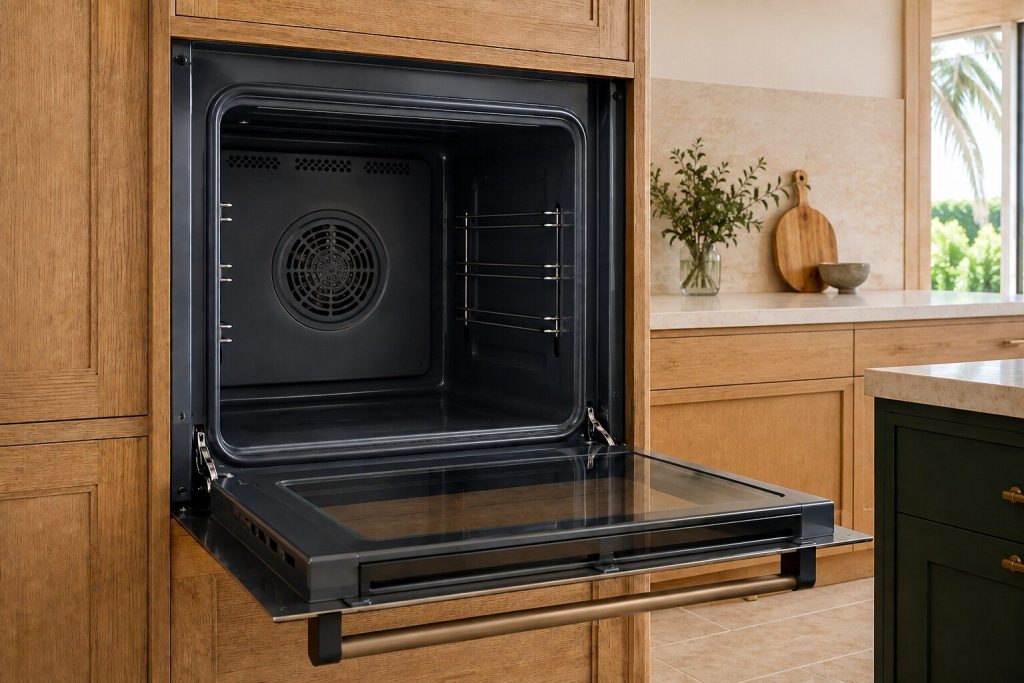
Château Tourelle — a standalone fully electric multifunction wall oven, F60 and F75, built into a cabinet run. Not the range's oven and it does not take the range's parts.
The rule most owners have never been told
When a Château is ordered with the all-induction cooktop — available on the 150, 120, 90 and 60 — the ovens are always electric. Without exception. It is a rule on La Cornue's own order form rather than a preference or a recommendation.
That is worth knowing for two reasons. It means a range with an induction top has no gas diagnostics at all, so the three published codes become the vocabulary. And it means the reverse deduction works: if somebody tells you their all-induction Château has a gas oven, one of those facts is wrong.
Why the broiler being electric matters
Every vaulted gas oven here has an electric broiler over a gas bake burner. Two heat sources, two switched circuits, one cavity.
So a range can brown things beautifully and refuse to bake, or bake perfectly and never brown. Owners describe this as "the oven is half working", which is precisely accurate. It is also the fastest free diagnosis on the appliance: an oven that broils but will not bake has already proved its supply, its control, its door and its temperature sensing are healthy.
What this changes about a service call
Three practical things.
Which door. Tell us. It is the difference between arriving with igniters and thermocouples and arriving with elements and a sensor.
Two thermostats drift independently. A range can have one oven perfectly calibrated and the other thirty degrees out, and an owner who cooks in one of them will never know about the other. It is why an annual visit measures both.
One repair does not imply the other. A gas oven that needed an igniter at year fifteen says nothing about when the electric side will want an element. They are on separate clocks.
If you do not know what you have
Look for a mode dial with icons, which means multifunction electric. Look for a plain thermostat and a broil control, which means vaulted. Look at whether the door has a window — a Château gas oven does not.
And if the paperwork exists, look at that instead. The model code and the configuration are decided at the factory and cannot be read off the appliance later, which makes the original invoice or the dealer's order confirmation genuinely more useful on this make than on any other.
If it turns out to be a repair
What this leads to, and what it costs
Every job on this site is priced the same way: an on-site diagnostic first, the figure agreed in writing before anybody starts.
-
Vaulted ovens and convection ovens — gas, electric, and the Tourelle wall oven Ovens
There are three different ovens on this make and they fail in three different ways. The vaulted gas oven cooks by radiant heat inside a sealed dome and has an electric broiler over it. The vaulted electric oven sits on the other side of the same range. And since 2025 there is a standalone one: the Château Tourelle, a fully electric multifunction wall oven in 60 and 75 centimeter widths, built to sit in a cabinet run next to a Château cooktop. Which of the three you have decides everything about the repair.
- Vaulted gas, vaulted electric and the electric Tourelle wall oven
- Gas ovens carry an electric broiler — browning and baking can fail separately
- Thermostat drift is measured against a probe, never adjusted by feel
-
Dual fuel · gas · all-induction — Château, Châtelet, Castel, Grand Palais, CornuFé Ranges
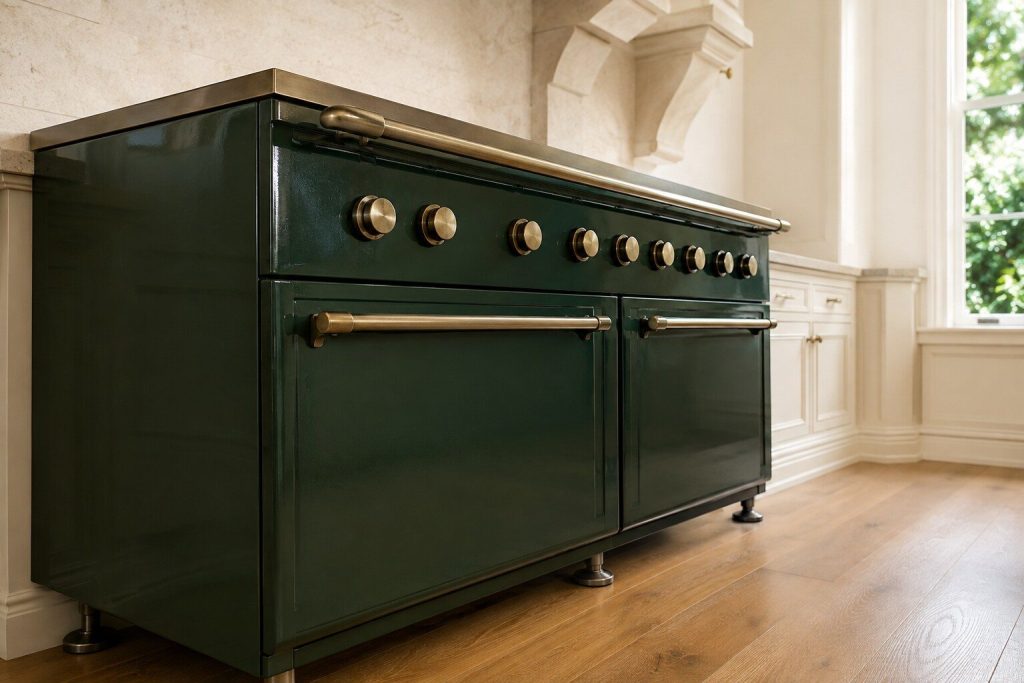
The range is what La Cornue makes, and everything else in the line exists around it. A Château is built to order in France, arrives in a crate weighing over half a ton, and is assembled from parts a customer chose one at a time: which oven is gas and which is electric, whether the top carries a French top, a lava-rock grill, induction or a teppanyaki plate, which of about fifty enamels, which trim metal. Two of them are almost never identical. That is the first thing a repair on one has to take seriously — the model number tells you the size, and the configuration code tells you what is actually under the lids.
- Dual fuel, all gas or all induction — three different ranges, three parts lists
- The configuration code, not just the model, decides what is on the top
- Made-to-order enamel and trim are part of the job, not an extra
-
G4 Château Series La Cornue G45 repair
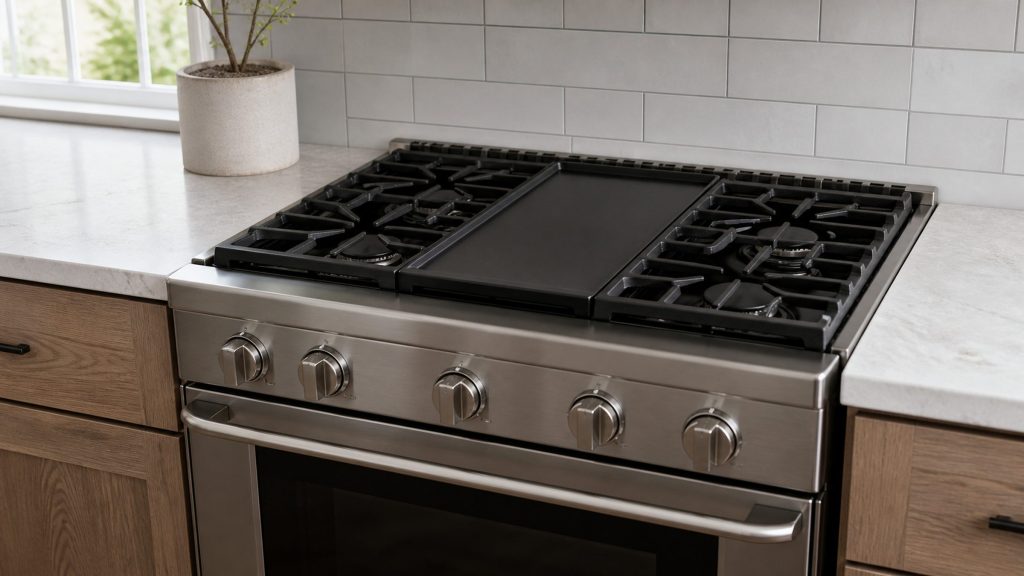
La Cornue G45 repair in Miami: what owners of this G4 Château Series unit search for, what those symptoms usually point at, and what the work involves. Diagnostic from $95, credited toward the repair.
- Burner will not light
- Burner clicks but will not ignite
- Yellow or orange flame
-
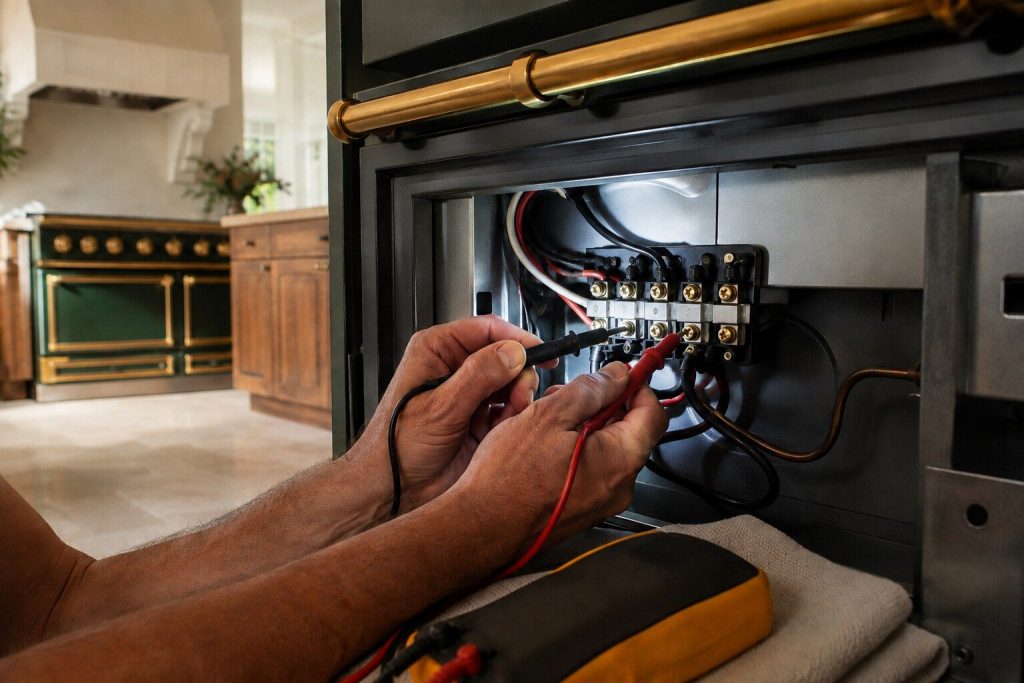
from $95 Diagnostic visit
One visit, one technician, one answer in writing. On a make with three error codes in its entire documentation, the diagnostic is not a formality before the repair — it is the repair's only source of information, and it is done with instruments rather than by elimination.
- Measured, not guessed — this make reports almost nothing on its own
- The configuration code read off the range, because it decides the parts
- Written findings and a from-price before anything is opened
Questions people ask about this
How do I tell which side is which?
Look at the dials. The gas oven has a thermostat and a broil control and nothing else; the electric side on a CornuFé or a Tourelle has a mode dial with icons on it. On a Château the two vaulted ovens look similar from the front, and the honest answer is that it is specified at the factory — the original invoice or order confirmation says, and so does a technician in about a minute.
One oven works and the other does not. Two repairs?
Usually two, and that is the practical reason this page exists. They are separate appliances: separate burner or elements, separate thermostat, separate broiler. A range can lose its gas oven entirely and keep the electric one working perfectly, and the diagnosis for one tells you nothing about the other.
Can a gas oven be converted to electric?
No, and it is not something to pursue. A vaulted gas oven is a sealed cavity built around a burner position, a flue path and an insulation package; converting it would mean rebuilding the cavity. If you want fan cooking, that is what the electric side of a dual-fuel range is for, or the Tourelle wall oven, which is multifunction by design.
Which is better?
They are good at different things, which is the argument for having both. Gas for roasting, bread and anything with a crust — radiant heat from a sealed dome does that better than moving air. Electric for baking that wants evenness and repeatability. A single-oven range is a compromise; a dual-fuel one is not.
Common Problems
More guides like this one
-
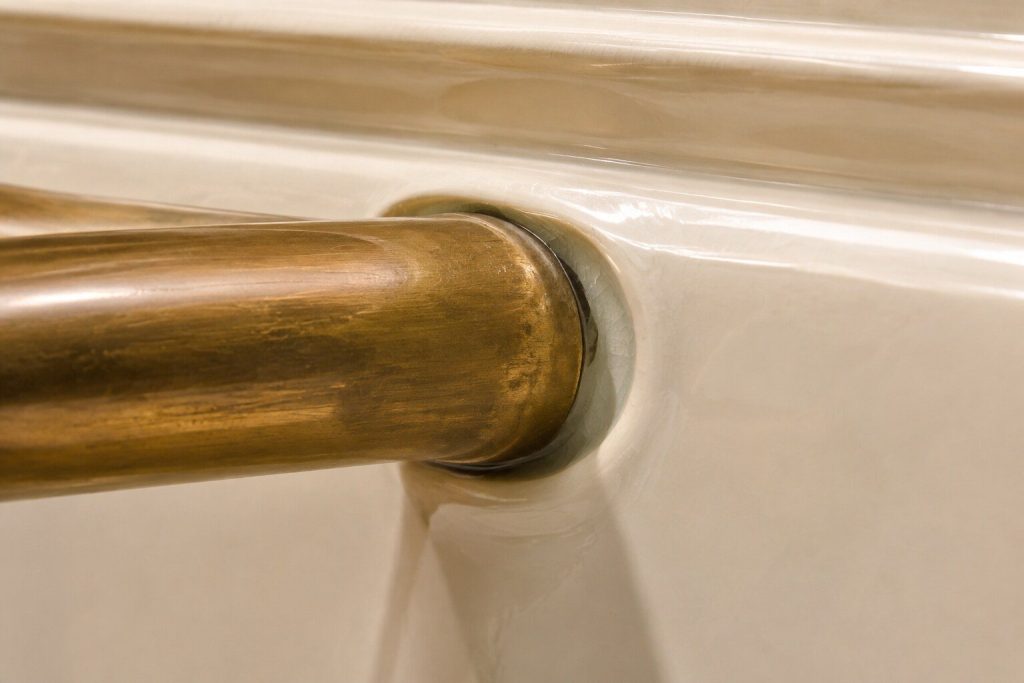
What Is Actually Different About a La Cornue Range
Hand-built to order since 1908, a vaulted radiant oven, a cast-iron plate heated by one burner, and a crate weighing up to 1,320 lb. Written by people who take them apart.
Read more -
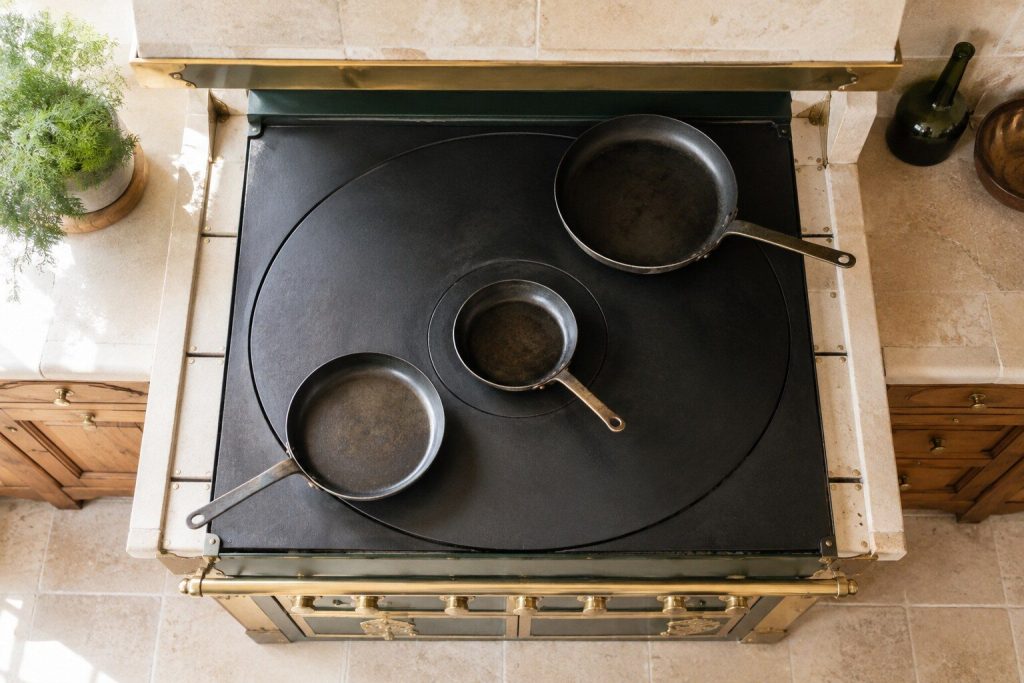
What a French Top Is For, and How to Cook on One
One 7,500 BTU burner under a solid cast-iron plate, hottest at the center and cooler outwards. You cook on it by moving pans, not by turning a knob.
Read more -
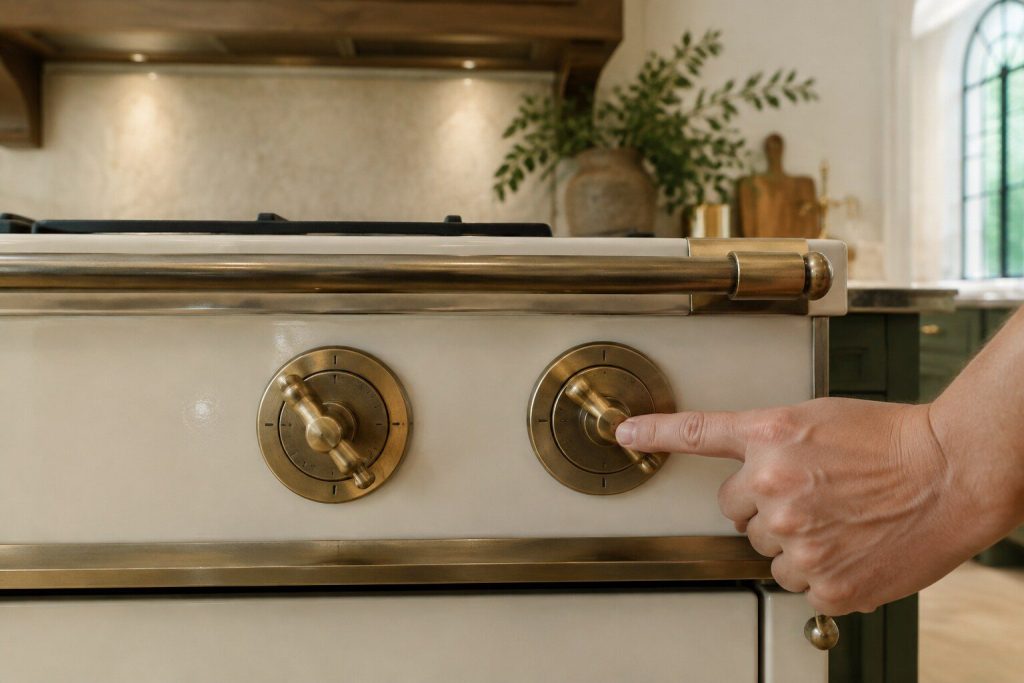
Every Symbol on a La Cornue Oven Dial, and What It Actually Does
A La Cornue dial is iconography rather than words. Here is what each mark selects, why the gas side has fewer of them, and which symbols are not functions at all.
Read more
Tell us the model number and what it is doing.
This article is based on:
- Official manufacturer documentation
- Internal repair procedures
- Technician repair history
- Company quality standards