Troubleshooting
Can a Cracked Glass Cooktop Be Repaired? No, and Here Is Why
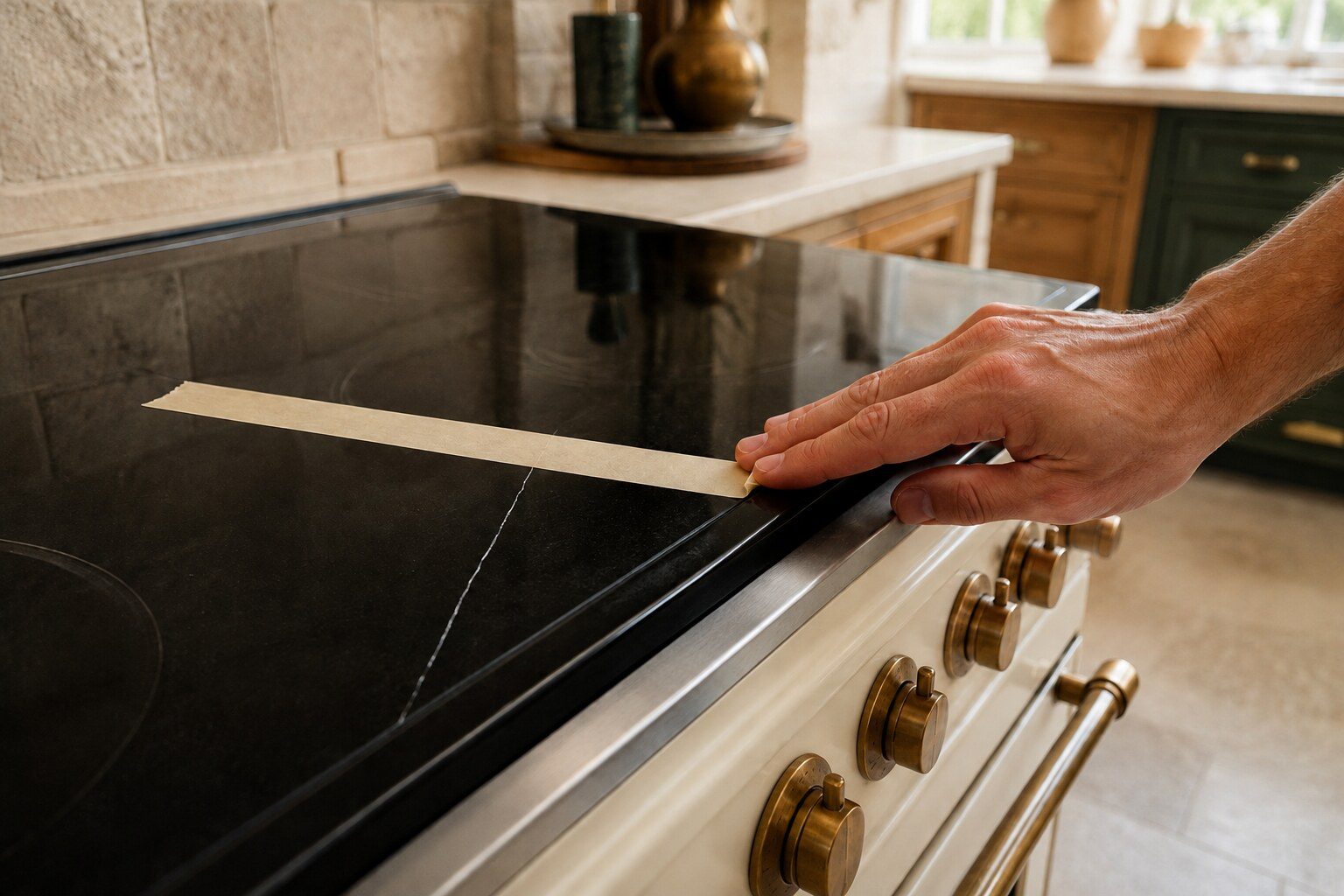
No. Ceramic glass on an induction cooktop is a structural part: it carries the weight of pans and it seals the coils and the electronics beneath it from anything spilled on the surface. There is no filler, no polish and no partial pane, and a cracked panel is replaced as a piece. La Cornue's own guide is unambiguous about what to do in the meantime — disconnect the cooker immediately from the power supply, arrange for its repair, and do not use the cooker until after the repair. A hob that still heats is not evidence that it is safe. The replacement panel is ordered against that cooktop's own zone layout rather than a size, because the printed markings have to line up with the coils underneath, and the coils and electronics get inspected for what has already come through the crack. It is frequently covered by household contents insurance as accidental damage even though manufacturers exclude impact damage from warranty.
The full guide
Can a cracked glass stove top be repaired? The answer people are looking for is not available
A whole cluster of searches asks whether a cracked glass cooktop can be repaired, how much repairing one costs, and what it costs to replace just the glass. The hopeful version of the answer does not exist, so here is the real one with the reasoning attached.
Why it cannot be repaired
Ceramic glass on an induction cooktop is doing three jobs at once.
It is structural: it carries the weight of pans, including a full stock pot set down harder than intended.
It is a thermal component: it takes the heat coming back off a pan base and sheds it, and it is engineered for exactly that cycle.
And it is a seal. Underneath it are induction coils, temperature sensors and a generator board. The glass is the only thing between those and whatever gets spilled on the surface.
A filler cannot restore structure. A polish cannot restore the seal. A partial pane does not exist. So the panel is replaced as a piece, and there is no cheaper version of that job.
What the maker says to do
La Cornue's own guide has one entry written as an instruction rather than an explanation, and this is it: *disconnect the cooker immediately from the power supply and arrange for its repair. Do not use the cooker until after the repair.*
That is worth reading twice, because the temptation is obvious. The hob still works. Three zones out of five are nowhere near the crack. Dinner is in an hour.
The reason not to is the seal. A crack passes liquid to live electronics, and it does so silently — a boil-over on the far side of the panel finds the crack by capillary action and by gravity, not by proximity. And a cooktop that has been used for a fortnight since it cracked is a different repair from one that cracked this morning, because by then the question is not only the glass.
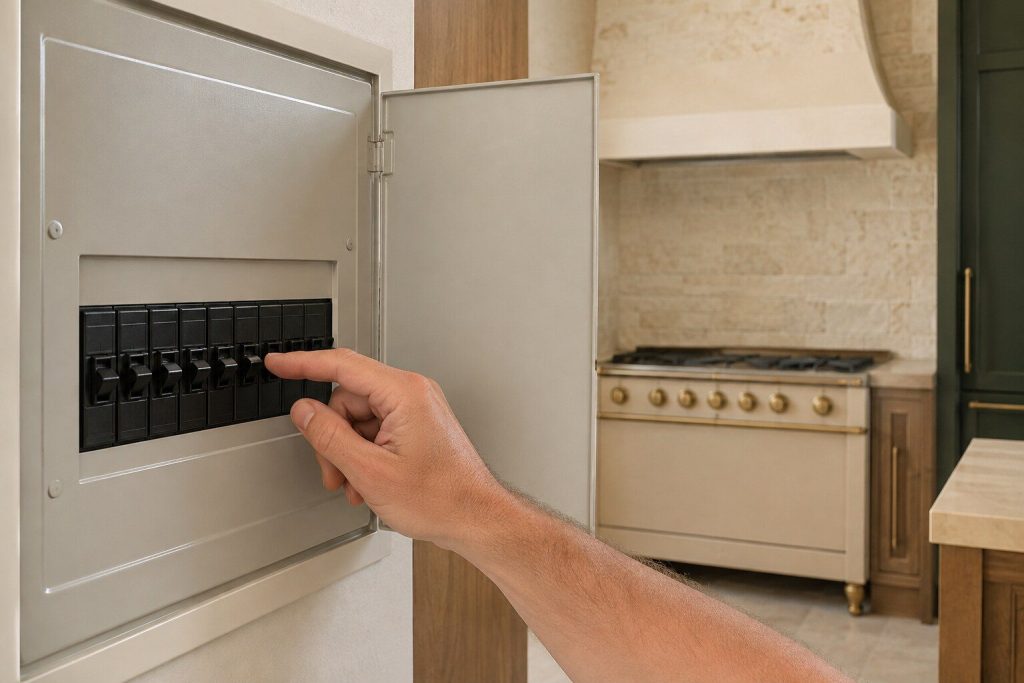
Isolate it at the breaker if there is no accessible switch. Keep it dry: no wet cloths, no cleaning products anywhere near it.
How it usually happens
Impact. A dropped pan or a heavy lid, and this is the overwhelming majority. It is an ordinary kitchen accident and nobody's failing.
Thermal shock. A cold wet cloth or a spill of cold liquid onto a hot zone.
A boil-dry, then cooling. Related to the E2 code on this make: a dry pan takes the glass far past its normal working temperature, and the cooling afterwards is where a crack appears.
A stress point at the frame. Rare, and usually installation-related — a panel bedded or clamped unevenly.
What the replacement involves
More than swapping a sheet of glass, which is why the figure is what it is.
The panel is ordered against the configuration, not the width. The printed zone markings have to align with the coils beneath them, and how many zones there are and where they sit is part of what somebody chose at order time. On a made-to-order cooktop that means the order references the range's own code — and it carries a lead time, quoted before ordering.
What is underneath gets inspected. Coils, sensors, the generator board, the frame and the seal. A hob that cracked recently and has been kept dry usually needs nothing else. One that has been in use is a longer conversation.
It gets sealed properly on the way back. A panel bedded badly leaks into the same electronics whose one documented code, E2, is about heat.
On a gas Château with a two-zone induction insert, the rest of the top stays completely usable while the part is on order. On an all-induction range it does not, and we say so when we quote rather than afterwards.
The money conversation, honestly
Our figure for this work starts at $595 and parts are quoted on top. That sounds high next to a mass-market hob and it is proportionate here: a single induction element was a $3,500 upcharge at order time on these ranges, and the panel is what protects them.
Then ask your insurer. Impact damage is normally outside a manufacturer's warranty and frequently inside household contents cover as accidental damage. A written diagnostic naming the cause, the part reference and the quote is what a claim needs, and it is what our report gives you if you ask for it in that form.
The one thing that is not this page
Scratches. They are not cracks and they are not a safety matter. The maker's own line is honest about them: mineral deposits from water or food come off with a cleaning cream, and tiny scratches are not removable but become less visible over time as a result of cleaning. Its advice is preventative and it names the cause — make sure pan bottoms are smooth and clean.
If a fingernail catches on the mark and there is a rust line or a change in the sound the hob makes, that is a crack. If it is a fine gray line that only shows in raking light, that is a scratch, and it has its own page.
If it turns out to be a repair
What this leads to, and what it costs
Every job on this site is priced the same way: an on-site diagnostic first, the figure agreed in writing before anybody starts.
-
Cracked induction glass
This is the one problem on this appliance with a safety instruction attached, and La Cornue's own guide is unambiguous about it: disconnect the cooker from the power supply immediately and do not use it until it has been repaired. The glass is what separates the coils and the electronics from anything spilled on the surface.
- Disconnect it at the supply — the maker says so, not us
- Do not cook on it, even on the zones that still work
- The replacement panel is ordered to that top's own zone layout
-
Induction glass replacement
The one problem on this make with a safety instruction attached. La Cornue's guide is unambiguous: a cracked hob is disconnected from the power supply immediately and not used until it has been repaired, because the glass is what separates the coils and the electronics from whatever is spilled on it.
- Made safe first, diagnosed second
- Glass ordered to the range's own configuration, not a generic panel
- Coils and electronics inspected for what has already got through the crack
-
La Cornue induction hob: a crack in the hob surface — disconnect it immediately, in the maker’s own words
La Cornue — an indicator rather than a code. This is the only entry in La Cornue's troubleshooting section written as an instruction rather than an explanation, and the instruction is unambiguous: disconnect the cooker immediately from the power supply, arrange for its repair, and do not use it until after the repair.
What the machine is telling you
Questions people ask about this
It is only a small crack at the edge.
Have it looked at rather than judged from above. A chip at the very edge of the panel, outside the sealed area and away from any zone, can sometimes be monitored — but the assessment is whether the glass is still continuous and whether the seal is intact, and that cannot be established by eye from the top. A crack inside a zone marking, or anywhere liquid can sit, is treated as a crack. Photograph it cold and dry and we will tell you which you have.
Can I keep using the zones that still work?
No, and this is the maker's instruction rather than our caution. The glass is what separates the coils and the electronics from spills, so the fact that a zone still heats says nothing about whether the appliance is safe. Isolate it at the breaker if there is no accessible switch.
Will insurance pay for it?
Often, and it is worth asking. Impact damage to a glass hob is normally excluded from a manufacturer's warranty but frequently covered by household contents insurance as accidental damage. What helps a claim is a written diagnostic naming the cause, the part reference and the quote — ask for the report in that form.
Why is the panel not a stock item?
Because on a made-to-order cooktop the printed zone markings have to line up with the coils beneath them, and the number and position of zones is part of the configuration somebody chose. So the order goes against the range's own configuration code rather than against a width, and it comes with a lead time that we quote before ordering.
Troubleshooting
More guides like this one
-
Your Oven Has Not Broken, It Has Drifted: Testing a Thermostat
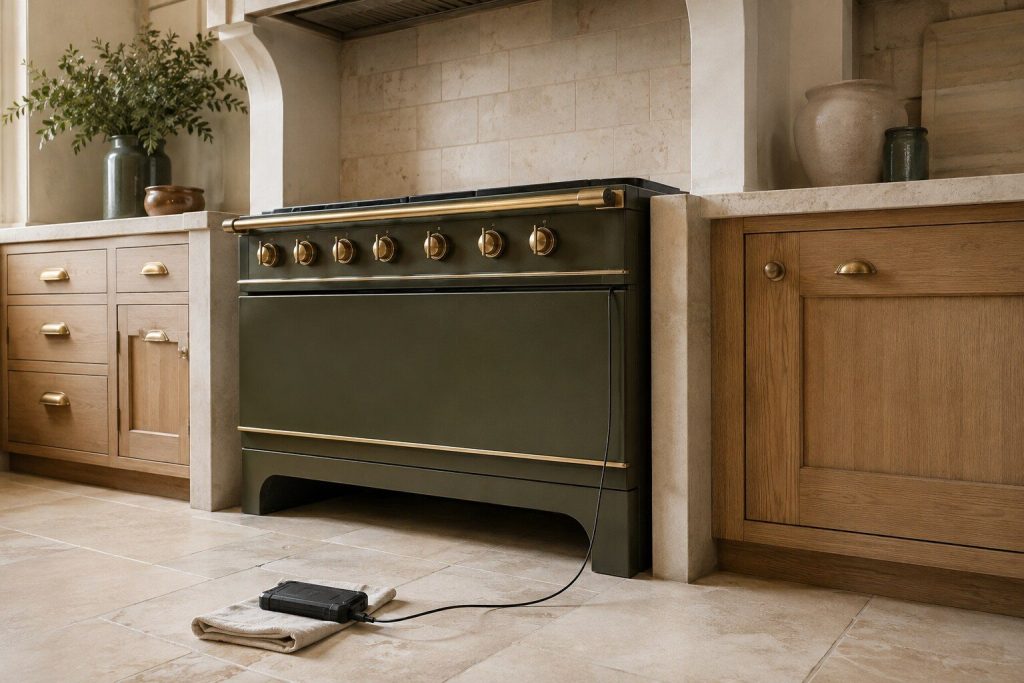
The maker's own guide says an oven that gets hotter with age and does not come back wants a thermostat. What nobody warns you about is that your cooking will change.
Read more -
Resetting an Oven Control, and When Resetting Is the Wrong Move
The internet's answer to every appliance message is to reset it. On this make there is one code where doing that repeatedly is what destroys the board it protects.
Read more -
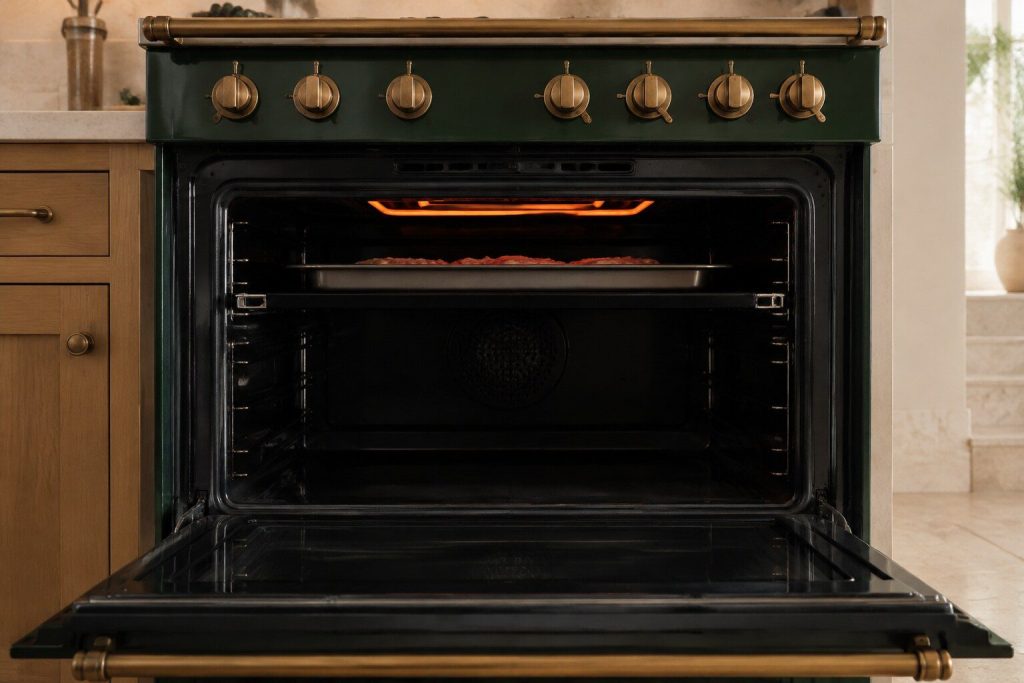
The Broil Symbol on a La Cornue, and Why Browning Fails on Its Own
Every vaulted gas oven here has an electric broiler over a gas burner. Two circuits in one cavity — so an oven can brown beautifully and refuse to bake.
Read more
Tell us the model number and what it is doing.
This article is based on:
- Official manufacturer documentation
- Internal repair procedures
- Technician repair history
- Company quality standards