Maintenance & Prevention
Seasoning a French Top, and the Mistake That Cracks One
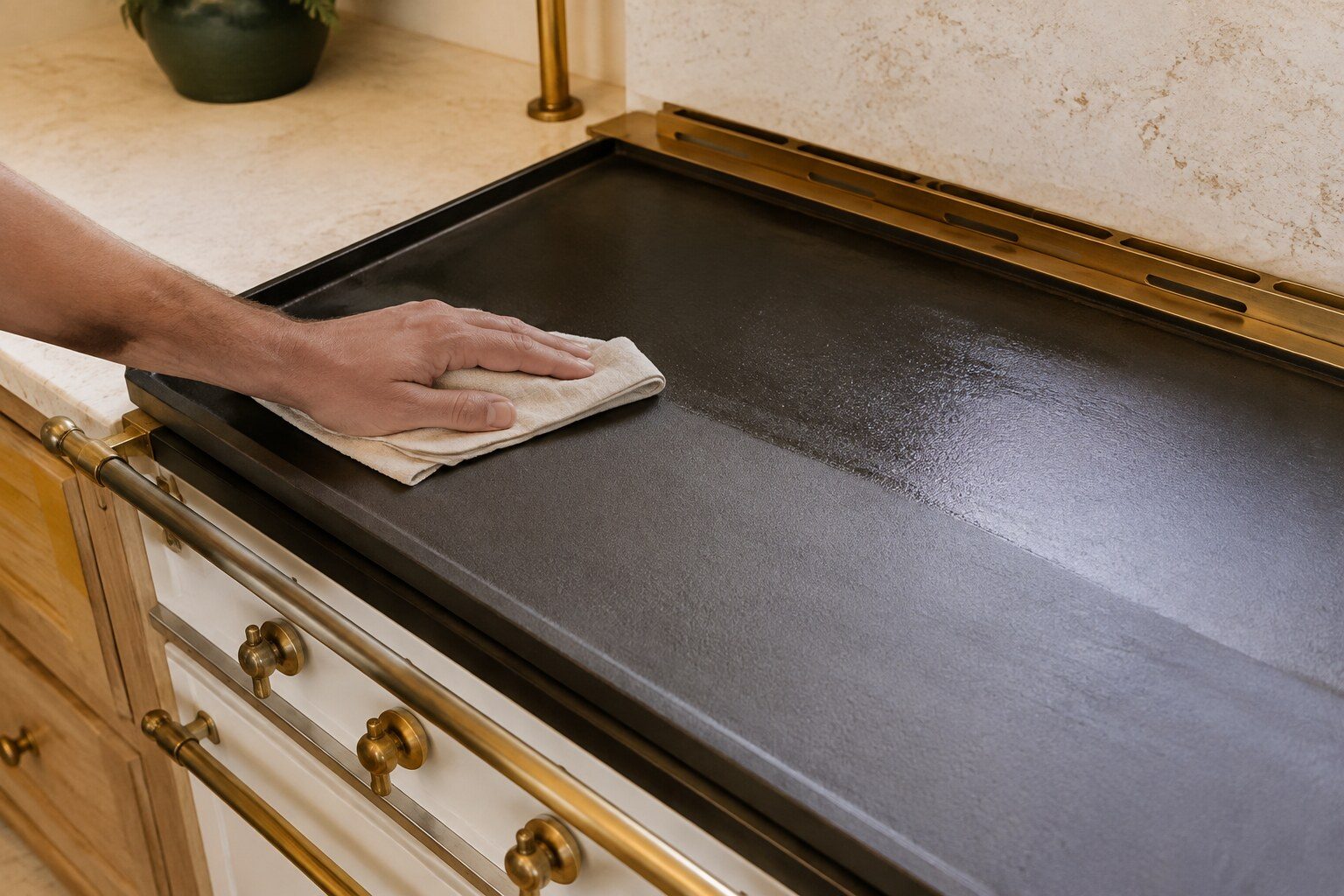
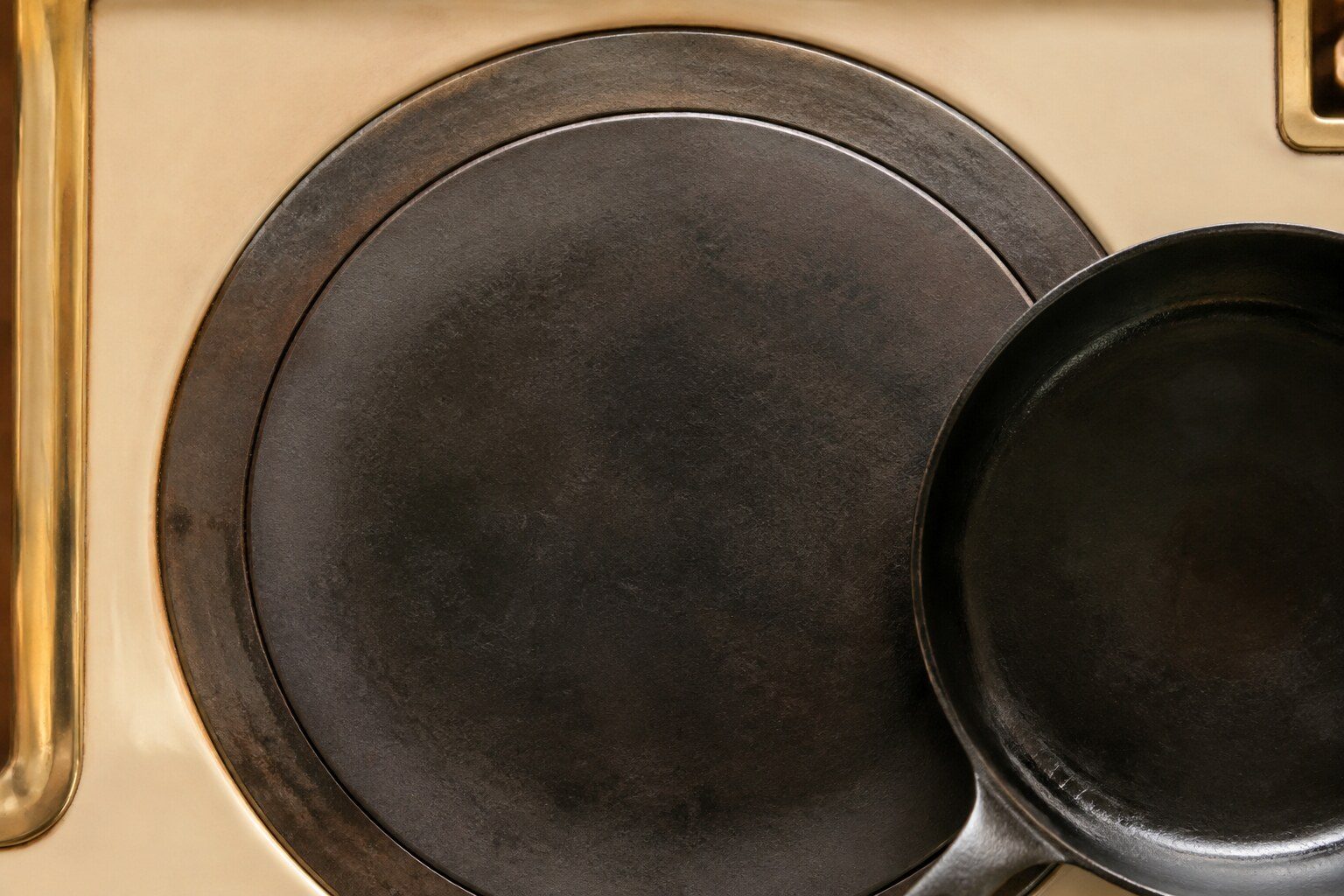
Clean the plaque warm, dry and mechanically: a scraper and a dry cloth while there is still heat in it, then a thin film of oil wiped almost dry to re-season. Never put anything wet on a hot plate — no damp cloths, no cold liquids, no washing it down until it has cooled completely — because thermal shock is the leading cause of a cracked plaque and a replacement is a made-to-order part ordered against the range's own configuration. Look underneath occasionally too: the face nobody inspects is the one that rusts first in this climate, and rust and scale on the underside insulate the iron from its own burner, which is a common cause of a plate that has quietly lost its performance. Crazing in the black seasoning layer is normal and means nothing; a single line that catches a fingernail and shows a rust trace is a crack through the casting.
The full guide
How to clean La Cornue stove top: three rules, and the reasoning behind them
The plaque coup de feu is a slab of cast iron heated by one 7,500 BTU burner under its center. Looked after, it will outlast the kitchen it stands in. Mistreated once, it cracks — and a replacement is a made-to-order part ordered against the range's own size and configuration, with a lead time rather than a shelf.
The three rules are: clean it warm, keep it dry, and never let anything wet touch it hot. Everything below is why.
Cleaning: scrape, do not wash
Warm — not hot, not stone cold. Cook, then let it come down for twenty minutes.
A metal scraper or a bench scraper across the surface takes off what cooking left. A dry cloth takes off the rest. That is the whole routine, and it is how these plates have been cleaned since 1908.
Soap and water strip seasoning, which is the polymerized oil film that keeps bare iron from rusting and makes cooking directly on the plate pleasant. So a wash costs you a re-oil, and a plate washed often enough is a plate you are permanently rebuilding. If you do need to wash it, do it cold, dry it immediately and completely, and season it again.
Seasoning: thin, and repeated
A little oil on a cloth, worked over the whole surface, then wiped back until it looks almost dry. Then let the plate come up gently on a low burner.
Thin is the entire technique. A thick film does not polymerize properly — it goes sticky and stays sticky, and then it carbonises into a rough black layer that is genuinely hard to remove and which insulates the plate slightly. Several thin layers over several cooking sessions beat one enthusiastic one.
A well-seasoned plate is black. Bare iron is gray. Neither is a problem; gray simply means you have some seasoning to build.
The mistake: thermal shock
This is the one that brings us out.
A cast-iron plate at searing temperature has a considerable gradient across it — hottest above the burner, much cooler at the corners. Put anything cold and wet onto the hot part and the metal there contracts against metal that has not, and cast iron is strong in compression and brittle in tension.
The specific versions we see: a damp cloth used to wipe a hot plate. A pan of cold liquid set down on the center. Somebody washing the cooktop down at the end of the evening before it has cooled.
None of those is careless in any ordinary sense. They are all things people do to every other cooktop they have ever owned.
So: nothing wet until it is genuinely cold. Not warm — cold. If you want to clean it at the end of cooking, scrape it warm and dry, and leave water out of it entirely.
The underside, which nobody looks at
Once a year, look at the face that points down.
Rust and scale there insulate the iron from its own burner, and the complaint that produces is a plate that has quietly lost its performance — slower to come up, a smaller hot center, corners that never get usable. Owners describe it as the plate wearing out. It is a layer of oxide.
It is also where corrosion starts in a coastal kitchen, because it is the surface that never gets wiped and never gets hot enough for long enough to stay dry.
Cleaning it back is part of a French top service, and it is one of the more satisfying things we do: a plate that had been declared dead comes back because the iron can feel its burner again.
Crazing is not a crack
Let the plate go completely cold and clean it back dry, then look in daylight.
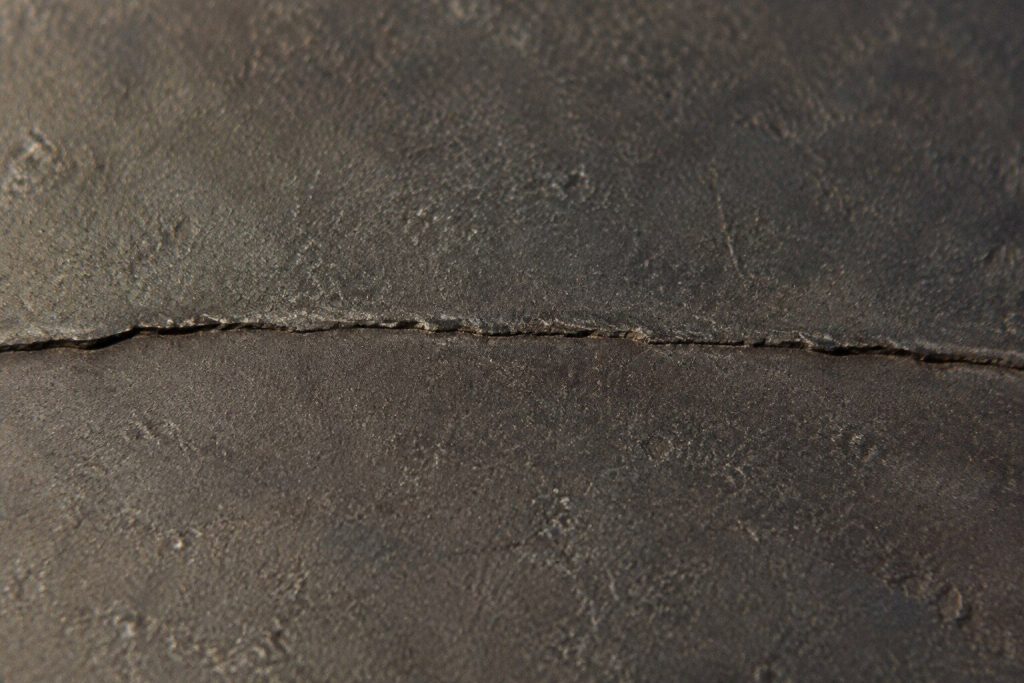
Crazing is a fine spider web in the black seasoning layer. It does not catch a fingernail. It is the normal appearance of a well-used plate and it means nothing at all.
A crack is a single line, usually running from an edge or from the hot center outwards. It catches a nail, and it often shows a rust trace along it because moisture has got into the casting.
If it is through the iron, stop using the plate — a cracked plate can move, and a moving plate over a lit burner is not worth the risk. If it is a stabilized hairline at the edge away from the hot center, that is something to keep dry, keep seasoned and monitor, and it can go on for years. We will tell you which you have rather than condemning a plate for having a line on it.
And if the heat has gone rather than the plate
Worth saying, because it is the more common call. Most cold-spot complaints start underneath: a weak, rich or partly blocked burner cannot load a plate this heavy, and a blocked drip or air path starves it of combustion air.
So before anyone talks about the iron, light the burner and look at the flame. Blue, even, and the right size. That is where these visits are usually solved.
If it turns out to be a repair
What this leads to, and what it costs
Every job on this site is priced the same way: an on-site diagnostic first, the figure agreed in writing before anybody starts.
-
A line across the iron Cracked French top plate
A crack in the plaque is neither cosmetic nor automatically terminal, and the difference matters because a replacement plate is a made-to-order part. Crazing in the seasoning looks alarming and means nothing; a crack through the cast iron changes how heat crosses the plate and can propagate.
- Crazing in the seasoning is not a crack in the iron
- Thermal shock is the usual cause — a wet cloth on a hot plate
- A replacement plate is a made-to-order part, so this gets looked at properly
-
from $245 French top service
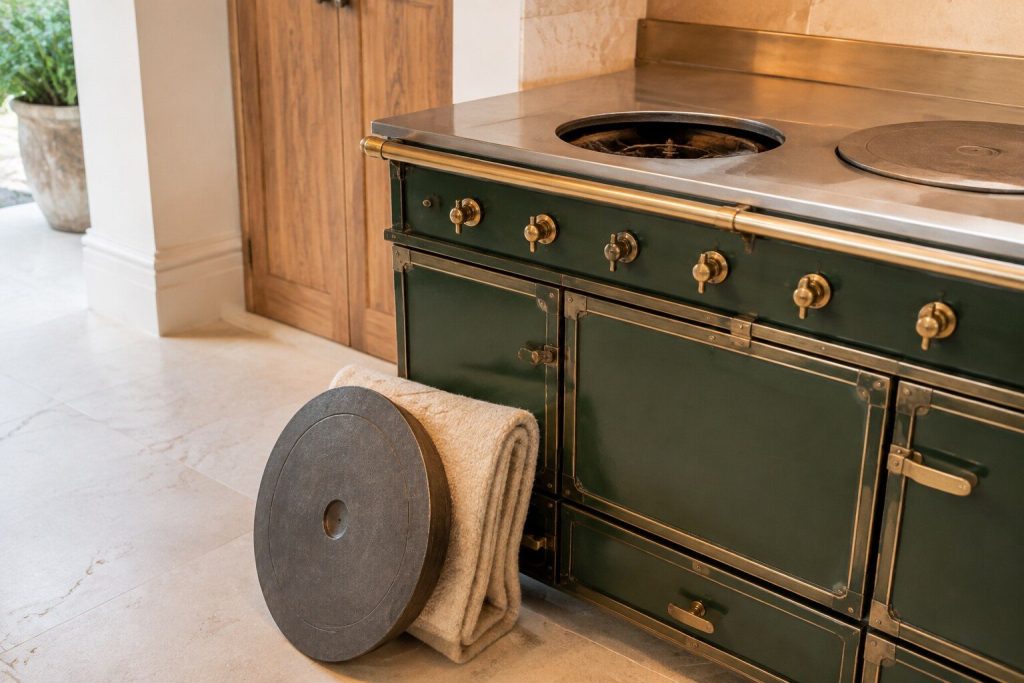
The plaque coup de feu is a single cast-iron plate heated by one 7,500 BTU burner directly under its center, and it is the most-used and least-understood part of the range. Cracks, warping, rust, dead cold spots and a burner running wrong underneath are all different problems that present the same way.
- Crazing in the seasoning and a crack through the iron are told apart
- The burner beneath it checked first — most cold spots start there
- Re-seasoned properly, so the plate is handed back working
-
Brass gas burners · plaque coup de feu · lava-rock grill · induction · teppanyaki Cooktops and rangetops
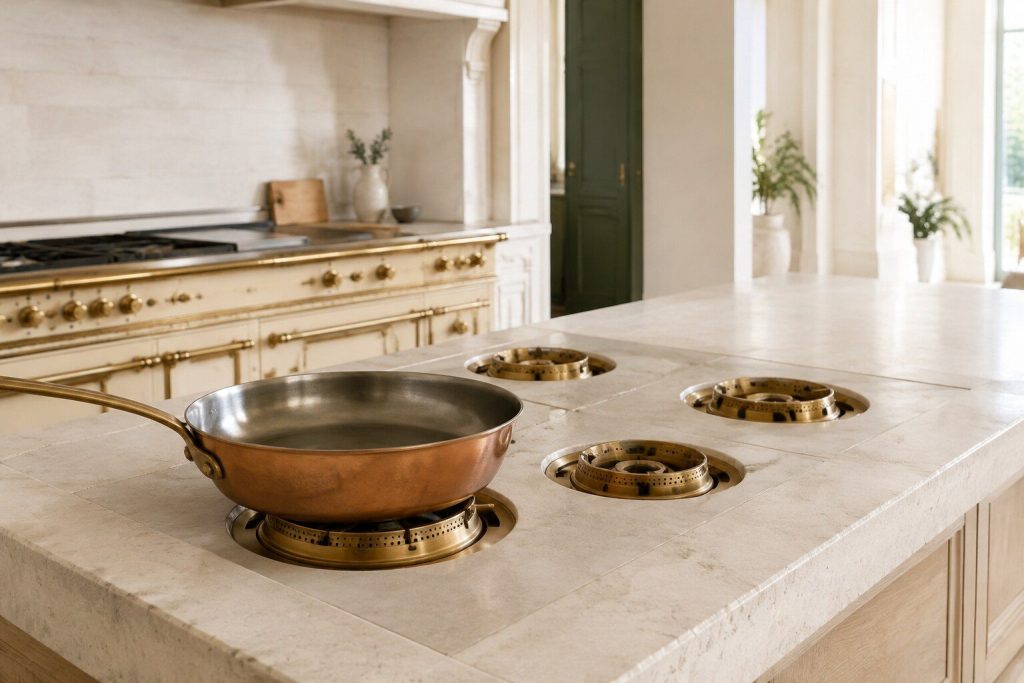
A La Cornue cooktop is a set of modules chosen at order time and dropped into a stainless frame: brass gas burners at 17,000 and 7,500 BTU, a 22,000 BTU power burner, the cast-iron plaque coup de feu heated by a single burner underneath, a lava-rock grill, ceramic-glass induction zones, an electric teppanyaki plate. This is the top of a range, and each module is a different repair. Sold on its own without ovens beneath it, the same top is a rangetop, and it has its own page.
- Gas, induction, French top, grill and teppanyaki modules on one frame
- Induction is the only half of this line that shows a code — E2, U400, Er
- A cracked glass hob is disconnected first and diagnosed second
Questions people ask about this
Can I use soap and water on it at all?
On a cold plate, sparingly, and dry it immediately and completely — then re-season. Soap strips seasoning, which is the film that keeps the iron from rusting, so every wash costs you a re-oil. Most of the time a scraper and a dry cloth on a warm plate does more with less.
It has surface rust after we were away.
Common in a house closed for the season, and recoverable. Take it back with a dry abrasive pad or fine wire wool until you have clean gray iron, wipe it out, then re-season in thin layers with the burner on low. What you are racing is time: rust that has been left long enough to pit the surface is thinning the casting, and a thinned plate is the one that eventually cracks on a normal thermal cycle.
Should the plate be black or gray?
Black, ideally — that is polymerized oil, and it is what makes cooking directly on the plate pleasant. Gray means bare iron, which works but rusts. Neither is a problem, and a plate that has been stripped back for cleaning simply needs its seasoning building again.
Do the engraved stars matter?
They are La Cornue's mark and they sit where the plate is hottest, which makes them a useful map rather than decoration. Clean over them like the rest of the plate — the engraving holds seasoning slightly better, which is why they often look darkest.
Maintenance & Prevention
More guides like this one
-
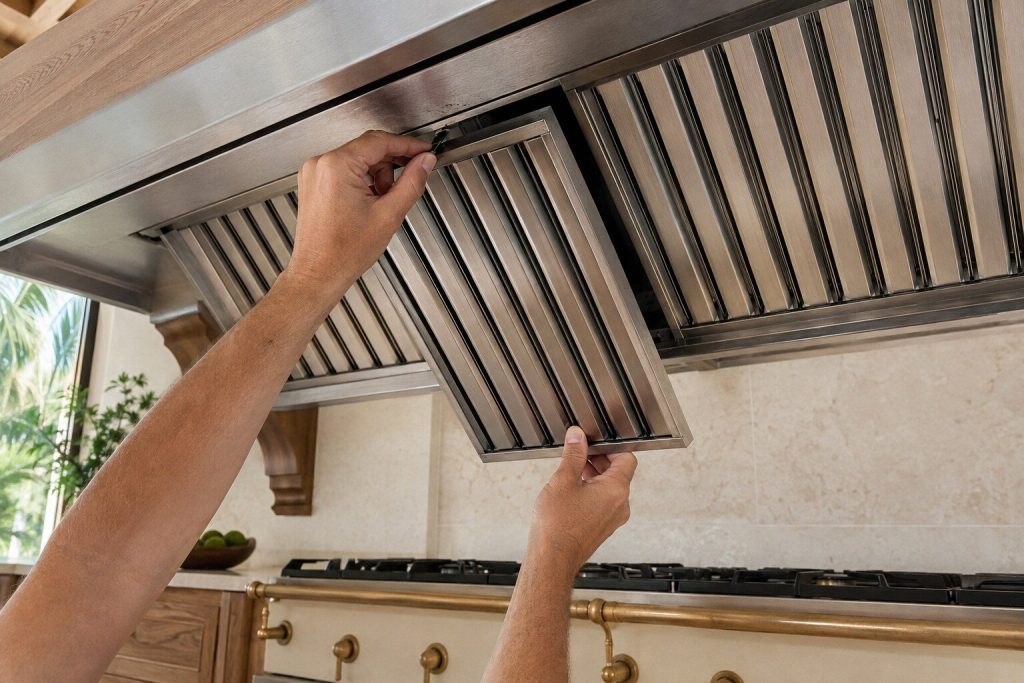
How Often to Clean Hood Filters Over a Range Like This One
The general answer is wrong here. Over a 22,000 BTU power burner and a lava-rock grill, baffles saturate far faster — and the grease they miss ends up in the range's electronics.
Read more -
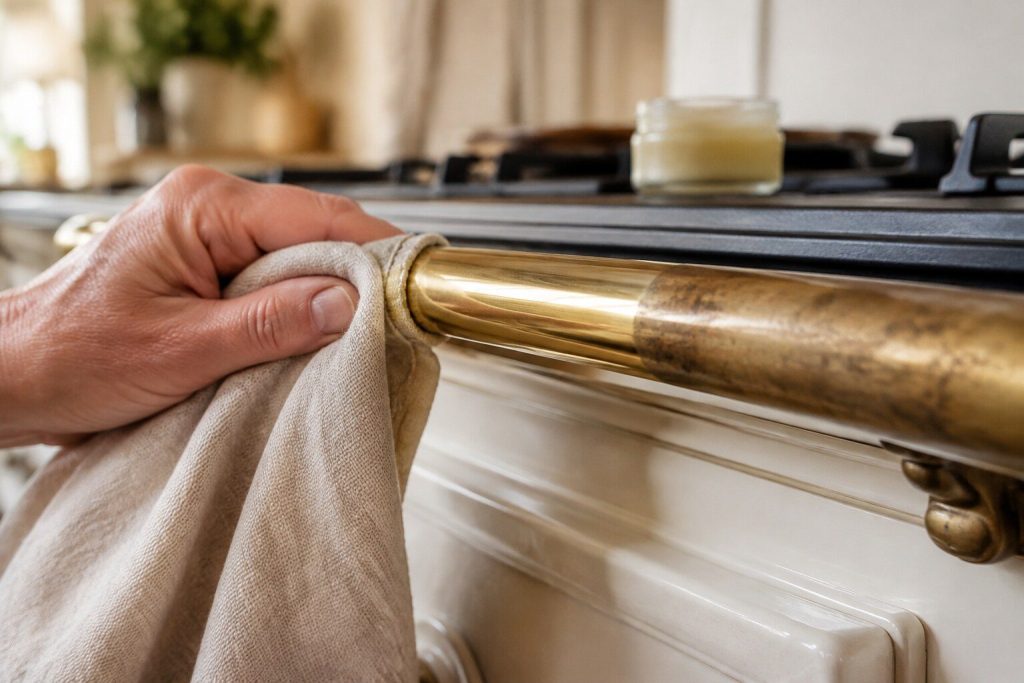
Cleaning La Cornue Brass and Trim in a Coastal Kitchen
Establish whether your trim is clear-coated before anything abrasive touches it. Removing lacquer along with tarnish is the mistake that cannot be undone.
Read more -
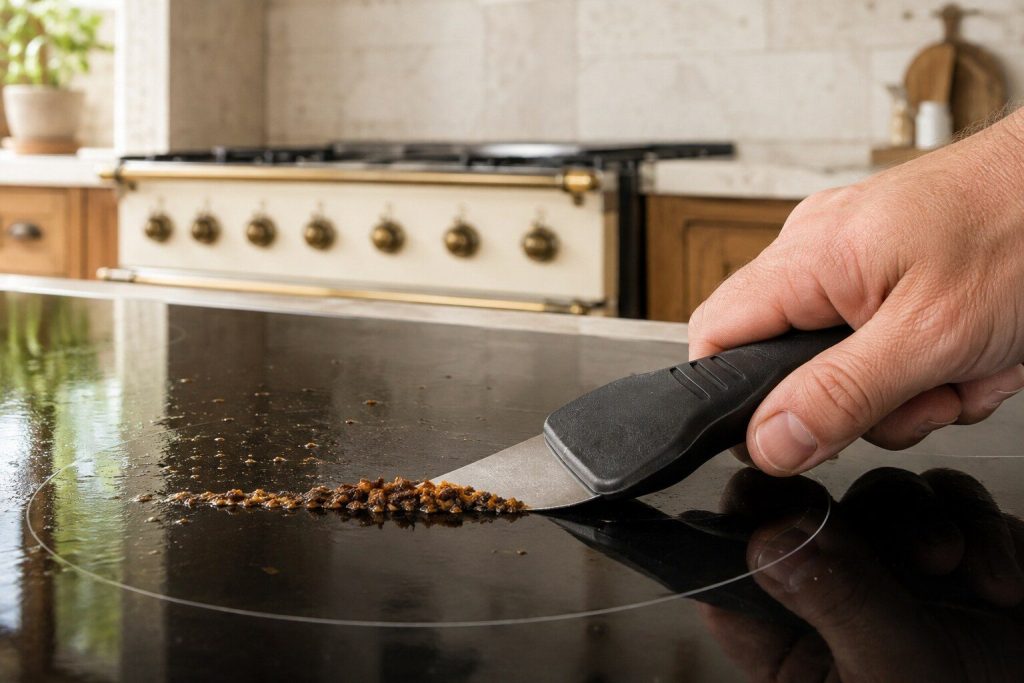
Cleaning an Induction Hob Without Scratching It
The maker's own answer is honest and unwelcome: mineral deposits come off, fine scratches do not. Its advice is preventative, and it names the cause — pan bases.
Read more
Tell us the model number and what it is doing.
This article is based on:
- Official manufacturer documentation
- Internal repair procedures
- Technician repair history
- Company quality standards