Maintenance & Prevention
Cleaning La Cornue Brass and Trim in a Coastal Kitchen
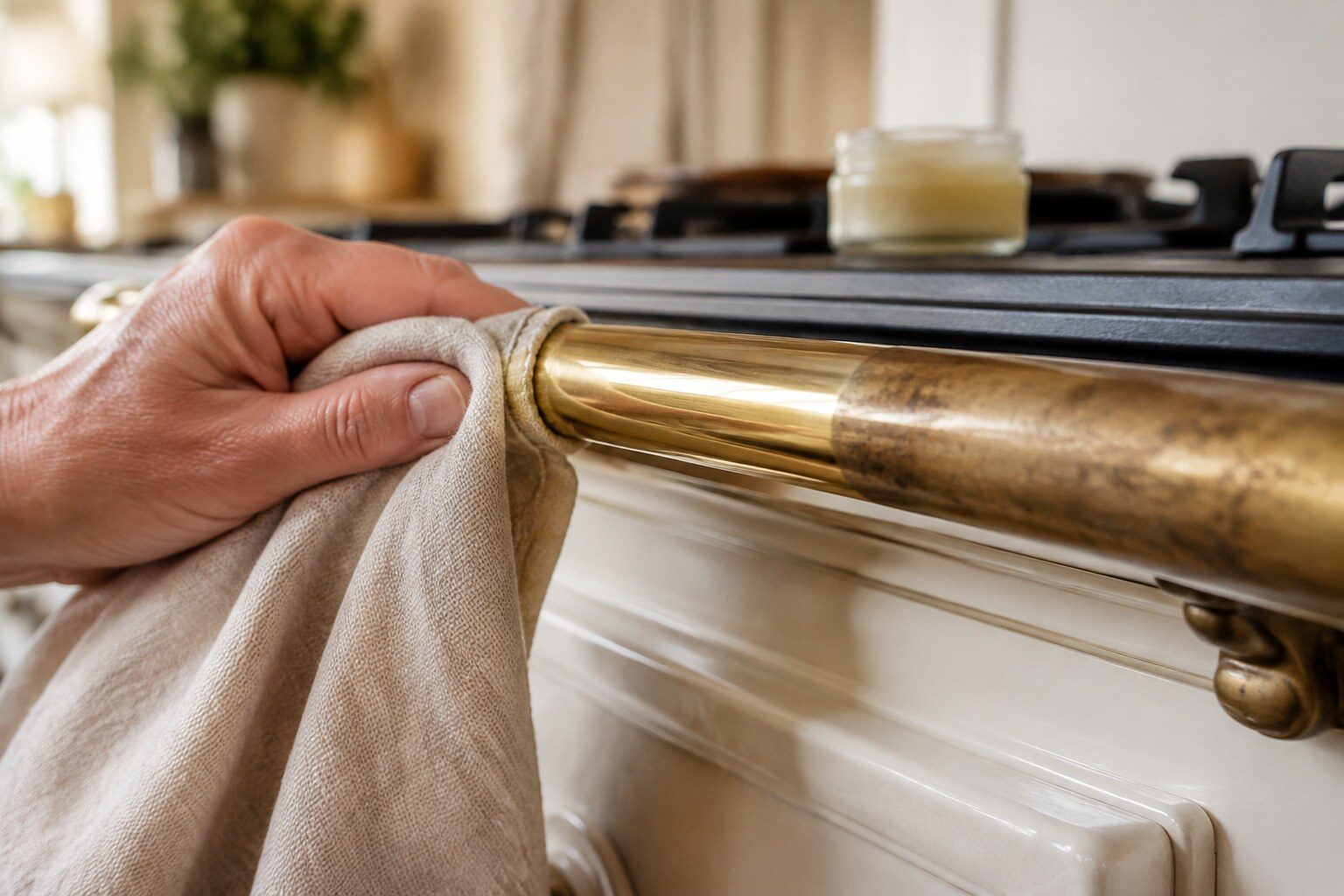
Find out what your trim is before you clean it. La Cornue offers polished and brushed brass, brushed stainless, brushed nickel, polished chrome, polished and brushed copper, matte black and matte bronze — and a clear-coated varnish is available on brushed and polished brass and copper. Polished brass on these ranges is frequently natural, uncoated metal that is meant to patina, and the maker says so in its own literature. On uncoated brass a proper brass polish used sparingly is correct; on a clear-coated finish it takes the lacquer off with the tarnish and there is no way back short of refinishing the part. If you do not know which you have, wash with warm water and a little dish soap, dry immediately, and ask before you escalate. In a kitchen a few miles from salt water, drying after every clean matters more than what you clean with.
The full guide
How to clean La Cornue brass: the one maintenance question that is specific to this make
Most cleaning advice is transferable between appliances. This is not, for two reasons: La Cornue offers about ten different trim metals with an optional clear coat over some of them, and the trim is next to vitreous enamel that will not forgive an abrasive.
So the first step is not cleaning. It is finding out what you have.
Coated or uncoated: the question that cannot be un-asked
The trim options are polished brass, brushed brass, brushed stainless, brushed nickel, polished chrome, polished copper, brushed copper, matte black, matte bronze and polished stainless. And a clear-coated varnish is available on brushed and polished brass and copper.
Those two cases want opposite treatment.
Uncoated brass is bare metal. It tarnishes, it patinas, it responds to polish, and La Cornue says in its own literature that polished brass trim is natural, non-coated metal that will patina over time. If you want it bright, a proper brass polish used sparingly is correct and you will be doing it again in a few months. Many owners decide they prefer the patina, which is a legitimate choice rather than neglect.
Clear-coated brass or copper is metal under lacquer. The lacquer is the finish. Polish removes it along with whatever is on top of it, unevenly, and the result is a patchy surface that can only be put right by refinishing the part.
How to tell
Look at how it has aged. Uncoated metal darkens unevenly and warms in tone; fingerprints appear and fade. A coated finish stays uniform for years and then shows cloudiness or fine flaking rather than tarnish.
Then test somewhere nobody looks — the back of a rail, the underside of a handle. Bright and even means uncoated. Dull and patchy means stop, and the correct response to having started is not to continue evenly across the whole rail.
Better still, look at the paperwork. The trim metal and the varnish option are specified at order time and recorded on the invoice, which is one more reason the original order confirmation is worth keeping with the house.
The routine that suits almost every finish
Warm water, a drop of dish soap, a soft cloth. Then dry immediately and completely.
That is genuinely it, for coated brass, chrome, nickel, stainless, matte black and matte bronze. It is also fine on uncoated brass if you are content with patina.
What salt air actually does
Two different things, and they get confused.
Patina is a chemical change in the surface of bare metal. It is stable, it is protective, and on brass it is the reason people choose brass. A coastal kitchen with the windows open accelerates it — a season's worth in a month is not an exaggeration.
Corrosion is different: it eats into the metal and under plating. Chloride is what does it, moisture is what carries it, and the fix is not a product. It is drying.
Which is why the single most useful sentence on this page is that drying after every clean matters more than what you clean with. Salt on dry metal is a wipe. Salt in standing moisture is pitting, and pitting on chrome is a part rather than a cleaning job.
Keep everything away from the enamel
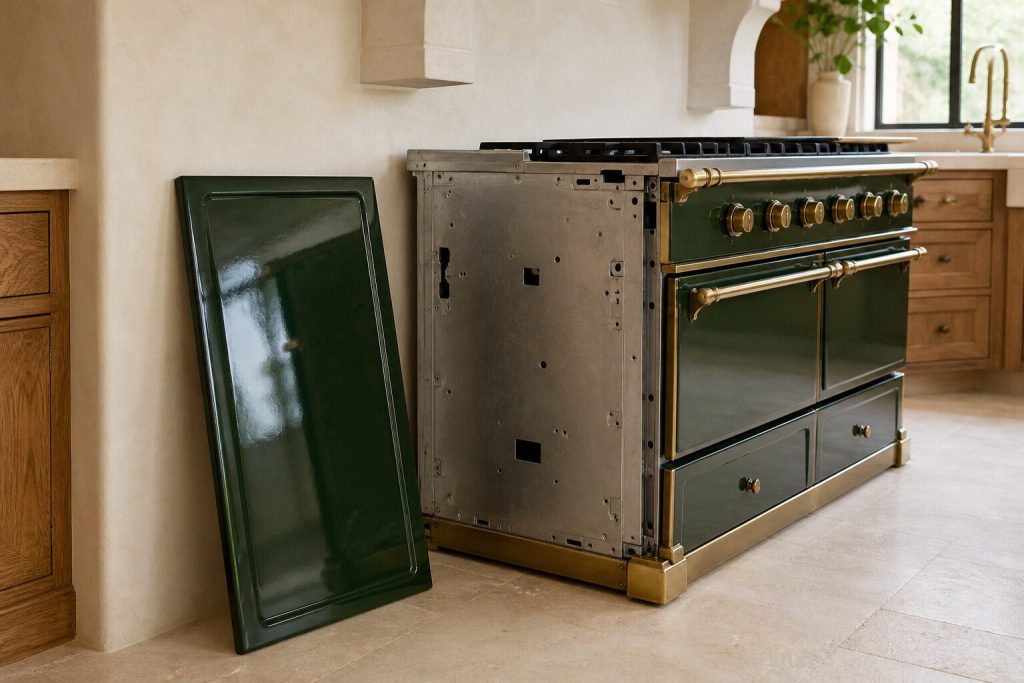
The trim sits against vitreous enamel — glass fused to steel, in one of about fifty colors or a one-of-a-kind that cost $3,400 at order time.
Metal polish on enamel is at best useless and at worst abrasive. Caustic and corrosive cleaners are ruled out by La Cornue's own cleaning notes for the whole range. And a chip in the enamel is not cosmetic in this climate: the steel underneath is exposed to moisture and cooking acids, and it will rust outwards from the day it happened.
So work with a cloth rather than a spray, and wipe any overspill off the enamel straight away.
The parts of the range that need this most
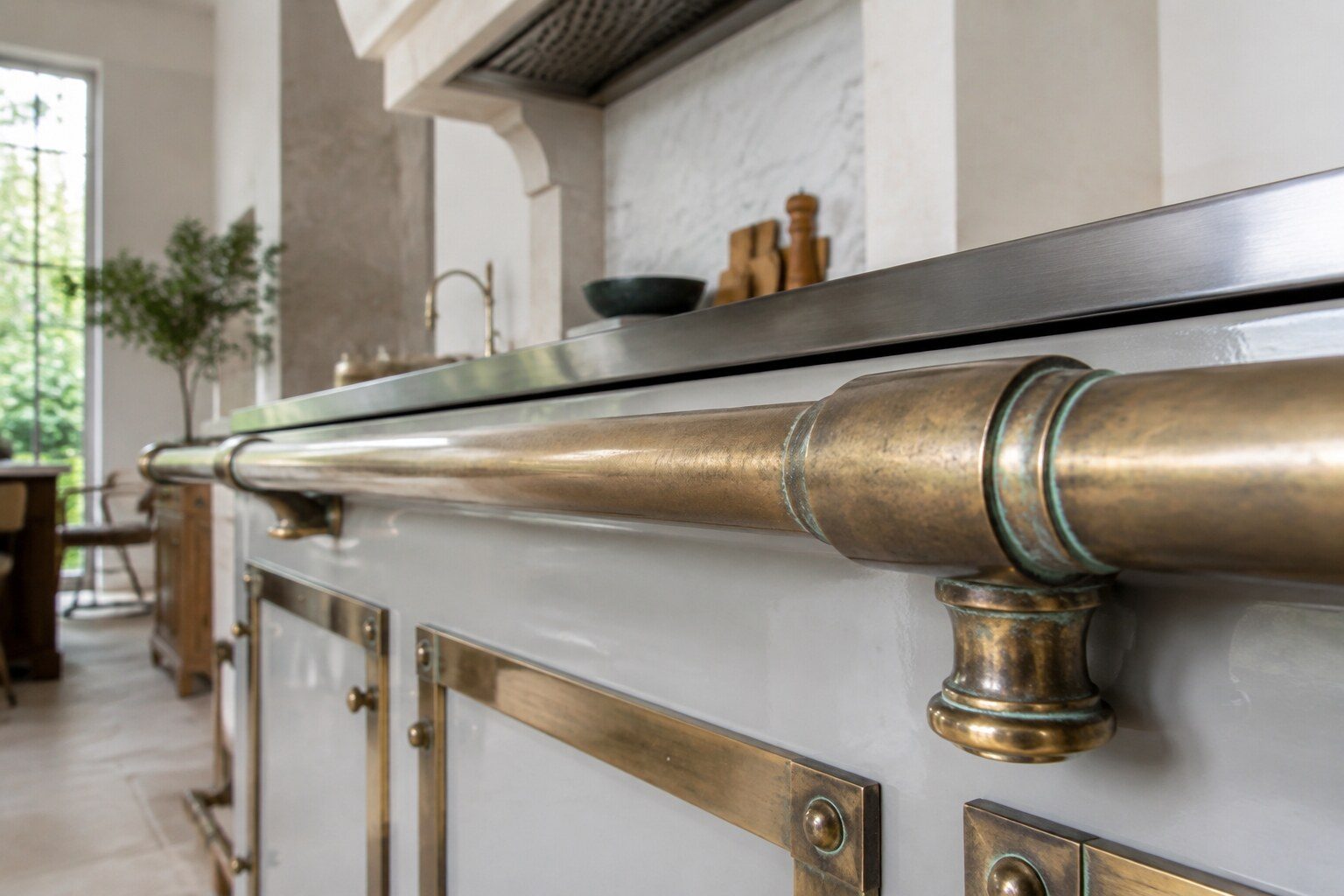
The handrail, because hands are on it and because it is the most visible piece of metal in the kitchen.
The bezels around the knobs, which live hotter than anything else on the fascia — particularly the ones next to the plaque or the grill — and age first.
The toe kick, which gets mopped, splashed and forgotten, and where standing water sits longest.
The hood, because it is finished to match the range and it is the piece a hot, greasy kitchen works on hardest. It is also 850 mm tall and 650 deep, so it is the one you clean on a ladder and therefore the one that gets skipped.
When it is past cleaning
Pitting in chrome. Flaking lacquer. Rust coming through a chip in the enamel. Green corrosion in the crevice where a fixing meets brass.
Those are parts and refinishing rather than products, and the practical thing is that a replacement is ordered against the range's own finish reference from the original order — not matched by eye. Which is the last reason to know what your trim actually is before you need to replace any of it.
If it turns out to be a repair
What this leads to, and what it costs
Every job on this site is priced the same way: an on-site diagnostic first, the figure agreed in writing before anybody starts.
-
from $265 Enamel panel and trim service
Vitreous enamel is glass fused to steel and about fifty colors of it were available at order time. A chip is not cosmetic in this climate — the steel under it rusts outwards — and a tarnished brass handrail attacked with the wrong product loses its lacquer along with the tarnish.
- Chips stabilized or the part ordered in the range's own color reference
- Brass, copper, nickel and chrome trim treated by what they actually are
- Clear-coated finishes identified before anything is polished
-
Dual fuel · gas · all-induction — Château, Châtelet, Castel, Grand Palais, CornuFé Ranges
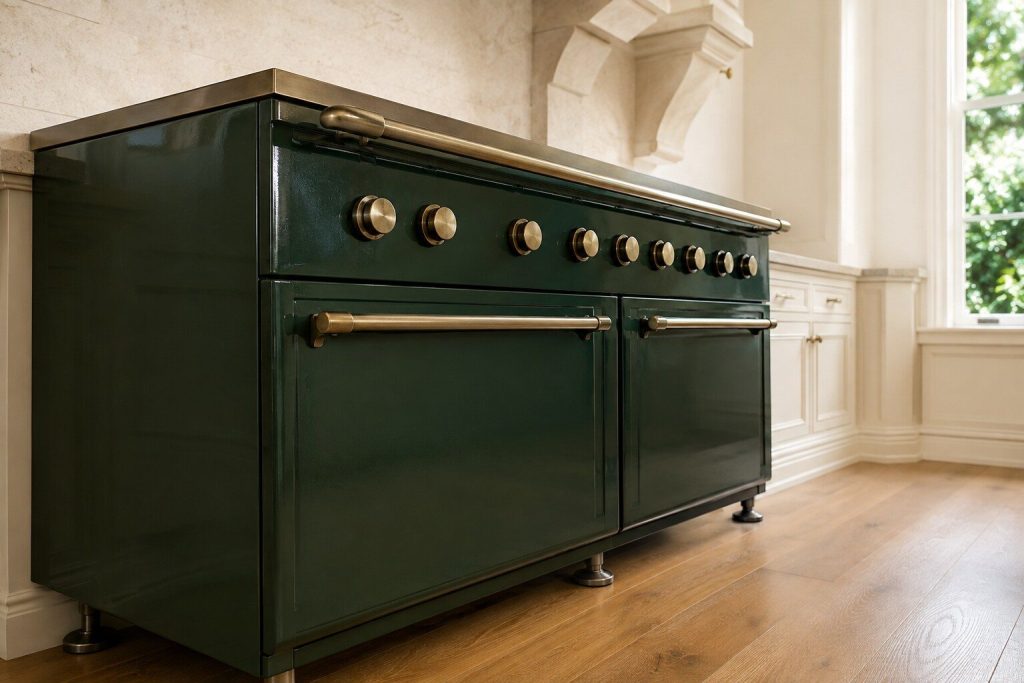
The range is what La Cornue makes, and everything else in the line exists around it. A Château is built to order in France, arrives in a crate weighing over half a ton, and is assembled from parts a customer chose one at a time: which oven is gas and which is electric, whether the top carries a French top, a lava-rock grill, induction or a teppanyaki plate, which of about fifty enamels, which trim metal. Two of them are almost never identical. That is the first thing a repair on one has to take seriously — the model number tells you the size, and the configuration code tells you what is actually under the lids.
- Dual fuel, all gas or all induction — three different ranges, three parts lists
- The configuration code, not just the model, decides what is on the top
- Made-to-order enamel and trim are part of the job, not an extra
-
from $195 Appliance maintenance
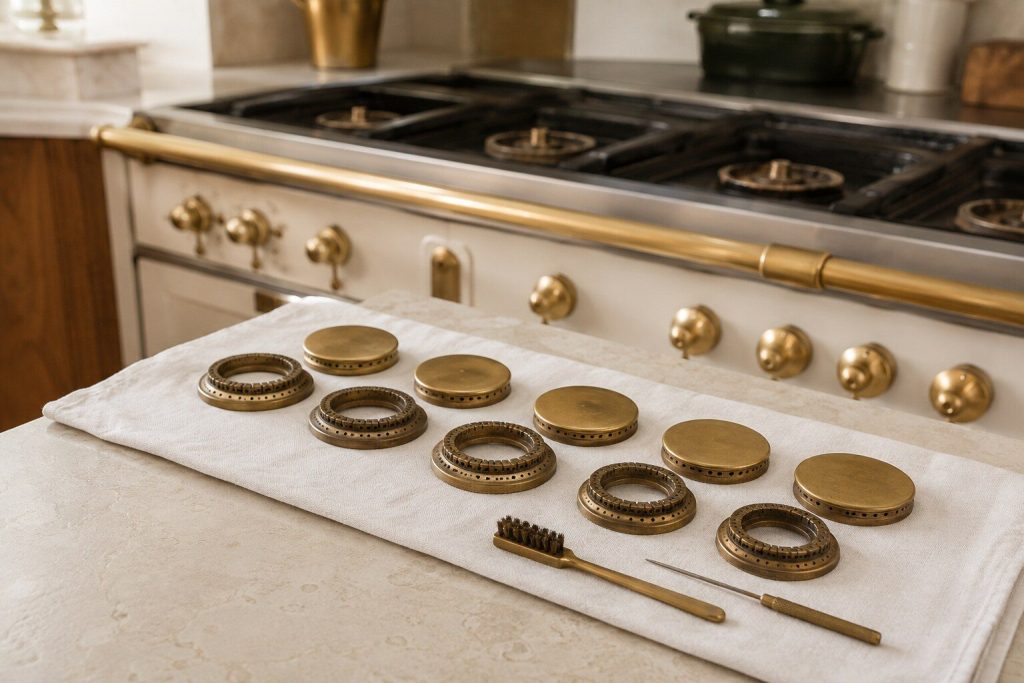
An annual visit that exists because most of what goes wrong on this make goes wrong slowly. Burners drift rich, thermostats drift hot, baffles saturate, brass tarnishes, and the owner adapts to every one of them without noticing. This is the visit that measures instead of adapting.
- Burner combustion and oven calibration checked against specification
- Baffle filters, duct flow and blower condition on the hood
- Enamel, trim and seals inspected while they are still repairable
Questions people ask about this
How do I tell if my brass is coated?
Look at how it has aged. Uncoated brass darkens unevenly, warms in tone and shows fingerprints that fade; a clear-coated finish stays uniform and eventually shows cloudiness or fine flaking rather than tarnish. If a discreet corner responds to gentle polish and comes up bright and even, it is uncoated. If it goes dull and patchy, stop immediately — you are removing lacquer. The original order paperwork says which was specified.
My brass has gone dull. Is that damage?
Usually not. Patina on natural brass is the finish doing what it was chosen to do, and a coastal kitchen with the windows open does a season's worth in a month. Whether you polish it back is taste, not maintenance. What is not taste is moisture left standing on any metal here, which is corrosion rather than patina.
Can I use a household metal polish?
On uncoated brass, a proper brass polish used sparingly and buffed off completely. What we would keep away from the range entirely: abrasive pads, scouring creams, oven cleaner and anything caustic. The maker's own cleaning notes say it does not recommend corrosive or caustic cleaners, and enamel next to your trim is glass fused to steel — once it is broken, the steel underneath rusts from that day.
The chrome has spots that will not come off.
Pitting rather than staining, most likely, and it is a coastal-kitchen classic: chloride works into the plating and the damage is under the surface. Polishing harder makes it worse. It is a part rather than a cleaning job, and it is worth catching early because the same conditions are working on the fixings behind it.
Maintenance & Prevention
More guides like this one
-
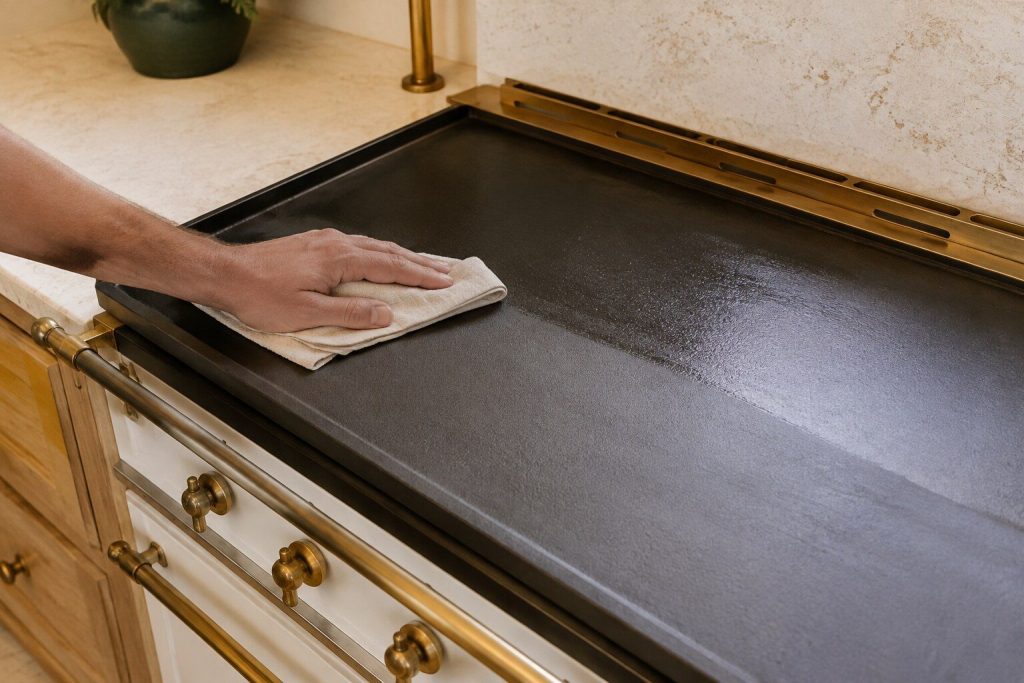
Seasoning a French Top, and the Mistake That Cracks One
Cast iron kept dry and seasoned outlives the kitchen. Washed down hot, it cracks — and a replacement plaque is a made-to-order part.
Read more -
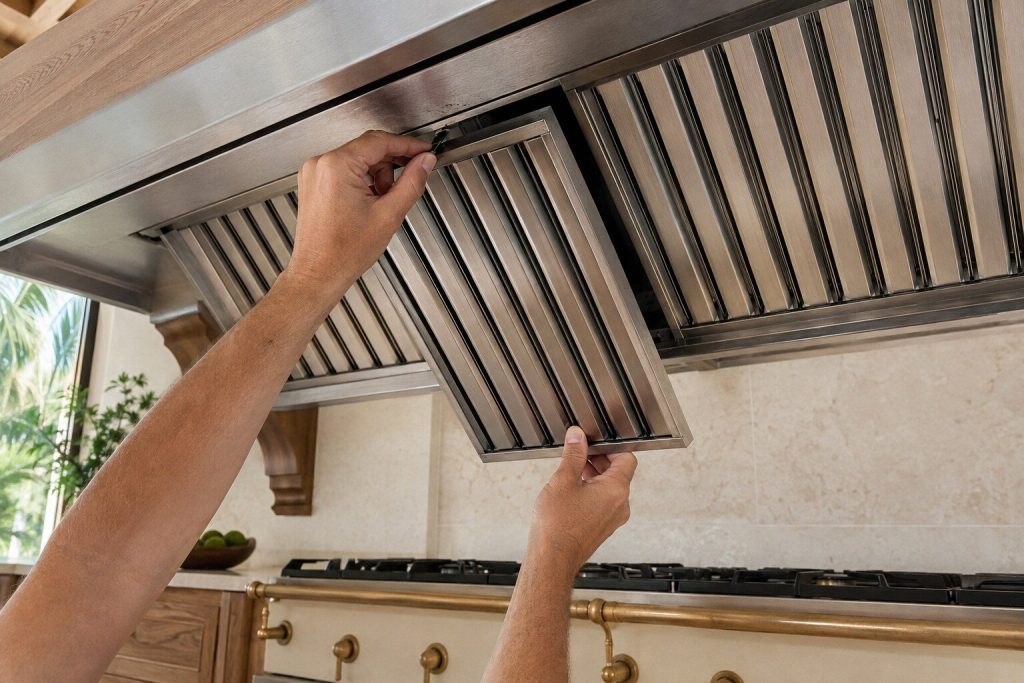
How Often to Clean Hood Filters Over a Range Like This One
The general answer is wrong here. Over a 22,000 BTU power burner and a lava-rock grill, baffles saturate far faster — and the grease they miss ends up in the range's electronics.
Read more -
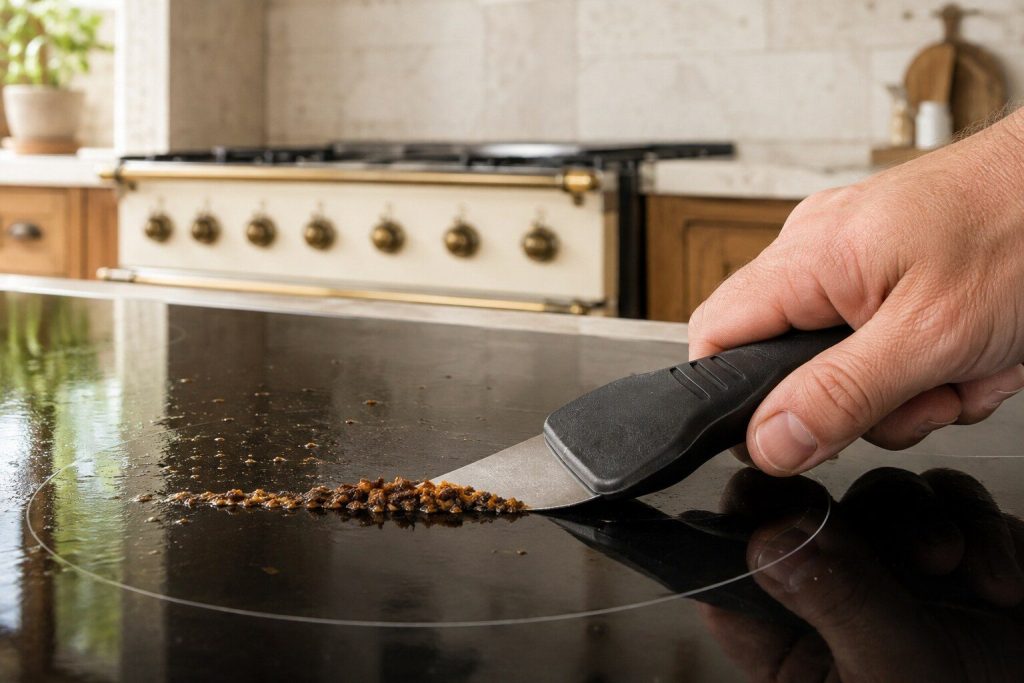
Cleaning an Induction Hob Without Scratching It
The maker's own answer is honest and unwelcome: mineral deposits come off, fine scratches do not. Its advice is preventative, and it names the cause — pan bases.
Read more
Tell us the model number and what it is doing.
This article is based on:
- Official manufacturer documentation
- Internal repair procedures
- Technician repair history
- Company quality standards