Maintenance & Prevention
Cleaning a La Cornue Oven Without Damaging the Enamel
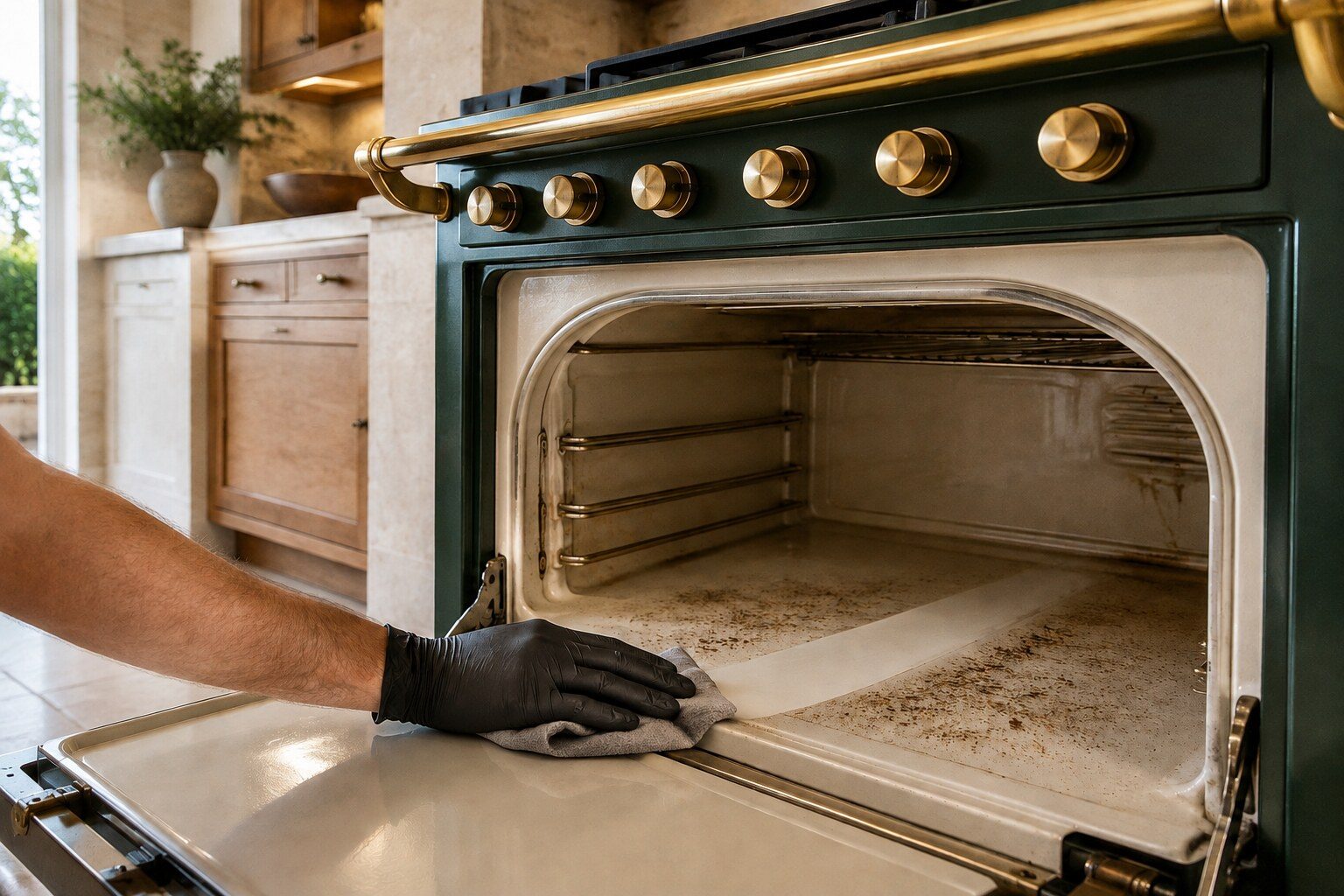
Clean it warm rather than hot or cold, work in stages, and stay away from anything caustic — La Cornue's own cleaning notes say it does not recommend corrosive or caustic cleaners, which rules out most supermarket oven cleaners. A vaulted oven has no pyrolytic self-clean cycle to burn residue away, so the routine is a warm cavity, hot water with a little dish soap, a soft cloth or a non-scratch pad, and repeated gentle passes rather than one aggressive one. Take the shelves and runners out and do them in the sink. For anything baked hard, a paste of bicarbonate of soda and water left for an hour or two lifts it without attacking the enamel. Never use a wire brush, a scraper or a scouring powder on the cavity: enamel is glass fused to steel, and once it is chipped the steel underneath rusts outwards from that day — which in a coastal kitchen is not a slow process.
The full guide
How to clean La Cornue oven: why this needs its own page
Two reasons, and they both come from the appliance rather than from us.
There is no self-clean cycle. A pyrolytic oven takes its cavity to around 900 °F and turns residue to ash; a vaulted oven is a sealed enamelled dome with a burner beneath it and there is no such cycle to run. So cleaning is manual, and it works far better done regularly than heroically.
And the maker rules out the products most people reach for. La Cornue's own cleaning notes say it does not recommend corrosive or caustic cleaners, because they may damage the range. That removes most of the aggressive supermarket oven products from the conversation entirely.
What the surface actually is
Vitreous enamel: glass fused to steel at high temperature. It is hard, it is chemically stable, and it is the reason these cavities look right after thirty years.
It is also brittle. Chip it and the steel underneath is exposed, and in a kitchen a few miles from salt water exposed steel rusts outwards from the day it is exposed. A chip on the floor of a gas oven — the wettest, hottest, most acidic place on the appliance — is in the worst possible position.
So every choice below is made to avoid one thing: mechanical damage to a glass surface.
The routine
Clean it warm. Not hot, not stone cold. Residue lifts far more easily from a warm cavity, and a hot one is a burn risk and — if anything wet touches it — a thermal-shock risk. Cook, then let it come down for half an hour.
Shelves and runners out. They do better in a sink with a soak than they ever will inside the oven, and taking them out gives you access to the cavity.
Warm water, a drop of dish soap, a soft cloth or non-scratch pad. Work the cavity, rinse, go again. On an oven cleaned every few weeks this is the whole job.
Bicarbonate paste for anything baked hard. Mixed with water to a spreadable paste, left an hour or two, then lifted with a non-scratch pad and warm water. Repeat rather than escalate. Two gentle passes beat one aggressive one, every time.
Dry it. And while the door is open, check the seal.
What not to use, and why
Wire brushes, scrapers, scouring powders, abrasive pads. Mechanical damage to glass. This is the whole list of things that cannot be undone.
Caustic and corrosive cleaners. Ruled out by the maker. They also creep into seams, onto trim and under the door seal, where caustic residue does damage you find months later.
Anything abrasive near the trim. Brass, copper, nickel and chrome each want different treatment, and some are clear-coated — where a polish removes the lacquer along with the tarnish.
Foil on the oven floor. On a gas oven you would be covering the path heat takes into the cavity. Use a shallow tray on a low shelf instead.
Water on a hot plaque, if you are cleaning the cooktop at the same time. Thermal shock is the leading cause of a cracked French top and it is entirely avoidable.
The habit that makes all of this easy
Wipe spills while the oven is still warm from cooking, the same evening. Ten seconds then is ten minutes in a month's time, and it means the aggressive products never become tempting.
The other habit is a tray. Anything likely to boil over gets a shallow tray on the shelf below, which is not a compromise — it is what people who cook in these ovens have always done.
Two things worth doing while you are in there
Paper-test the door seal. Close a strip of paper in the door and pull it out at eight or ten points around the perimeter. Where it grips, the seal is working. Where it slides out freely, it is not — and on a vaulted oven the door is part of the cooking mass, so a leaking seal presents as an oven that has lost its power rather than as a draft.
Look for chips. Around the door frame, on the floor, at the edges of the shelf runners. A chip found while it is a chip is stabilized. A chip found two years later is a panel ordered against a color reference, with a lead time.
And the cooktop, briefly
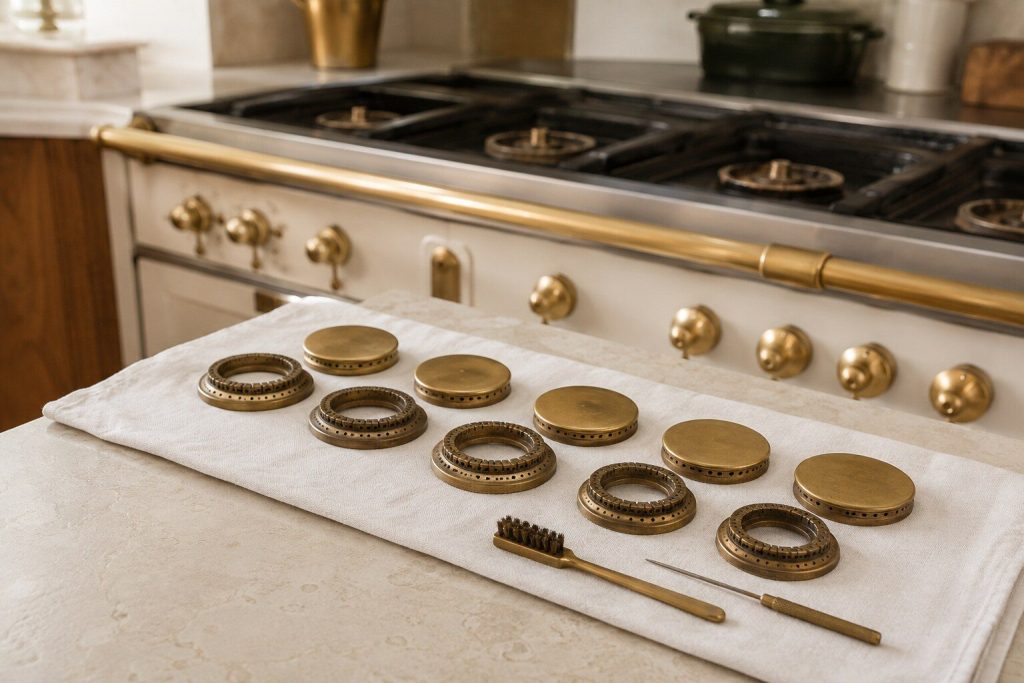
Different surfaces, different rules, and each has its own page on this site: the plaque coup de feu is cast iron and wants scraping warm and dry, brass burner parts want hot water and a soft brush and complete drying before reassembly, and ceramic induction glass wants a cream cleaner and pans with smooth bases.
The drying one matters more here than the products. A burner reassembled wet in an eighty per cent humidity kitchen clicks and does nothing for a day, and it is the single most common finding on a burner call in this city.
If it turns out to be a repair
What this leads to, and what it costs
Every job on this site is priced the same way: an on-site diagnostic first, the figure agreed in writing before anybody starts.
-
Vaulted ovens and convection ovens — gas, electric, and the Tourelle wall oven Ovens
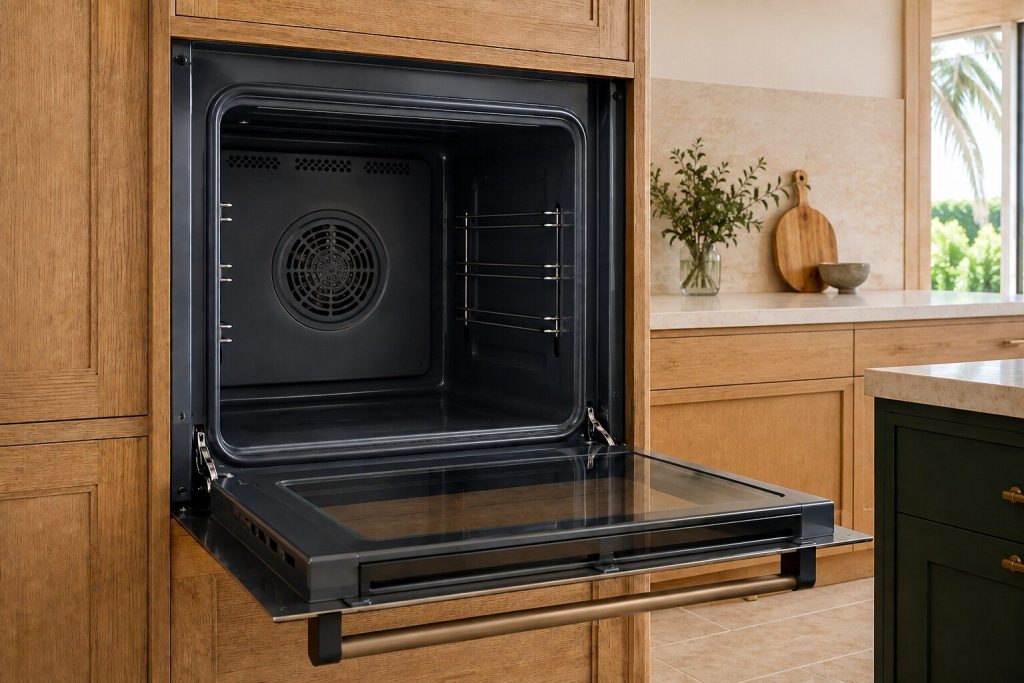
There are three different ovens on this make and they fail in three different ways. The vaulted gas oven cooks by radiant heat inside a sealed dome and has an electric broiler over it. The vaulted electric oven sits on the other side of the same range. And since 2025 there is a standalone one: the Château Tourelle, a fully electric multifunction wall oven in 60 and 75 centimeter widths, built to sit in a cabinet run next to a Château cooktop. Which of the three you have decides everything about the repair.
- Vaulted gas, vaulted electric and the electric Tourelle wall oven
- Gas ovens carry an electric broiler — browning and baking can fail separately
- Thermostat drift is measured against a probe, never adjusted by feel
-
from $195 Appliance maintenance
An annual visit that exists because most of what goes wrong on this make goes wrong slowly. Burners drift rich, thermostats drift hot, baffles saturate, brass tarnishes, and the owner adapts to every one of them without noticing. This is the visit that measures instead of adapting.
- Burner combustion and oven calibration checked against specification
- Baffle filters, duct flow and blower condition on the hood
- Enamel, trim and seals inspected while they are still repairable
-
from $265 Enamel panel and trim service
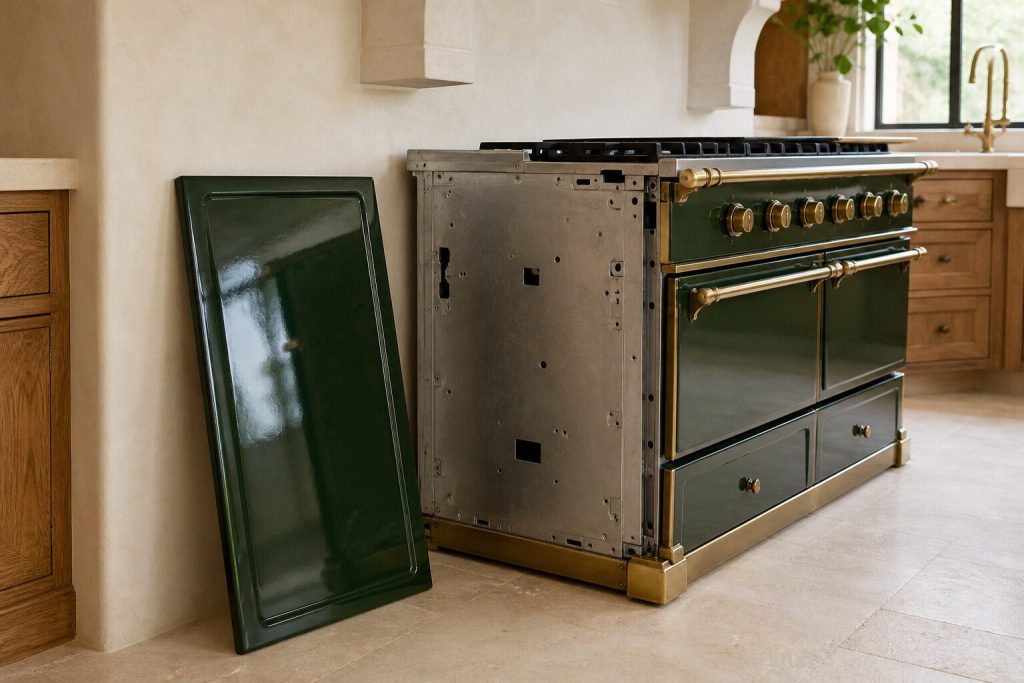
Vitreous enamel is glass fused to steel and about fifty colors of it were available at order time. A chip is not cosmetic in this climate — the steel under it rusts outwards — and a tarnished brass handrail attacked with the wrong product loses its lacquer along with the tarnish.
- Chips stabilized or the part ordered in the range's own color reference
- Brass, copper, nickel and chrome trim treated by what they actually are
- Clear-coated finishes identified before anything is polished
-
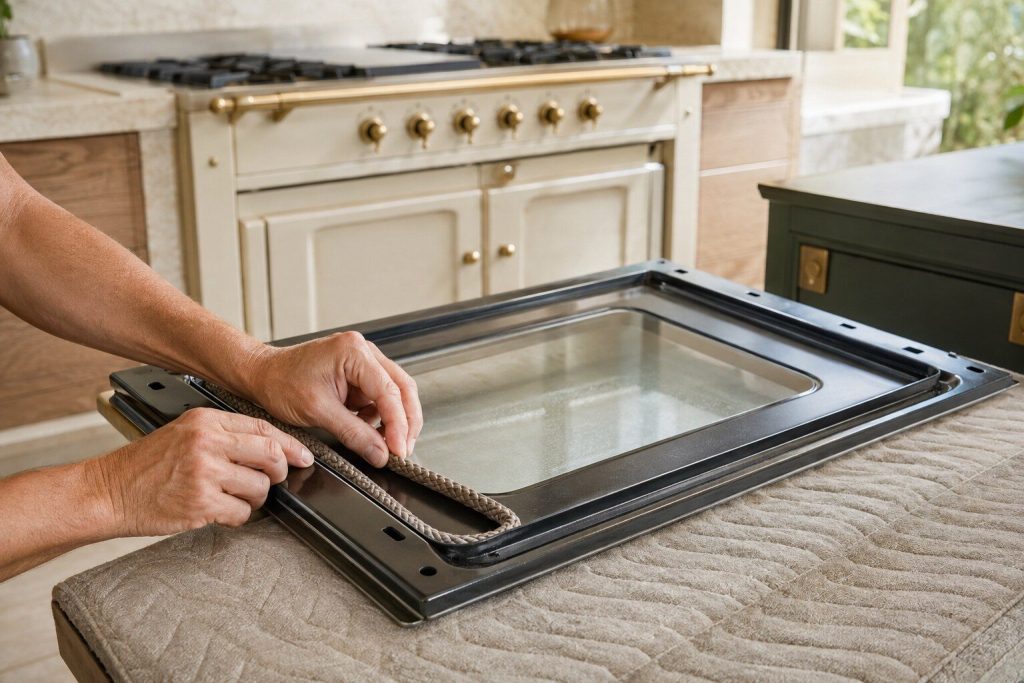
from $215 Oven door seal and hinge service
On a vaulted oven the door is part of the cooking mass, and a seal that no longer pulls onto its frame turns into a cooking complaint rather than a visible leak. Long preheats, a cool front shelf and browning on one side all start here.
- Seal, catch and hinge adjusted as one system
- Door pull measured, not judged by how it sounds
- Heat loss confirmed before and after

Questions people ask about this
Can I use a supermarket oven cleaner?
We would not, and the maker's own cleaning notes are the reason: it does not recommend corrosive or caustic cleaners, and most of the aggressive supermarket products are exactly that. They also creep — into seams, onto trim, under a door seal — and caustic residue in those places causes damage you find months later. Warm water, soap, patience and bicarbonate get almost everything.
Why is there no self-clean?
Because a vaulted oven is not that kind of appliance. A pyrolytic cycle takes a cavity to around 900 °F, and the design here is a sealed enamelled dome with a gas burner beneath it and an electric broiler above. There is no cycle to run and nothing to fall back on, so cleaning is manual and regular rather than occasional and violent.
Something has burnt hard onto the floor of the oven.
Bicarbonate paste, an hour or two, then a soft pad and warm water, repeated. Two gentle passes beat one aggressive one. What we would not do is attack it with a scraper: a chip in the enamel on the floor of a gas oven is in the wettest, hottest place on the appliance, and it will rust.
Can I line the oven floor with foil to keep it clean?
No, particularly not on the gas side. You would be covering the path the heat takes into the cavity, which changes how the oven cooks and can trap heat where it was not meant to sit. A shallow tray on a low shelf under whatever is likely to spill does the same job without interfering with the oven.
Maintenance & Prevention
More guides like this one
-
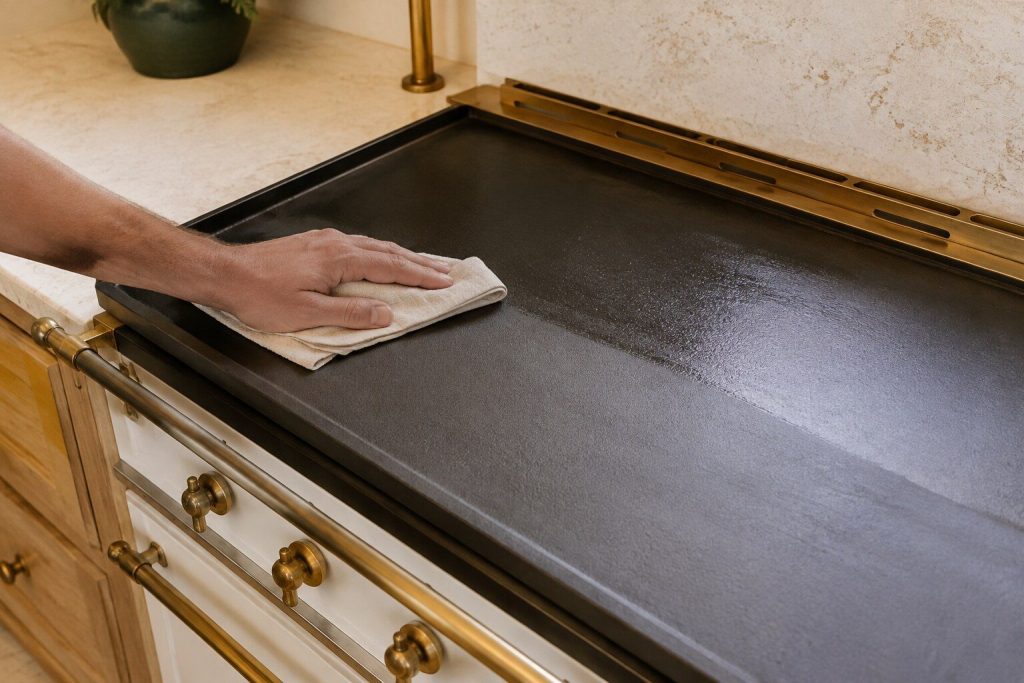
Seasoning a French Top, and the Mistake That Cracks One
Cast iron kept dry and seasoned outlives the kitchen. Washed down hot, it cracks — and a replacement plaque is a made-to-order part.
Read more -
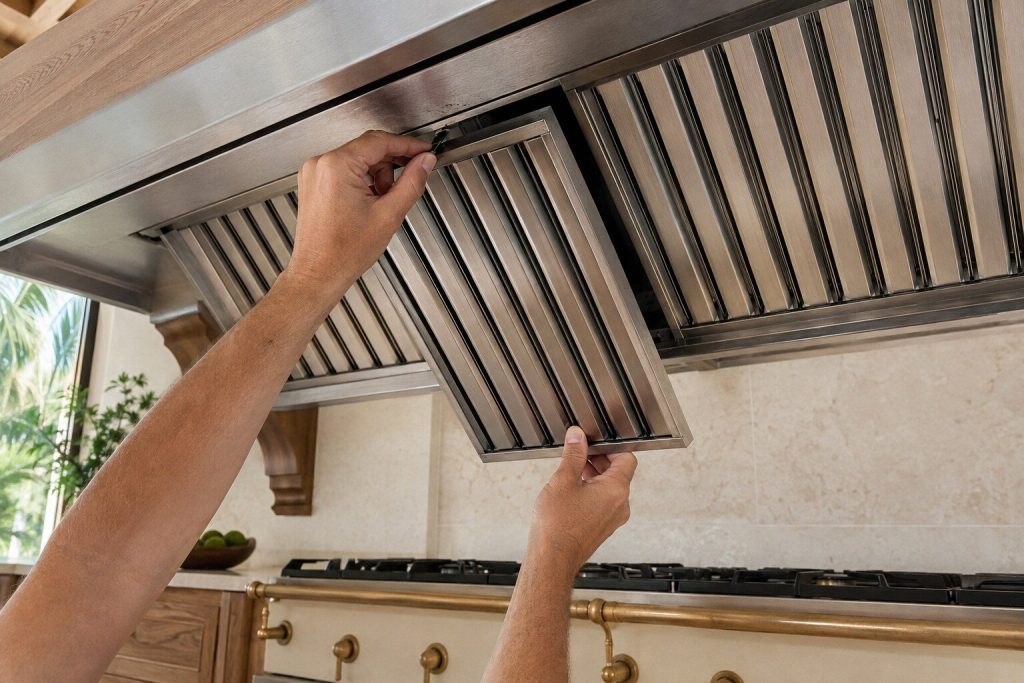
How Often to Clean Hood Filters Over a Range Like This One
The general answer is wrong here. Over a 22,000 BTU power burner and a lava-rock grill, baffles saturate far faster — and the grease they miss ends up in the range's electronics.
Read more -
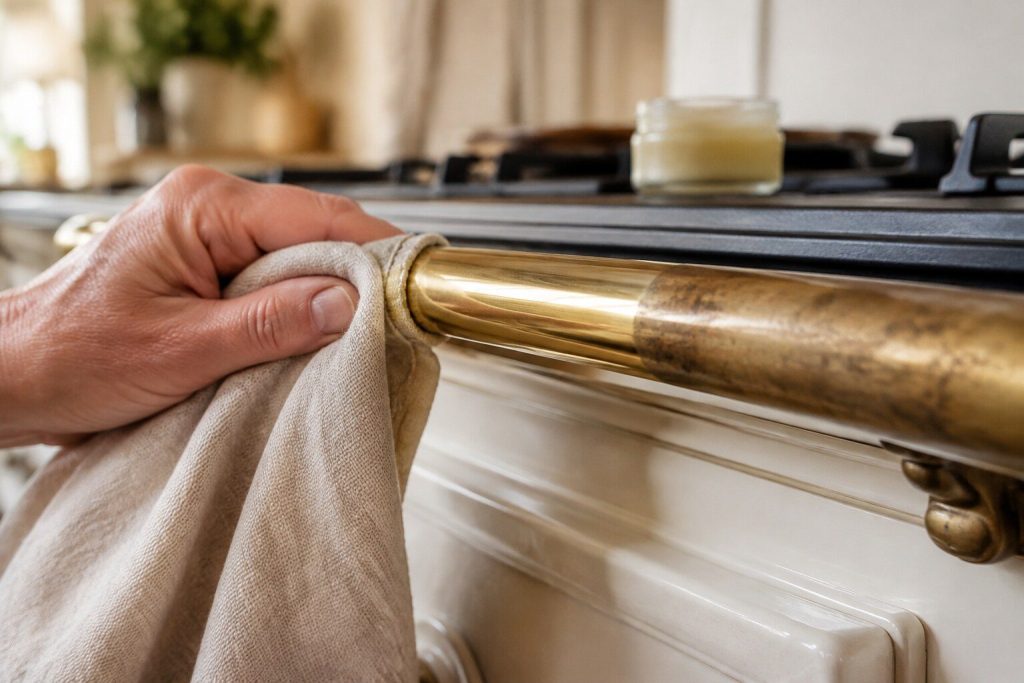
Cleaning La Cornue Brass and Trim in a Coastal Kitchen
Establish whether your trim is clear-coated before anything abrasive touches it. Removing lacquer along with tarnish is the mistake that cannot be undone.
Read more
Tell us the model number and what it is doing.
This article is based on:
- Official manufacturer documentation
- Internal repair procedures
- Technician repair history
- Company quality standards