Maintenance & Prevention
Cleaning an Induction Hob Without Scratching It
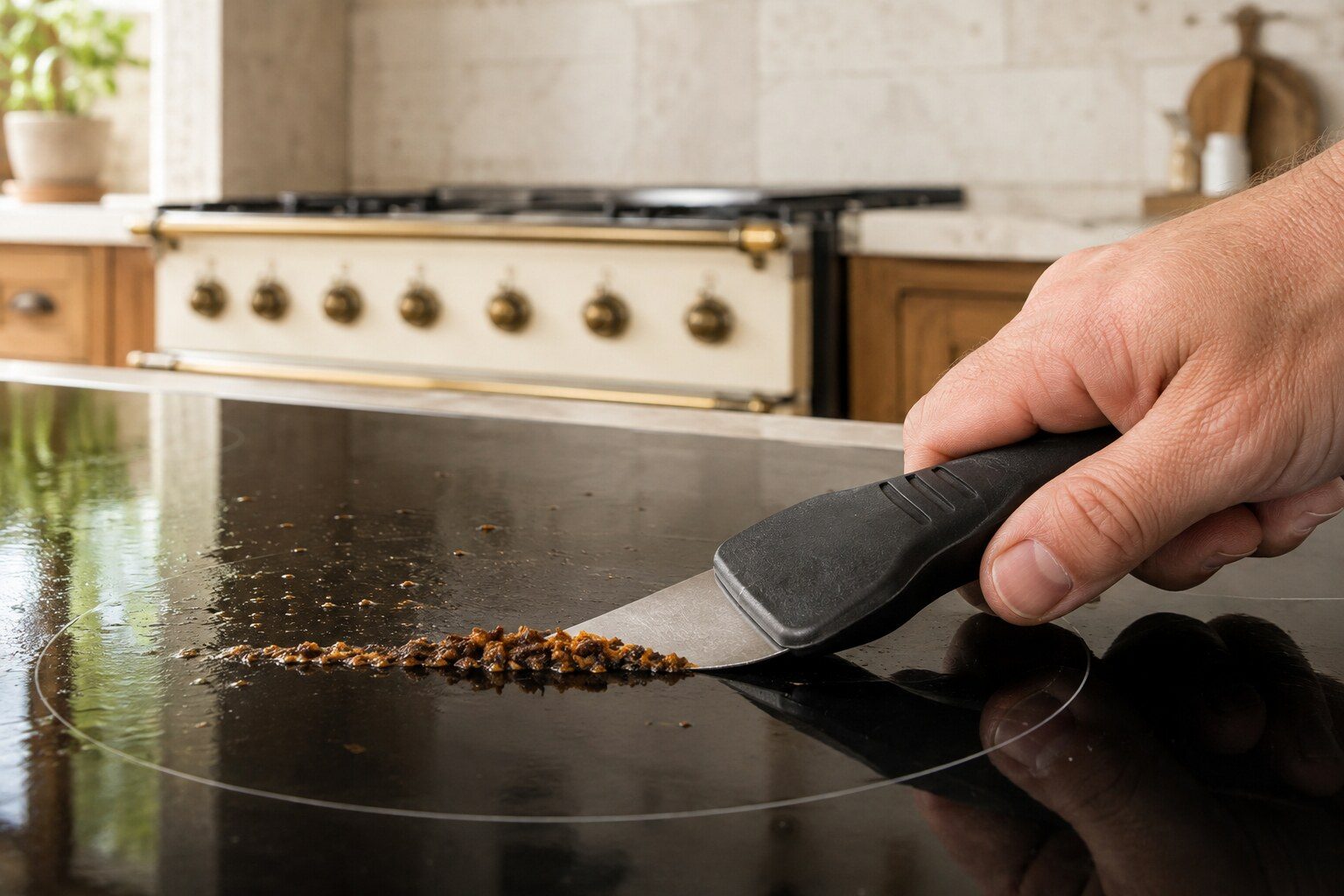
Use a dedicated ceramic hob cream on a cool surface with a soft cloth or the plastic scraper made for the job, and work in straight passes rather than circles. La Cornue's own guide is honest about the limits: marks from mineral deposits from water or food can be removed with a cleaning cream, but tiny scratches are not removable — they only become less visible over time as a result of cleaning. Its advice is therefore preventative, and it names the cause directly: always use the recommended cleaning methods and make sure that pan bottoms are smooth and clean. Which means most of the answer is about pans, not products. Lift pans rather than sliding them, especially cast iron, keep the bases clean of grit, and deal with sugar spills immediately while they are still soft, because sugar bonds to ceramic glass as it cools and taking it off cold is where scratches come from.
The full guide
How to clean glass hob without scratching: the honest answer first
La Cornue's own guide addresses this in two sentences, and they are worth having verbatim before anything else:
> Marks from mineral deposits from water or food can be removed with a cleaning cream. However, tiny scratches are not removable but will become less visible in time as a result of cleaning.
So: deposits come off, scratches do not. Nothing in a bottle changes that, and anybody promising otherwise is selling something.
Which is why the guide's actual advice is preventative, and why it names the cause directly: *always use the cleaning methods recommended in this guide, and make sure that the pan bottoms are smooth and clean.*
Most of this page is therefore about pans.
The routine
Let it cool. A hot hob bakes cleaner onto itself, and anything wet on a hot surface is a thermal risk. If the display shows H, the zone is still above 140 °F — that indicator exists for exactly this moment.
Get the grit off before you rub anything. A dry or barely damp cloth first. The great majority of fine scratching is grit trapped under a cloth rather than the cloth or the cream.
Ceramic hob cream, in straight passes. A dedicated cream on a soft cloth. Straight lines rather than circles — partly because it works better on baked residue, partly because any fine marking that does occur is far less visible in a straight line than as a swirl catching the light.
The plastic scraper for anything burnt. The scrapers sold for ceramic hobs, held at a shallow angle, on a cool surface, only where a cloth has failed. Not a metal blade: it will lift burnt sugar and it will also find grit and drag it.
Buff dry. Cream residue left to dry is what produces the streaks people then attack with something stronger.
The pans are the whole story
Run your hand across the base of each pan you use on the induction zones.
Rough, pitted or sandy bases are the abrasive. Cheap multi-ply pans that have warped, cast iron that has developed a rough casting surface, anything that has been used on a gas burner and picked up scale — all of them grind against ceramic glass every time they move.
Sliding rather than lifting is the action. It is instinctive with a heavy pan and it is what scratches. Lift, particularly cast iron.
Dirty bases carry grit from a counter or a sink onto the glass.
There is a second reason to care, beyond cosmetics. A pan base below the minimum diameter for its zone will not couple to induction at all — the published minimums on these cooktops are 4¾ inches at the front left, 5½ at the rear zones and 8¼ at the center. So the pans you use well on this hob are heavy, flat, clean and large enough, and that is the same list that keeps the glass unmarked.
Sugar, immediately
The one spill with a deadline. Sugar and anything sugary bonds to ceramic glass as it cools, and once it has set, removing it means a scraper and pressure — which is precisely the situation that produces damage.
So a sugar spill gets dealt with while the zone is still warm and the sugar still soft, with a scraper at a shallow angle and care about the heat. It is the one exception to letting the hob cool first, and it is worth the exception.
What South Florida adds
Hard water. Every boil-over and every wiped-down surface leaves mineral behind, and the next heating cycle bakes it on. Over a year that becomes the cloudy, faintly iridescent film people take for damage.
It is not damage and the cream takes it off — but the easier answer is a wipe when the hob is cool after cooking, every time. Ten seconds against half an hour later.
When it is not a cleaning question
A fingernail catches on the mark, and there is a rust trace or a change in the sound the hob makes. That is a crack, not a scratch, and it is a safety matter: La Cornue's instruction is to disconnect the cooker immediately from the power supply and not use it until it has been repaired, because the glass is what separates the coils and electronics from anything spilled on the surface.
The hob is cutting out under load and showing E2. That is the electronics overheating, and the maker's first suggestion is ventilation rather than a part. Cleaning is not the answer and neither is resetting it.
Both of those have their own pages here, and both are worth reading before anybody puts a cloth away and forgets about it.
If it turns out to be a repair
What this leads to, and what it costs
Every job on this site is priced the same way: an on-site diagnostic first, the figure agreed in writing before anybody starts.
-
La Cornue induction hob: scratches in the ceramic glass, and what the maker says can and cannot be undone
La Cornue — an indicator rather than a code. The guide is honest about this one: mineral deposits from water or food can be removed with a cleaning cream, but tiny scratches are not removable — they simply become less visible over time as a result of cleaning.
What the machine is telling you -
Cooktops and rangetops
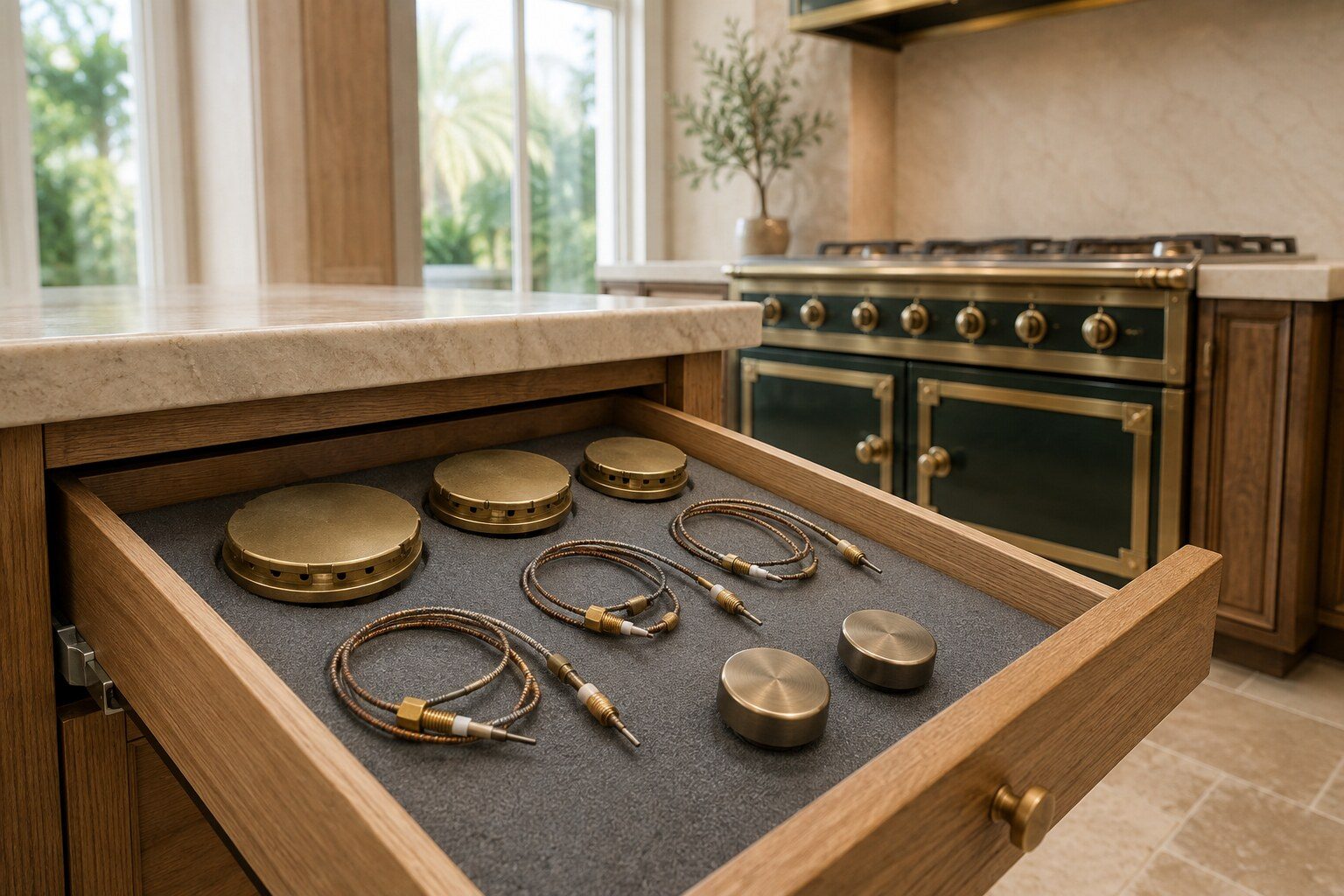
A La Cornue cooktop is a set of modules chosen at order time and dropped into a stainless frame: brass gas burners at 17,000 and 7,500 BTU, a 22,000 BTU power burner, the cast-iron plaque coup de feu heated by a single burner underneath, a lava-rock grill, ceramic-glass induction zones, an electric teppanyaki plate. This is the top of a range, and each module is a different repair. Sold on its own without ovens beneath it, the same top is a rangetop, and it has its own page.
- Gas, induction, French top, grill and teppanyaki modules on one frame
- Induction is the only half of this line that shows a code — E2, U400, Er
- A cracked glass hob is disconnected first and diagnosed second
-
Induction hob repair
The three codes La Cornue documents anywhere all live here: E2, the electronics are too hot; U400, the cooker is incorrectly connected; Er with a number, an internal problem the user cannot clear. Everything else on that display is an indicator, and telling the two apart saves a visit.
- E2 is investigated as ventilation first, as the maker's own guide says
- Indicators — H, the pan-missing symbol, L, A, P — are not problems
- Zone-by-zone testing with pans that meet the minimum diameters
-
Cracked induction glass
This is the one problem on this appliance with a safety instruction attached, and La Cornue's own guide is unambiguous about it: disconnect the cooker from the power supply immediately and do not use it until it has been repaired. The glass is what separates the coils and the electronics from anything spilled on the surface.
- Disconnect it at the supply — the maker says so, not us
- Do not cook on it, even on the zones that still work
- The replacement panel is ordered to that top's own zone layout
Questions people ask about this
Will a scratch turn into a crack?
Not on its own — a surface scratch and a crack through the panel are different things, and a scratched hob is cosmetically annoyed rather than compromised. What does matter is that the conditions producing scratches are also the ones producing impacts, and an impact is what cracks glass. A crack is a safety matter with its own page: the maker's instruction is to disconnect the cooker immediately and stop using it.
Can I use a razor scraper?
The plastic scrapers sold for ceramic hobs, yes, held at a shallow angle on a cool surface. A metal blade will lift burnt sugar and will also find any grit under it and drag that across the glass. If you use one, it is for burnt residue only, never as a routine cleaner, and never dry.
There are rainbow-colored patches that will not shift.
Usually heat-discoloured mineral residue rather than damage to the glass, and a cream cleaner with a little patience takes most of it. Hard water in South Florida contributes: every boil-over leaves the mineral behind and the next heating cycle bakes it on. Wiping the hob when it is cool after cooking prevents nearly all of it.
My pans leave gray marks.
That is metal transfer from the pan base rather than a mark in the glass, and it usually comes off with a cream cleaner. It is also a warning: a base leaving metal behind is a base that is abrasive, and it is scratching the surface at the same time. Check it, and consider retiring it from the induction zones.
Maintenance & Prevention
More guides like this one
-
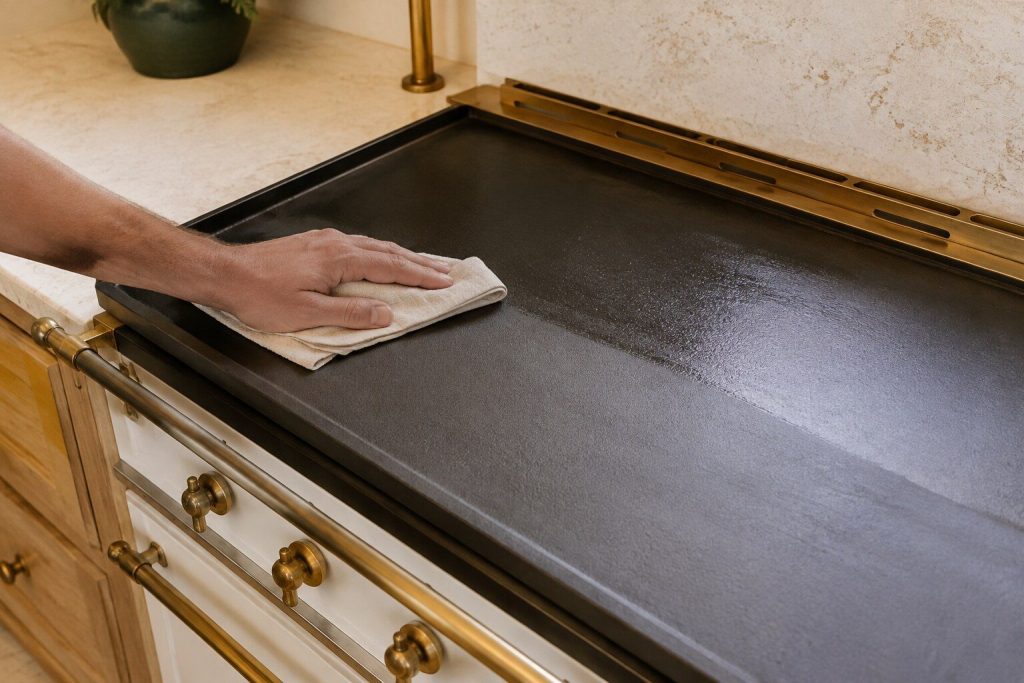
Seasoning a French Top, and the Mistake That Cracks One
Cast iron kept dry and seasoned outlives the kitchen. Washed down hot, it cracks — and a replacement plaque is a made-to-order part.
Read more -
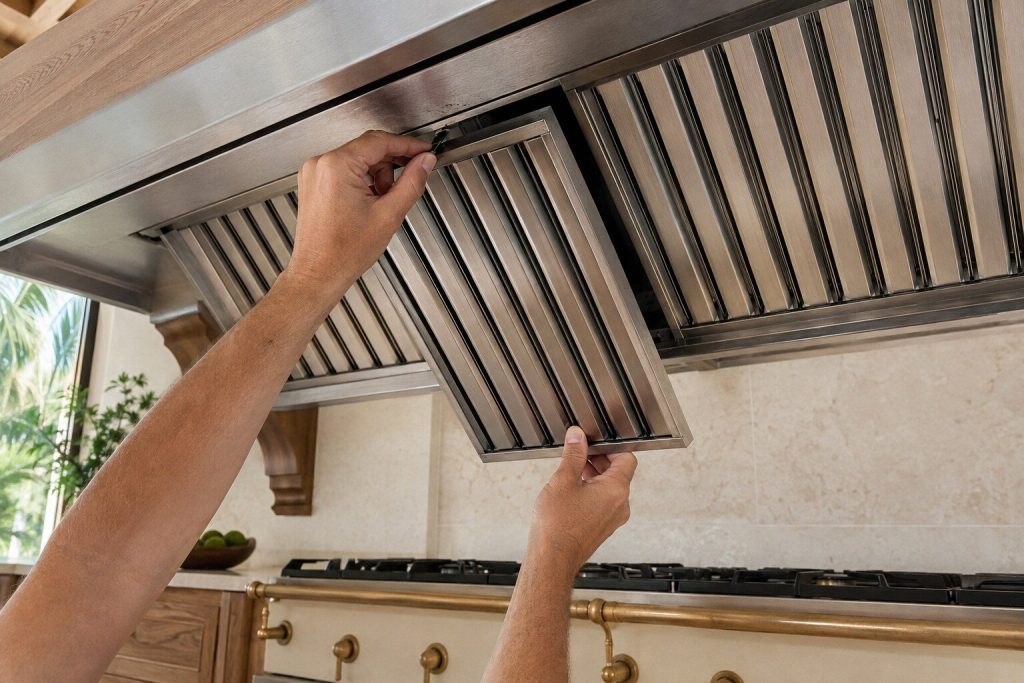
How Often to Clean Hood Filters Over a Range Like This One
The general answer is wrong here. Over a 22,000 BTU power burner and a lava-rock grill, baffles saturate far faster — and the grease they miss ends up in the range's electronics.
Read more -
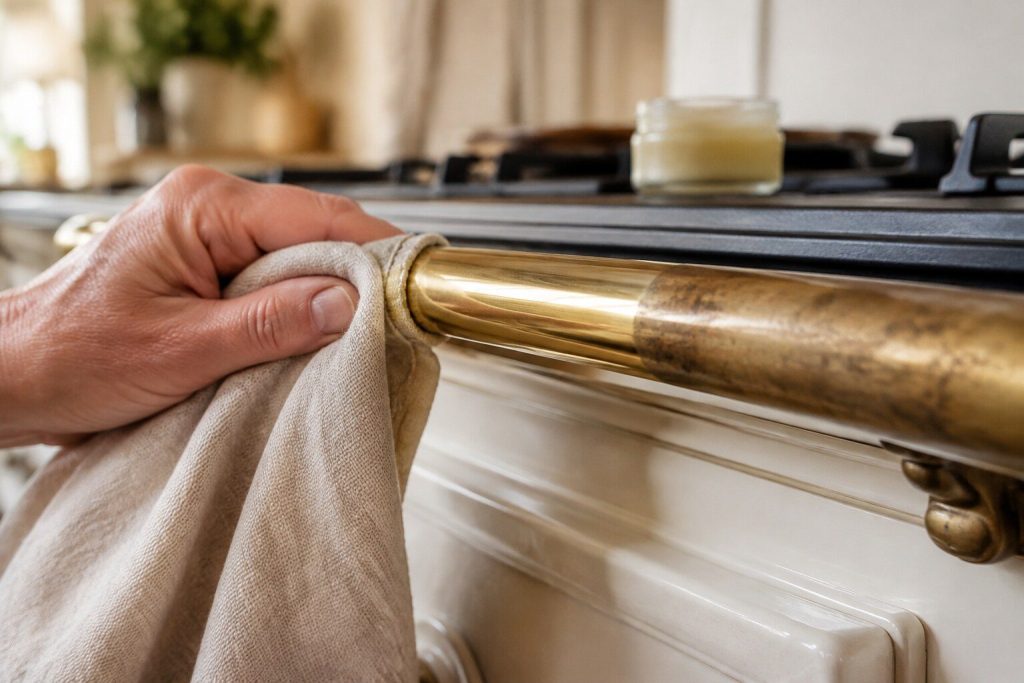
Cleaning La Cornue Brass and Trim in a Coastal Kitchen
Establish whether your trim is clear-coated before anything abrasive touches it. Removing lacquer along with tarnish is the mistake that cannot be undone.
Read more
Tell us the model number and what it is doing.
This article is based on:
- Official manufacturer documentation
- Internal repair procedures
- Technician repair history
- Company quality standards